
Origin cue
Yunnan White Tea: What the Origin Usually Suggests
A Yunnan white tea label is useful as a cue, not as proof. It may tell you how the tea is being presented, and it can prompt a closer look at leaf size, bud-to-leaf ratio, aroma, liquor texture, and how the tea behaves over several infusions. It does not confirm quality, cultivar, age, processing care, storage history, or flavor by itself.
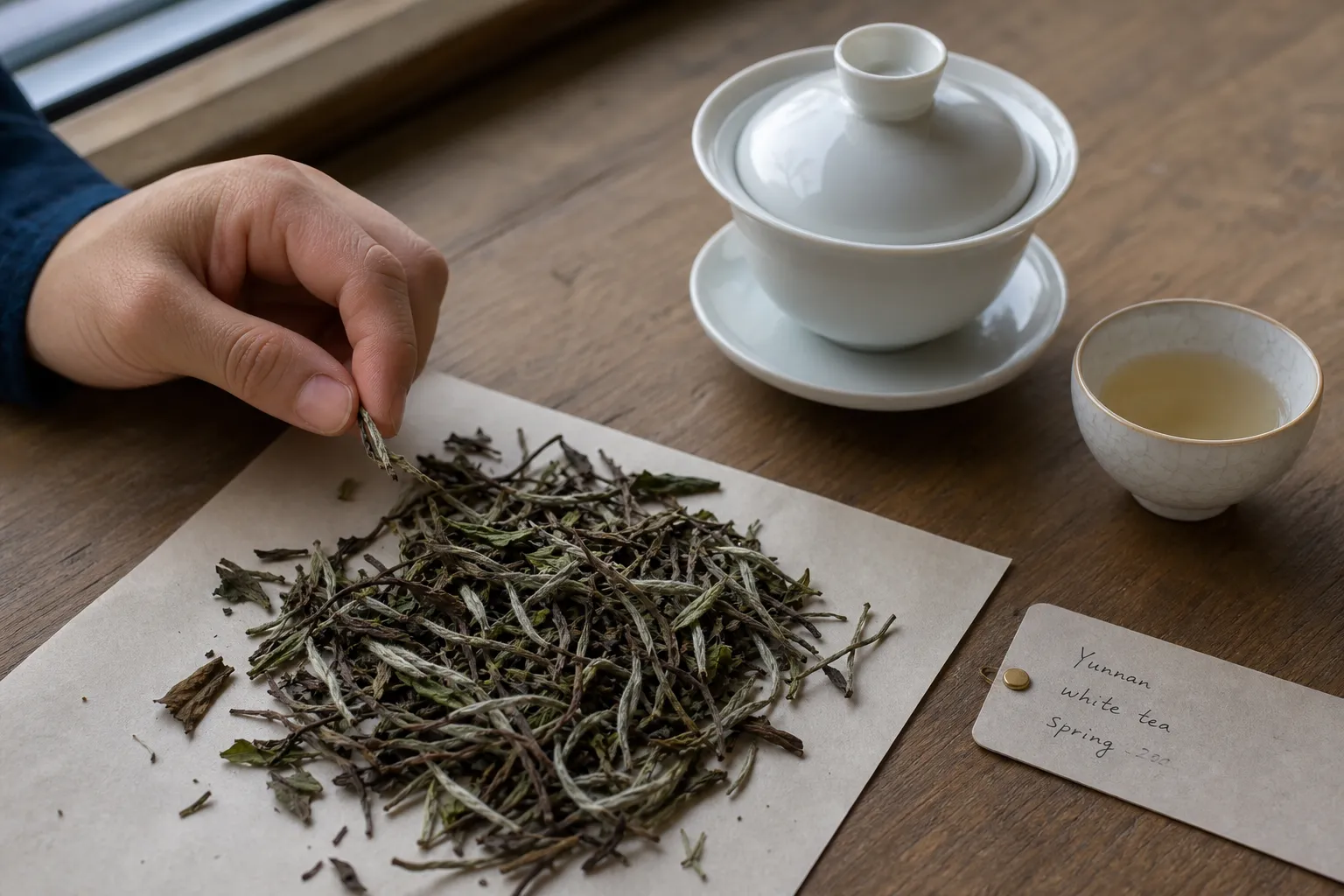
The practical answer is simple: let the origin note decide what to inspect next. Look at the dry leaf, warm the leaves in a gaiwan or small pot, brew with steady timing, and compare the cup with the seller’s description. The label starts the question; the leaf and liquor carry the weight.
upward
Read the full overview first
Use the broader guide first if you need the full scope before this page.
What the Yunnan Origin Label Can Suggest
When a tea is sold as Yunnan white tea, the origin wording often works as sourcing and market language. It may be meaningful, but it is still a description attached to a specific tea, not a full explanation of what is in the packet.
For a buyer, that can still help. The phrase gives you a reason to slow down and ask whether the sample’s appearance, aroma, and infusion behavior support the way it is being described. If the listing also mentions larger leaf material, older trees, a mountain area, or aging potential, treat those as details to check against the tea rather than conclusions to accept from the label alone.
Dry Leaf
Are the buds and leaves whole or broken? Is the material mostly buds, a bud-and-leaf set, or broader mature leaf?
Color Range
Does the color look even, or is there a wide mix of green, brown, silver, and dark fragments?
Aroma Signal
Warm the vessel, add the leaf, and smell before pouring water; a coherent warmed-leaf aroma is more useful than dramatic origin language.
None of these observations proves origin, but they tell you whether the tea gives you something observable beyond the name. If the aroma is flat, unpleasantly musty, smoky without explanation, or mismatched with the seller’s notes, the origin label should not override that signal.
Why “Large Leaf White Tea” Needs Careful Reading
Yunnan white tea is often discussed alongside large leaf white tea, but that phrase needs careful handling. In a product description, “large leaf” may refer to visible leaf size, regional plant material, picking style, or simply the way a seller wants to frame the tea. Without stronger documentation for the specific batch, it should not become a fixed rule for every Yunnan-labeled tea.
Separate the claim from the cup
- What the label says: the language used to present the tea.
- What the dry leaf shows: visible size, breakage, bud-to-leaf ratio, and picking pattern.
- What the infusion reveals: texture, clarity, aroma development, and whether the tea stays pleasant across steeps.
A tea can have broad leaves and still taste dull, rough, or poorly stored. A tea with smaller-looking material can still brew cleanly and pleasantly. Leaf size is one observation, not a full judgment.
If a seller describes the tea as large leaf white tea, check whether the sample makes that visible. Broader leaves should be easy to see before brewing, and after steeping they should open enough for you to inspect texture, breakage, stems, and picking pattern. If the material is heavily fragmented, dusty, or hard to read after infusion, the wording gives you less practical help.
The same caution applies when Yunnan is compared with other Chinese white tea regions. Region language can organize a tasting table, but it cannot replace checking appearance, aroma, liquor color, texture, and how the leaves hold up across repeated infusions.
How to Compare a Yunnan White Tea Sample
A fair Yunnan white tea comparison starts with a steady brewing setup. Use the same vessel, similar leaf amount, similar water temperature, and a consistent steep pattern. That keeps the origin label from becoming the loudest part of the tasting before the tea has shown itself.
Place the Yunnan-labeled sample beside a white tea you already know, such as Silver Needle, White Peony, Gongmei, or Shoumei. The point is not to crown one as better. The point is to notice structure. Does one tea feel lighter in body? Does another show deeper liquor color? Does the aroma fade quickly, or does it change gradually from steep to steep?
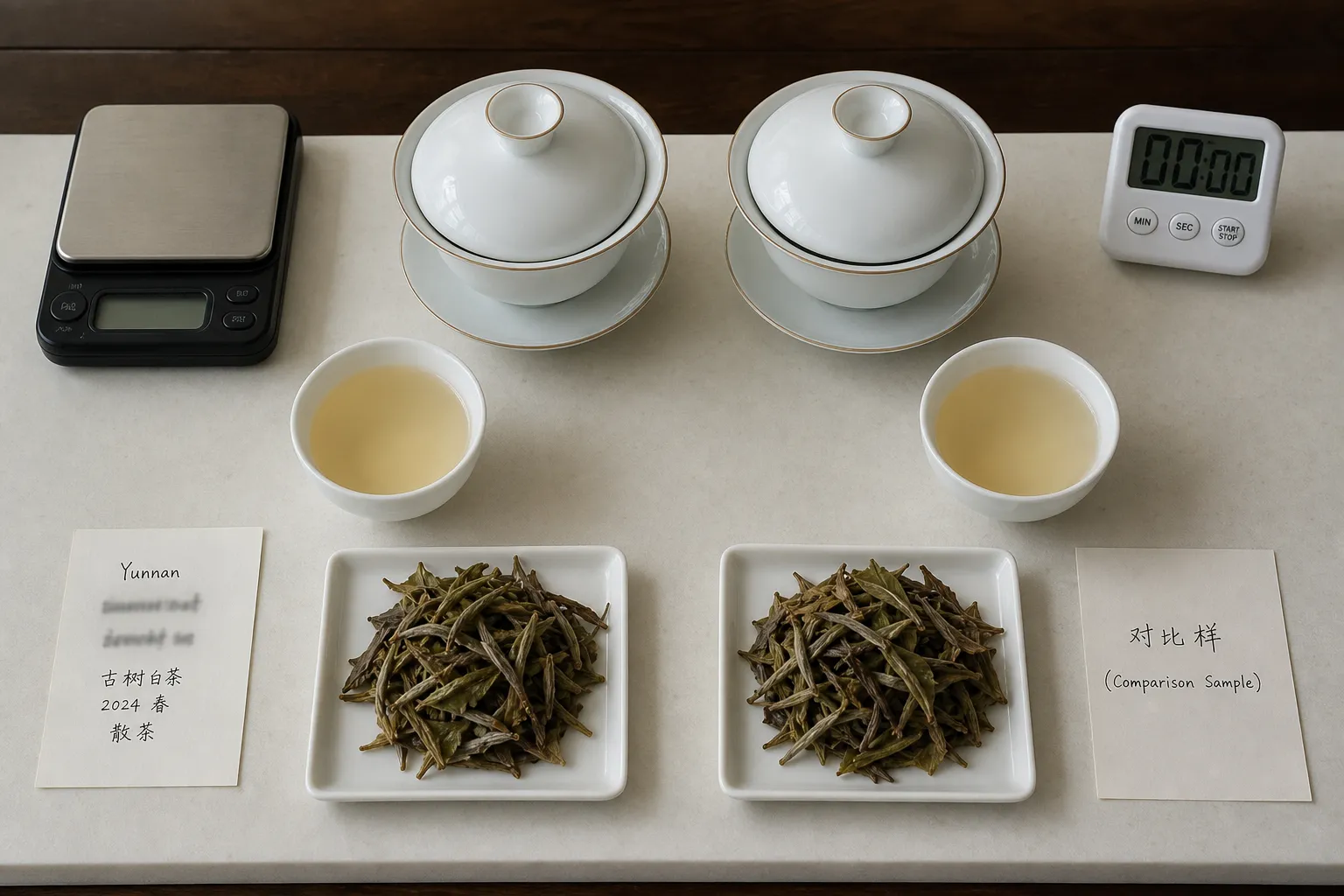
A simple comparison path
- Dry leaf: note size, shape, bud-to-leaf ratio, color range, and breakage.
- Warmed leaf: smell for a clean, coherent aroma before adding water.
- First infusion: check clarity, texture, and whether the cup feels thin or balanced.
- Middle infusions: watch whether the tea opens, flattens, sharpens, or becomes sweeter.
- Wet leaf: inspect leaf integrity, stems, picking pattern, and any storage smell.
These are not origin tests. They are practical tasting controls. They help you decide whether the tea is enjoyable, fairly described, and worth comparing again under a slightly different brew.
If the first cup tastes weak, do not immediately blame the region or category. Adjust the next steep first. Use a little more leaf, extend time slightly, or try a warmer pour if the tea seems under-extracted. If the liquor turns harsh quickly, shorten the steep or lower the water temperature. Brewing behavior gives you more useful information than label confidence alone.
Common Confusion Around White Tea Origin Language
Origin as a verdict
The most common mistake is treating “Yunnan” as a quality verdict. Origin can matter in tea culture and trade language, but it is not stand-alone proof of good leaf, careful processing, honest age, or clean storage.
Processing as assumed
White tea processing language usually points toward withering and drying, but a Yunnan white tea label does not tell you how carefully those steps were handled for a given batch.
Age as proof
A wrapper or listing may suggest older material, but the label alone does not verify age or storage history. Pay attention to aroma and storage condition before romance.
Price as certainty
A higher price may reflect scarcity language, sourcing story, packaging, seller positioning, or genuine care, but it does not create a simple price-to-quality rule.
A weak cup does not become stronger because the label sounds specific. A good tea still needs to show itself in the gaiwan. If the tea tastes overly rough, stale, sour, smoky, or muddy, processing and storage questions remain open. With aged white tea, clean depth, steady infusions, and a pleasant settled character are more useful than an unsupported number. If the tea smells damp, basement-like, or confused, pause before letting the age claim lead the decision.
Treat price as context. Compare it with leaf condition, seller transparency, cup performance, and whether the description gives you enough detail to understand what you are buying.
What to Check Before Trusting the Label Too Much
Before leaning on a Yunnan white tea label, ask what else is visible. A useful listing or wrapper may include harvest information, processing notes, storage context, or a clear description of the material. Even then, the wording should be checked against the tea itself. Seller context matters, but it is part of the evidence, not the whole answer.
Small inspection routine
- Open the packet and look before brewing.
- Smell the leaf in a warmed vessel.
- Brew a short first infusion and then a slightly longer second one.
- Watch whether the tea becomes more expressive, stays thin, or turns coarse.
- After several steeps, spread the wet leaf and look at its condition.
This routine helps with uncertainty in tea labels because it brings the decision back to things you can observe. You are not trying to prove the exact mountain, plant material, or production story at home. You are deciding whether the tea is consistent, pleasant, and described with enough care to make the origin note useful.
If you are comparing two samples, keep notes short. Write down dry leaf, warmed aroma, liquor texture, aftertaste, storage impression, and how many infusions remained enjoyable. A few clear notes are better than a long paragraph shaped by the product name. Over time, this gives you a personal reference for how different white teas behave without turning every label into certainty.
The Evidence Limit
The available research material for this page does not provide public sources strong enough to verify hard claims about Yunnan white tea origin, large-leaf material, regional production differences, processing variation, aging behavior, health value, or market value. That limitation matters. The useful answer is not a grand statement about what Yunnan white tea always is; it is a careful way to read the label.
So keep the boundary clear: Yunnan origin language can guide attention, but it should not close the case. It can help you decide what to inspect, what to ask the seller, and how to compare a sample beside other teas. It should not be treated as proof of authenticity, quality, age, cultivar, storage condition, wellness value, or predictable flavor.
For the next cup, keep the controls steady. Use the same gaiwan, leaf amount, water temperature, and steep pattern you would use for any fair comparison; then let the dry leaf, aroma, liquor color, texture, and wet leaves decide how much confidence the label deserves.