
Brewing Framework
Brewing White Tea
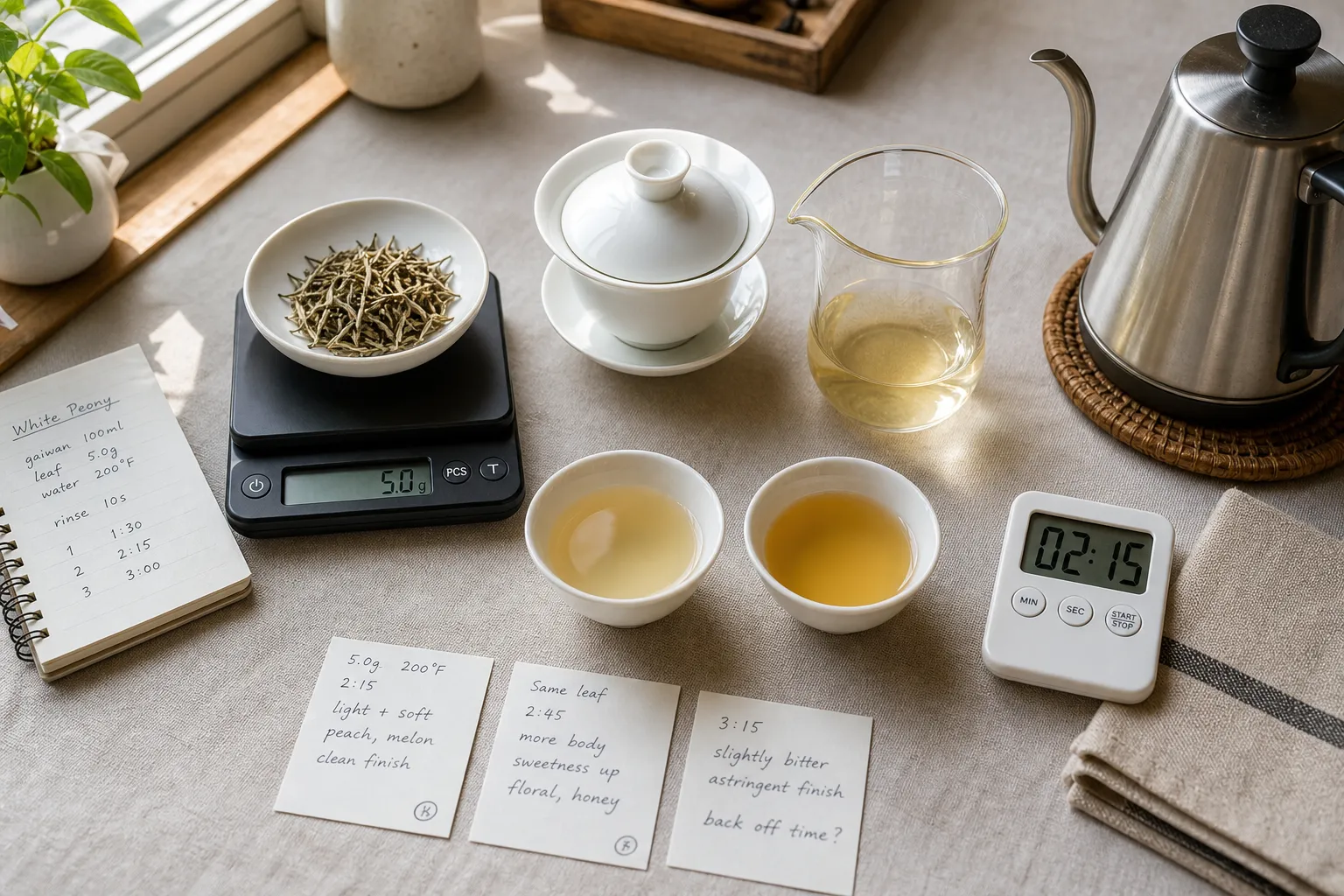
Brewing white tea is not about finding one perfect recipe. It is about learning how leaf amount, water heat, steeping time, vessel size, and taste feedback work together.
If a cup tastes pale and thin, it often needs more leaf, more time, warmer water, or less water. If it tastes harsh, sharp, or drying, it usually needs less extraction pressure: a shorter steep, slightly cooler water, fewer leaves, or a cleaner separation between leaf and liquor.
Because this page does not have a usable public source set for exact brewing numbers, it does not present precise temperatures, ratios, or steeping times as verified rules. Treat the guidance here as a practical framework: start reasonably, taste carefully, change one variable, and let the next cup improve.
Start With the Leaf, Not the Recipe
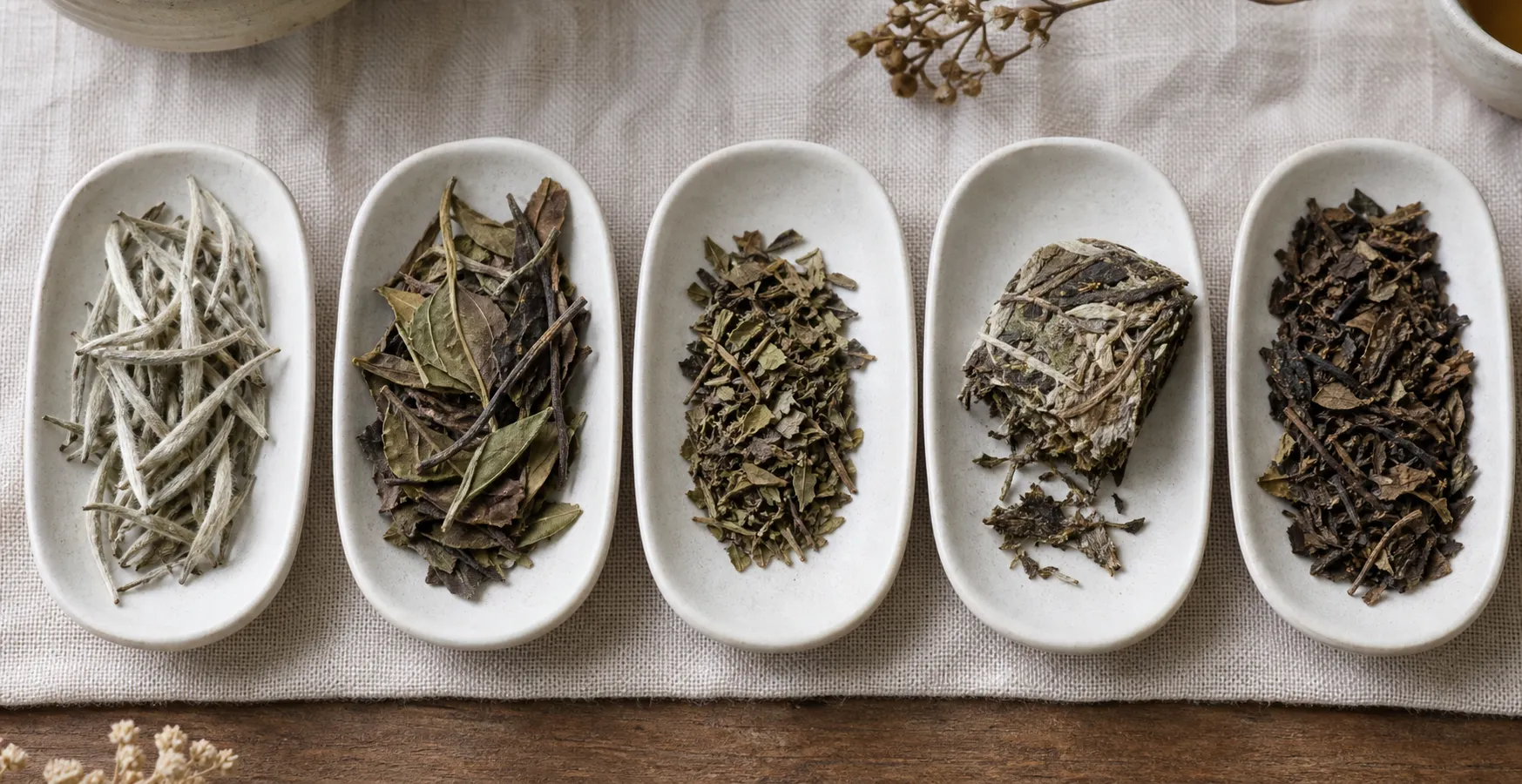
White tea can be bud-heavy, leafy, fluffy, broken, compressed, young-looking, darker with age, or mixed in appearance. Those differences matter more than a universal instruction.
A fine, fluffy tea can look generous while weighing very little. A denser broken-leaf tea can release flavor quickly. A compressed piece may begin quietly, then open over several infusions. A darker or older-looking tea may need direct tasting rather than assumptions based on age language.
Before brewing, ask:
- Are the leaves mostly buds, open leaves, stems, small pieces, or a compressed chunk?
- Do they look pale and fresh, darker and aged, or mixed?
- Are they bulky and airy, or compact and dense?
- Are you making one mug, repeated small infusions, a shared pot, or a chilled brew?
- Did the last cup taste thin, harsh, flat, grassy, heavy, or balanced?
Those questions do more useful work than a rigid “right” temperature. White tea brewing temperature and white tea steeping time matter, but they are dials, not commandments.
| If the cup tastes like this | Try first |
|---|---|
| Thin or watery | Use more leaf, less water, a longer steep, or a smaller vessel |
| Harsh or drying | Shorten the steep, lower the heat slightly, or use less leaf |
| Flat or dull | Try slightly warmer water, fresher water, or more leaf |
| Grassy or sharp | Reduce heat or shorten the first steep |
| Heavy or stewed | Use less leaf, pour sooner, or separate leaf and liquor more cleanly |
| Pleasant but faint | Keep the method and increase leaf amount slightly |
The central habit is simple: brew, taste, adjust. White tea rewards attention because small changes can shift aroma, sweetness, body, and finish.
Why White Tea Is Easy to Misbrew
White tea is often described with gentle words: soft, floral, hay-like, honeyed, mellow, clean, delicate. Those words can help set expectations, but they can also make beginners too cautious. Very little leaf, cool water, and a short steep can produce a cup that tastes like warm scented water.
The opposite mistake is treating white tea like a robust black tea: a large mug, a long steep, and no attention to when the liquor has enough presence. That can make the cup dry, rough, or flat.
Both mistakes come from assuming white tea has one personality. It does not. The same category includes light bud teas, leafier styles, compressed pieces, broken material, young teas, and darker teas with storage history. Brewing white tea confidently begins with noticing which one is in front of you.
The Main White Tea Brewing Variables
The easiest way to improve is to change one variable at a time. If you change leaf amount, water heat, steeping time, and vessel together, the next cup may improve, but you will not know why.
| Variable | What it changes | When to increase it | When to reduce it |
|---|---|---|---|
| Leaf amount | Concentration, aroma, body, finish | Cup is pleasant but faint, watery, or too light | Cup feels crowded, rough, heavy, or drying |
| Water heat | Speed and force of extraction | Cup is dull, muted, or under-extracted | Cup is sharp, grassy, or drying |
| Steeping time | How long extraction continues | Cup is thin or the leaves have barely opened | Cup is heavy, flat, rough, or overdone |
| Vessel size | Ratio of leaf to water | Tea is weak in a large mug or pot | Tea is too intense in a small vessel |
| Leaf separation | When extraction stops | You need more control | Leaves keep sitting in hot water after the cup is ready |
| Water quality | Clarity and freshness of taste | Tea seems dull across several attempts | Water tastes unpleasant before tea is added |
Leaf Amount
Leaf amount is the strength dial. More leaf usually brings more aroma, body, and flavor. Too much leaf can make the cup feel crowded or drying, especially with a long steep.
Volume can mislead. Fluffy leaves may fill a spoon but brew lightly. Smaller or broken leaves may look modest but release quickly. If you have a scale, weighing can make repeat brewing easier. If not, use your own cup as the reference: add a little more or less next time and compare.
If the tea tastes pleasant but faint, increase leaf before making the steep much longer. If it tastes strong but rough, reduce leaf before blaming the tea.
Water Heat and Steeping Time
Water heat and steeping time should be considered together. Warmer water with a short steep can be gentler than cooler water left too long. A lower-heat brew can still become flat or heavy if the leaves sit for an extended period. A hotter brew can taste lively when poured quickly.
A temperature-control kettle can help with consistency, but it is not required. You can let boiled water rest briefly before pouring, or use a repeatable routine that helps you learn from each session. The goal is not laboratory precision. The goal is enough consistency to understand the cup.
A useful rule of thumb:
- If you increase heat, consider shortening time.
- If you reduce heat, you may need more time or more leaf.
- If the cup is thin, strengthen extraction gradually.
- If the cup is harsh, reduce extraction pressure gradually.
Vessel and Pouring
The vessel affects water volume, heat retention, leaf movement, and pouring speed. A small gaiwan or teapot supports short repeated infusions. A mug or larger teapot usually uses more water and a longer steep. A basket infuser gives leaves more room than a cramped tea ball. A pot that pours slowly can keep extracting while you serve.
A vessel is not just a container. It is part of the brewing method.
- Did the leaves have enough room to open?
- Could you remove or separate the leaves when the steep was done?
- Did the vessel hold more water than the leaf amount could support?
- Did the last cup pour stronger than the first because the pour was slow?
Water
White tea does not hide unpleasant water well. If several careful attempts taste flat, dull, or oddly heavy, try a different water source before changing every other variable.
Freshly heated water, clean vessels, and water that tastes good on its own are sensible starting points. This page does not make broad chemistry claims; it simply treats water as one of the quiet variables that can change the cup.
Choosing a White Tea Brewing Method
No method owns white tea. Each gives a different level of control.
| Method | Best when you want | Watch for |
|---|---|---|
| Gongfu white tea | Short repeated infusions, close aroma changes, small cups | Too much leaf or slow pouring can make early infusions intense |
| Western brewing white tea | A practical mug, infuser, or teapot | Too little leaf or too much water can make the cup thin |
| Cold brew white tea | A softer chilled drink prepared ahead | Too little leaf or too short a brew can taste faint |
| Leaves-in-cup brewing | Casual sipping with the leaves visible | Strength changes while leaves stay in the cup |
| Thermos brewing | Warm tea on the move | Long contact with hot water can become heavy |
Gongfu brewing is useful when you want to read the leaf closely. A smaller vessel, more leaf relative to water, and short infusions make changes easier to notice: fragrance, texture, sweetness, body, and how compressed leaves open over time. It also magnifies mistakes, so pouring speed and leaf amount matter.
Western-style brewing is often the easiest daily method. A mug, roomy infuser, or small teapot can make a clear and satisfying cup without much ceremony. The main needs are enough leaf, enough room for expansion, and a way to stop extraction when the tea tastes ready.
Cold brew white tea changes the pace. Cool water extracts slowly and can produce a softer chilled cup, though the result depends on leaf style, water amount, time, and storage conditions during brewing. Since this page does not have sourced parameters, treat cold brew timing and ratios as adjustable rather than fixed.
Leaves-in-cup brewing can be relaxed and visually pleasing. Leaves float, sink, open, and continue changing the liquor. It is less precise, so it is better for casual drinking than diagnosing a brewing problem.
Fixing Common White Tea Brewing Problems
Most problems can be improved without replacing the tea. First, name what is wrong. “Bad” is too vague. Thin, harsh, flat, grassy, muted, stale, and heavy each point toward a different adjustment.
| Problem | What it may mean | Best first moves |
|---|---|---|
| Thin | Too little leaf, too much water, too short a steep, or leaf not opened yet | Add leaf, reduce water, steep slightly longer, or use a smaller vessel |
| Harsh or drying | Heat, time, and leaf amount are too strong together | Pour sooner, lower heat slightly, use less leaf, or improve leaf space |
| Flat | Under-extraction, tired water, cooling too fast, or leaf/storage issue | Try warmer water, more leaf, fresher water, or a warmed vessel |
| Grassy or sharp | Extraction is too forceful for that leaf | Shorten the steep, lower heat, or use less leaf |
| Heavy or stewed | Leaves stayed in hot water too long | Pour fully, remove the infuser, shorten time, or use less leaf |
| Uneven across steeps | Leaf opens slowly or extraction is inconsistent | Let compressed tea open, pour evenly, and avoid judging by the first steep alone |
Do not fix everything at once. If a cup is harsh and you reduce leaf, lower heat, and shorten time all together, the next cup may become weak. Choose one main change, then taste again.
Reading the Leaf Before You Brew
A quick look and smell can prevent many mistakes.
| Leaf appearance | Brewing clue |
|---|---|
| Whole, fluffy, bud-heavy | May need more measured leaf than it appears; give it room to open |
| Leafier material | May show more body and structure; test heat and time rather than assuming fragility |
| Broken or small pieces | Often extracts quickly; shorten time or reduce heat if it becomes sharp |
| Compressed white tea | May start light and strengthen as it opens; avoid overcorrecting after the first infusion |
| Darker or aged-looking tea | Evaluate aroma, liquor, body, and finish directly; do not rely on age language alone |
Age and storage deserve care. Brewing can show whether you enjoy a tea, but it cannot verify every market claim. If a seller’s age or storage description matters to a purchase, check it alongside leaf appearance, aroma, packaging context, and the detail provided by the seller.
A Simple Beginner Path
If you are new to brewing white tea, do not begin with too many moving parts. Start with a repeatable method, then make one change at a time.
First Session
Make a Straightforward Cup
Choose a mug, roomy infuser, or small teapot that lets the leaves expand. Use enough leaf that the bottom is visibly covered, but not so much that the infuser is packed tight. Use water that feels appropriate to the leaf: gentler for very delicate-looking material, warmer if previous cups have been dull or weak.
Steep, taste, and remove the leaves when the cup has enough presence.
- Leaf amount: light, medium, heavy, or weighed if available
- Heat impression: cooler, moderate, or warmer
- Result: thin, balanced, harsh, flat, strong, aromatic, or heavy
That small note is more useful than copying a recipe you cannot adjust.
Second Session
Change One Variable
Repeat the same tea. If the first cup was thin, add more leaf or steep longer. If it was harsh, shorten the steep or use slightly cooler water. If it was flat, try warmer water or fresher water. If it was pleasant but faint, increase leaf rather than pushing time too far.
This is how practical white tea brewing improves: not by memorizing rules, but by seeing cause and effect in your own cup.
Third Session
Try a Different Vessel
Once you have a decent mug brew, try the same tea in a smaller vessel if you have one. Use more leaf relative to water and pour shorter infusions. Notice whether aroma becomes clearer, body changes, or the tea becomes easier or harder to control.
If the small-vessel session feels too intense, reduce leaf next time. If it feels interesting but uneven, work on pouring speed and timing.
Useful Tasting Words for Adjustment
You do not need formal tasting language. Plain words are enough if they help you choose the next move.
| What to describe | Useful words |
|---|---|
| Aroma | Floral, hay-like, sweet, woody, warm, faint, stale |
| Body | Thin, round, silky, heavy, light |
| Finish | Clean, dry, sweet, rough, lingering, short |
| Balance | Quiet, bright, soft, sharp, full, dull |
These words prevent a common mistake: calling every disliked cup “bitter.” The real issue may be thinness, dryness, flatness, overconcentration, stale aroma, or a mismatch between the tea and your taste.
Common Mistakes
White tea can be simple. Many problems come from vague premium language, habits borrowed from other teas, or recipes followed without observation.
| Mistake | Better approach |
|---|---|
| Using too little leaf because the tea looks delicate | Delicate-looking tea still needs enough material to flavor the water |
| Letting leaves sit after the cup tastes ready | Remove the infuser, pour fully, or separate leaf and liquor |
| Treating temperature as the only important variable | Think in combinations: heat, time, leaf amount, vessel, and water |
| Copying gongfu habits into a mug | Match leaf amount and steeping time to the vessel size |
| Expecting every white tea to taste the same | Brew for balance first, then decide whether you like that tea’s character |
| Using market language as brewing evidence | Let appearance, aroma, and infusion behavior guide the cup |
Words such as old, rare, handmade, mountain, premium, or traditional may provide context, but they do not tell you exactly how to brew the tea. The leaf in the vessel gives better feedback.
A Calm Brewing Checklist
Before brewing
- Match vessel size to leaf amount.
- Give whole leaves room to open.
- Use water that tastes clean to you.
- Decide whether you want one mug, repeated small infusions, or a cold brew.
- Avoid changing every variable at once.
During brewing
- Watch how quickly the liquor gains color and aroma.
- Smell the cup before judging only by taste.
- Pour or remove the leaves when the cup has enough presence.
- Notice whether later steeps become stronger as the leaf opens.
After brewing
- Name the result in one or two words.
- Choose one adjustment for next time.
- Keep the change small enough to learn from.
- Repeat with the same tea before deciding the method failed.
This checklist is intentionally plain. Brewing improves when the process is observable.
How This Root Page Connects to Deeper Guides
This page is the map. Deeper guides can focus on narrower questions when more detailed support is available.
| Next guide | Use it when | Main question |
|---|---|---|
| White Tea Brewing Temperature and Steeping Time | You want clearer control over heat and duration. | How do water heat and steep length change flavor, aroma, body, and dryness? |
| Gongfu Brewing White Tea | You want repeated short infusions in a gaiwan or small teapot. | How do leaf amount, vessel size, pouring speed, and infusion sequence shape the session? |
| Western-Style White Tea Brewing | You want a practical mug, infuser, or teapot method. | How do you make white tea taste clear and full without turning it heavy? |
| Cold Brew White Tea | You want a chilled, softer cup prepared ahead. | How do leaf type, water amount, and time affect a cool extraction? |
| Adjusting White Tea Taste | Your cup is thin, harsh, flat, grassy, muted, or too strong. | Which variable should you change first? |
The deeper pages should carry more specific examples and parameters when the source base supports them. This root page stays broader: it gives the brewing logic, the diagnostic path, and the vocabulary for making better decisions.
What This Page Leaves Open
Some topics need restraint because the supplied research material for this page contains no usable public references. That does not make the guidance empty. It means the article should stay practical, observable, and adjustable rather than overconfident.
This page does not establish verified numbers for:
- Exact white tea brewing temperature ranges
- Exact white tea steeping time windows
- Fixed leaf-to-water ratios
- Gongfu parameters by vessel size
- Western brewing ratios by mug or teapot size
- Cold brew timing by leaf type
- Vessel material effects
- Grade-by-grade extraction behavior
- Aged white tea storage outcomes
- Caffeine, antioxidants, or wellness-related outcomes
Precise numbers can be useful when they are grounded and explained. Unsupported precision can be misleading because it teaches the reader to blame themselves when the tea, vessel, water, or leaf amount does not match the recipe.
For this page, the stronger approach is to use visible feedback: dry leaf appearance, aroma, liquor strength, mouthfeel, finish, and how the leaf behaves across steeps.
White tea is sometimes discussed in wellness-oriented language, but this brewing guide does not make outcome promises. Brewing choices can change taste, aroma, body, and strength in the cup. They should not be framed as a substitute for higher-stakes care or as a route to assured personal results.
Build Your Own White Tea Brewing Notes
You do not need a formal tasting journal. A few repeatable notes can make the next brew easier.
| Session note | What to record |
|---|---|
| Tea form | Bud-heavy, leafy, broken, compressed, darker, mixed |
| Vessel | Mug, basket infuser, teapot, gaiwan, glass, thermos |
| Leaf amount | Light, medium, heavy, or weighed amount if available |
| Heat impression | Cooler, moderate, warmer |
| Steep pattern | Short, medium, long, repeated, left in cup |
| First result | Thin, balanced, sharp, flat, heavy, sweet, aromatic |
| Next change | More leaf, less leaf, warmer water, cooler water, shorter steep, longer steep |
After three sessions with the same tea, patterns usually become visible. You may notice that it needs more leaf than expected, that it dislikes long mug steeps, that it opens slowly when compressed, or that it becomes clearer with a different water source.
A simple practice session works well:
- Brew the tea normally and describe the result.
- Brew it again with a little more leaf and keep everything else similar.
- Return to the first leaf amount and change steeping time.
By the end, you will know whether that tea responds more clearly to concentration or time. Later, test heat.
Not every tea will become your favorite. If you have tried more leaf, less leaf, warmer water, cooler water, shorter time, longer time, and a different vessel, and the cup still feels dull or unpleasant, it may simply not suit your taste. Brewing skill can reveal a tea more clearly, but it cannot turn every tea into the same ideal cup.
The root lesson stays the same across all white tea brewing methods: leaf style, water heat, steeping time, vessel, and taste feedback work together. Start with a reasonable method, taste honestly, change one variable, and let the next cup teach you what the recipe could not.