
About whiteteaaura
Editorial Team
whiteteaaura is maintained through a small editorial workflow led by site editor Mara Ellowen. The work is organized around practical white tea questions: how a reader chooses a first Silver Needle, why a White Peony brew may taste thin, what storage conditions can change an aged Shoumei cake, or how to read origin and harvest notes without treating them as proof by themselves.
The editorial desk is intentionally modest. It does not present itself as a committee, institute, tasting panel, or certifying body. Pages are built from reader tasks, observable tea variables, careful comparison language, and revisions when a guide needs clearer boundaries or better examples.
How topics are chosen
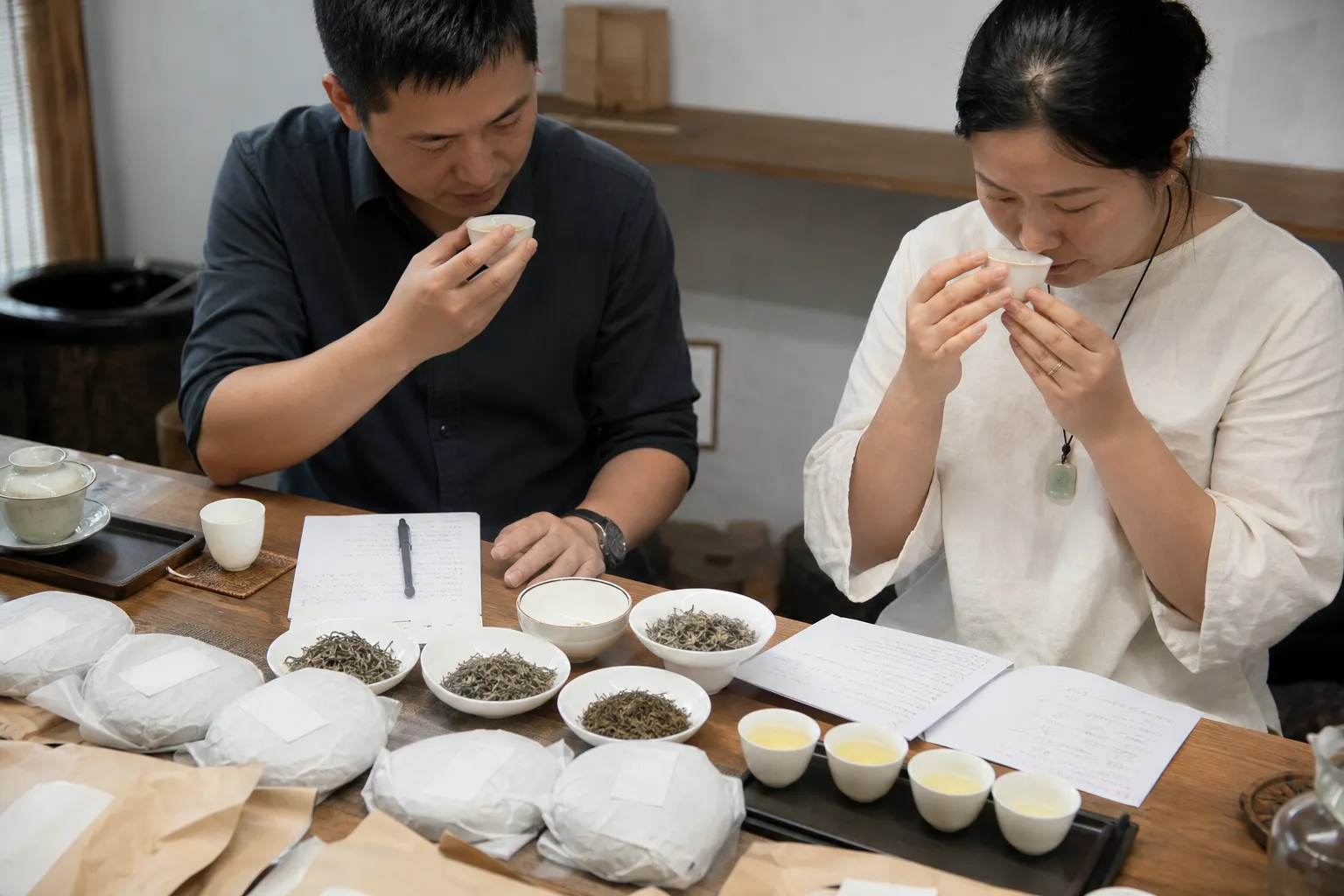
Topic selection starts with a reader’s next decision rather than a broad encyclopedia outline. A page may begin with a brewing problem, a variety comparison, a storage concern, a processing step, or a buyer cue that needs cautious wording. If a subject cannot be tied back to real leaves, vessels, time, temperature, aroma, appearance, storage, or seller context, it is usually narrowed before drafting.
Steep log
Drafts stay close to the cup
Brewing guidance names variables such as leaf ratio, vessel, water temperature, steep time, and cup interval. Sensory notes are written as recognition cues, not fixed outcomes every reader must taste.
Origin note
Claims are kept within bounds
Age, origin, storage, wellness-adjacent, and market-related statements are checked for overreach. The site prefers words such as “often,” “can,” and “may suggest” when the evidence depends on context.
Leaf set
Comparisons avoid false certainty
Variety guides compare Silver Needle, White Peony, Gongmei, and Shoumei through appearance, processing, brewing behavior, and likely flavor direction without turning labels into guarantees.
Aging wrapper
Older pages are revisited
Existing guides may be tightened when a storage note needs more caution, a brewing example can be clearer, or a buyer cue should be separated from stronger evidence.
What the team page means in practice
“Editorial team” refers to the site’s working method: selecting useful white tea questions, grouping notes by variety and task, checking wording for cautious boundaries, and revising pages when better explanations are available. It should not be read as an external board, formal review panel, or regulated assurance process.