
Beginner foundation
White Tea Basics
White tea basics start with one practical correction: white tea is made from the tea plant, Camellia sinensis. It is not a caffeine-free herbal infusion, and it is not defined by being pale in the cup.
A beginner does not need to memorize every grade name at once. Start with the tea in front of you: the dry leaf, the aroma before brewing, the amount of leaf in the vessel, the water temperature, the steeping time, the texture of the cup, and the way the finish lingers or turns dry. Those clues will teach you more than a label that only says “rare,” “ancient,” or “premium.”
White tea can be soft, floral, honeyed, grassy, hay-like, fruity, woody, rounded, or lightly brisk. It can be loose or pressed, bud-heavy or leaf-forward, fresh-tasting or stored for years. The category is gentle in reputation, but it is not one single flavor, one single caffeine level, or one automatic quality tier.
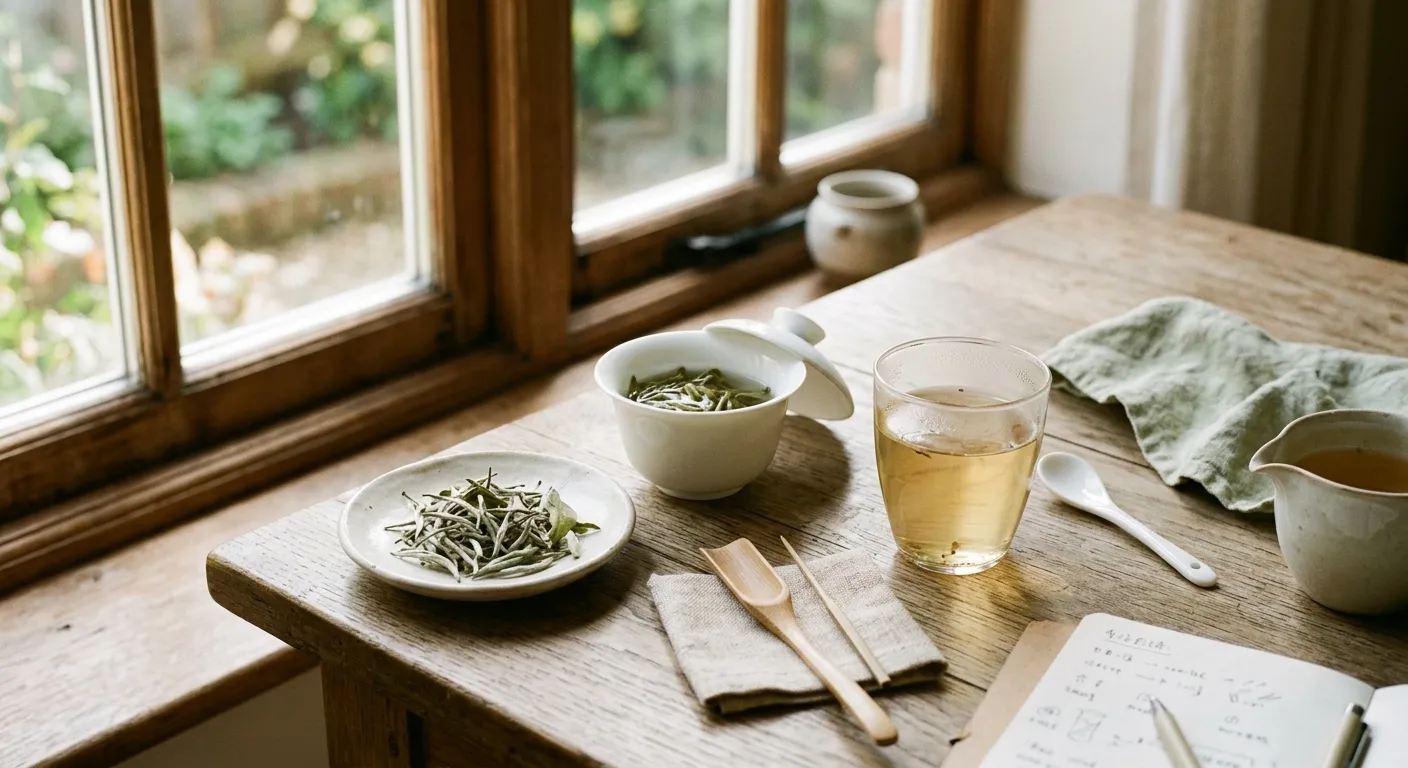
A Quick Map of White Tea
White tea is easiest to learn as a set of connected questions.
What is white tea?
Look at first: Tea plant material, category language, processing description.
Why it matters: It separates real tea from herbal infusions, scented blends, and loose marketing use of the word “tea.”
What does white tea taste like?
Look at first: Dry aroma, liquor color, sweetness, body, finish, astringency.
Why it matters: White tea can be delicate, but it is not always thin or identical across styles.
Does white tea have caffeine?
Look at first: Leaf amount, bud-and-leaf material, steeping time, water temperature, serving size.
Why it matters: White tea should be assumed to contain caffeine, even when it tastes mild.
How should I brew it?
Look at first: Vessel size, grams of leaf, water heat, time, re-steeping behavior.
Why it matters: Small changes can move the cup from faint to fragrant, or from sweet to drying.
What should I believe on a label?
Look at first: Seller detail, storage smell, wrapper context, age and origin wording.
Why it matters: Labels can help, but they do not prove quality by themselves.
The public sources used for this page are strongest as guardrails rather than as a complete white-tea tasting manual. They support broad points: tea categories can be classified, tea can contain caffeine and polyphenolic compounds, caffeine response varies by person, and health-adjacent claims should stay modest. The tasting, brewing, storage, and buying guidance below is therefore written as practical beginner orientation tied to observable leaf and cup signals.
What Is White Tea?
White tea is a type of tea made from Camellia sinensis, the same plant used for green, black, oolong, and other true teas. That distinction matters because everyday language often calls many drinks “tea.” Chamomile, peppermint, rooibos, and fruit infusions may be brewed like tea, but they are not white tea unless actual tea leaves are part of the product.
International tea classification recognizes white tea as a tea type. That helps place it within the wider tea family. It does not, however, verify that a specific product is well made, correctly labeled, properly stored, or from the exact place a seller names.
White tea is also not simply “tea that looks pale.” A pale liquor can come from low leaf amount, cool water, short steeping, a mild tea style, or weak brewing. A deeper color can come from older material, leafier grades, stronger steeping, storage, or compression. The cup color matters, but it is not the definition.
A more useful beginner definition
- It comes from the tea plant.
- It is commonly associated with withering and drying, with less aggressive handling than many teas drinkers first meet.
- It may include buds, young leaves, larger leaves, or a mixture.
- Its dry color can be silvery, greenish, olive, brownish, mixed, or darker with age and storage.
- Its brewed liquor can range from pale straw to gold, amber, or deeper tones.
White tea is broader than silver buds. Many beginners first encounter bud-heavy teas with downy, silvery leaves, but the category also includes bud-and-leaf teas, leafier styles, loose teas, pressed cakes, fresh teas, and teas sold with age claims. That range is why sweeping statements about white tea taste or white tea caffeine often mislead.
What Does White Tea Taste Like?
White tea often gives a softer first impression than roasted teas, heavily oxidized teas, or strongly vegetal green teas. Common tasting notes include honey, dried flowers, warm hay, melon, pear skin, herbs, straw, grain, light wood, or dried fruit. These are possibilities, not promises.
A better way to learn white tea taste is to separate the cup into parts.
Dry leaf aroma
The smell before brewing. Is it sweet, floral, grassy, hay-like, fruity, woody, stale, smoky, damp, or flat?
Liquor color
The brewed liquid. Does the color match the strength of the cup, or is the tea pale but still aromatic?
Body
Mouthfeel. Is it airy, silky, rounded, broth-like, thin, or heavy?
Sweetness
Natural impression, not added sugar. Does sweetness show as honey, fruit, grain, flowers, or a soft aftertaste?
Astringency
Drying or gripping sensation. Does the finish feel clean, lightly brisk, or too drying?
Finish
What remains after swallowing. Does aroma return, fade quickly, turn sweet, or become rough?
Two beginner mistakes are especially common.
The first is brewing too weakly and assuming the tea has no flavor. If the cup tastes like warm water, check the variables before blaming the tea: leaf amount, water heat, steeping time, vessel size, and whether the dry leaf smelled lively before brewing.
The second is overcorrecting. More leaf, hotter water, and longer steeping can bring out body and aroma, but they can also increase bitterness, roughness, or dryness. If a cup becomes sharp, adjust one variable at a time instead of changing the whole method.
Does White Tea Have Caffeine?
Yes. White tea should be assumed to contain caffeine.
The amount in a specific cup can vary, so this page does not give a fixed number for “white tea caffeine.” Caffeine depends on the tea material, amount used, water temperature, steeping time, serving size, number of infusions, and personal response. General caffeine guidance also makes an important point for tea drinkers: people vary in how they respond to caffeine.
Do not assume white tea is caffeine-free because it tastes gentle or looks pale. If you need a caffeine-free drink, choose a caffeine-free herbal infusion rather than relying on white tea for that role.
Leaf amount
More leaf in the same vessel usually gives a stronger cup.
Bud-and-leaf proportion
Different grades can brew with different intensity and texture.
Water temperature
Hotter water often extracts faster and can make the cup feel stronger.
Steeping time
Longer contact generally increases extraction.
Vessel size
A small vessel with generous leaf can create a concentrated session.
Number of infusions
Re-steeping spreads the session across several cups.
Time of day
A mild evening cup may still matter for caffeine-sensitive drinkers.
Personal response
Some people notice caffeine more readily than others.
If caffeine is a concern, brew lighter, drink earlier, use smaller servings, and watch your own response. People with pregnancy-related concerns, medical conditions, medication questions, or strong caffeine sensitivity should seek appropriate professional guidance rather than relying on a tea article.
Brewing Variables for White Tea
There is no single perfect recipe for all white tea. A better beginner method is to understand the controls and adjust them deliberately.
White tea brewing depends on leaf amount, water temperature, time, vessel, and the style of tea. The same tea can taste quiet, sweet, full, brisk, or drying depending on how those controls line up.
Leaf Amount
White tea leaves can be bulky, especially when they include large, loose, airy material. A spoonful may be misleading because different teas occupy space differently. Weighing the leaf gives better repeatability, but tasting feedback works too.
If the brew is thin and the dry leaf smelled good, use more leaf next time. If it is too strong or drying, use less leaf or shorten the steep. If the first cup is pleasant but later cups fade quickly, try a slightly larger dose.
Brewing style matters. A Western-style mug or pot usually uses less leaf for a longer steep. A small gaiwan or small teapot often uses more leaf with shorter, repeated infusions. Both can work; they simply create different kinds of sessions.
Water Temperature
Many beginners hear that white tea needs very cool water. Sometimes cooler water helps, especially with delicate bud-heavy teas. But overly cool water can also produce a flat cup, especially with larger leaves, older tea, or compressed material.
Use temperature as an adjustment, not a fixed identity: if the tea is fragrant but sharp, try slightly cooler water; if it is faint and sweet but weak, try warmer water or a longer steep; if a bud-heavy tea becomes drying, shorten the time before dropping the temperature too far; if a leafier tea feels dull, it may need more heat to show body.
The goal is not to force every white tea into one number. The goal is to notice whether heat is helping aroma and sweetness or pushing the finish toward roughness.
Time and Re-Steeping
Time changes the cup quickly. A mild tea may become rounded with a longer steep; a fragrant cup may become drying if left too long.
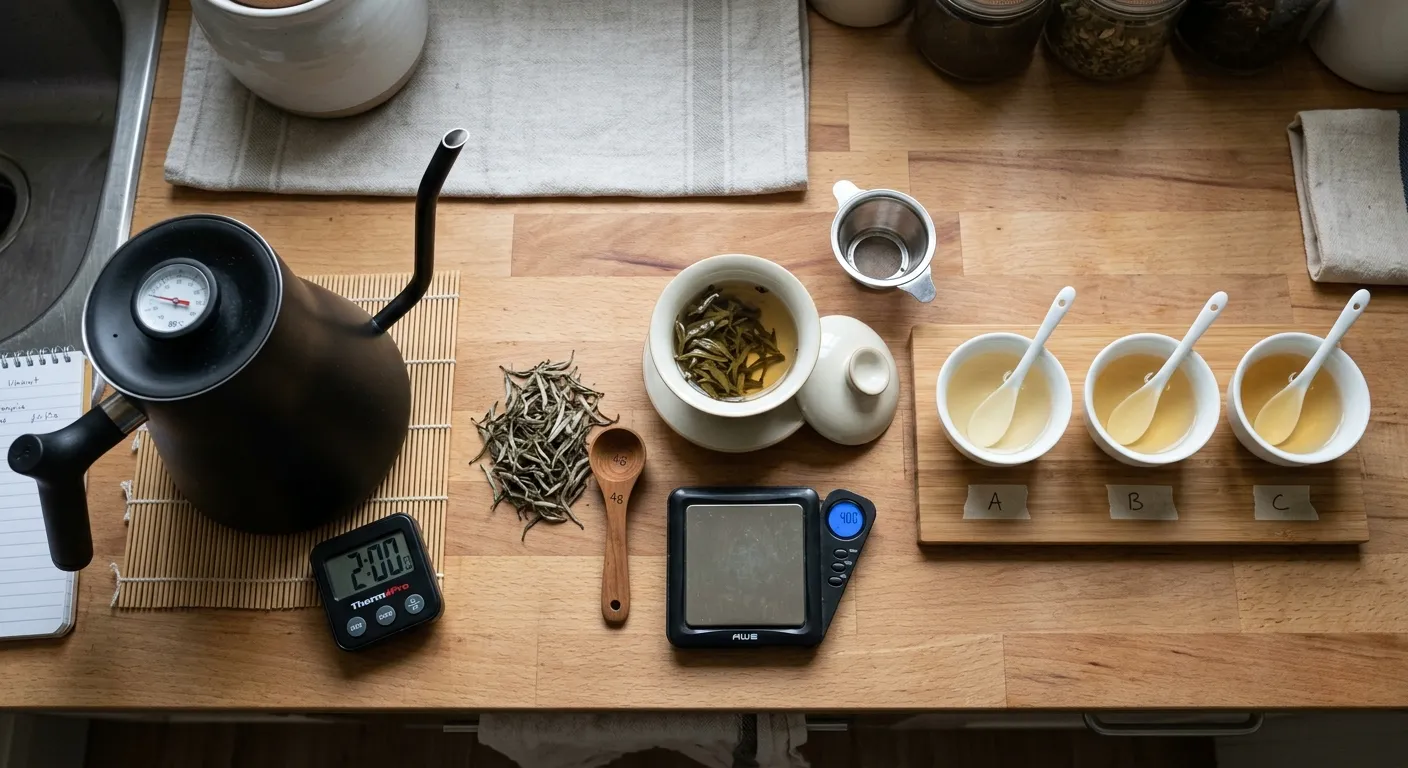
For a useful first test, keep the leaf amount, vessel, and water temperature the same. Change only the steeping time. Taste how the body, sweetness, and finish move.
White tea often has more to offer after the first infusion, especially when brewed with enough leaf. Later steeps may become sweeter, softer, fruitier, more woody, or lighter. Use the leaves as cues: if the wet leaf still smells good and is only beginning to open, another infusion is worth trying. If the cup turns hollow and the wet leaf smells spent, stop.
Re-steeping is not a contest. The useful question is whether the next cup is still enjoyable.
Choosing White Tea Without Overtrusting Labels
A beginner does not need to decode every grade name immediately. It is more useful to combine label information with what you can observe: dry leaf appearance, aroma, seller context, storage condition, and the brewed cup.
Labels can mention harvest style, origin, grade, year, cultivar, processing notes, or whether a tea is loose or pressed. Those details may help. They are not proof by themselves.
Dry leaf appearance
It can show bud-heavy, bud-and-leaf, leaf-forward, broken, compressed, dusty, downy, lively, or dull material. Pretty leaves do not automatically mean better tea.
Dry aroma
It may suggest sweet, floral, hay-like, fruity, woody, clean, stale, damp, smoky, or perfumed notes. A good label cannot fix a flat or tainted smell.
Seller description
Year, broad origin, style, storage notes, plain vs scented, and brewing suggestions can help. Prestige words alone do not prove quality.
Storage smell
Check whether the tea has absorbed cupboard, incense, plastic, basement, spice, or pantry odors. Age language does not outweigh poor storage smell.
Cup behavior
Body, sweetness, finish, astringency, and re-steeping strength matter. One weak brew may reflect method, not only tea quality.
Dry aroma is often more revealing than visual grade language. Fresh or well-kept white tea may suggest sweetness, dried flowers, hay, fruit, grain, herbs, or clean wood, depending on style and age. Concerning smells include mustiness, damp cardboard, sourness, heavy perfume from nearby storage, stale dust, or smoke that seems out of place.
Seller context matters most when the description gives you something to inspect. Useful details might include tea type, harvest or production year, loose or compressed form, broad origin, storage notes for older tea, whether the tea is scented or plain, and brewing suggestions that read as guidance rather than certainty.
Be cautious with language that leans heavily on status: “old,” “rare,” “premium,” or region names may be meaningful, but they should be checked alongside appearance, aroma, storage context, and cup behavior.
Age, Storage, and Origin Claims
White tea is often sold with age and origin language. These can be part of the tea’s identity, but they are also areas where beginners should slow down.
A tea can be older, stored, regional, traditional, rare, or special. The question is whether the claim is supported by context you can inspect.
Age Claims
Aged white tea can be appealing, but age is not automatic quality. An older tea can be clean, sweet, woody, mellow, flat, stale, damp-smelling, or poorly stored. Time alone does not make a tea better.
- Look for a stated year or approximate period.
- Check whether the tea is loose or pressed.
- Consider storage context, wrapper or packaging information, dry leaf aroma, and wet leaf aroma after the first steep.
- Ask whether the cup tastes clean and coherent, and whether the price seems based only on age language.
If the only argument is “older is better,” keep expectations modest. A younger tea that smells clean and brews well may be a better beginner choice than an older tea with unclear storage.
Storage
Storage affects ordinary drinking tea, not only collector tea. White tea can absorb surrounding odors, and poor storage can flatten or distort the cup.
- Keep tea away from strong odors.
- Avoid damp conditions.
- Limit unnecessary air exposure.
- Keep it away from direct sunlight.
- Avoid frequent temperature swings when possible.
- Separate scented teas from plain teas.
- Keep packaging clean and closed.
White tea does not need theatrical storage. It needs a clean, stable place. If you buy small amounts for regular drinking, careful everyday storage may matter more than complex aging plans.
Origin Claims
Origin can shape expectation, but it should not become a shortcut for trust. A region name may place a tea in cultural or production context, yet it does not by itself prove authenticity, quality, or flavor.
When you see origin language, ask whether the seller gives enough detail to make the claim understandable. Is the origin connected to processing, harvest, or storage context? Does the leaf appearance fit the description? Does the aroma seem clean and plausible? Is the origin being used to explain the tea, or only to raise its status?
For beginners, origin is one clue among several. Let the brewed cup stay part of the evaluation.
White Tea vs Green Tea
White tea vs green tea is a useful comparison because both come from the tea plant and both can look light in the cup. They are not the same category, and one is not universally better than the other.
White tea
True tea made from Camellia sinensis, often described through withering and drying with relatively light handling. It may taste floral, hay-like, honeyed, fruity, soft, woody, rounded, or lightly brisk. It can be gentle, but still changes with dose, heat, and time. Assume it contains caffeine. Clean, dry, odor-free storage matters, and age claims need context.
Green tea
True tea made from Camellia sinensis, often associated with heat steps that shape its green character. It may taste grassy, vegetal, marine, nutty, brisk, sweet, or fresh depending on style. Some styles can become sharp quickly when brewed too hot or too long. Assume it contains caffeine. Freshness is often emphasized, though practices vary by tea.
A beginner might choose white tea for soft aroma, layered sweetness, re-steeping, and interest in bud-and-leaf or aged styles. A beginner might choose green tea for brighter vegetal flavors, fresh aromatics, and familiar daily drinking styles.
If you enjoy green tea but find some styles too grassy or sharp, white tea may offer a softer route. If you enjoy white tea but want brighter vegetal intensity, some green teas may suit you better. Your preferred cup matters more than ranking the categories.
White Tea Benefits and Limits
White tea is often discussed in wellness language because tea contains compounds such as caffeine and polyphenolic compounds, and because tea has a long history as a daily drink. That context can be interesting, but it should not become the main promise of a beginner guide.
A careful view separates three things:
- Enjoyment and routine — You may value white tea because it tastes good, invites slower attention, and fits a daily ritual.
- General composition — Tea can contain caffeine and polyphenolic compounds, but composition does not equal a specific result from one cup or one category.
- Stronger outcome language — Claims about specific health results need a much higher level of support than a label, tradition, or general article about another tea category can provide.
The most useful beginner position is modest: drink white tea because you enjoy the aroma, texture, culture, and learning process. Read wellness language as background, not as a promise.
Caffeine is the most practical health-adjacent issue for many readers. A cup that feels gentle to one person may feel too stimulating to another, especially if brewed strong or consumed late in the day. Pay attention to total tea and coffee intake, serving size, steeping strength, timing, and your own response.
A Beginner’s First White Tea Session
Before brewing
Look at the dry leaf. Is it mostly buds, buds with leaves, or larger leaves? Is it loose or compressed? Does it smell fresh, sweet, floral, hay-like, fruity, woody, flat, smoky, damp, or dusty?
If the tea is compressed, break or pry a piece carefully so you get a mix of outer and inner material when possible. Avoid crushing it into dust. Small fragments extract faster and may make the cup stronger or more astringent.
During brewing
Choose a vessel you can repeat: a small pot, gaiwan, mug infuser, or simple cup method. The exact vessel matters less than consistency.
- Use a moderate amount of leaf rather than an extreme dose.
- Use hot water that does not push the session too aggressively from the start.
- Keep the first steep controlled.
- Smell the wet leaf after pouring.
- Taste before adding anything.
- Notice body, sweetness, aroma, dryness, and finish.
If the cup is too light, increase leaf, time, or temperature next time. If it is too sharp, reduce one of those variables. Make one change at a time.
After the first cup
Try another infusion if the wet leaf still smells good. Many white teas reveal more after the leaves open. Later cups may show more sweetness, softer body, or a different aromatic direction.
Write down plain notes: leaf amount, vessel, water temperature if known, steeping time, first impression, what changed in later infusions, and whether you would brew it stronger or lighter next time.
A few practical notes will teach you more than a long flavor wheel you never use.
The Main White Tea Styles Beginners Will Encounter
This root page should not turn into a full catalog, but it helps to know why white tea labels differ. Many beginner-facing names point to leaf grade, bud-and-leaf composition, shape, age, or presentation.
Mostly slender buds
May suggest a bud-forward style, often visually delicate. Check aroma, sweetness, and whether the cup has enough body.
Buds plus leaves
May suggest a broader style with more texture potential. Check balance of florals, hay, fruit, body, and dryness.
Larger leaves
May suggest a leaf-forward style that brews fuller. Check clean storage, body, sweetness, and roughness.
Pressed cake
May suggest a compressed form that needs careful breaking. Check storage smell, inner vs outer material, and age claim context.
Darker dry leaf
Age, storage, processing, or leaf material may be involved. Do not assume age or quality from color alone.
Very pale liquor
May come from delicate tea or light brewing. Check leaf amount, time, and aroma before judging.
The same label can vary between producers and sellers. Let the actual tea correct your expectations.
Common Beginner Mistakes
White tea is not difficult, but it is easy to misunderstand because its marketing language often sounds gentle, old, pure, rare, or effortless. The real cup is more specific.
Mistake: Assuming white tea has no caffeine. Better: Assume it contains caffeine and adjust timing, dose, and serving size.
Mistake: Judging only by liquor color. Better: Smell the dry leaf, taste the body, and check the finish.
Mistake: Brewing too weak and blaming the tea. Better: Increase leaf, time, or temperature one at a time.
Mistake: Brewing too hard and calling the tea bad. Better: Reduce time, heat, or leaf amount before deciding.
Mistake: Trusting age claims automatically. Better: Check storage smell, wrapper context, seller detail, and cup cleanliness.
Mistake: Treating origin as proof. Better: Use origin as one clue, not a complete quality judgment.
Mistake: Buying only the prettiest leaves. Better: Attractive buds can be lovely, but leafier teas may offer body and depth.
Mistake: Believing broad wellness promises. Better: Keep the focus on enjoyment, caffeine awareness, and careful wording.
Mistake: Storing tea near spices or scented products. Better: Keep plain tea away from strong odors.
Mistake: Expecting all white teas to taste the same. Better: Compare leaf grade, age, storage, and brewing method before generalizing.
A Simple White Tea Evaluation Checklist
Use this checklist when buying, opening, or brewing a white tea for the first time.
On the label
- Is it clearly described as white tea from the tea plant?
- Is it plain, scented, blended, or flavored?
- Is a year stated, and does the seller explain what that year means?
- Is origin language specific enough to be useful?
- Are brewing suggestions reasonable rather than absolute?
- Does the description rely too heavily on prestige words?
In the dry leaf
- Does it look mostly bud-heavy, bud-and-leaf, or leaf-forward?
- Is there excessive dust or breakage?
- Does the color look lively for the style?
- Does the aroma seem clean?
- Are there signs of damp, stale, perfumed, or storage-tainted smell?
In the cup
- Is the flavor faint, balanced, full, brisk, or drying?
- Is sweetness present?
- Does aroma continue after swallowing?
- Does the body match what you expected from the leaf?
- Do later infusions improve, hold steady, or collapse?
- Would a brewing adjustment likely help?
For age and storage
- Does the tea smell clean when dry and wet?
- Is the age claim supported by seller context?
- Is the storage description clear enough for the price being asked?
- Does the cup taste coherent, or does age language seem to be doing all the work?
Where to Go Next
White tea basics are easiest when you move from the broad map into one focused question at a time.
I want the category explained more clearly.
Best next topic: What Is White Tea. It helps you decide how white tea is defined through tea plant material, processing language, and category boundaries.
I cannot tell whether my cup tastes right.
Best next topic: What Does White Tea Taste Like. It helps you describe sweetness, florals, hay, fruit, body, finish, and brewing-related changes.
I thought white tea was caffeine-free.
Best next topic: Does White Tea Have Caffeine. It helps you understand why white tea can contain caffeine and how dose, time, temperature, and sensitivity affect a session.
I already drink green tea.
Best next topic: White Tea vs Green Tea. It helps you compare processing expectations, flavor, brewing behavior, and use cases.
I hear a lot of wellness language around tea.
Best next topic: White Tea Benefits and Limits. It helps you separate enjoyable routine and general tea composition from stronger claims that need better support.
A practical learning route
- Brew one white tea carefully.
- Adjust leaf amount and steeping time.
- Compare a bud-heavy tea with a leafier tea.
- Store both away from odor and moisture.
- Revisit them after several weeks and note whether aroma changed.
- Read labels more carefully, especially around age and origin.
- Keep health and market language in perspective.
Final Takeaway
White tea is a recognized tea category, a caffeinated drink, and a broad tasting landscape rather than a single pale, delicate cup. The best beginner approach is practical: look at the dry leaf, smell it, brew it with attention to leaf amount, water temperature, and time, then judge the cup by aroma, body, sweetness, astringency, finish, and re-steeping behavior.
Use labels, origin notes, age claims, and wellness language carefully. They can provide context, but they do not replace the evidence in front of you: clean aroma, thoughtful storage, clear seller information, and a cup that makes sense when brewed well. Once those basics are in place, white tea becomes easier to choose, compare, store, and enjoy one session at a time.
Sources
Sources and further reading
Reference links are limited to sources considered suitable for public citation in this page.