
Sourcing framework
White Tea Sourcing and Craft
White tea sourcing and craft is the practical work of reading a tea before you trust its story. A listing may name a region, grade, harvest season, old material, careful handling, or storage history, but none of those details should carry the whole decision alone.
A better first move is to compare the visible leaf, the seller’s description, the aroma, the brewed cup, the storage context, and the price language together. Clear sourcing should make the tea easier to understand. Careful craft should show up in the leaf and the cup, not only in polished wording.
This root guide gives a buying and tasting framework for white tea sourcing and craft. It does not try to settle every origin, grade, or processing question. Instead, it helps you judge what can be seen, smelled, brewed, and reasonably questioned before you place too much trust in a claim.
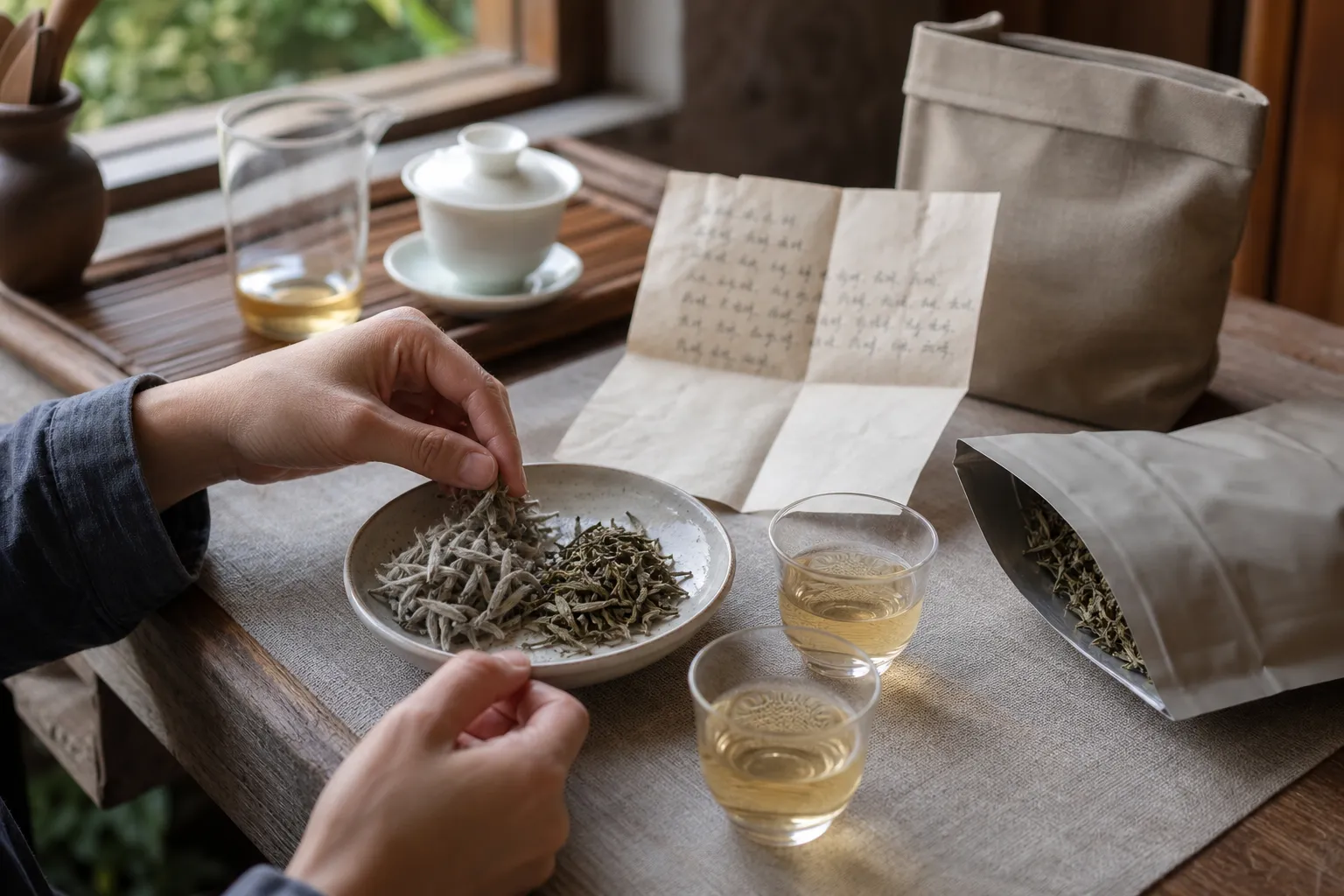
Why Sourcing and Craft Matter
White tea can look simple from the outside: pale leaves, quiet aroma, light liquor, and names that often sound clean or minimal. Buying it is usually less simple. A pouch, cake, or online listing may include origin language, grade names, harvest timing, age notes, cultivar references, flavor promises, and premium positioning.
Some of those details can help. None of them are enough by themselves.
Sourcing points to where the tea is said to come from, how the harvest is described, what the seller knows or chooses to explain, and how much uncertainty remains. Craft points to how the leaves were picked, withered, dried, handled, compressed, stored, and presented. Together, they shape the buyer’s expectations before brewing and the drinker’s judgment after the cup is poured.
Because no verified public references were available for this page, the framework here stays cautious. It avoids exact regional rules, strict grading charts, and firm authenticity checks. The useful approach is simpler: read the tea through several clues at once, keep market language in proportion, and let the cup challenge the story when it needs to.
That matters whether you are choosing loose Silver Needle, comparing White Peony, considering a compressed cake, or trying to understand why one white tea tastes fresh and floral while another feels darker, sweeter, woodier, or more stored.
Read the Leaf, the Story, and the Cup Together
A strong white tea listing should not ask you to believe one impressive phrase. It should give you enough connected details to form a reasonable expectation.
Leaf appearance
Helps read bud-to-leaf ratio, breakage, color range, stems, cleanliness, and rough handling cues. It cannot settle exact origin, age, grade, or overall quality alone.
Aroma
Helps read freshness, storage condition, sweetness, grassiness, fruit, hay, wood, dampness, or dullness. It cannot identify processing method or region by itself.
Infusion behavior
Shows how quickly the tea opens, body, bitterness, sweetness, texture, and staying power. It cannot confirm authenticity or harvest status alone.
Seller context
Includes harvest notes, storage notes, origin description, photos, return clarity, and comparison details. It cannot independently confirm every claim.
Price language
Shows whether the tea is positioned as rare, aged, daily, premium, or collectible. It cannot prove true scarcity or future value.
Wrapper and processing notes
Packaging can give context for cakes, stored tea, or batch identity. Processing descriptions can frame withering, drying, handling, and compression, but they are not complete craft records unless well documented.
The point is not to reject every claim. It is to ask whether the claim has company. A tea with beautiful leaves but vague selling language may still be worth tasting, especially as a sample. A tea with detailed origin notes but flat aroma needs caution. A high-priced cake with strong age language deserves more cross-checking: leaf condition, storage scent, infusion depth, seller history, and whether the story is specific enough to evaluate.
Start With What You Can Observe
Before interpreting big claims, look at the tea itself.
Dry leaves can show whether the material is mostly buds, bud-and-leaf sets, larger mature leaves, broken fragments, or a mixed grade. Color can vary with style, age, storage, and processing, so it should not be used as a simple pass-or-fail test. Still, heavy dust, excessive breakage, dullness without explanation, or a stale smell are reasons to slow down before accepting premium wording.
Aroma is the next practical check. Ask whether the dry leaf smells clean and coherent. Then warm the leaf in a preheated vessel and notice whether it opens into something recognizable. Damp, sour, stale, smoky, or storage-heavy notes are not automatic verdicts, but they deserve attention.
Then brew the tea in a plain, repeatable way. Use a familiar vessel, note the leaf amount, water temperature, steep time, and number of infusions. If a tea is described as delicate but becomes harsh immediately, or described as rich but disappears after one light infusion, the mismatch may matter. It may also be a brewing issue, so adjust one variable before deciding.
Treat Claims as Questions
Origin names, grade terms, old-tree language, wild material language, spring harvest wording, and aged tea descriptions work best as questions to investigate.
- Premium grade: What does the leaf actually look like, and how does it brew?
- Spring harvest: Is there a date range, producer context, or only a phrase?
- Aged: What storage clues, wrapper context, aroma, and infusion behavior support the story?
- Specific origin: Is the place named clearly, and are there details beyond a broad label?
- Hand-crafted: What handling, withering, drying, batch, or material information is described?
- Rare or limited: Does the listing explain why, or is the word doing most of the work?
Seller language can be meaningful. It just should not be treated as the finish line.
Processing Expectations Without Turning Them Into Theater
White tea processing is often described in simple terms, and that can be helpful. The broad expectation is limited handling compared with more heavily shaped tea styles, with withering and drying playing a large role in the finished leaf. But simple wording can hide variation, and this page does not have the source support to define one universal technical sequence.
For a buyer, the useful question is not “Does the listing sound traditional?” It is “Does the processing description explain what I can see, smell, and taste?”
Look for details that connect method to result: leaf material, withering environment, drying approach, batch scale, compression, or storage after processing. A phrase like “carefully made” tells you little on its own. A description that explains why the leaf looks loose, fluffy, darker, greener, more broken, or compressed gives you more to evaluate.
Craft detail helps you understand the tea. Craft theater asks you to admire it without giving you much to check.
Leaf Material Sets the First Expectation
The picked material shapes the tea before the kettle is warm. A bud-heavy tea will not look, brew, or price the same way as a tea made from broader leaves.
Withering, Drying, and Handling Should Explain the Cup
Withering and drying affect moisture loss, aroma development, texture, and later storage behavior, but vague craft praise still needs to be checked against the cup.
Compression Adds Another Reading Layer
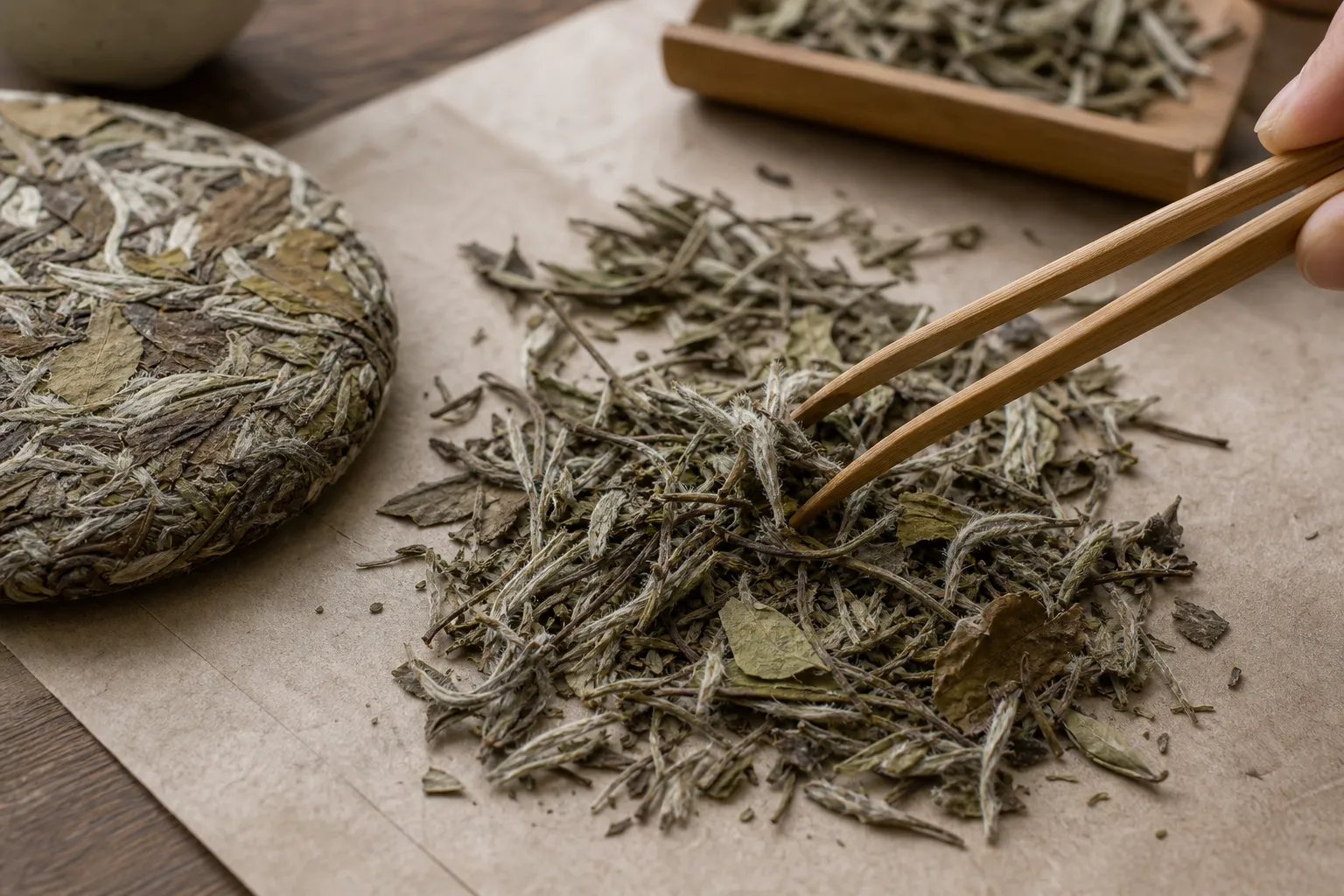
For cakes, the surface, back, edge, loosened leaves, visible inner material, aroma, and infusion life all matter beyond the wrapper.
Bud-heavy material may appear silvery, downy, compact, and visually delicate. Leafier material may show larger shapes, stems, more color variation, and a broader body in the cup. That is not a quality ranking by itself. Bud-heavy teas can be refined and prized in many market contexts, but larger-leaf white teas can also be expressive, satisfying, and well made. The mistake is treating one visual profile as the only form of quality.
- Is the leaf material consistent with the style or grade being named?
- Are the photos clear enough to show buds, leaves, stems, and breakage?
- Does the seller explain whether the tea is loose, compressed, fresh, or stored?
- Does the price seem connected to visible material and clear context, or mostly to prestige wording?
More useful language connects craft to the tea’s character. It may describe careful handling, a lighter aroma target, storage-minded drying, or batch-level choices. Without stronger references, those phrases still need to be read cautiously, but specifics are more helpful than praise.
The cup should remain part of the check. If a tea is presented as clean, delicate, and carefully handled, but the wet leaf smells muddy or the liquor turns rough without much flavor, note the mismatch. If a tea is described as rustic or leafier and brews with body, sweetness, and coherence, do not dismiss it just because it is not visually pristine.
Some white teas are sold loose. Others are pressed into cakes or other compact forms. Compression changes how you inspect the tea. A pleasant wrapper, an older-looking label, or a darker edge does not settle age or storage quality. The brewed tea still has to support the story.
Compressed teas often carry age or storage language, so the threshold for detail should be higher. A useful seller explains storage conditions in plain terms and gives photos that show more than packaging.
How to Read White Tea Origin Cues
White tea origin cues can include country, province, region, village, mountain, producer notes, cultivar mentions, elevation language, and harvest dates. These cues matter because place and production context can shape expectations. They become weak when they are used as substitutes for the actual tea.
A broad origin name may help you understand the seller’s category. A more specific note may help you compare teas from the same seller or region. But origin language should be read with humility unless it comes with clear documentation, consistent seller behavior, and a cup that does not contradict the story.
- Sort teas into fairer comparison groups.
- Notice patterns across multiple teas from the same seller.
- Ask better questions about cultivar, harvest, processing, and storage.
- Understand why two white teas with the same grade name may taste different.
- Decide whether the price is mostly place language or a fuller set of details.
Origin wording should not become a quality stamp. A famous place name can appear in a weak listing. A less famous place can produce clean, enjoyable, honestly represented tea. A narrow place description can still be difficult for a normal buyer to verify.
Treat origin as context. Let it guide comparison, not replace tasting.
Seller Transparency: What a Good Listing Should Show
Buying white tea often means buying a story before you taste the tea. Seller transparency matters because it reduces the gap between the story and the cup.
A transparent listing does not need to be long. It needs to answer the questions that affect the buying decision.
- Clear photos of the dry leaf, not only styled packaging.
- A description of the material: bud-heavy, bud-and-leaf, larger-leaf, loose, compressed, or mixed.
- Harvest or production timing when relevant.
- Storage notes for older, compressed, or long-held teas.
- Brewing suggestions that sound practical and adjustable.
- Tasting notes that allow variation instead of promising one exact experience.
- A seller voice that separates known details from interpretation.
- Price logic that points to material, origin specificity, storage, batch size, or curation rather than only prestige words.
A weak listing may still sell a pleasant tea, but it asks you to accept more uncertainty. That matters most when the price is high, the age language is strong, the origin wording is narrow, or the tea is positioned as rare.
Photos are part of that evidence trail. They cannot settle everything, but they let you inspect shape, color range, breakage, stems, compression, and general cleanliness. For cakes, photos of the front, back, side, and loosened material are more useful than a single wrapper image.
Tasting notes also need proportion. Floral, sweet, hay-like, fruity, creamy, mineral, woody, or cooling language can give you a starting point. But white tea changes with water temperature, vessel size, leaf amount, steep time, storage, and age. Good tasting notes guide attention; they do not script your cup.
Harvest and Grade Claims
White tea harvest and grade claims can be useful when they describe visible material and timing. They become misleading when they imply that a name alone settles value.
A grade name may point to bud ratio, leaf size, harvest style, or market category, depending on context. This page does not present a strict grading chart because the available material does not support exact definitions. Use grade language as a comparison aid, not as a verdict.
- Look at the whole leaf sample, not the prettiest corner.
- Compare the grade name with what the photos show.
- Check whether the aroma feels clean and coherent.
- Brew the tea and note body, sweetness, texture, and how quickly flavor drops.
- Decide whether the price reflects the full picture, not just the name.
Bud-heavy, leafy, and mixed material can all be legitimate depending on style and representation. When a tea is described as bud-heavy, the photos should show that clearly. When a tea is described as leafier, larger leaves should not be treated as a defect by default. When the material looks mixed, honest presentation matters more than forcing it into a more prestigious frame.
Harvest timing can also help, but its meaning depends on tea style, region, storage, and seller context. A harvest year or season gives you something to compare. Vague freshness language without dates gives you less. Freshness is not the only possible value, either. Some white teas are sold for immediate brightness; others are sold with storage or aging in mind. The key is alignment: a fresh-framed tea should not smell tired, and an aged-framed tea should not rely only on age wording.
Buying White Tea Online With Less Guesswork
Buying white tea online opens access to more styles than most local shelves can offer. It also removes the simplest test: smelling and brewing before purchase. That makes your evaluation method more important.
The goal is not to find a perfect listing. The goal is to decide whether the listing gives you enough information for the price and your curiosity level.
Leaf visibility
Clear photos that show the actual material.
Style clarity
Loose, compressed, fresh, stored, bud-heavy, leafy, or visibly mixed.
Timing
Harvest year, pressing year, or storage period when relevant.
Origin context
Place language specific enough to compare, not just impress.
Processing note
Meaningful handling, withering, drying, or storage information.
Storage note
Plain explanation for older or compressed teas.
Brewing guidance
Practical suggestions you can adjust.
Seller voice
Clear separation between facts and tasting impressions.
Price logic
A cost that makes sense beside the visible and written information.
If several of these are missing, the tea may still be enjoyable, but the purchase becomes more speculative. That may be acceptable for a low-cost sample. It is less comfortable for a large cake or a high-priced lot.
When possible, buy samples or smaller amounts before committing. This is especially useful with a new seller, unfamiliar origin, aged tea, compressed format, or style outside your normal preference. Sampling lets you test the tea with your water, vessel, and brewing habits. It also gives you a personal record instead of forcing you to rely on reputation or packaging.
Keep notes simple: tea name, seller, harvest or age note if given, leaf appearance, dry aroma, first infusion, later infusion, and whether the tea improved, faded, sharpened, softened, or became more interesting.
Craft Cues in the Cup
The cup is where sourcing and craft become practical. You cannot confirm every backstory through brewing, but you can notice whether the tea behaves with coherence.
A well-represented white tea should not require you to ignore the cup in favor of the label. If the aroma, texture, aftertaste, and infusion life feel out of step with the description, keep that mismatch in your notes.
Dry leaf aroma
Clean sweetness, dullness, grassiness, hay, fruit, wood, and stale notes.
Warm leaf aroma
Whether the tea opens clearly in a heated vessel.
Wet leaf aroma
Whether brewing reveals clarity, depth, dampness, sourness, smoke, or flatness.
Liquor texture
Thin, round, soft, gripping, heavy, silky, or rough impressions.
Sweetness
Whether sweetness appears early, late, faintly, or not at all.
Infusion life and wet leaf condition
Whether the tea fades quickly or keeps giving something worth drinking, and whether the wet leaf shows intactness, breakage, mixed picking, toughness, or resilience.
Liquor color can help you observe change, but it should not become a quality scale. A pale cup may still be aromatic. A darker cup may reflect age, processing, storage, leaf material, or brewing strength. The wet leaf can also show how intact the material is and whether the picking looks consistent, but it remains one clue among many.
A tea does not need to be powerful to be good. Some white teas are quiet. Quiet should not be confused with empty.
Storage and Age Claims
Storage clues matter because storage can shape aroma, texture, and how a tea presents over time. They also require caution because storage history is hard for a normal buyer to confirm fully.
Treat age language as something to examine. Ask what is documented, what is implied, and what the cup suggests.
A useful storage note may describe whether the tea has been kept dry, clean, separated from strong odors, and handled in a way that fits the seller’s intended style. For compressed tea, wrapper condition, batch information, seller timeline, and photos of the loosened material may also help. None of these details settles the whole question, but they improve the conversation.
Darker leaves, deeper liquor, or older-looking packaging may be part of an aged tea’s story. They are not enough by themselves. Aroma and infusion behavior matter. Does the tea smell clean and layered? Does it show depth over multiple infusions? Or does it taste mostly flat, stale, or storage-damaged?
If you are new to aged white tea, compare small samples across different sellers and price points. This helps you build a reference without overcommitting. It also helps you learn which storage profiles you actually enjoy.
Once you buy white tea, your own storage becomes part of the tea’s future. Keep the basics simple: protect the tea from strong odors, unnecessary moisture, harsh light, and careless heat exposure. Avoid constantly opening long-term storage just to check it. Use smaller working containers if you drink from a larger reserve.
Common Mistakes When Reading White Tea Listings
White tea becomes easier to buy when you recognize the shortcuts that often mislead buyers.
Treating grade as quality by itself
Compare grade with appearance, aroma, cup behavior, and price.
Letting origin replace sensory judgment
Use place names as context, then smell and brew the tea.
Assuming older means better
Look for storage notes, clean aroma, and cup depth.
Overvaluing decorative craft language
Prefer specifics about material, handling, storage, and batch identity.
Ignoring brewing variables
Rebrew with one variable changed before judging harshly.
Buying too much before tasting
Use samples or smaller amounts while learning a seller or style.
These mistakes are normal. Tea listings are often written to sound confident. The buyer’s job is not to become suspicious of everything. It is to let the amount of evidence shape the amount of trust.
A Simple Evaluation Workflow
Use this workflow when a listing interests you but you are not sure how much to trust it.
Before purchase, read the listing once without deciding. Then read it again while separating facts from impressions.
Facts may include harvest year, region, material description, cake weight, storage note, or clear photos. Impressions include tasting language, prestige words, rarity framing, and broad quality statements. Both can be useful, but they should not carry the same weight.
Then ask whether the price matches the amount of clarity provided. If the listing is low-cost and curiosity-driven, you may accept more uncertainty. If it is expensive, ask for stronger detail or choose a sample.
When the tea arrives, inspect the dry leaf before brewing. Note whether it resembles the listing photos. Smell it in the bag or wrapper, then in a warmed vessel. Brew a first session in a simple, controlled way. Do not chase perfect extraction; chase a clear baseline.
- Leaf condition.
- Dry and warm aroma.
- First infusion impression.
- Texture and sweetness.
- Any roughness, flatness, or storage concern.
- How the tea changes over later infusions.
- Whether the seller’s description feels fair.
After a few sessions, decide whether the tea’s story, price, and cup still align. Some white teas open better with more leaf, slightly hotter water, longer rests between infusions, or a different vessel. If the tea improves after adjustment, your first brew taught you something. If the mismatch remains, that also teaches you what to check next time.
Reader Paths Into Deeper Topics
This page is a map, not the final word on every subtopic. Use the next path according to the question you are trying to answer.
What actually happens to the leaves?
Go deeper into how white tea is processed: the broad processing path and how limited handling shapes expectations.
Why do withering and drying get so much attention?
Go deeper into withering and drying: moisture loss, aroma, sweetness, body, and storage potential.
How should I read place names?
Go deeper into origin cues: region, cultivar, elevation, producer context, and the limits of origin language.
Can I judge an online listing better?
Go deeper into buying white tea online: photos, harvest notes, grade words, storage descriptions, and seller context.
What do harvest and grade claims really tell me?
Go deeper into harvest and grade claims: bud-to-leaf ratio, season language, premium wording, and comparison habits.
If you are confused by process terms, start with processing. If you are comparing two listings, start with online buying and grade language. If a seller’s place story sounds impressive but vague, start with origin cues. If an aged cake is the question, storage clues and seller transparency should sit beside every age phrase.
Source Limits for This Guide
The supplied research material for this page did not include verified public references, curated firsthand reports, or usable source documents. For that reason, this guide avoids exact technical rules, fixed historical claims, firm regional definitions, strict grade systems, and high-confidence statements about storage outcomes or authenticity checks.
That limitation does not make the topic unusable. It changes the kind of help this page can responsibly provide. The safest root-level advice is to keep the cup connected to the claim: compare leaf appearance, aroma, infusion behavior, harvest notes, storage context, seller transparency, and price language before you decide how much to trust a tea’s story.
The First Answer for Buying Better White Tea
No single cue should carry your whole decision. Not origin. Not grade. Not age. Not price. Not a beautiful wrapper. Not a poetic tasting note.
White tea becomes easier to understand when sourcing and craft are read as connected signals. A clear seller description should make the leaf easier to interpret. The leaf should make the description more believable or raise fair questions. The brewed cup should show whether the tea has enough aroma, texture, clarity, and staying power for the way it was presented.
Start with small comparisons. Brew carefully, but not nervously. Keep notes. Let uncertainty affect how much you buy. Over time, the patterns become easier to see: which sellers explain well, which grade words match the leaf, which storage notes matter to you, which origin cues help, and which craft descriptions actually show up in the cup.