
Sourcing cue
How to Read Village Names on White Tea Listings
A village name on a white tea listing can be useful, but read it as a sourcing clue, not as proof. It may show that the seller is trying to place the tea more precisely than a broad “Fuding,” “Zhenghe,” county, mountain, or province label. That extra detail can help you compare listings, especially when it appears beside leaf grade, harvest style, clear photos, aroma notes, storage description, and a consistent seller catalog.
By itself, though, a white tea village origin claim cannot confirm exact origin, quality, age, authenticity, storage condition, or value. The practical move is simple: notice the village name, then ask what else in the listing supports it.
upward
Start with the broader guide
Use the broader guide first if you need the full scope before this page.
Direct reading rule
Use the village name as one clue inside a fuller pattern: grade, harvest style, photos, storage notes, aroma description, price, and seller consistency.
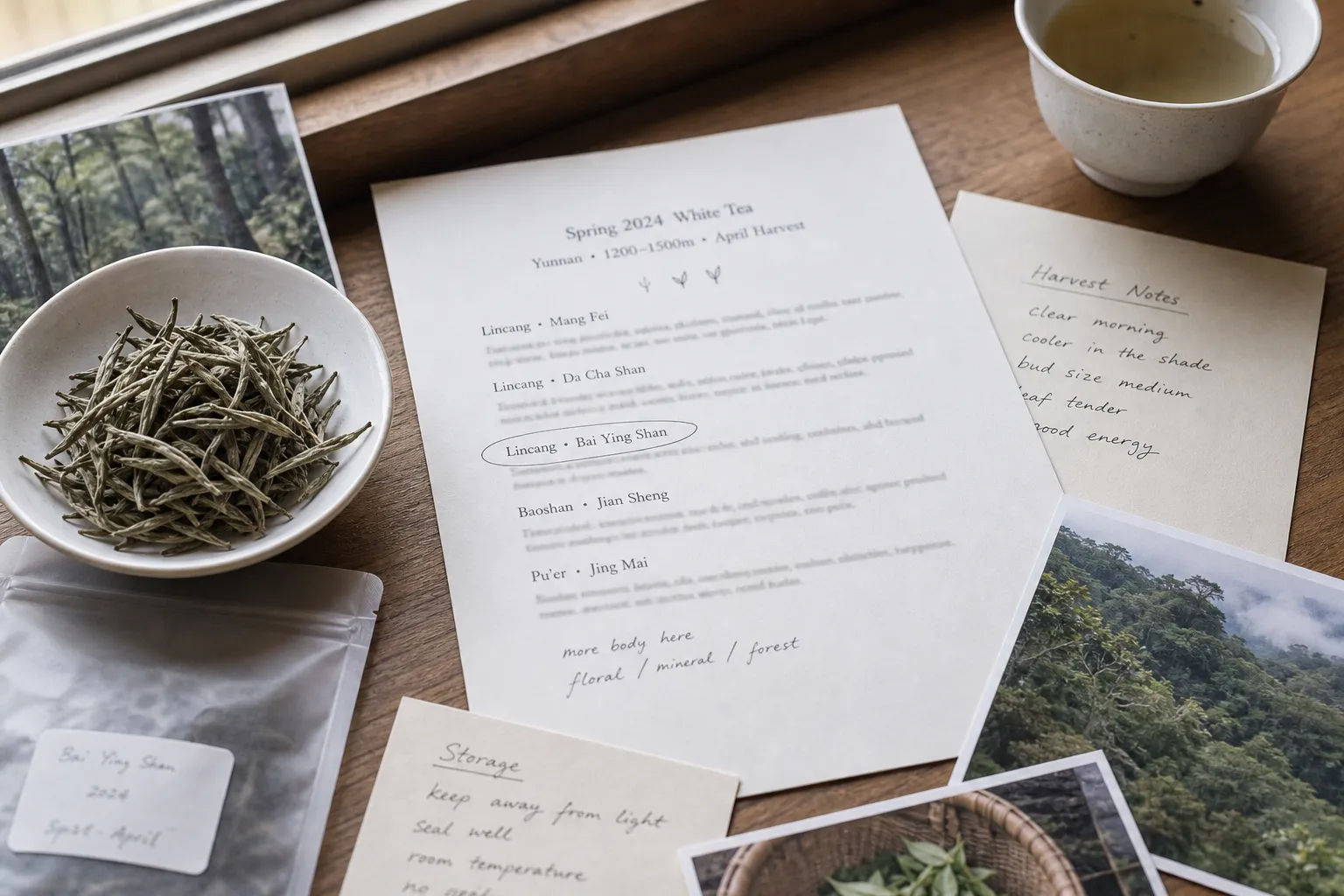
What a Village Name Can Actually Tell You
Village names on white tea listings often work like a narrower address line. A seller may add a local place name to make the tea feel more specific than a regional label. For a buyer, that can be helpful because origin language often sits near other useful details: cultivar notes, plucking grade, harvest season, cake pressing date, storage condition, or a short tasting profile.
The key phrase is “starting point.” A white tea village name can help you sort listings, remember samples, and compare how one seller describes different teas. It can also help you notice when a listing is unusually vague or unusually detailed.
A tea described only with a famous-sounding place name but no leaf grade, harvest information, storage context, or clear photos gives you little to work with. A modestly named tea with coherent, visible details may be easier to judge.
A village name becomes more useful when it is part of a full origin description. A listing that gives region, village, harvest period, leaf grade, and processing style gives the reader more context than one that uses a place name as the main selling point. Even then, the wording remains seller-provided information unless stronger documentation is available.
For ordinary buying, most readers are not verifying land boundaries or production records. They are deciding whether the listing is specific, coherent, and worth sampling.
Read the Village Name Beside the Tea
Treat each listing detail as one piece of a small pattern. A village name can help when the surrounding information is specific without sounding inflated.
Leaf grade
If the listing names Silver Needle, White Peony, Gongmei, or Shoumei, check whether the photos and description give a plausible sense of bud and leaf proportion. A village name does not fix confusion about grade. If a tea is sold as a bud-heavy grade but the images show many broad leaves and stems, the place name cannot resolve that mismatch.
Harvest style
Listings may mention early spring picking, later spring material, or a more mature leaf style. The village name is less useful if the harvest detail is missing, because white tea character depends heavily on what was picked and when.
Appearance
Dry-leaf color, bud density, leaf size, stem presence, compression, and cake surface can all help you read the listing. None of these signs confirm origin, but they can show whether the description is internally consistent.
Aroma and infusion
Sellers may describe fresh hay, dried flowers, honeyed sweetness, herbs, wood, dried fruit, or aged warmth. These notes can help you decide whether the tea fits your taste, but flavor varies with material, processing, storage, age, water, vessel, and brewing style.
Storage context
Storage notes are especially important for aged or pressed white tea. If a listing gives a village name and an age statement, ask whether it also explains storage in plain terms. Was the tea stored loose or pressed? Does the seller mention dry, clean, moderate storage? Does the aroma description sound like tea condition rather than only market language?
Price comparison
A specific tea origin listing at a surprisingly low price is not automatically wrong, and a high price does not confirm anything. Still, price should make you compare. If several listings use the same village language but differ sharply in grade, age, photos, and seller explanation, the place name is only one part of the reading.
A Quick Check Before You Trust the Label
Use this compact check when a listing leans on a village name:
- Does the listing name the leaf grade clearly?
- Do the photos support the stated grade and harvest style?
- Is the village name part of a fuller origin description, or is it the main selling point?
- Are storage notes included if the tea is aged, pressed, or sold as older material?
- Does the description match the visible leaf condition?
- Is the same seller consistent across similar white tea sourcing details?
- Does the price make sense beside grade, harvest style, age, and presentation?
- Is the origin wording being used as information, or mostly as decoration?
This checklist does not confirm where the tea was grown. It helps you decide how much confidence to place in the listing. For most buyers, that is the realistic task: not proving a map point, but avoiding overreading seller listing language.
Seller catalog consistency is often underrated. If a seller uses village names only for a few high-priced teas and gives almost no supporting detail, the wording may be more promotional than informative. If the same seller consistently gives region, village, grade, harvest, processing, storage, and clear images across many teas, the catalog gives you more context for judging how they use origin language.
Samples can also keep the question practical. If you are curious about a named-village tea, buying a small amount before a cake or larger bag is often more useful than trying to solve the origin question from text alone. Brew the sample in a familiar vessel, keep water and timing steady, and compare it with another tea of similar grade and age. You are not trying to identify the village through taste. You are asking whether the tea is enjoyable and whether the listing prepared you well for what arrived.
Common Confusion Around Village Names on White Tea
A village name is not a quality grade
Quality still depends on material, picking, withering, drying, handling, storage, and the care of the seller’s description. A broadly labeled tea may be cleaner, better stored, or better suited to your taste than a tea carrying a precise place name.
Specific wording is not the same as strong traceability
Some listings may use precise language, but a reader usually cannot confirm the full path from garden to finished tea from the listing alone. That does not make the origin phrase useless. It means it should be read at the right strength.
Village origin is not a flavor promise
Place can shape expectations, but white tea flavor is not controlled by location alone. Leaf grade and harvest style can change the cup dramatically. A bud-heavy tea, a leafier White Peony, and a mature-leaf Shoumei can behave differently before storage even enters the picture. Processing choices and storage conditions can shift aroma, sweetness, body, and aftertaste.
Prestige can become a trap
Some buyers see a famous or unfamiliar village name and assume the tea must be rare or superior. Without reliable supporting material, that is too much meaning to place on one phrase. A listing may sound specific because specificity sells. The better question is not “Is this village name impressive?” but “Does the whole listing help me understand the tea?”
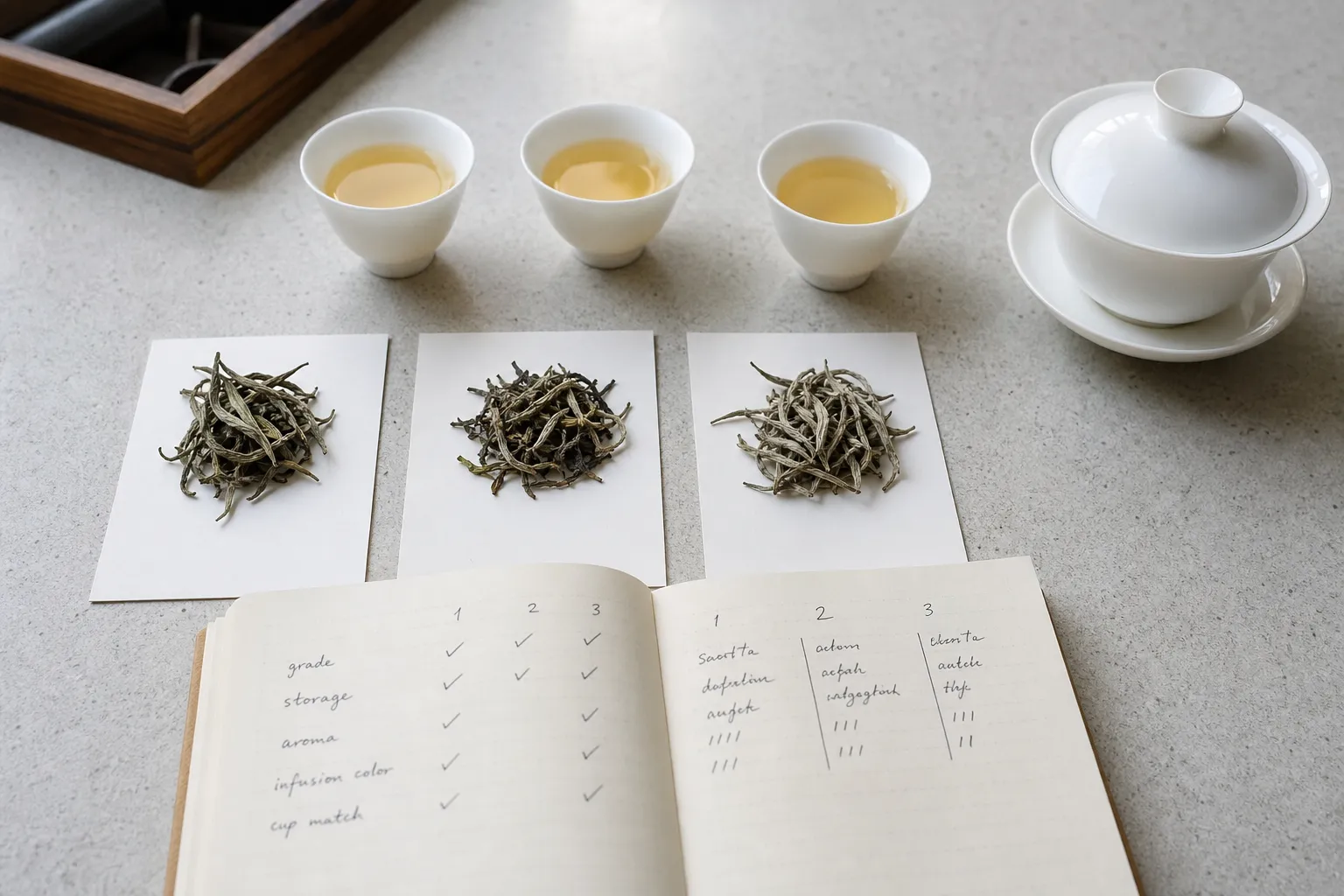
Finally, do not let origin language distract from condition. If the dry leaf smells stale, smoky in an unwanted way, musty, or flat, the village name does not improve the cup. If the tea brews thin despite careful parameters, or if the aroma feels disconnected from the description, record that. Your own notes about appearance, aroma, infusion color, body, and storage impression are more useful for future buying than memorizing place names alone.
Where the Evidence Stops
For this page, the limit is clear: no usable public reference material was available to support claims about specific white tea villages, rankings, boundaries, protected origin status, verification systems, or named-village prestige. Broad internet repetition, seller wording, short comments, and promotional copy should not be treated as confirmation.
So the responsible reading method is deliberately modest. A village name can be a clue. It can make a listing more specific. It can help organize comparisons. It can prompt better questions. But it should not be used alone to judge exact origin, authenticity, age, storage quality, safety, or future value.
Ask for plain details before buying
- What grade is the tea, and what does the seller mean by that grade?
- When was it harvested or pressed, if that applies?
- Is it loose tea or a cake, and how has it been stored?
- Are the photos of the actual tea being sold?
- Does the seller describe the dry leaf and brewed tea in concrete terms?
- Are smaller sample sizes available?
These questions keep the conversation tied to tea you can inspect and brew. They also reveal whether the seller can explain the listing beyond the village name.
For everyday white tea buying, the strongest habit is to build your own comparison record. Note the listing title, village wording if present, grade, harvest style, price, storage note, dry-leaf appearance, first aroma, brewing method, and whether the cup matched your expectation. Over time, this teaches you which sellers use origin language carefully and which listings lean too hard on it.
The Practical Reading Rule
When you see a village name on a white tea listing, read it once, then look away from it. Check the grade, harvest style, photos, aroma notes, storage description, price, and seller catalog pattern. Then return to the village name and ask whether it fits into a coherent description or whether it is doing most of the persuasive work.
If the rest of the listing is thin, the village name should not raise your confidence very much. If the rest of the listing is detailed, consistent, and matched by the tea when you brew it, the village name can become one useful part of your buying notes.
That is the balanced way to read village names on white tea: not as empty decoration, and not as proof. Treat them as cautious sourcing clues, then let the leaves, storage context, seller clarity, and your own cup decide how much they matter.