
Buyer cues
White Tea Origin Cues
A white tea label can sound precise before it becomes useful. A region name, village name, spring harvest note, or familiar grade such as Silver Needle may all point in the right direction, but none of them should carry the whole story alone.
Reading white tea origin cues well means asking how the place name lines up with the leaf, the grade, the processing language, the storage history, the price, and the seller’s willingness to answer specific questions. Origin matters, especially in traditional white tea contexts, but it works best as a cluster of clues rather than a final stamp of certainty.
upward
Start with the broader guide
Use the broader guide first if you need the full scope before this page.
What Origin Means on a White Tea Label
On a white tea label, “origin” can mean several different things:
Growing region
Where the leaf material is said to have been grown.
Processing location
Where the fresh leaf may have been withered, dried, sorted, pressed, or packed.
Grade language
Names such as Silver Needle, White Peony, Gongmei, or Shoumei, which describe picking style more than a full origin story.
Cultivar or plant material
A clue that may suggest local tradition, but does not identify the exact source by itself.
Brand or protected-name wording
Language that may clarify naming systems, without replacing product-level judgment.
Marketing shorthand
Prestige terms that may be meaningful, vague, or stretched.
The strongest labels make these layers easier to separate. They do not simply say “famous origin.” They give a harvest season, grade, processing style, production year when relevant, storage context, and enough detail for a buyer to ask follow-up questions.
A weaker label may still contain a real region name, but it asks that name to do too much. “Fujian white tea” is more informative than no origin at all, but it remains broad. “Fuding” is more specific, and Fuding has recognized cultural importance in white tea; the FAO identifies the Fuding White Tea Culture System as a Globally Important Agricultural Heritage System. That supports Fuding’s broad regional and cultural relevance. It does not settle the quality, freshness, storage condition, or exact source of any individual tea carrying the name.
Why Fujian Matters, and Where the Shortcut Breaks
Fujian sits at the center of much traditional white tea language. Beginners searching for white tea growing regions often meet Fujian first, then more specific names such as Fuding and Zhenghe. That is a reasonable starting point because many classic white tea categories and buyer expectations are tied to Fujian production culture.
The shortcut breaks when a broad origin is treated as a quality verdict. A Fujian white tea origin note may suggest a traditional frame, but it does not tell you whether the tea was carefully harvested, slowly withered, gently dried, cleanly stored, honestly graded, or priced in proportion to what is being sold.
Fuding and Zhenghe are often compared in white tea discussions, but beginners do not need a rigid flavor chart. A better first reading is modest:
- Fuding can be meaningful as a known white tea origin and cultural reference.
- Zhenghe can be meaningful as another traditional origin cue in white tea listings.
- Neither name alone confirms harvest quality, cultivar, storage, age, or taste.
- The useful question is whether the place name agrees with the visible leaf, grade, aroma, price, and seller detail.
This matters when listings make origin sound like it solves every other question. A Silver Needle from a famous area can still be poorly stored. A White Peony with a less fashionable place name can still be carefully made. A pressed Shoumei cake can look old because of storage conditions rather than a well-supported age story. Origin can raise your interest; it should not end your judgment.
Fuding vs Zhenghe White Tea: Cues Beginners Can Actually Read
A beginner does not need to settle every regional debate to read a label more carefully. The practical difference is not “which origin is better,” but how much support comes with the name.
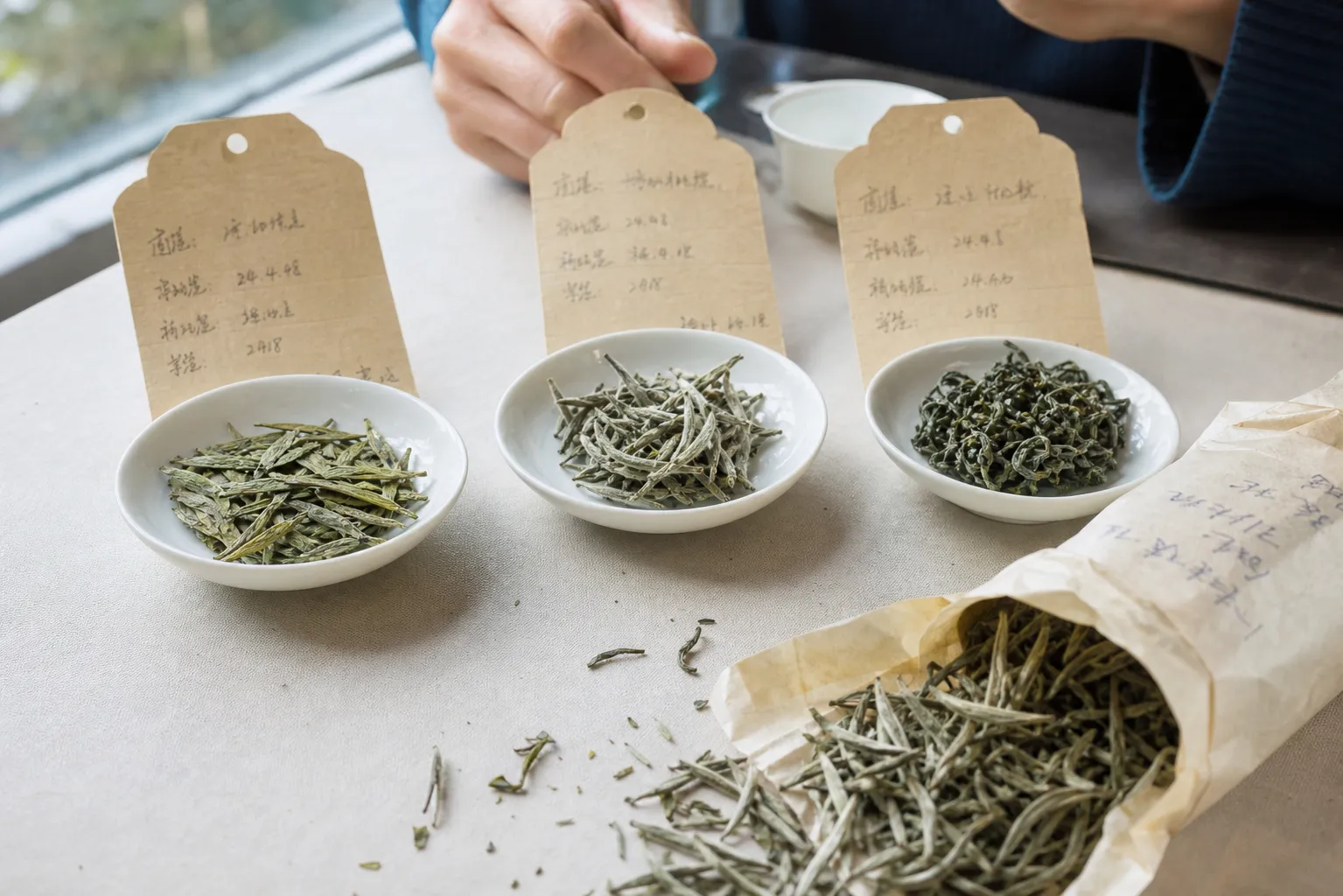
For a Fuding-labeled tea, look beyond the word itself. Does the listing mention harvest season? Does it identify the grade clearly? Are there close dry-leaf photos showing bud shape, leaf size, color range, and stem presence? Does the visible material fit the claimed style? If the listing says Silver Needle, the tea should not look like a mixed leaf cake with many broad leaves. If it says White Peony, some leaf-and-bud material is expected, but the region name should not be the only meaningful detail.
Use the same method for Zhenghe white tea cues. Treat the place name as one clue supported by harvest and processing detail. A careful seller should be able to explain what the tea is, when it was made, whether it is loose or pressed, how it has been stored, and why the price sits where it does. If the language is mostly prestige language and says little about the actual leaf, the origin claim is carrying too much weight.
Village names need the same caution. A village name may be useful when it sits inside a coherent sourcing story. It is less useful when it appears as decoration with no harvest year, no grade clarity, no storage note, and no photographs that allow basic checking. Village-level language feels precise, but precision in wording is not the same as precision in support.
Can White Tea Come from Outside China?
White tea can be discussed outside the traditional Chinese origin frame, and modern tea markets often use “white tea” for teas made in different regions. For buyers, the key distinction is between traditional origin language and processing-style language.
When a tea from outside China is called white tea, the label may be pointing more to the processing approach than to a traditional Fujian origin. That does not automatically make the tea inferior or misleading. It means the buyer should read the claim carefully. Is it using “white tea” as a style? Is it borrowing Chinese grade terms? Is it comparing itself to Silver Needle or White Peony? Is it transparent about the actual growing region and plant material?
Yunnan white tea is a useful example because it appears in many contemporary white tea discussions, often with a different flavor expectation from classic Fujian language. A Yunnan white tea origin may suggest larger-leaf material, different growing conditions, and a different cup direction, but those are still clues rather than fixed results. The better question is not “Is Yunnan real white tea?” but “What exactly is this tea claiming to be, and do the leaf, processing, aroma, and seller information support that claim?”
If a non-Fujian tea is clear about its region, harvest, processing, and style, the label can be honest even when it is not traditional in the same way. Confusion starts when a listing borrows famous Fujian-style grade language without explaining how the tea actually relates to that tradition.
How Origin and Processing Work Together
Origin and processing cues are strongest when they agree with each other. White tea is not only a place name. It is also shaped by picking, withering, drying, sorting, pressing, and later storage.
Start with the grade. Silver Needle usually signals a bud-focused tea. White Peony usually signals a bud-and-leaf style. Gongmei and Shoumei often appear in more mature-leaf contexts, including pressed cakes and aged white tea markets. These grade names are not full origin evidence, but they give you something visible to check.
Then look at the dry leaf. Origin language becomes more useful when the material looks plausible for the stated grade and age. Bud-heavy tea should not look like a random blend of broken dark leaves. Aged tea should not depend only on a printed year; its aroma, dryness, compression, wrapper condition, and storage story should make sense together. Fresh loose white tea should not smell stale, damp, or heavily perfumed if the seller presents it as cleanly stored and minimally handled.
Infusion behavior helps too, though it is not a laboratory test. A tea that opens gradually across several steeps, with aromas that fit the style and no obvious storage off-notes, gives the origin story more support. A tea that tastes flat, dusty, sour, or strangely scented may still carry a region name, but the cup is telling you to slow down.
Processing also explains why two teas from similar places can taste different. Withering conditions, leaf maturity, drying choices, pressing, and storage path can all change the result. Mountain origin and flavor should therefore be read carefully. A mountain name may suggest microclimate, elevation, or local identity, but the cup is also shaped by harvest timing, handling, and storage.
Cultivar Names, Mountain Names, and Other Specific-Looking Clues
Specific-looking clues can be useful, but they are not all the same kind of information.
A cultivar name may tell you something about plant material or local growing tradition. Without reliable batch-level context, though, read it as a claim to check rather than a conclusion. Cultivar names and origin often travel together in seller language, but a cultivar reference does not identify the field, village, processing skill, or storage condition.
A mountain name may help distinguish one production story from another. It can suggest local identity or growing context. It should not be reduced to a fixed flavor promise. Even within a named area, different gardens, harvest dates, weather patterns, and processing choices can move the tea in different directions.
A village name may be the most tempting cue because it feels close to the farm. In practice, village names on white tea listings need the same cross-checking as broader regions. Ask what the seller means: Was the tea grown there, processed there, stored there, or simply associated with a producer there? Is the village name supported by harvest detail and photos, or is it used mainly as prestige language?
Legal-sounding or database-like wording belongs in a separate mental box. Trademark language, protected-name language, geographical indication-style wording, and standards references may matter in naming systems. They do not replace sensory evaluation, storage context, or seller transparency. For practical tea selection, their main value is to remind you that names have layers: cultural, commercial, regulatory, and sensory layers can overlap without becoming the same thing.
Origin Claims That Are Easy to Overread
The most common mistake is giving one cue the job of five. A famous region name cannot do the work of leaf inspection, harvest detail, storage context, and cup evaluation. A printed year cannot confirm good aging conditions. A village name cannot confirm careful processing. A grade name cannot confirm origin.
“Fuding”
Can suggest a link to a recognized white tea region and cultural context. It does not settle freshness, storage quality, exact source, or cup quality of this batch.
“Zhenghe”
Can suggest a traditional white tea origin cue. It does not settle whether the tea is better or worse than Fuding tea.
“Fujian”
Can suggest a broad traditional origin frame. It does not settle specific county, village, cultivar, or harvest handling.
Village name
Can suggest more precise sourcing language. It does not settle that the leaf definitely came from that village.
Cultivar name
Can suggest possible plant-material context. It does not settle exact field origin or sensory result.
Mountain name
Can suggest possible local identity or growing context. It does not settle a fixed flavor profile.
Old production year
Can suggest possible aging context. It does not settle good storage or reliable age support.
Standards-like wording
Can suggest a formal vocabulary signal. It does not settle product-level certainty for the buyer.
A useful label does not need every possible detail. Many small producers and shops will not present information in a polished way. The basic story should still be coherent. If a listing claims premium origin, rare harvest, old age, and an unusually low price while giving little visible support, treat the offer as uncertain rather than exciting.
A Practical Frame for Comparing White Tea Origins
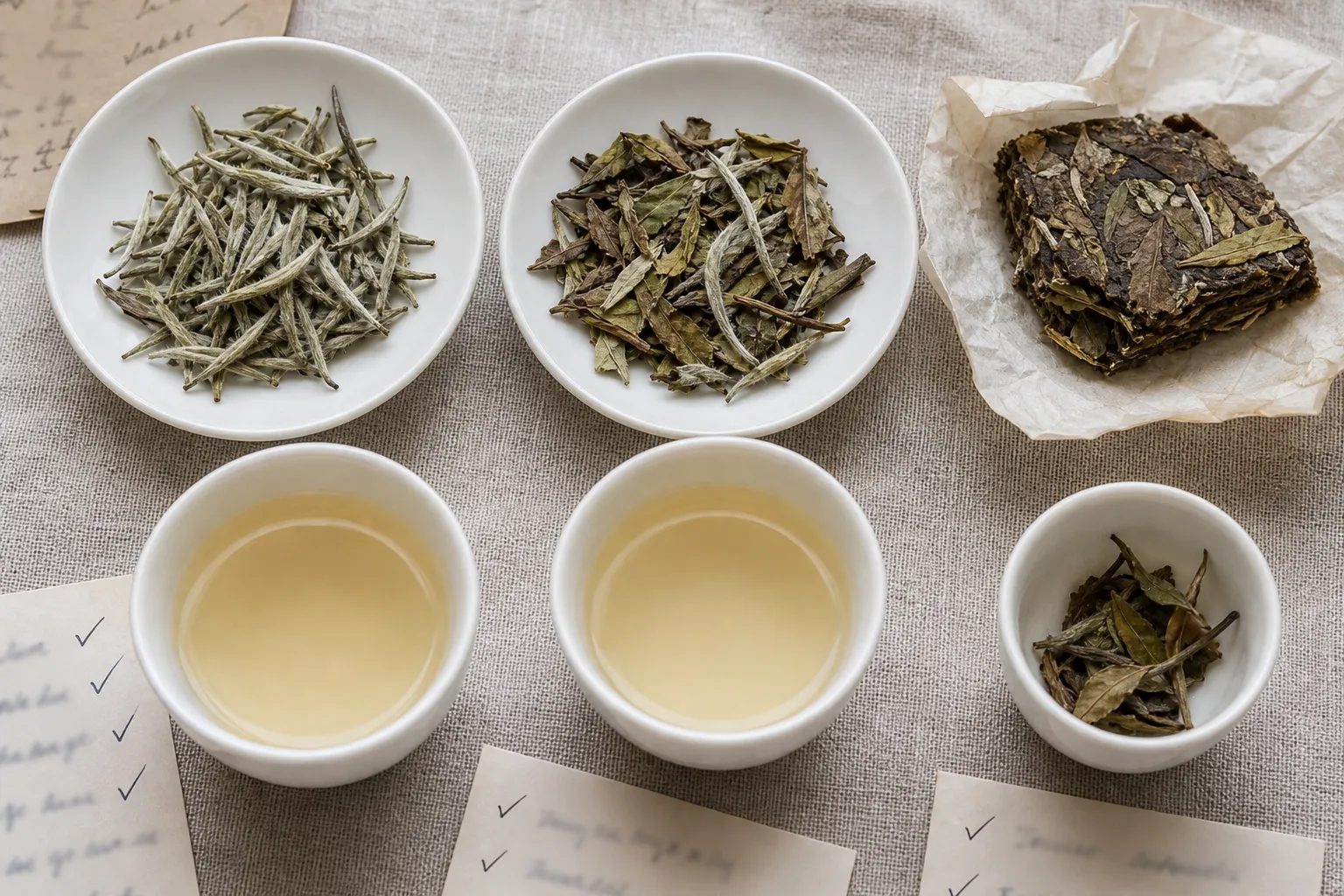
When comparing white tea origins, do not begin with a ranking. Begin with two cups and a checklist. The goal is not to declare one region superior; it is to understand what changed.
If you are comparing two teas at home, use the same brewing vessel, water, leaf amount, and steeping rhythm. If you cannot control brewing, compare the labels and photos instead. Keep the question simple: which cues align, and which cues remain unsupported?
A steady comparison can look like this:
- Name: What region, county, mountain, village, or producer language appears?
- Grade: Does the stated grade match the visible bud-to-leaf ratio?
- Harvest: Is there a season or year, and does it fit the style being sold?
- Processing: Is the tea loose, pressed, aged, or freshly presented?
- Appearance: Are the leaves whole, broken, mixed, very dark, dusty, or visually consistent?
- Aroma: Does it smell clean, stale, damp, smoky, perfumed, woody, hay-like, floral, or sweet?
- Infusion: Does the tea open cleanly, fade quickly, show roughness, or reveal storage notes?
- Storage: Is there any explanation of dry, humid, sealed, open, warehouse, or home storage?
- Price: Is the price plausible for the claimed origin, grade, age, and detail level?
- Seller response: Can the seller answer specific questions without only repeating prestige words?
Seller transparency matters because white tea origin claims are not fully visible from the wrapper. A good answer does not have to sound academic. It can be plain: harvest year, grade, loose or pressed form, how it was stored, what the seller knows, and what remains uncertain. Strong sellers usually make uncertainty smaller, not invisible.
How to Ask Better Questions Before Buying
The best questions are specific enough that a vague answer becomes obvious. Instead of asking, “Is this real Fuding white tea?” ask:
- “What harvest year and season is this batch?”
- “Is the origin claim about the growing area, processing location, or producer location?”
- “What grade is the leaf material, and can I see close photos?”
- “How has the tea been stored since production?”
- “Is the village or mountain name tied to the garden, the maker, or the selling brand?”
- “For an aged cake, what explains the storage aroma and wrapper condition?”
These questions keep the conversation grounded in observable details. They also avoid turning the seller’s words into the end of the inquiry. If the answer is detailed, consistent, and modest, the origin cue becomes more useful. If the answer only repeats the famous name, the buyer has learned something too.
For online purchases, photos matter. Look for clear dry-leaf images, not only styled wrapper shots. For loose tea, you want enough detail to see bud shape, leaf size, color variation, and breakage. For cakes, look at compression, surface material, edge condition, wrapper wear, and whether the product page explains storage. A beautiful wrapper is not evidence by itself.
For in-person purchases, aroma can be one of the quickest checks. Clean white tea may show gentle hay, floral, honeyed, herbal, woody, or dried-fruit directions depending on style and age. Strong dampness, heavy scenting, or stale storage notes should make you pause. Sensory cues do not identify origin on their own, but they help you decide whether the origin story is still worth trusting.
When an Origin Cue Is Enough to Matter
An origin cue is enough to matter when it changes how you evaluate the tea, not when it ends the evaluation. A Fuding name may justify closer attention. A Zhenghe note may help you compare traditional white tea styles. A Yunnan origin may prepare you for a different material and cup direction. A village or mountain name may help you ask sharper questions.
The more expensive, aged, rare, or prestige-heavy the tea is, the more alignment you should expect. For an everyday loose White Peony, a broad but coherent origin note, clear photos, and honest grade language may be enough for a low-stakes purchase. For a costly aged cake with a famous village name, expect more: production year context, storage explanation, visible leaf consistency, plausible pricing, and a seller who can explain what is known.
The opposite is also true. If the tea is inexpensive and clearly presented as a simple daily drink, it may not need a full sourcing dossier. The issue is not whether every tea comes with deep documentation. The issue is whether the strength of the claim matches the strength of the support.
Good white tea buying is less about memorizing famous names and more about reading alignment. Region, grade, harvest, processing, leaf appearance, aroma, infusion behavior, storage, price, and seller clarity should point in roughly the same direction. When they do, origin language becomes genuinely useful. When they do not, the label has offered a clue, not a conclusion.
Sources
Sources and further reading
Reference links are limited to sources considered suitable for public citation in this page.