
White tea types
What Are the Main Types of White Tea
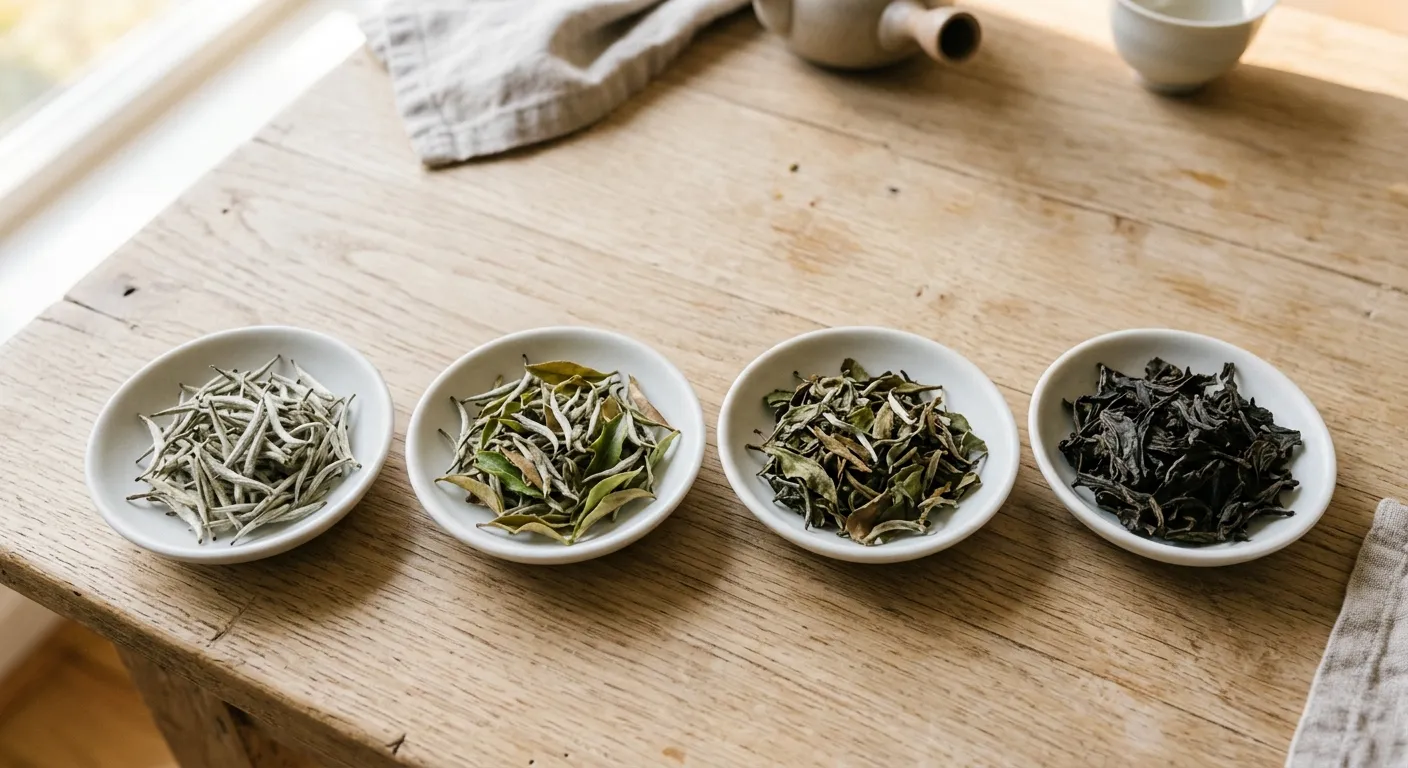
The main types of white tea most buyers run into are Silver Needle, White Peony, Gongmei, and Shoumei. The names are useful because they give you a first clue about the leaf material: Silver Needle is usually bud-focused, White Peony commonly combines buds and young leaves, and Gongmei and Shoumei often show more visible leaf.
That list helps, but it should not be read as a strict quality ladder. A careful choice still depends on what you can observe: dry leaf shape, aroma, wet leaf condition, brewing behavior, storage notes, harvest information, and whether the seller’s wording matches the tea in front of you.
upward
Read the full overview first
Use the broader guide first if you need the full scope before this page.
The four common white tea names at a glance
White tea categories are easiest to understand by looking at the leaves before looking at the price. These names are often used to describe the balance of buds and leaves, though exact usage can vary by producer, region, and market.
Silver Needle white tea
What to look for: Mostly pale, downy buds.
Common cup expectation: Often light, clean, delicate, and subtle.
Label-reading caution: The name alone does not tell you storage condition or handling quality.
White Peony white tea
What to look for: Buds mixed with young leaves.
Common cup expectation: Often more layered, aromatic, and textured than bud-only tea.
Label-reading caution: Leaf size, grade wording, and bud ratio can vary.
Gongmei white tea
What to look for: More leaf presence, sometimes with fewer visible buds.
Common cup expectation: Often fuller, warmer, and more forgiving to brew.
Label-reading caution: The name may be used loosely in sales descriptions.
Shoumei white tea
What to look for: Larger or more mature-looking leaves are common.
Common cup expectation: Often broader, deeper, and suitable for stronger infusions.
Label-reading caution: Age and origin wording need checking against aroma, leaf, and seller context.
Use this as a working map. Two teas with the same name can drink very differently because of harvest material, drying, storage, age, compression, and brewing method.
Silver Needle: bud-focused and usually the most delicate
Silver Needle white tea is often the easiest to recognize when the sample is truly dominated by buds. The dry leaf is commonly slender, pale, and covered with fine down. Compared with the other common white tea names, it usually has the least obvious leaf material.
In the cup, expect a lighter style rather than a heavy one. Many examples are described through soft sweetness, gentle aroma, and a clean infusion. If it tastes thin, do not assume the tea is poor right away. Too little leaf, water that is too cool, a very short steep, or an oversized vessel can all make a bud-heavy tea seem faint.
Silver Needle also attracts premium white tea labels, so it is worth slowing down before buying. Check whether the sample is mostly intact buds or a mixed-looking tea carrying a prestigious name. Smell for freshness, flatness, dampness, or stale notes. Look for clear harvest and storage context rather than relying on refined wording alone.
White Peony: buds and leaves, often more expressive
White Peony white tea usually sits between the quiet delicacy of Silver Needle and the fuller leaf-driven character of Gongmei or Shoumei. It is commonly recognized by a mix of buds and young leaves. For many drinkers, that makes it one of the most approachable white tea varieties: the buds can bring lift, while the leaves add aroma, texture, and body.
If Silver Needle feels too quiet, White Peony may be easier to read. It often shows more obvious changes across steeps: floral aroma, soft fruit-like sweetness, a rounder body, or a clearer finish. These are broad tendencies, not fixed outcomes. Poor storage can make a White Peony taste flat; careful handling can make it vivid and balanced.
This is also where label comparison starts to matter more. Packages may mention grade, origin, season, age, or old-tree language. Treat those as clues, not conclusions. Compare the written description with the actual leaf: bud-to-leaf ratio, evenness of material, leaf condition, and aroma after warming the vessel.
For a beginner choosing between Silver Needle and White Peony, the practical question is simple: do you want the quietest bud-focused expression, or do you want more leaf-driven body and feedback in the cup?
Gongmei and Shoumei: leafier styles with a wider brewing range
Gongmei white tea and Shoumei white tea are often discussed together because both can show more leaf material than Silver Needle or White Peony. They should not be dismissed as simply “lesser” teas. A leafier white tea can be enjoyable because it is less fragile in brewing and may give a fuller, more direct infusion.
Gongmei is commonly placed between White Peony and Shoumei in buyer-facing category language. Depending on the tea and how the label is being used, it may show a mix of leaves with some bud material. In brewing, it can feel rounder and less ethereal than Silver Needle, and it may tolerate slightly stronger handling.
Shoumei is often the leafiest of the four common names. The dry leaf may look larger, darker, or more varied, especially beside bud-heavy tea. A well-kept Shoumei can be satisfying when you want a warmer, deeper, or more straightforward white tea session. It is also commonly encountered in compressed forms, where cakes or pressed pieces add another layer of judgment: age, storage, and compression can all affect how the tea opens.
The main caution is simple: do not read Gongmei or Shoumei as automatic budget tea, and do not read Silver Needle as automatic excellence. White tea type differences help predict style. They do not settle quality, storage, or personal preference.
How the type changes brewing expectations
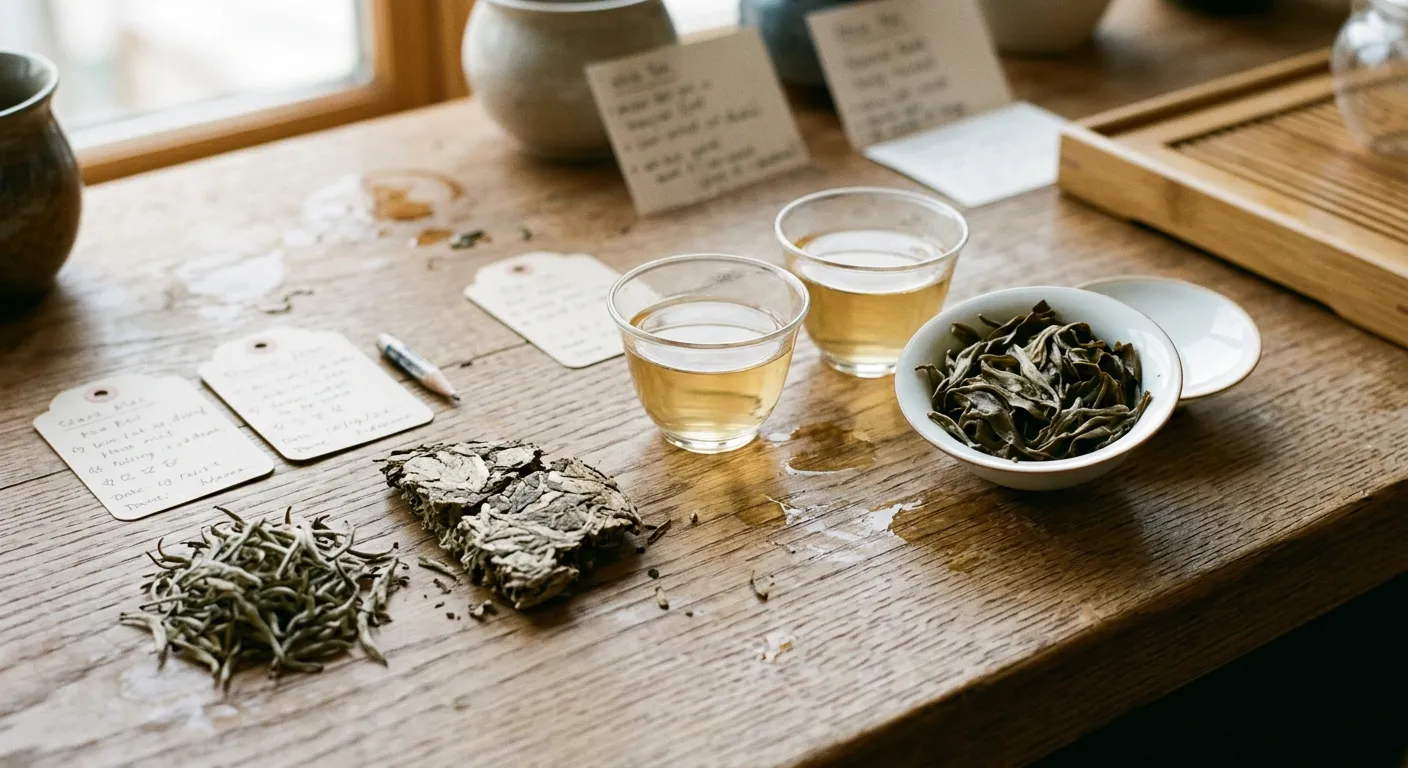
The type of white tea can guide your first brew, but it should not lock you into one rule. A bud-heavy tea often needs enough leaf and time to avoid tasting too faint. A leafier tea may release color, aroma, and body more readily. A compressed tea may need a little patience before the leaves loosen, depending on the piece and vessel.
A simple comparison method is more useful than chasing exact numbers:
- Use the same vessel for two samples. A small gaiwan or small teapot makes differences easier to notice.
- Keep the leaf amount consistent. Weight is best, but even a consistent spoonful is better than guessing differently each time.
- Start moderately. Use short steeps and a moderate water temperature, then adjust one variable at a time.
- Look at the wet leaves. Bud-heavy, mixed, and leafier teas become easier to distinguish once hydrated.
- Note body before flavor words. Ask whether the cup feels thin, soft, rounded, brisk, heavy, or drying.
If Silver Needle tastes too quiet, add leaf or extend the steep before judging the tea. If Shoumei tastes too strong or coarse, shorten the infusion or use slightly cooler water. If White Peony seems uneven, inspect whether the sample contains mixed leaf sizes that extract at different speeds.
This keeps the type name connected to the actual cup instead of blaming the category for a brewing variable.
How to compare white tea labels without overreading them
White tea grade language can be helpful, but it can also be slippery. A label may use a familiar name, a premium adjective, an origin phrase, an age statement, or a harvest note. None of those is enough on its own.
When comparing labels, read in layers:
- Name: Is it Silver Needle, White Peony, Gongmei, Shoumei, or a less familiar local or commercial name?
- Visible material: Does the leaf appearance fit the broad category description?
- Form: Is it loose leaf, pressed cake, ball, brick, or another compressed shape?
- Storage clues: Does the tea smell clean, stale, damp, smoky, sour, or muted?
- Age wording: Is the age claim supported by packaging context and seller clarity, or is it mainly used as sales language?
- Brewing behavior: Does the cup keep opening over several steeps, or does it fade quickly?
This matters especially with aged white tea. Older tea can be interesting, but age alone is not a quality marker. Storage conditions matter. A poorly kept tea may drink dull or unpleasant even if the date sounds appealing. For pressed Gongmei or Shoumei, check aroma and infusion behavior instead of relying only on the wrapper.
Common confusion around white tea categories
One common mistake is treating the four names as a strict ladder from best to worst. They are better understood as style markers. Silver Needle may be prized for bud material and delicacy, but a poorly stored example can be less enjoyable than a clean, expressive Shoumei. White Peony may be the best balance for one drinker, while another may prefer the soft clarity of Silver Needle or the fuller body of a leafier tea.
Another misunderstanding is assuming all white tea is pale, mild, and nearly flavorless. Some cups are very gentle, especially when brewed lightly. Others can be aromatic, rounded, sweet, woody, or more textured, depending on leaf material, processing, storage, and brewing.
Market language creates a third problem. Sellers may use familiar names in ways that are not always consistent across regions or product lines. That does not mean every label is misleading. It means the buyer should connect the name to what can be checked: dry leaf, wet leaf, aroma, liquor color, mouthfeel, and how the tea changes over several infusions.
A practical way to choose your first type
If you are choosing one white tea to start with, match the type to the cup you want rather than chasing the most expensive wording.
Choose Silver Needle if you want a quiet, bud-focused tea and enjoy subtle changes. Choose White Peony if you want a balanced introduction with both aroma and body. Choose Gongmei if you want something leafier and often more forgiving in brewing. Choose Shoumei if you are curious about a broader, deeper style, especially in loose or compressed forms.
For learning, the clearest comparison is not one luxury tea against one random bargain tea. Buy small samples of two or three types from a similar seller context, brew them side by side, and write down what you see before what you think you should taste. The visible leaf material, the way the infusion opens, and the condition of the wet leaves will teach more than the label alone.
The short answer remains: the main types of white tea are Silver Needle, White Peony, Gongmei, and Shoumei. The better answer is to use those names as a map, then verify them through the leaves, aroma, brewing behavior, and storage context.