
Leaf appearance guide
What Are White Tea Leaves Supposed to Look Like
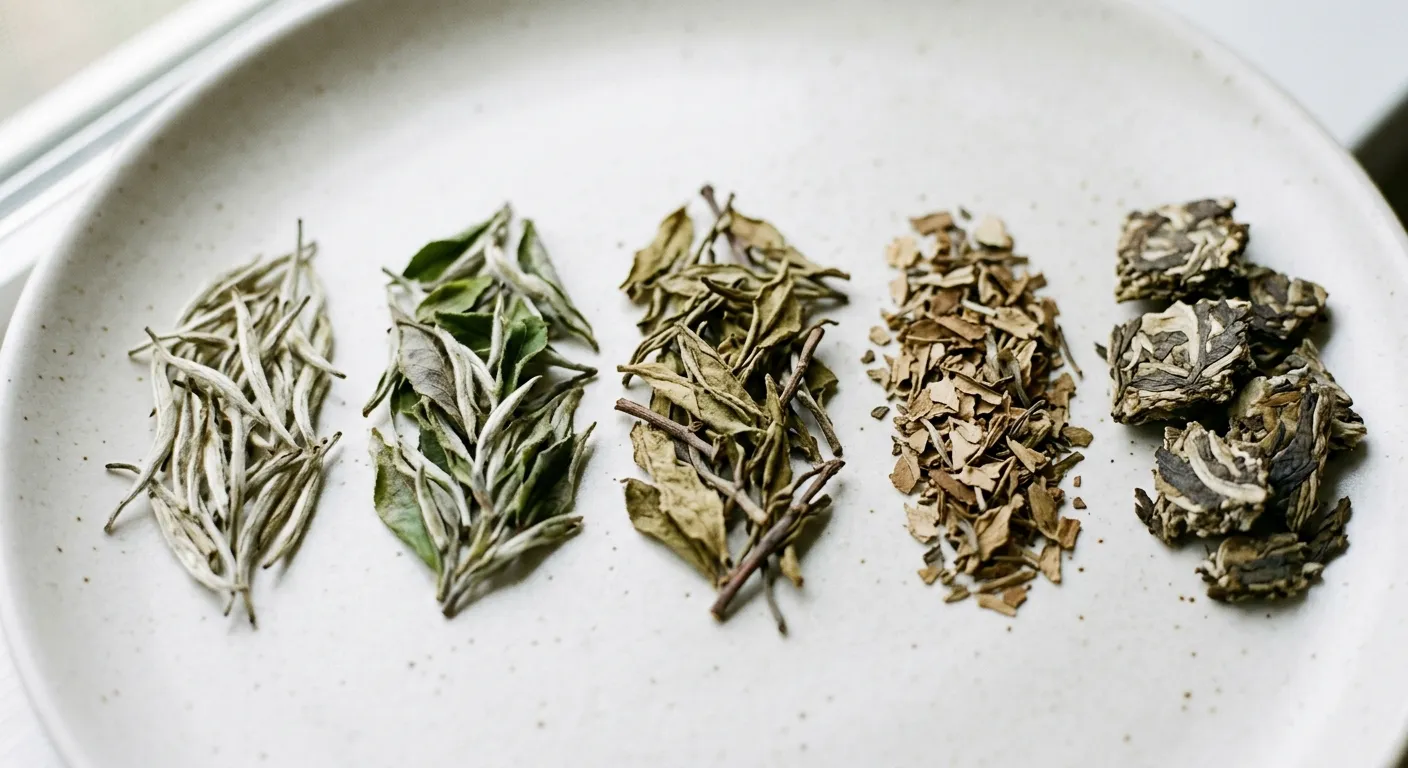
White tea leaves are not supposed to look perfectly uniform. In real samples, white tea leaves look like pale buds, green-gray or olive leaves, silvery down, small stems, flat or twisted leaf pieces, or darker compressed fragments depending on style, age, storage, and handling.
Some white teas are mostly buds. Others show clear leaf-and-bud sets. Others include larger leaves, more stem, and a wider color range. A neat, pale, downy appearance can be a good sign in some styles, but appearance alone does not prove grade, origin, freshness, age, storage quality, or authenticity.
A better question is: does this sample’s appearance make sense alongside its aroma, brewing behavior, seller information, and storage context?
upward
Start with the broader guide
Use the broader guide first if you need the full scope before this page.
The normal visual range of white tea dry leaves
White tea dry leaves can look delicate, loose, uneven, slightly fuzzy, and more natural than machine-cut tea. Many samples show a mix of tones rather than one flat color. You may see silver, pale green, gray-green, muted olive, tan, light brown, or deeper brown shades.
That range is not automatically a problem.
Bud presence
Some white teas show many unopened or partly opened buds. These can look slender, tapered, and covered with fine pale hairs.
Leaf-and-bud sets
Many samples include a bud attached to one or more leaves. The leaf may be flat, curled, folded, or lightly twisted.
Downy hairs
Fine white or silver fuzz can appear on buds and young leaf material. It may collect as pale dust in the bag or tin.
Leaf size
Some teas are made of small, neat pieces; others include broader leaves and visible stems.
Color variation
Pale, greenish, gray, tan, and brown tones can all appear in white tea, especially across different styles or older teas.
Broken material
A little breakage can happen during drying, packing, shipping, or cake compression. Heavy dust or many shattered pieces deserve a closer look.
Compression
In cake, brick, or pressed form, leaves may look flattened, layered, darker inside, or more fragmented at the edges.
Use these as practical inspection clues, not formal grading rules.
Buds, leaves, stems, and fuzz: what each clue can tell you
When people judge white tea leaf appearance, they often focus on buds, downy hairs, color, and broken leaves. Those details can help you describe what is in front of you, but none of them should carry the whole judgment.
White tea buds
White tea buds can appear narrow, soft-looking, and pale compared with mature leaves. In product photos, they are often shown as silvery or ivory-green tips. In a real packet, they may look less dramatic because lighting, handling, storage, and compression change the surface.
A sample with many buds may suggest a bud-heavy style, but it does not confirm quality by itself. Also check whether the dry leaf smells clean, how the tea opens in hot water, whether the liquor tastes balanced, and whether the seller gives coherent harvest and storage information.
White tea leaf-and-bud sets
Some white teas show a bud with one or more attached leaves. These sets can look more open and irregular than bud-only tea. The leaves may be larger, flatter, darker, or more olive-toned than the buds. That contrast can be normal.
Leaf-and-bud material also means the dry tea may look less “perfect” in a photograph. Leaves can overlap, curl, fold, or show small tears. A mixed-looking sample is not automatically inferior; it may simply belong to a style where visible leaves are expected.
White tea downy hairs
Fine downy hairs are one of the first features beginners notice. They can appear as a soft silver coating on buds or young leaf surfaces. Sometimes loose hairs gather at the bottom of a bag as a pale, fluffy residue.
Down can be a useful visual clue, but it is not a complete quality test. Some teas show more fuzz than others because of leaf material, style, handling, and lighting. Visible down does not automatically mean the tea is excellent, and less visible down does not automatically mean the tea is poor.
Stems and larger leaves
Stems can be surprising if you expected only neat buds. In many real white tea samples, especially loose leaf-and-bud teas or pressed cakes, some stem presence can appear. Larger leaves may look thin, papery, rough-edged, or unevenly colored.
The important point is proportion and context. A few stems or larger leaves can be part of the sample’s character. A sample that is mostly coarse stem, dust, or unrelated-looking debris deserves more scrutiny, especially if the aroma is flat, damp, sour, musty, heavily perfumed, or otherwise unpleasant.
How common white tea styles can differ in appearance
White tea style names are often used in the market to set expectations. A label should not be treated as visual proof, but these broad patterns can help you understand what sellers and tea drinkers are usually comparing.
Silver Needle
Often presented as mostly slender buds with pale silver-gray down.
Do not assume origin, harvest date, or grade from bud shape alone.
White Peony
Often shown as buds with attached leaves, with more green and olive variation.
Do not assume quality only because leaves are visible.
Gong Mei
Can appear more leafy, mixed, and less bud-dominant.
Do not judge authenticity from leaf size alone.
Shou Mei
Can show larger leaves, more stems, and deeper color variation.
Do not assume age, storage condition, or value only from darkness.
Two samples with the same style name can still look different because of harvest material, processing, sorting, compression, storage, and photography.
Color variation is normal, but color is easy to overread
A beginner may expect white tea to be literally white. In real dry leaves, “white” often refers more to pale buds and fine surface hairs than to an all-white pile of leaves.
A fresh-looking loose sample may show pale green, gray-green, silver, or straw tones. A more oxidized-looking or older-looking sample may show tan, amber, brown, or darker olive shades. Pressed tea may look darker where leaves are compressed or broken. Product photos can make the same tea look lighter or darker depending on lighting and editing.
Color is a clue, but a weak one when used alone. A pale tea is not automatically fresh or high grade. A darker tea is not automatically well aged. A brown edge is not automatically a defect.
Compare color with other signs
- Does the dry leaf smell clean, sweet, floral, hay-like, woody, or pleasantly mellow?
- Does it smell stale, damp, sour, musty, or oddly perfumed?
- Do the leaves open in water in a way that matches the dry material?
- Does the infusion taste thin, harsh, flat, rounded, sweet, woody, or clean?
- Does the seller provide a plausible style name, harvest context, storage note, or photo of the actual batch?
If color is the only thing that seems “off,” pause before rejecting the tea. If color, aroma, texture, and brewing behavior all seem wrong together, the concern becomes more meaningful.
Broken white tea leaves: normal damage or warning sign?
Broken white tea leaves are not automatically a problem. Dry tea is fragile. Buds and leaves can crack during drying, transport, storage, or when a pressed cake is pried apart. A loose sample may include small fragments at the bottom of the pouch. A cake sample may include chipped edges, flakes, and layered pieces.
A sample can still look reasonable if it includes
- Mostly recognizable buds, leaves, or leaf-and-bud pieces.
- Some small broken fragments.
- Light leaf dust from handling.
- Compression marks from a cake or brick.
- Uneven shapes that still look like tea leaf material.
Look more carefully if you see
- A high proportion of powder rather than leaves.
- Many brittle, shattered pieces with little recognizable structure.
- Foreign material that does not resemble tea.
- Fuzzy patches that look like surface growth rather than natural bud hairs.
- A dry or wet aroma that seems damp, sour, musty, or unpleasant.
Even then, appearance is only the first prompt to investigate. Smell the dry leaf, brew a small amount if appropriate, and check how the infused leaves look after they open. If the tea was sold as a pristine bud-heavy style but arrives as mostly dust and stems, the mismatch between label and sample matters more than any single broken piece.
What aged white tea darkening may suggest
Aged white tea darkening is often discussed by sellers and collectors, but darkness alone should be handled carefully. White tea can become visually darker over time, and pressed teas can look deeper because of compression and storage conditions. However, a dark leaf pile does not prove age, good storage, or value.
For an older white tea sample, inspect several things together:
Dry leaf color
Is the darkening fairly even, or patchy in a way that raises questions?
Aroma
Does it smell mellow, woody, dried-fruit-like, herbal, or clean? Or does it smell damp, sour, musty, or stale?
Texture
Are the leaves dry and intact enough to handle, or oddly soft, wet, sticky, or powdery?
Cake surface
If pressed, are there unusual spots, fuzzy growth, or areas that look water-damaged?
Seller context
Is the age claim supported by clear information, or only by vague marketing language?
Infusion behavior
Does the tea brew into a coherent cup, or does it taste flat, muddy, harsh, or unpleasant?
Darkness can fit an older-looking tea, but it is not proof. A young tea can be dark because of processing or storage. An old tea can be stored poorly. A photograph can exaggerate both light and shadow. Treat color as a starting clue, not a conclusion.
How to inspect a white tea sample without overjudging it
First, spread a small amount of dry tea
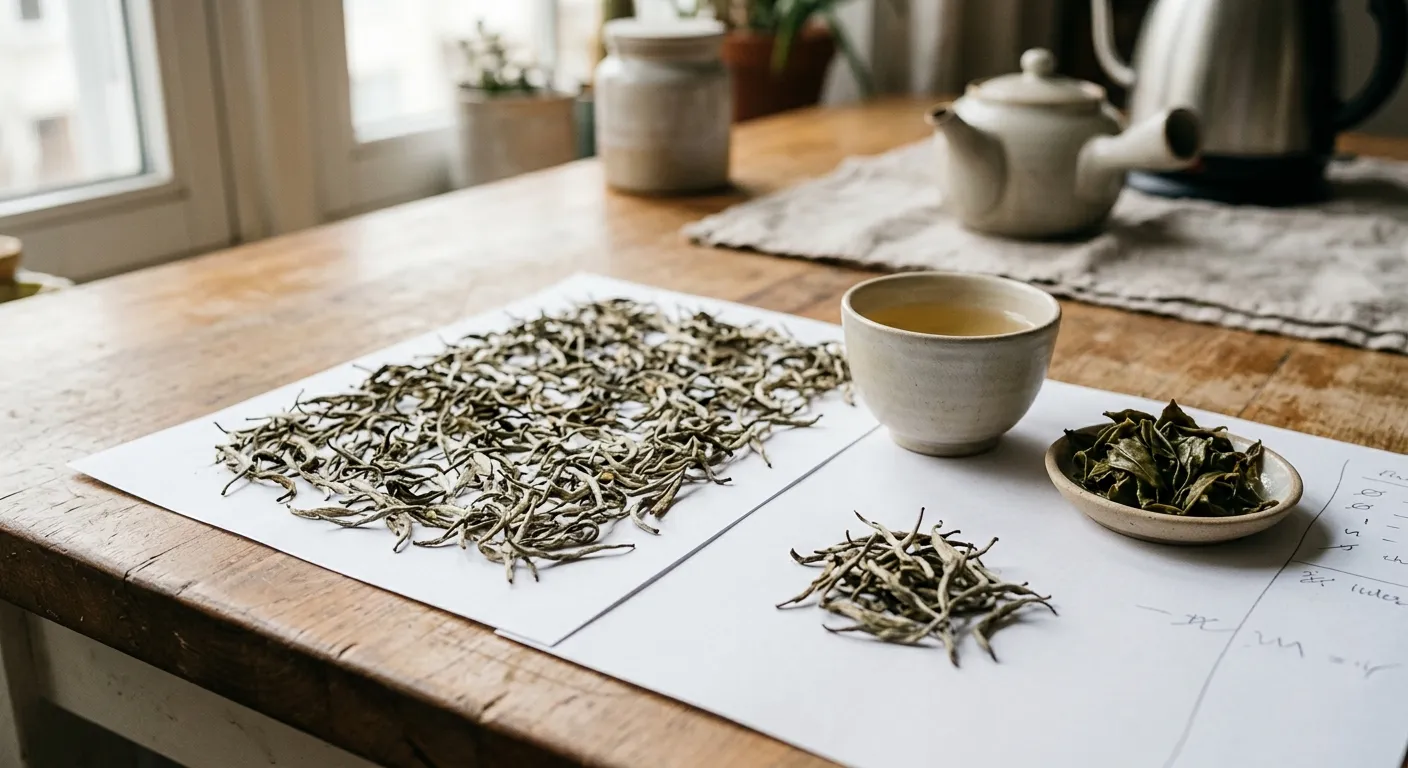
Spread a small amount of dry tea on a white plate or plain paper. Look for the overall mix: buds, leaves, stems, fragments, color range, and surface fuzz. Try not to judge from one dramatic piece. Look at the whole sample.
Second, smell the dry leaf
White tea aromas vary, but the scent should make sense as tea. Clean, gentle, sweet, grassy, floral, hay-like, woody, or mellow aromas give one kind of context. Damp, sour, stale, unexpectedly smoky, or heavily perfumed aromas call for more caution.
Third, brew a small test cup
Use enough leaf to see how the material opens, but not so much that the brew becomes unreadable. After steeping, look at the wet leaves. Buds may plump. Leaves may unfold. Broken pieces may separate. The wet leaf can show whether the dry sample was mostly intact material or mostly small debris.
Fourth, compare the result with the label
If a tea is described as bud-heavy but looks mostly leafy, that is a mismatch to ask about. If a pressed older tea looks dark but smells clean and brews smoothly, darkness alone may not be a problem. If a loose pale tea looks beautiful but tastes flat, the photo-ready appearance did not tell the whole story.
Product photos can mislead your eye
Product photos are useful for learning visual vocabulary, but they can set unrealistic expectations. White tea photographed under bright light may look more silver, greener, cleaner, or more uniform than the tea appears in your hand. A close-up of selected buds may not represent the full bag. A cake photo may hide edge breakage or interior compression.
This does not mean product photos are useless. They can help you recognize broad style differences. But they should not be used as independent proof of grade, age, storage, origin, safety, or health value. If the photo is important to your buying decision, prefer sellers who show the actual batch, dry leaves, wet leaves, and brewed liquor rather than only a polished close-up.
A practical answer to “does my white tea look normal?”
Your white tea may look normal if it has recognizable tea material, a plausible mix of buds and leaves for its named style, some natural color variation, and an aroma that does not raise obvious concerns. It may also be normal for white tea dry leaves to look slightly fuzzy, uneven, papery, folded, broken in places, or darker if compressed or older.
Look more carefully if the tea is mostly powder, smells damp or unpleasant, contains strange non-tea material, shows suspicious surface growth, or does not match the seller’s description. Also be cautious if a seller asks you to accept appearance as proof of a strong claim. Visual beauty can be appealing, but it is only one part of judging white tea.
The best reading of a sample comes from a small group of clues: dry leaf appearance, aroma, wet leaf behavior, brewed taste, storage context, and seller transparency. When those clues agree, you can feel more confident. When they conflict, appearance alone should not decide the answer.