
White tea basics
What Is White Tea
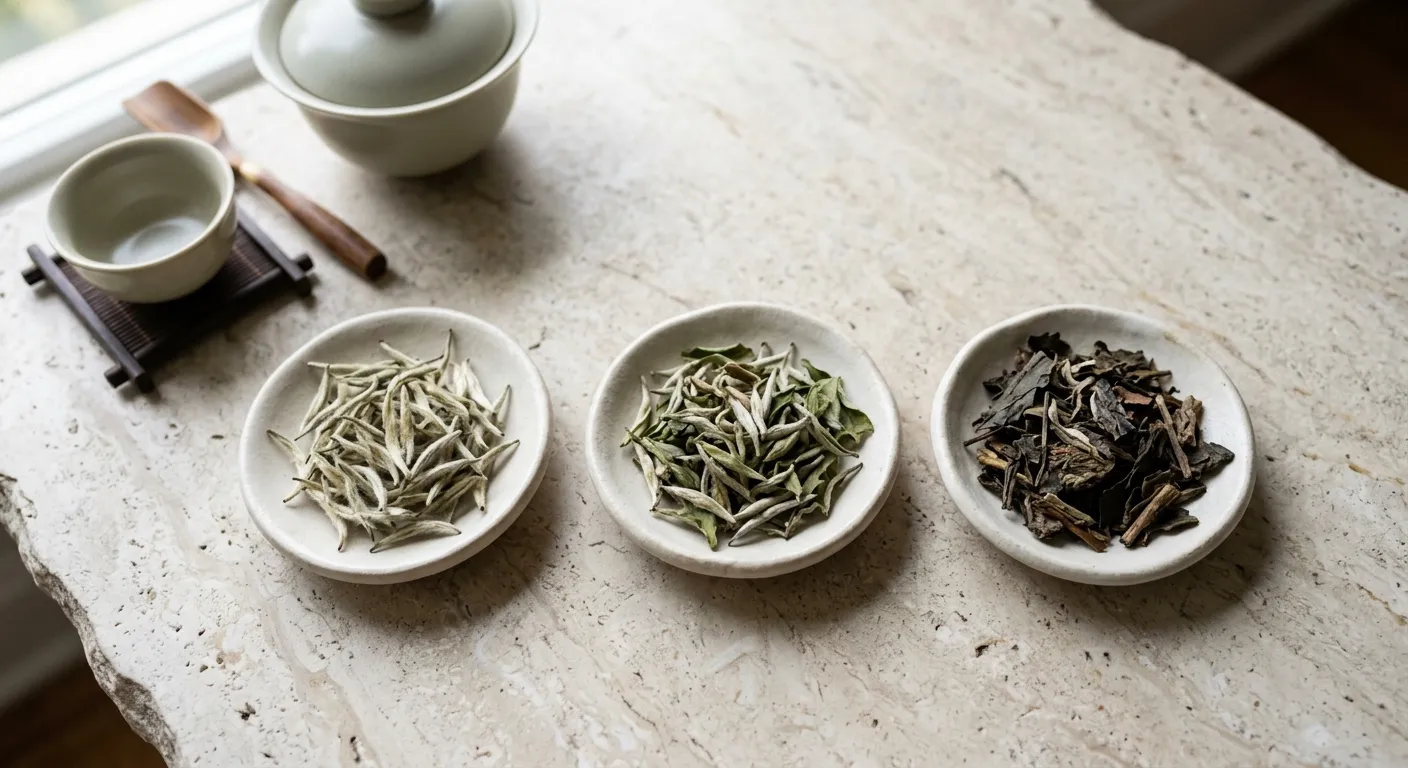
If you are asking what is white tea, you are probably trying to sort out labels that do not look alike: pale loose buds, green-brown leafy cakes, “Silver Needle,” “White Peony,” aged Shoumei, small compressed balls, and notes about sun drying or minimal processing.
The practical answer is this: white tea is tea made from the tea plant, usually through a process centered on withering and drying rather than heavy rolling, tight shaping, or strong heat-driven transformation.
That definition is useful, but it does not explain why one white tea tastes soft and floral while another brews dark, woody, and full. In the cup, white tea changes with bud-to-leaf ratio, drying style, age, storage, compression, harvest material, and how honestly the seller describes it. A better answer helps you look at the leaves, smell them, brew them, and decide whether the label makes sense.
upward
Read the full overview first
Use the broader guide first if you need the full scope before this page.
What Makes a Tea White Tea
White tea is a processing category, not simply a pale drink. The liquor may be straw yellow, pale gold, amber, orange, or deeper if the tea is aged, leafier, or brewed strongly. A tea is not “white” only because the infusion looks light.
In practical tea language, white tea usually involves:
- True tea plant material: buds, young leaves, or more mature leaves from the tea plant, not herbal flowers or fruit infusions.
- A withering-focused process: fresh leaves lose moisture before final drying.
- Limited mechanical disruption: many white teas are less rolled, twisted, or bruised than many green, oolong, or black teas.
- A relatively whole finished leaf style: especially in loose leaf white tea, the leaves often remain more visibly intact.
- A wide sensory range: gentle, sweet, floral, hay-like, melon-like, herbal, woody, date-like, or warmer and deeper with age and storage.
This does not mean every white tea is delicate, pale, or expensive. A bud-only tea and a leafy compressed Shoumei cake can both be sold as white tea, but they will not brew the same way. One may feel soft and quiet; the other may be fuller, darker, and more autumnal. The category is broad enough that the processing path matters more than one fixed flavor.
A useful first question is: Does the label describe a white tea processing path, and do the leaves support that story? If the drink is a scented blend, a pale herbal infusion, or a green tea marketed with “white” language because it looks gentle, you are dealing with a different situation.
Is White Tea Really Minimally Processed?
White tea is often called minimally processed. The phrase can help, but it can also make the tea sound untouched. That is not quite right.
Withering is a major step. Drying is a major step. Time, airflow, leaf thickness, weather, temperature, and handling all shape the finished tea. A better way to put it: white tea is commonly less intervention-heavy than tea styles that depend on strong rolling, repeated shaping, or more forceful heat steps.
Less intervention does not mean less skill. Poorly dried white tea can taste flat, stale, sour, harshly smoky, or damaged by storage. A carefully handled one can show clear aroma, steady sweetness, and a more gradual infusion arc.
What Happens During White Tea Withering
White tea withering is the stage where fresh leaves lose moisture before final drying. As the leaf softens, its aroma and cup behavior can shift. Grassy sharpness may round out. The finished tea may move toward hay, flowers, fruit skin, warm straw, herbs, or honeyed notes.
You do not need to inspect a factory to notice some of the results. Look at the tea in front of you:
- Are the buds and leaves intact, or badly broken?
- Does the dry leaf smell clean and recognizable, or dull and stale?
- Does the first infusion open gradually, or does it give everything at once and fade?
- Does the wet leaf look flexible and alive, or harshly fragmented?
These signs do not prove the exact production method. They do, however, give you more to work with than words like “natural,” “traditional,” or “premium.”
Is White Tea Oxidized or Unoxidized?
White tea is sometimes casually described as unoxidized, especially when compared with black tea. That is too neat. Because white tea commonly relies on withering and drying rather than immediate strong heat fixation, some oxidation may occur during handling and drying. The amount can vary.
For a drinker, the better question is not “zero or full oxidation?” but how much transformation does this tea seem to show?
Pale bud teas may brew light, fresh, and quiet. Leafier white teas may show more body and color. Aged or compressed white teas may bring warmer aromas, darker liquor, and more rounded sweetness, depending on storage.
Be cautious with both extremes. White tea is not always unchanged and pale; it is also not automatically dark, aged, and rich. The category has range.
What White Tea Leaves Are Supposed to Look Like
White tea leaf appearance varies widely. You may see silvery buds, green-gray leaves, olive tones, brown edges, tan stems, or darkened compressed material. None of these signs proves quality on its own, but each one helps you understand what kind of tea you have.
Buds, Leaves, and Why They Matter
The difference between buds and leaves affects appearance, price language, texture, and brewing behavior.
Bud-heavy white tea often looks downy or silvery because unopened buds may carry fine hairs. These teas are commonly associated with a lighter body, gentle sweetness, and softer aroma. They may also release flavor slowly, especially if the buds are tight.
Bud-and-leaf white tea shows a mix of pale buds and broader leaves. Many drinkers find this style easier to understand than very delicate bud tea because the leaves add body while the buds still contribute fragrance and softness.
Leafier white tea can look less visually refined to a beginner, but that does not make it lesser for every purpose. Leafier material can brew with deeper color, more body, and stronger aged-tea character in many drinking contexts. It also appears often in cakes, bricks, and small compressed balls.
When judging white tea leaves, look across several cues:
Bud-to-leaf ratio
May suggest style, harvest material, likely delicacy or body.
Cannot prove true grade, origin, or fair price by itself.
Leaf wholeness
May suggest handling, sorting, and breakage level.
Cannot prove that the tea will taste good by itself.
Dry aroma
May suggest freshness, storage condition, and possible flaws.
Cannot prove exact age or production method by itself.
Liquor color
May suggest leaf type, age, brewing strength, and storage influence.
Cannot prove authenticity on its own.
Wet leaf texture
May suggest processing and storage clues.
Cannot prove a complete quality verdict by itself.
A coherent tea should make sense across several signs. If the label says bud-only but the tea is mostly broken leaves, ask questions. If a tea is sold as aged but smells damp, flat, or unpleasantly basement-like, age language should not override your senses.
Does White Tea Come from a Different Tea Plant?
White tea is generally understood as true tea made from the tea plant, the same broad plant source associated with green, oolong, black, and dark teas. The difference is usually processing, not a completely different plant.
That matters because many pale drinks are not white tea. Chamomile, chrysanthemum, mint, and fruit infusions can brew light in color, but they are not white tea in the tea-category sense. A blend may use white tea as its base and add flowers, fruit, or flavoring, but then you are judging both the base tea and the added ingredients.
Cultivar, region, harvest season, and local practice can still matter. They may affect aroma, leaf size, bud density, sweetness, and aging behavior. But the category begins with tea leaves handled in a white-tea style.
Why Is White Tea Called White Tea?
The name is commonly connected to the pale, silvery appearance of tender buds and the fine hairs visible on some finished leaves. It does not mean every white tea looks white.
Many white teas are green-gray, olive, tan, brown, or darkened with age and storage. This is one reason beginners get confused. They expect the dry leaf to be white and the cup to be nearly clear. Then they meet White Peony with green leaves, Shoumei with broad brownish leaves, or an aged cake with amber liquor.
Those teas can still belong to the white tea family if the material and processing path fit. Think of “white” as a historical and visual clue, not a strict color rule.
Main Types of White Tea a Beginner Will Meet
The main types of white tea are often presented through grade or style names. Names can vary by market and translation, and seller usage is not always consistent. Treat them as a map, not a guarantee.
Silver Needle
Silver Needle is commonly used for bud-only or bud-dominant white tea. It is often easy to recognize: slender buds, pale down, and a quiet, clean appearance.
In brewing, Silver Needle can be subtle. If pushed too hard, it may become thin rather than dramatic. If brewed with patience, it may show soft sweetness, light florals, and a smooth texture.
A common mistake is expecting Silver Needle to be powerful because it is often expensive. When it is good, its appeal is usually refinement, texture, and clarity rather than loud flavor.
White Peony
White Peony is commonly described as a bud-and-leaf style. The leaves bring more body and aroma than bud-only material, so many drinkers find it easier to read in the cup.
It can show floral, hay-like, fruity, fresh herbal, or softly sweet notes depending on harvest, storage, and brewing. For learning white tea, White Peony is often a useful middle point because it lets you taste both bud character and leaf character.
Gongmei and Shoumei
Gongmei and Shoumei are often associated with leafier material, though market usage can be uneven. These teas may look less delicate, but they can be satisfying in a different way: fuller body, deeper liquor, dried-fruit tones, herbal warmth, and more obvious change during storage.
They are also common in compressed forms. If you see a white tea cake, many examples will be leafier rather than made entirely from fine buds. That is not automatically a flaw. It simply changes how you should brew, compare, and price the tea.
What Does Sun-Dried White Tea Mean?
“Sun-dried white tea” usually points to drying with sunlight as part of the production description. It can be a cultural or craft signal, but it is not proof of quality by itself.
Sun exposure, weather, timing, leaf thickness, and final moisture control all matter. The phrase may sound rustic and desirable, but the finished tea still needs to smell clean, brew clearly, and store well. If the tea tastes flat, sour, unpleasantly smoky, or damp, the sun-dried wording does not make up for that.
For a buyer, the useful questions are:
- Does the dry leaf smell clean and stable?
- Does the brewed tea feel coherent across several infusions?
- Does the seller describe form, harvest material, and storage clearly?
- Does the price make sense next to the visible leaves?
Production words can guide your attention. They should not replace tasting and inspection.
Can White Tea Be Loose Leaf, Cake, or Ball Form?
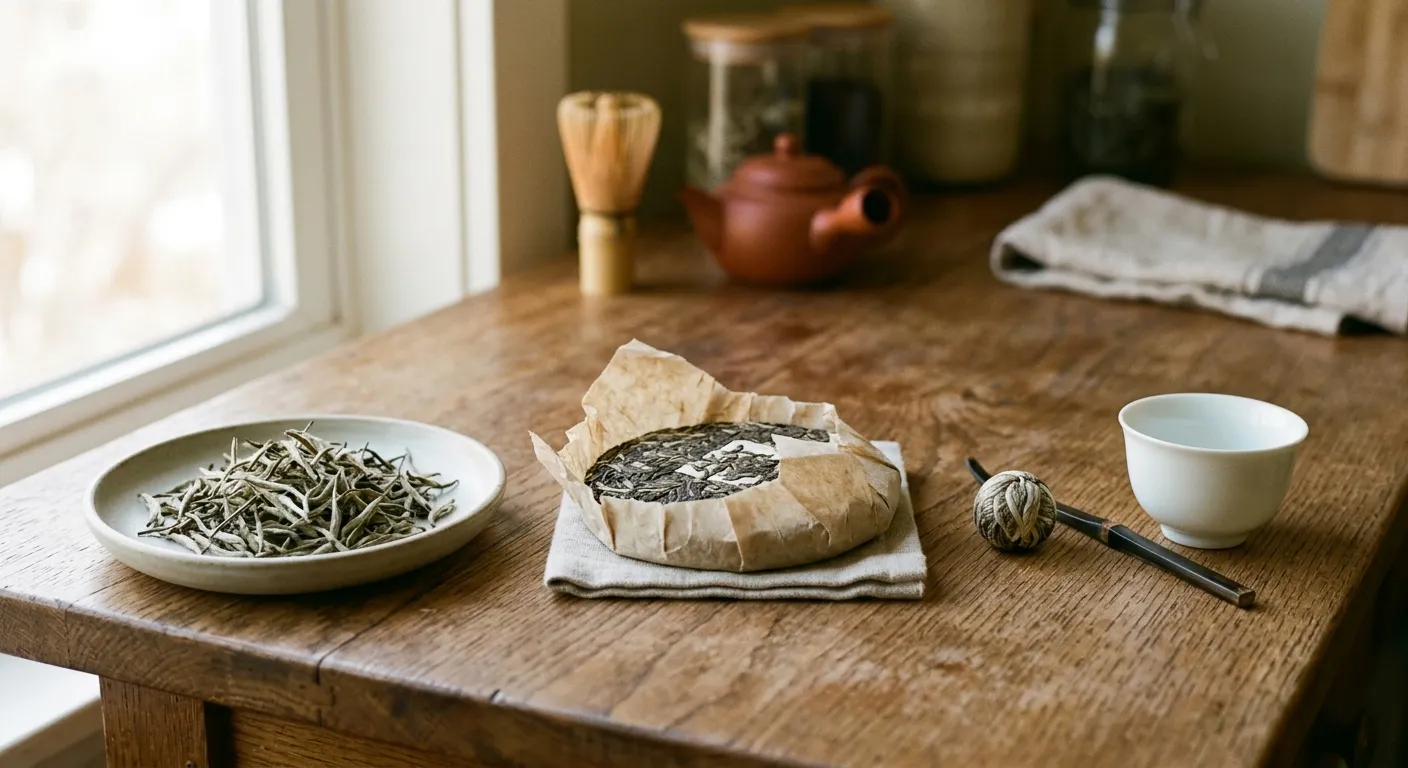
White tea can appear as loose leaf, cake, brick, mini cake, or ball form. Form changes how the tea stores, ages, breaks apart, and brews, but it does not automatically change the category.
Loose Leaf White Tea
Loose leaf white tea is easiest to inspect. You can see bud ratio, leaf size, breakage, stems, color, and general cleanliness. It also opens quickly in water, which makes it approachable for beginners.
The drawback is fragility. Loose white tea can break during handling and needs protection from humidity, strong odors, and excessive light. It is a good format when you are learning white tea leaf appearance because the material is visible before brewing.
White Tea Cake Form
A white tea cake is compressed. Compression can make storage and transport easier, and it changes brewing behavior. The inner leaves are not always visible until you pry the cake, so the surface does not tell the whole story. A cake may also brew slowly at first because the leaves need time to open.
When assessing a cake, check whether it smells clean before brewing; whether leaves separate without turning mostly to dust; whether the center and surface look reasonably consistent; whether the storage aroma is pleasant rather than damp or stale; and whether age claims are supported by wrapper context, seller history, and sensory cues.
Age wording is easy to overstate in compressed tea. Treat it as one part of the picture, not the whole argument.
White Tea Ball Form
White tea ball form usually means a small compressed portion made for convenient brewing. It can be practical, but it limits inspection. You may not know the leaf size or material blend until it opens in the vessel.
Give the ball enough water, space, and time to loosen. If the first infusion is tight or muted, that does not always mean the tea is weak. Later infusions often reveal more about the actual leaves.
White Tea Brewing Cues That Help Define the Cup
Brewing is where the definition becomes useful. Labels give you names; the cup shows how the variables behave.
Watch for:
- Leaf expansion: buds may open slowly; broader leaves may release faster.
- Liquor color: pale does not always mean weak, and dark does not always mean strong.
- Aroma: clean hay, soft flowers, warm herbs, fruit skin, honeyed notes, or gentle wood may appear depending on style and age.
- Texture: some white teas feel silky and light; others feel rounder and fuller.
- Bitterness and dryness: if the tea turns sharp, try cooler water, shorter time, fewer leaves, or a less aggressive vessel.
- Infusion arc: a quiet first cup may become sweeter later; a broken or poorly stored tea may peak quickly and fade.
Instead of memorizing one rule, match the method to the leaf. Bud-heavy teas often reward patience. Leafier teas may handle stronger brewing. Compressed forms need room to open. Aged or darker white teas may show more depth with slightly stronger brewing, but storage quality matters more than age language alone.
What Is Not Considered White Tea
A pale herbal infusion is not white tea just because it is light-colored. A delicate green tea is not white tea unless it was made and sold within a white-tea processing framework. A scented blend may contain white tea, but added flowers, fruit, or flavoring can dominate the cup.
Be careful with grade names used as decoration. Words such as “silver,” “peony,” “ancient tree,” “aged,” “sun-dried,” or “premium” can point toward a style, but none of them alone proves quality, origin, age, or storage condition.
The more expensive or rare the claim sounds, the more slowly you should compare it with what you can observe: visible leaf, aroma, brewed liquor, storage condition, seller detail, and price.
A grounded buying question is: Can the seller’s description, the visible leaf, the aroma, the brewed liquor, and the price sit in the same believable story? If one part feels exaggerated, keep looking.
A Practical Way to Judge White Tea
When you are new to the category, do not try to solve everything at once. Use a simple sequence.
- First, identify the form: loose leaf, cake, brick, mini cake, or ball. This tells you how much you can inspect before brewing and how the tea may open in water.
- Second, identify the material: mostly buds, bud-and-leaf, or leafier grade. This sets expectations for body, aroma, and brewing strength.
- Third, read the processing and drying language without letting it decide the verdict. Terms such as withered, dried, sun-dried, traditional, aged, or handmade may be useful, but the cup still has to support them.
- Fourth, check storage condition. White tea should not smell damp, stale, perfumed by nearby products, or lifeless. Aged white tea may smell deeper, warmer, or more woody, but unpleasant storage notes are not the same as maturity.
- Fifth, brew with adjustment rather than judgment. If the tea is thin, use more leaf or more time. If it is harsh, reduce intensity. If a compressed tea is quiet at first, let it open. If a bud tea seems too subtle, focus on aroma, texture, and finish rather than expecting black-tea strength.
The most useful answer to “what is white tea” is not a single sentence. It is a way of reading the tea: plant material, withering and drying, bud and leaf ratio, form, aroma, cup behavior, storage condition, and the honesty of the label. Once those pieces connect, white tea stops being a vague delicate drink and becomes a category you can compare with confidence and care.