
What Makes a Tea White Tea
A tea is white tea when it is made from leaves or buds of Camellia sinensis and processed in a white-tea style, most commonly with an emphasis on withering and drying rather than heavy rolling, shaping, or deeper oxidation. That is the practical answer to what makes a tea white tea: plant source plus processing.
A pale cup, a soft flavor, a “white” label, or wellness wording on a package is not enough on its own. For a drinker or buyer, the better question is: what can you actually check in the leaf, the label, and the brewed cup?
upward
Start with the broader guide
Use the broader guide first if you need the full scope before this page.
The two things that matter most
White tea starts with true tea material. In tea language, “true tea” means leaves or buds from Camellia sinensis, the same plant species used for green tea, black tea, oolong, yellow tea, and dark tea. The categories are shaped mainly by how the harvested leaf is handled after picking.
That matters because many drinks are called “tea” in everyday speech even when they are botanical infusions. Chamomile, peppermint, rooibos, chrysanthemum, and flower blends may be enjoyable, but they are not white tea unless actual Camellia sinensis white tea leaf is part of the blend. A pale herbal infusion is not white tea simply because it looks light.
The second condition is processing. White tea processing is commonly described around withering and drying, with less intensive manipulation than many other tea categories. That does not mean white tea is untouched or “raw” leaf. It has still been picked, spread, withered, dried, sorted, packed, and shaped by human decisions. A more useful phrase is lightly handled compared with more heavily worked tea styles.
What to look for in real white tea leaves
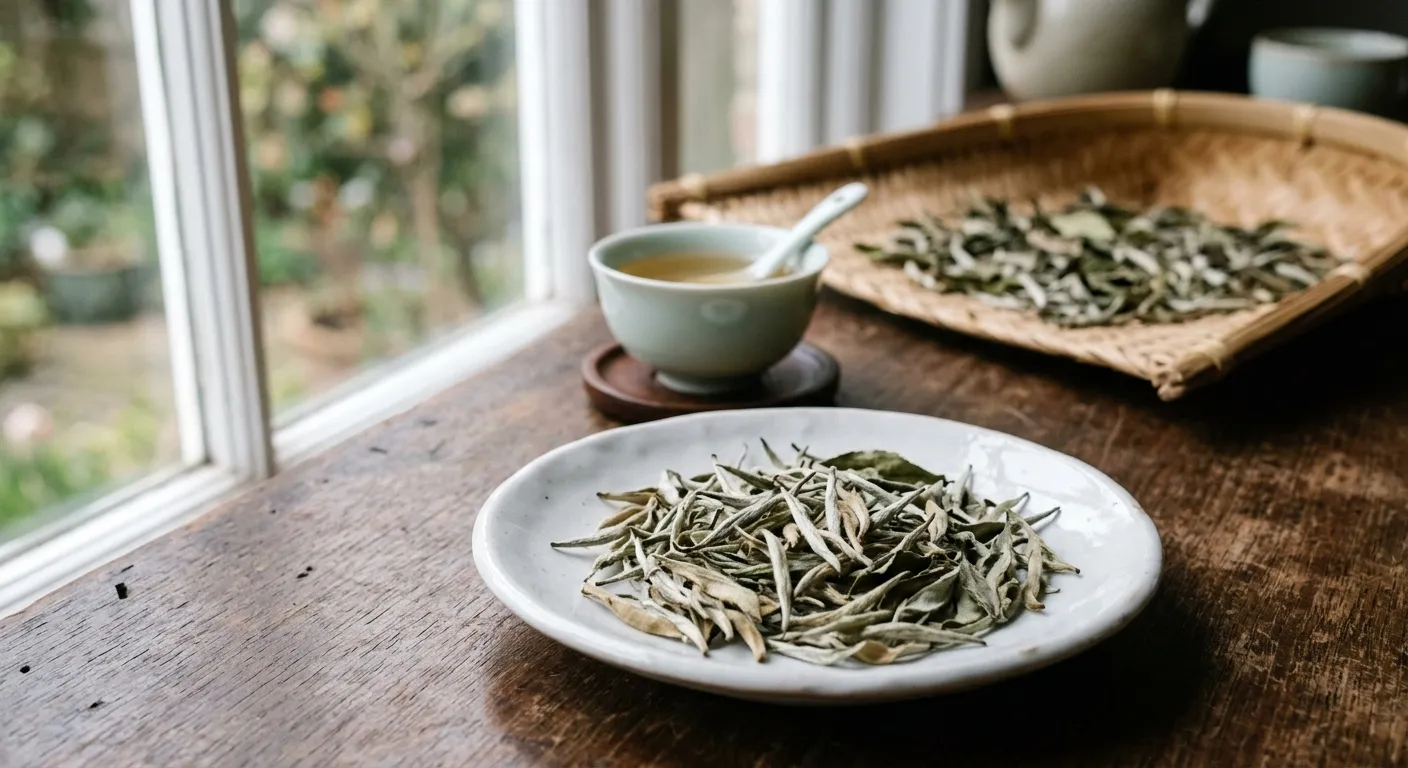
If you are holding the dry tea, begin with the material itself. White tea leaves may include buds, larger leaves, or a mix of both, depending on style and grade. Some white teas show fine pale hairs on young buds, giving the dry leaf a silvery or downy look. That down can be a helpful clue in some teas, but it is not a rule for every white tea.
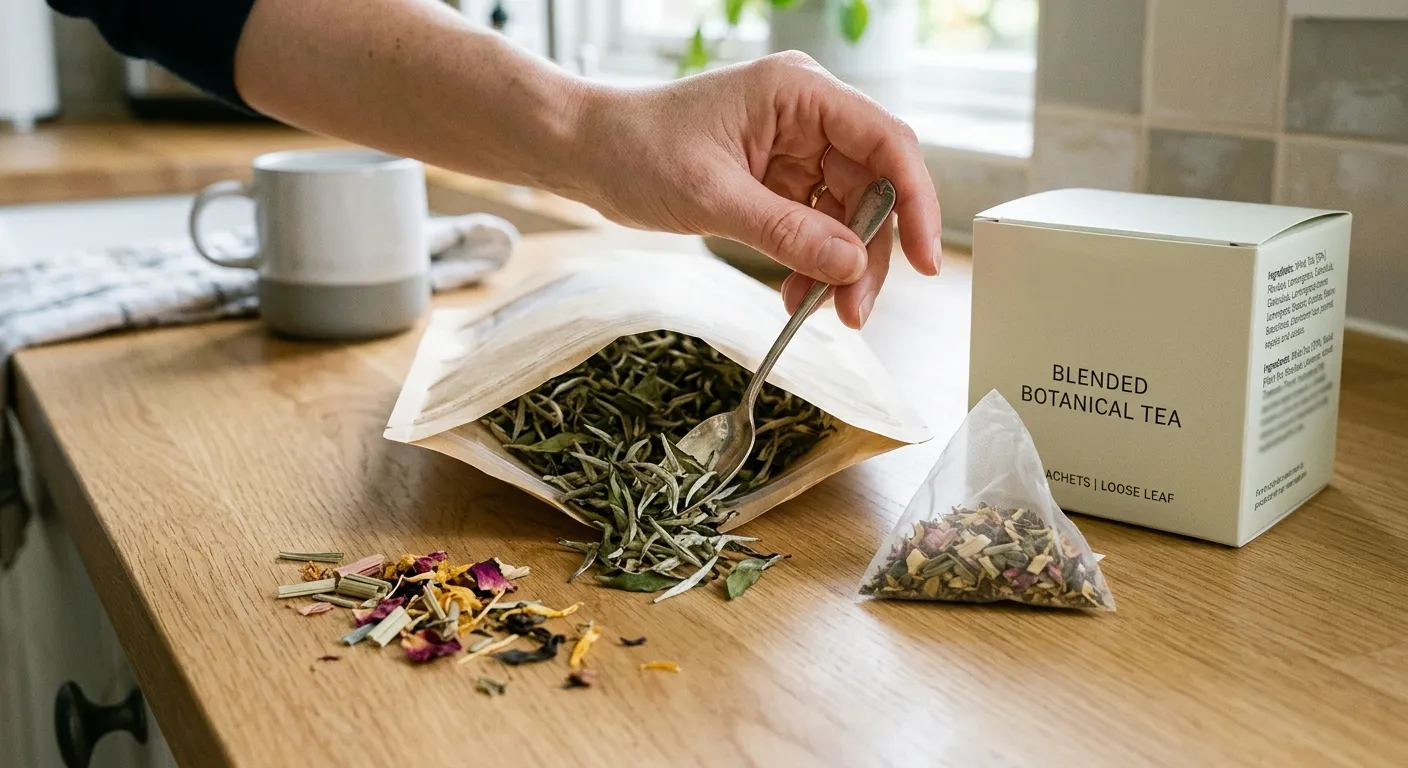
Leaf structure also helps. Many traditional-looking white teas use relatively whole buds and leaves rather than finely broken particles. Whole or mostly intact material lets you see whether you are looking at buds, young leaves, larger leaves, stems, or a mixed blend. In a tea bag or flavored sachet, the material may be too broken to read clearly, so the ingredient list becomes more important.
Processing notes are often the most useful label clue. A product page that says only “white tea” gives you less to work with than one that mentions withering, drying, harvest material, origin context, or whether the tea is made from buds, leaves, or both. These notes do not settle everything, but they give you something concrete to compare against the leaf.
A quick check can look like this
- Plant source: Does the label identify tea leaf from Camellia sinensis, or is it mainly a botanical infusion?
- Leaf material: Can you see buds, leaves, or both? Is the material whole, broken, powdered, or blended?
- Processing language: Does the seller mention withering, drying, or white-tea-style handling?
- Cup behavior: Does the infusion behave like brewed tea leaf rather than only fruit, flowers, or herbs?
- Context: Are harvest, origin, style, or producer details present, even if incomplete?
None of these clues proves the whole story alone. Read them together.
Why a pale cup is not enough
One common misunderstanding is to define white tea by liquor color. Many white teas do brew pale gold, straw-colored, light amber, or soft yellow, especially with gentle steeping. But pale liquor is not the definition.
Color changes with leaf material, age, storage, water temperature, steeping time, vessel size, and leaf amount. A lightly brewed green tea can look pale. A flower infusion can look almost clear. A white tea brewed with more leaf, hotter water, or a longer steep can look deeper than expected. Older or more mature material may also produce a darker cup.
Flavor can mislead in the same way. White teas are often described as gentle, haylike, floral, fruity, honeyed, or softly woody, but flavor is not a category test. A delicate tea is not automatically white tea, and a white tea does not stop being white tea because it tastes fuller, sweeter, more herbal, or more structured than expected.
Use the cup as supporting evidence. The foundation is still the leaf source and the way the leaf was processed.
What the label can and cannot tell you
The phrase “white tea” on a label is a starting point. In loose-leaf tea, it may point to a recognizable white tea style. In a flavored sachet, ready-to-drink bottle, wellness blend, or mixed botanical product, the same phrase may be used more loosely.
This is where the ingredient list matters. A blend might contain white tea leaf plus fruit flavoring, flowers, herbs, spices, or extracts. That does not make it bad, but it changes what the product is. If white tea leaf is only a small part of a larger flavored blend, the drinking experience may say more about the added ingredients than about the tea base.
Marketing language can also blur the category. Words such as delicate, premium, pure, light, antioxidant-rich, or low-caffeine are not definitions. White tea is defined by tea plant material and processing, not by a promise about refinement, gentleness, or personal effects.
Caffeine needs the same caution. White tea is made from Camellia sinensis, so it can contain caffeine. The amount can vary with leaf material, processing, brewing method, serving size, and product specifics. Without product-specific testing, exact caffeine claims are best treated carefully. Do not assume white tea is automatically caffeine-free.
Where processing changes the answer
Tea categories are tied to post-harvest handling. After tea leaves are picked, producers may wither, heat, roll, bruise, oxidize, dry, compress, age, scent, roast, or blend them in different ways. Those choices help shape whether the finished tea is understood as white, green, oolong, black, or another type.
For white tea, the central idea is relatively gentle handling, commonly associated with withering and drying. The leaf is not usually defined by strong rolling or deep oxidation as its main identity. Still, “less manipulated” does not mean every white tea is the same. Origin, harvest standard, cultivar, weather, drying method, storage, and producer decisions can all affect the finished leaf and cup.
It would be too neat to claim one visible sign for every white tea. Downy buds, pale leaves, a light cup, or a delicate aroma can all help you read a tea, but none of them replaces the basic question: is this Camellia sinensis leaf or bud material handled as white tea?
If you are comparing two products, ask which one gives you more processing context. “White tea, withered and dried” tells you more than “light and refreshing.” Visible intact leaf gives you more to inspect than a dusty blend where the tea base is hard to identify. More detail does not guarantee a better tea, but it gives you a better basis for judgment.
A simple way to decide what counts as white tea
When you are unsure, use a layered reading instead of relying on one clue.
- First, confirm the leaf source. If there is no Camellia sinensis tea leaf or bud, it is not white tea in the strict sense. It may be a botanical infusion, but that is a different category.
- Second, look for white-tea-style processing. Notes about withering, drying, and gentle handling are more useful than vague flavor language. Not every seller explains the process in depth, but a complete absence of processing context leaves more uncertainty.
- Third, inspect the material. Buds, leaves, fine down on some young material, and intact structure can all help you read the tea. Broken leaf, powder, or blended ingredients make appearance harder to use.
- Fourth, brew and observe without overreading the cup. Pale liquor, soft aroma, and gentle flavor can fit many white teas, but they are not enough by themselves. A deeper cup does not automatically rule white tea out either.
- Finally, treat label language as a clue, not the full answer. “White tea” should lead you to check plant source and processing, not stop the question.
Quick checks before you buy or brew
If a product is clearly presented as loose white tea, with visible tea leaves or buds and some processing or origin context, you can usually read it as white tea unless other details point away from that. If it is a flavored blend, tea bag, bottle, or wellness-positioned product, slow down and check the ingredient list.
A useful product description should answer at least some of these questions:
- Is the tea made from Camellia sinensis leaves or buds?
- Does it mention white tea processing, especially withering and drying?
- Can you see whether the material is buds, leaves, broken leaf, or a blend?
- Are added herbs, fruit pieces, flavorings, or extracts present?
- Does the seller give harvest, origin, or style context without relying only on vague premium language?
If several answers are missing, the product may still contain white tea, but the label is doing less work for you. Treat it as a less transparent purchase rather than forcing certainty.
The shortest reliable answer is this: white tea is true tea from Camellia sinensis leaves or buds, identified mainly by white-tea-style processing. The pale cup, downy buds, delicate aroma, intact leaves, and elegant label can help you investigate, but they do not replace the plant source and processing behind the leaf.
Sources
Sources and further reading
Reference links are limited to sources considered suitable for public citation in this page.