
White tea comparison
What Is the Difference Between Buds and Leaves in White Tea
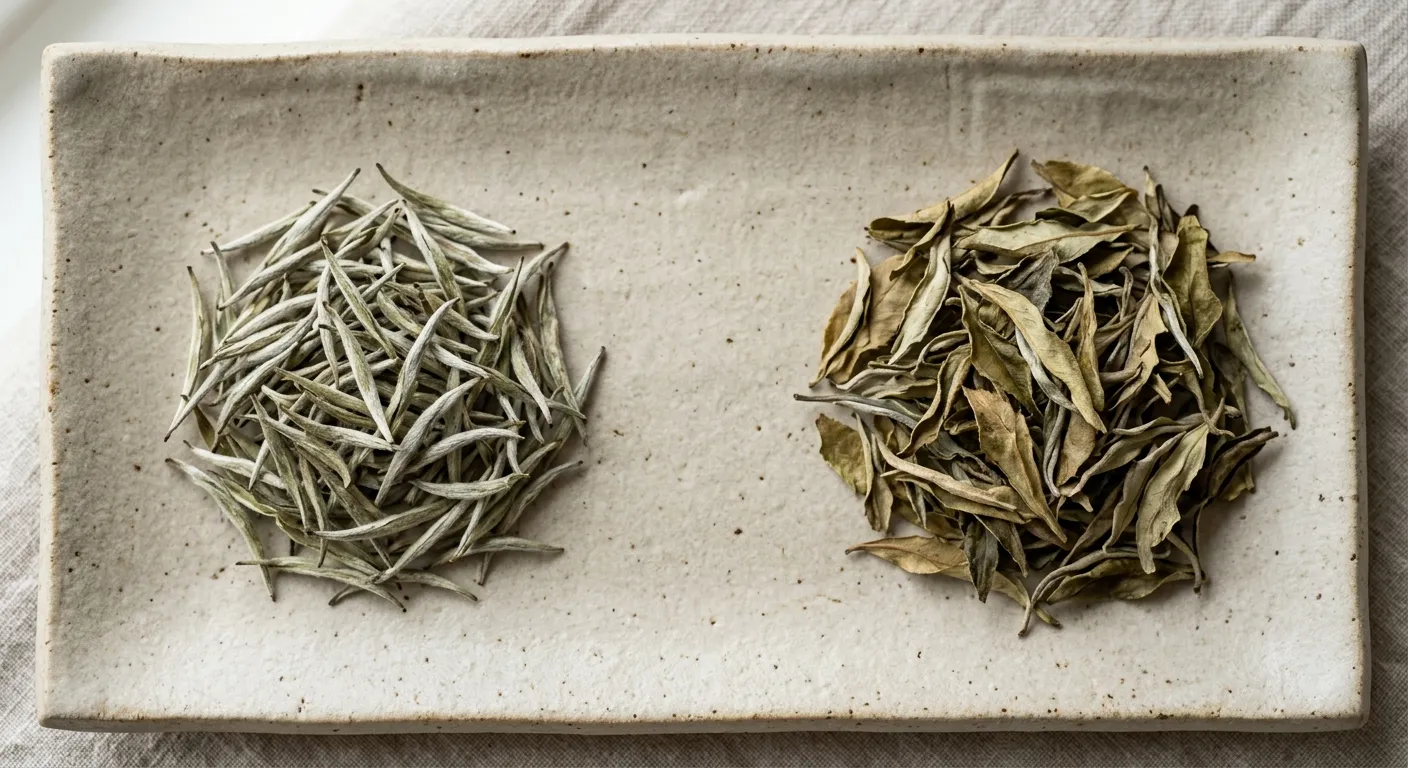
In white tea, buds are the young, unopened tips of the tea shoot, while leaves are the opened or opening leaf material around those tips. For anyone comparing white tea buds and leaves, the difference is easiest to see before brewing: buds are usually slimmer, more pointed, and often fuzzier; leaves are broader, flatter, and more varied in size.
That difference can affect how the tea looks, smells, and steeps, but it is not a simple quality ranking. A bud-heavy white tea may feel delicate and soft. A leafier white tea may bring more body, color, or range. Neither form proves quality by itself. The better question is whether the dry material, label wording, aroma, and cup behavior make sense together.
upward
Read the full overview first
Use the broader guide first if you need the full scope before this page.
How to tell buds from leaves in dry white tea
Start with the tea in front of you, not the grade name.
A white tea bud usually looks like a slim, tapered piece of new growth. It may resemble a small needle or closed tip. Many buds show fine pale hairs, often described as down or fuzz, which can give bud-heavy white teas a silvery or velvety look.
A leaf has more surface area. It may be folded, twisted, curled, broken, or pressed into a cake, but it usually looks broader than a bud. Some leafier white teas contain small young leaves close to the bud; others include larger, more open pieces. Pressed or aged white tea can be harder to read because compression, storage, and breakage may blur the original shape.
A quick visual check helps:
- Bud shape: narrow, pointed, closed or nearly closed, often with fine hairs.
- Leaf size: broader, flatter, more open, sometimes with visible veins or uneven edges.
- Bud-to-leaf ratio: the visible balance between unopened tips and opened leaves.
- Color range: silver, pale green, olive, tan, brown, or darker tones may reflect style, processing, storage, age, or compression.
- Uniformity: careful sorting can look attractive, but it does not prove flavor, origin, age, or value.
A beautiful bud-heavy tea can still brew flat. A leafier tea can look less polished and still produce a satisfying cup.
What bud-heavy and leafier white tea may suggest
Bud-heavy white tea is often described as delicate, refined, or premium. Leafier white tea is often described as fuller, broader, or more rustic. These descriptions can be useful, but they should stay flexible.
A bud heavy white tea may steep gently at first. The liquor can look pale, and the texture may feel soft rather than forceful. Aromas may be subtle, especially with light material, cooler water, short steeps, or a large vessel. If it tastes thin, do not judge it by the first cup alone. It may need more leaf, longer contact time, hotter water, or a vessel that holds heat better.
A leafier white tea may release color and flavor more visibly, especially when the leaves are larger, more open, broken, pressed, or stored for some time. It may give more body, but “more” is not always better. Leafier material can also become coarse, woody, dull, or drying if the tea or brewing does not suit it.
Connect appearance to brewing response:
- If a tea is mostly buds and the first infusion is very light, do not judge by color alone.
- If a tea has many leaves and darkens quickly, notice whether the flavor gains depth or only roughness.
- If the dry aroma is quiet, warm the vessel first and smell the leaf again.
- If the cup feels thin, adjust leaf amount and time before blaming the grade.
- If the tea turns harsh quickly, shorten the steep or lower the temperature slightly.
These are tea-table observations, not fixed rules. Style, cultivar, harvest, processing, storage, compression, age, vessel, temperature, and steep time can all change how buds and leaves behave in the cup.
Reading white tea label wording without overreading it
White tea descriptions often use phrases such as “all bud,” “bud-only,” “one bud one leaf,” “one bud two leaves,” “Silver Needle,” “White Peony,” “high grade,” or “premium.” These words can give clues, but they are not proof on their own.
Treat the label as something to check against the tea.
If a label says “all bud,” the dry material should mostly show narrow, closed tips rather than many broad leaf pieces. If it says “one bud two leaves,” you would expect a mixture of tips and leaf material, though broken tea, sorting, and compression can make that harder to confirm. If a famous white tea grade name appears, the appearance should at least make sense beside that claim.
White tea leaf grades are not always presented consistently across sellers, regions, translations, or product pages. A grade name may be used carefully, loosely, or mainly as marketing language. Be especially cautious when a listing leans on vague words such as “top,” “rare,” “premium,” or “ancient” without showing the tea clearly.
When reading white tea descriptions, look for concrete information:
- What picking style is described?
- Is the tea mostly buds, buds with small leaves, or visibly leafier material?
- Is it loose tea or pressed tea?
- Is there a harvest year or storage note?
- Do photos show dry leaf, brewed leaf, and liquor color?
- Does the brewing description match the material?
- Is the price explained only by bud count, or by broader context?
A high bud-to-leaf ratio can matter, but it should not be treated as automatic proof of better taste, freshness, authenticity, or long-term value. Leaf inclusion may simply belong to the style. A bud and leaf tea can be carefully made; a bud-only tea can still disappoint if the material, processing, storage, or brewing is weak.
What changes the answer in the cup
The difference between white tea buds and leaves becomes clearer when you brew, but brewing adds its own variables.
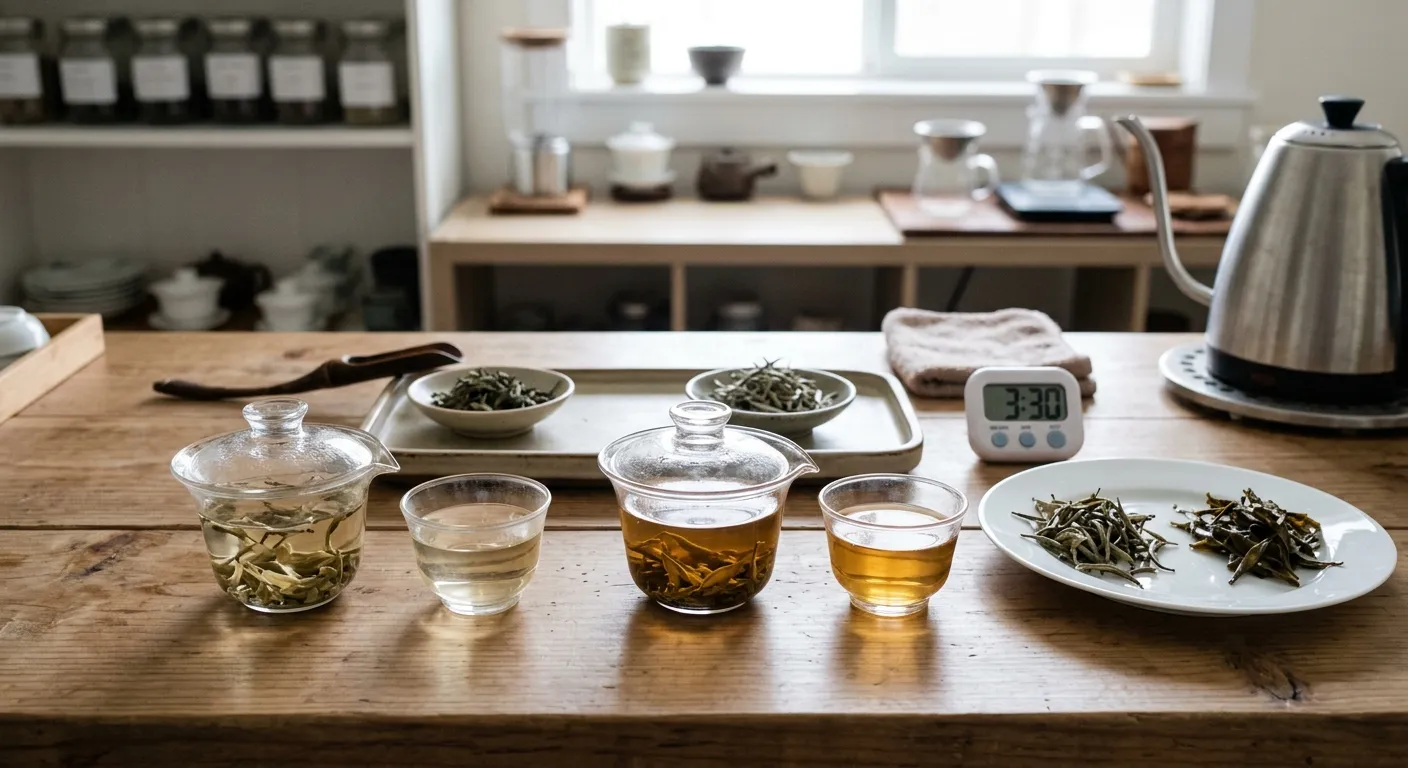
A pale infusion may come from bud-heavy material, short steeping, low leaf amount, cooler water, a large vessel, or restrained extraction. A darker cup may come from leafier material, longer steeping, warmer water, broken pieces, compression, or storage changes.
So white tea infusion color is useful, but not enough by itself.
For a cleaner comparison between two teas:
- Use the same vessel.
- Use a similar dry tea weight if possible.
- Keep the first water temperature and steep time consistent.
- Smell the dry leaf, warmed leaf, liquor, and wet leaf separately.
- Notice color, texture, aftertaste, and how quickly flavor appears.
- Adjust only one variable on the next steep.
This is not a formal scoring system. It is a way to avoid blaming the wrong thing. If a bud-heavy tea tastes faint, the issue may be extraction rather than bud quality. If a leafier tea becomes heavy too quickly, steep time may be the problem rather than the leaves themselves.
A small tasting checklist for buds and leaves
Use this checklist when deciding whether a white tea description matches the tea in your hand.
Look first
- Are the visible pieces mostly narrow buds, broader leaves, or a mixture?
- Do the buds look intact, broken, twisted, or flattened?
- Are the leaves small and tender-looking, or larger and more open?
- Does the material fit the picking description?
Smell next
- Is the dry aroma fresh, muted, sweet, grassy, floral, hay-like, woody, or storage-influenced?
- Does warming the leaf bring out more aroma?
- Does the aroma match the style being promised?
Brew carefully
- Is the first infusion pale, golden, amber, or darker?
- Does the liquor feel light, smooth, rounded, drying, coarse, or thin?
- Does the flavor build over several steeps, or fade quickly?
- Do the wet leaves show a mix of buds and leaves that makes sense?
Read the claim again
- Is the seller relying mostly on grade words?
- Are photos and descriptions specific enough to inspect?
- Is bud count being used as the main reason for a high price?
- Does the tea perform in the cup, not just in the product title?
This kind of white tea tasting checklist helps prevent two common mistakes: assuming buds always mean better tea, and assuming leaves always mean lower-grade tea.
Where the comparison has limits
The difference between buds and leaves is real and useful, but it is only one part of white tea interpretation.
Bud-heavy appearance does not verify origin. A famous grade name does not verify handling. A high price does not verify storage. A pale infusion does not prove delicacy. A darker infusion does not prove age or quality. Health, caffeine, antioxidant, authenticity, and market-value claims need stronger support than visual inspection or seller language.
The practical answer is simple: buds are the unopened tips; leaves are the opened leaf material; their ratio can affect appearance, brewing response, flavor impression, and label interpretation. Quality depends on the whole tea: material, picking, processing, storage, compression, brewing, and whether the seller’s wording matches what you can see, smell, and taste.
FAQ
Are white tea buds better than leaves?
Not automatically. Buds can suggest delicate texture and a fine appearance, but they do not prove better flavor or better quality. Leaves can add body, aroma range, and color, depending on the tea.
Does more fuzz mean higher quality white tea?
Fine hairs are common on young buds and can be a useful visual clue, especially in bud-heavy teas. But fuzz alone does not prove origin, freshness, grade, or cup quality.
Why does my bud-heavy white tea taste weak?
It may be naturally subtle, but brewing conditions matter. Try a little more leaf, slightly hotter water, longer steeping, or a smaller vessel before deciding the tea itself is weak.
Is leafier white tea lower grade?
Not always. Some white tea styles are expected to include both buds and leaves. Leafier material should be judged by appearance, aroma, brewing response, storage condition, and whether the label describes it honestly.
What should I check first when buying white tea?
Look at the dry material and label together. Check the bud-to-leaf ratio, picking description, photos, harvest or storage notes, and whether the price depends only on impressive grade language.