
Processing note
What Happens During White Tea Withering
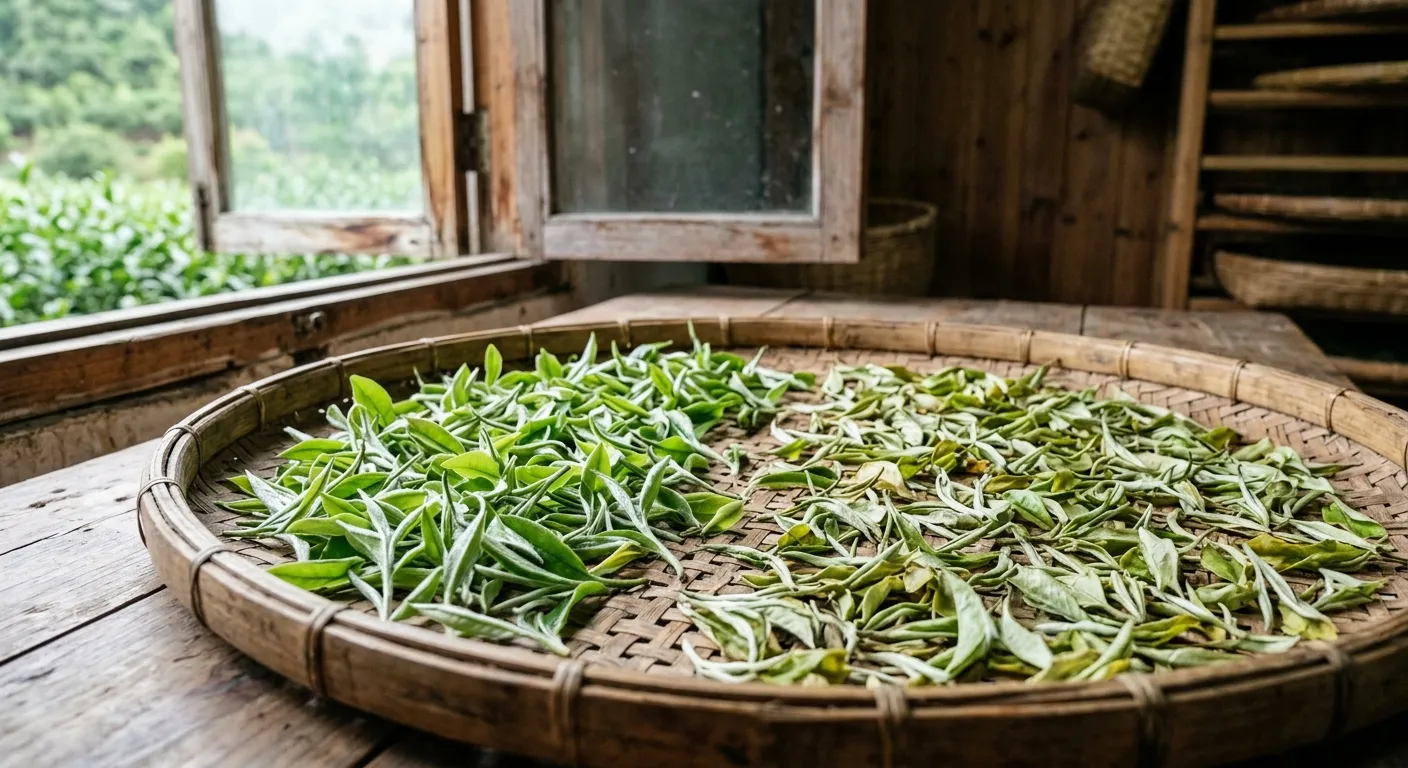
White tea withering is the early processing step where freshly picked leaves are spread out or held so they gradually lose moisture before final drying. During this stage, the leaf often becomes softer, less crisp, and easier to handle. Its smell may move from sharp green leaf toward gentler notes such as warm grass, hay, flowers, fruit skin, or light sweetness.
That does not make withering a proof of quality by itself. The result depends on the picked material, weather, airflow, humidity, leaf layer thickness, drying, storage, and maker judgment. For a tea drinker, the useful answer is simple: withering is where fresh leaf begins to become white tea, but the word does not guarantee taste, origin, grade, or value.
upward
Read the full overview first
Use the broader guide first if you need the full scope before this page.
The leaf changes before drying
A freshly picked tea shoot is still full of moisture. It can feel springy, firm, and green-smelling. White tea is often described as minimally processed, but “minimal” does not mean that nothing happens. Withering is one of the main moments when the leaf changes before drying makes it more stable.
As the leaves lose moisture, they tend to become more pliable. A bud that was upright and firm may relax. A leaf that might have snapped or bruised easily when fresh can become softer and easier to handle. This withered leaf texture is one visible sign that the material has moved away from its just-picked state.
Aroma can shift too. Fresh leaf may smell grassy, bean-like, sharp, or herbaceous. As withering progresses, some batches show rounder scents: dried grass, warm stems, faint flowers, fruit skin, or a softer sweetness. These are possibilities, not a checklist. Bud-heavy white tea, bud-and-leaf material, coarser leaves, different cultivars, and different seasons will not smell the same during the same step.
Color may change as well, though it should not be overread. Some leaves look less bright green after moisture loss. Bud hairs may stand out more. Stems or edges can show slight tonal variation. Still, finished tea color is shaped by drying, storage, age, compression, and brewing, so color alone is a weak way to judge how the tea was made.
Why withering matters in the cup
Withering matters because it changes the condition of the leaf before drying. A leaf that loses moisture slowly and evenly may behave differently from one that stays too wet in a thick layer or dries unevenly on the surface. Without reliable production notes, a drinker cannot reconstruct the exact process from the cup, but the tea can still offer clues.
If a white tea tastes very raw, sharp, or strongly green, it may make you wonder whether the leaf had enough time or the right conditions to change before drying. If the tea has a softer body, a more settled aroma, and less harsh greenness, the fresh-leaf edge may have been moderated. The important word is “may.” Brewing style, storage, harvest grade, age, water temperature, vessel, and leaf-to-water ratio can all change the impression.
Withering and aroma are often linked in the way people talk about white tea. Many drinkers expect white tea to show gentle fragrance: fresh hay, meadow flowers, melon rind, light honey, dried herbs, or warm straw. Those notes can be associated with careful leaf handling and moisture loss, but they do not prove one exact method. A hot gaiwan, a cooler long infusion, or a glass mug brew may reveal different sides of the same tea.
Withering and sweetness are also easy to overstate. White tea can taste sweet in the sense of having a rounded finish, low bitterness, or honeyed aroma. But “well withered” on a product page should not be read as a promise that the cup will taste sweet. Some teas remain brisk, herbal, or savory. Others become gentler after rest. Some feel pleasant when brewed lightly but coarse when pushed.
Greenness is more practical to notice. If a white tea tastes aggressively vegetal, thin, or harsh, processing may be one reason, but brewing may be another. Before blaming the tea, try slightly cooler water, a shorter steep, or a little less leaf. If the same sample stays sharply green across several reasonable brewing attempts, then withering, drying, storage, or leaf quality become more reasonable questions.
Conditions that change the withering result
The basic idea is simple: let moisture leave the leaf. The outcome is less simple. Several conditions can change how evenly and gently the leaves move through this stage.
Airflow
Airflow affects how moisture leaves the leaf surface. Still, damp air and moving air do not behave the same way. Too little movement can leave leaves heavy in humidity. Too much drying force may make the surface seem dry while the inner leaf is changing differently.
Humidity and temperature
Humidity and temperature shape the pace. In damp weather, moisture loss may be slower. In dry conditions, it may be faster. Precise figures should not be guessed from a product description alone. If a seller provides numbers, treat them as processing notes to consider, not as independent proof of quality.
Leaf layer thickness
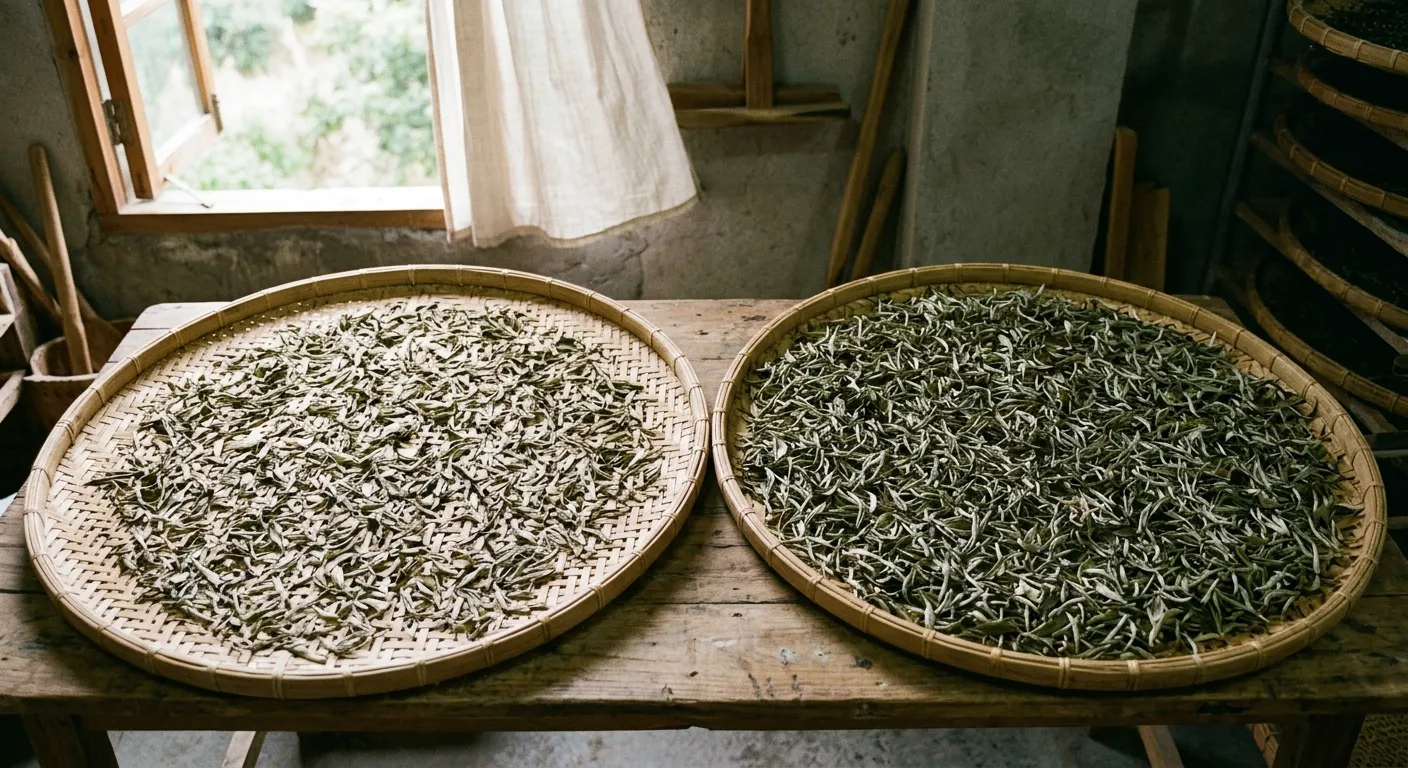
Leaf layer thickness matters because thinly spread leaves have more surface exposure. A deeper layer can hold heat and moisture differently. That does not automatically make one approach good and another bad. It means the maker has to read the condition of the leaf.
Harvest material
Harvest material changes the starting point. Silver Needle-style buds, White Peony-style bud-and-leaf material, Gongmei, and Shoumei-like leaf material can differ in size, tenderness, moisture, and surface texture. The withering step may need to suit the material rather than follow a fixed script.
Maker judgment
Maker judgment is the quiet variable behind all of this. The person handling the batch may look, smell, turn, spread, or move the leaves based on their condition. A short phrase such as “sun withered,” “indoor withered,” “traditional,” or “natural” may describe a broad approach, but it does not tell you whether the leaves were handled well.
What a drinker can actually look for
Most readers are not standing beside a withering tray. They meet the result later: dry leaf, warmed aroma, wet leaf, and cup. So the practical question is not “Can I prove the exact process?” but “Does the tea make sense when I compare the label with what I can observe?”
Start with the dry leaf. Does it look intact or heavily broken? Are the buds and leaves reasonably consistent for the style being sold? Does the aroma seem clean, dull, sour, smoky, stale, or lively? These signs do not confirm the withering method, but they keep you from relying only on the label.
If it fits your brewing habit, warm the dry leaf in a gaiwan or cup before adding water. Warmed leaf often reveals more than a quick sniff from a bag. You may notice hay, dried flowers, soft fruit, warm grain, herbs, or sharper green notes. This is not a processing verdict. It is a way to connect the idea of leaves changing before drying with the tea in front of you.
After the first infusion, look at the wet leaf. White tea leaves often rehydrate enough to show their original structure. Very broken material, dull aroma, or unpleasant dampness may raise questions, but no single sign proves the cause. Storage, shipping, cake compression, age, and handling all affect what you see.
In the cup, pay attention to balance. A white tea does not need to be sugary, floral, or thick to be well made. Some are light and quiet. Some are herbal. Some are fuller and warmer. The better question is whether the tea’s aroma, body, greenness, and finish feel coherent for the material and age you were told to expect.
Common confusion around white tea withering
The biggest misunderstanding is treating withering language as proof. A product page may mention a careful white tea processing step, but the phrase alone does not verify the finished tea. “Withered” tells you the category of handling; it does not tell you the batch condition, weather, timing, leaf depth, drying result, or skill involved.
Another confusion is assuming white tea is simply picked and dried. That shorthand hides the importance of the in-between stage. Freshly picked leaves do not become stable dry tea instantly. They pass through a period where moisture, texture, aroma, and handling behavior change. Understanding that stage makes white tea less mysterious: softness or greenness in the cup can have a processing context, even when the exact cause remains uncertain.
A third confusion is reading every floral or sweet note as a sign of superior withering. Pleasant aroma may reflect good material, careful handling, suitable drying, clean storage, cultivar, season, age, compression style, or brewing that suits the tea. If you are comparing samples, keep the brew method steady before drawing conclusions.
Finally, do not use withering claims to judge personal health effects. This page is about processing, flavor interpretation, and buying skepticism. Processing language should not be used as proof that a tea will produce a particular health result for the drinker.
A practical way to use this knowledge
When you see “white tea withering” in a description, read it as a starting clue, not the final answer. Ask what else supports the claim.
A useful check:
- Appearance: Do the buds and leaves match the style being sold?
- Aroma: Does the dry and warmed leaf smell clean and coherent?
- Brewing behavior: Does the tea stay balanced across reasonable infusions?
- Storage context: Does it smell fresh, rested, aged, or poorly kept?
- Seller context: Are harvest material, age, origin, and processing notes explained with restraint?
- Price language: Are words like “traditional” or “premium” doing too much work without observable support?
If a tea seems too green, thin, or sharp, adjust the cup before judging the processing. Use slightly cooler water, shorter steeps, or a different vessel. If the tea still feels raw or unbalanced after several attempts, then withering, drying, storage, or leaf quality may be part of the explanation.
The modest takeaway is the useful one: during withering, white tea leaves lose moisture and begin to change in texture, aroma, and handling character before drying. That step can shape the later cup, especially its softness, greenness, fragrance, and body. But it works together with leaf material, conditions, drying, storage, and brewing. Treat withering as one important part of how white tea is made, not as a magic word that proves the tea.
FAQ
Is white tea withering the same as drying?
No. Withering comes before final drying. It reduces moisture and changes the leaf’s texture and aroma, but drying is the later step that makes the tea more stable for storage.
Does longer withering always make better white tea?
Not always. Time alone does not prove quality. Leaf material, weather, airflow, humidity, layer thickness, drying, and handling all matter. A longer-sounding process can still produce uneven tea if the conditions are poor.
Can I taste withering in the finished tea?
You may notice signs that are often associated with withering, such as softened greenness, gentler aroma, or a more rounded body. But the cup is also shaped by brewing, storage, age, harvest material, and drying, so tasting cannot confirm the exact process by itself.
Should I trust a tea just because it says “sun withered” or “traditional withering”?
Use those phrases as context, not proof. Check them alongside leaf appearance, aroma, brewing behavior, storage condition, and the seller’s broader explanation.