
Label reading
What Cultivar Names Can Tell You About White Tea Origin
A cultivar name on a white tea label can be a useful clue, but it is not proof of origin. White tea cultivar names may point toward the plant material a seller wants you to notice, the growing tradition the description is trying to echo, or the style family the tea is being placed beside. They help you ask better questions. They do not confirm where the leaves were grown, how carefully they were processed, how old the tea is, or how the cup will taste.
For a buyer comparing samples, the steadier move is to treat the name as one piece of label evidence. Read it beside leaf shape, bud-to-leaf ratio, harvest note, aroma, storage context, seller detail, and brewing behavior.
upward
Read the full overview first
Use the broader guide first if you need the full scope before this page.
Use the name as a clue
It may point toward plant material, regional language, or a style family worth comparing.
Do not use it as proof
It does not confirm origin, processing care, age, flavor, price value, or label accuracy by itself.
What a Cultivar Name Can Actually Help With
A cultivar is a named plant variety. On a white tea label, that name may point toward the plant material behind the tea, or at least toward the way the seller wants the tea to be understood. If a listing mentions Da Bai white tea, for example, the useful response is not instant trust. It is a better set of questions: What style is being sold? Is it Silver Needle, White Peony, Gongmei, Shoumei, or something less clearly described? Is there harvest information? Does the dry leaf appearance match the rest of the listing?
This is where cultivar names on labels can help. They give you a thread to follow. A named white tea plant variety may explain why a seller is discussing buds, leaf size, regional tradition, or a particular production style. It can also help you compare two listings that otherwise use similar language.
But the thread is thin. A name printed on a wrapper or typed into a product page does not show the field, the picking, the withering, the drying, or the storage. If the cultivar name is the only detailed information in the description, it should make you more curious, not more certain.
A practical reading is simple: the cultivar name may suggest a direction; the rest of the tea must still answer for itself.
Read the Name Beside the Leaf, Not Above It
Start with the dry leaf. Silver Needle should draw attention to bud presentation. White Peony asks you to notice the relationship between buds and leaves. Gongmei and Shoumei often shift the question toward larger leaf material, body, aging language, and storage condition. These category names are not the same as cultivar names, but they keep the label grounded in what you can see.
A cultivar name can sound precise while the leaf tells a less tidy story. If a seller emphasizes a plant name but says little about picking standard, harvest season, or processing, the label may be leaning on market familiarity. That does not automatically make the tea poor. It means the name is doing more work than it should.
Cup-level checks that keep the label honest
- Aroma: Dry leaf scent, warmed leaf aroma, and the first infusion can show whether the tea feels clean, stale, woody, floral, grassy, honeyed, or muted.
- Warning signs: A tea that smells flat, sour, heavily stored, or oddly perfumed should not be rescued by a familiar cultivar name.
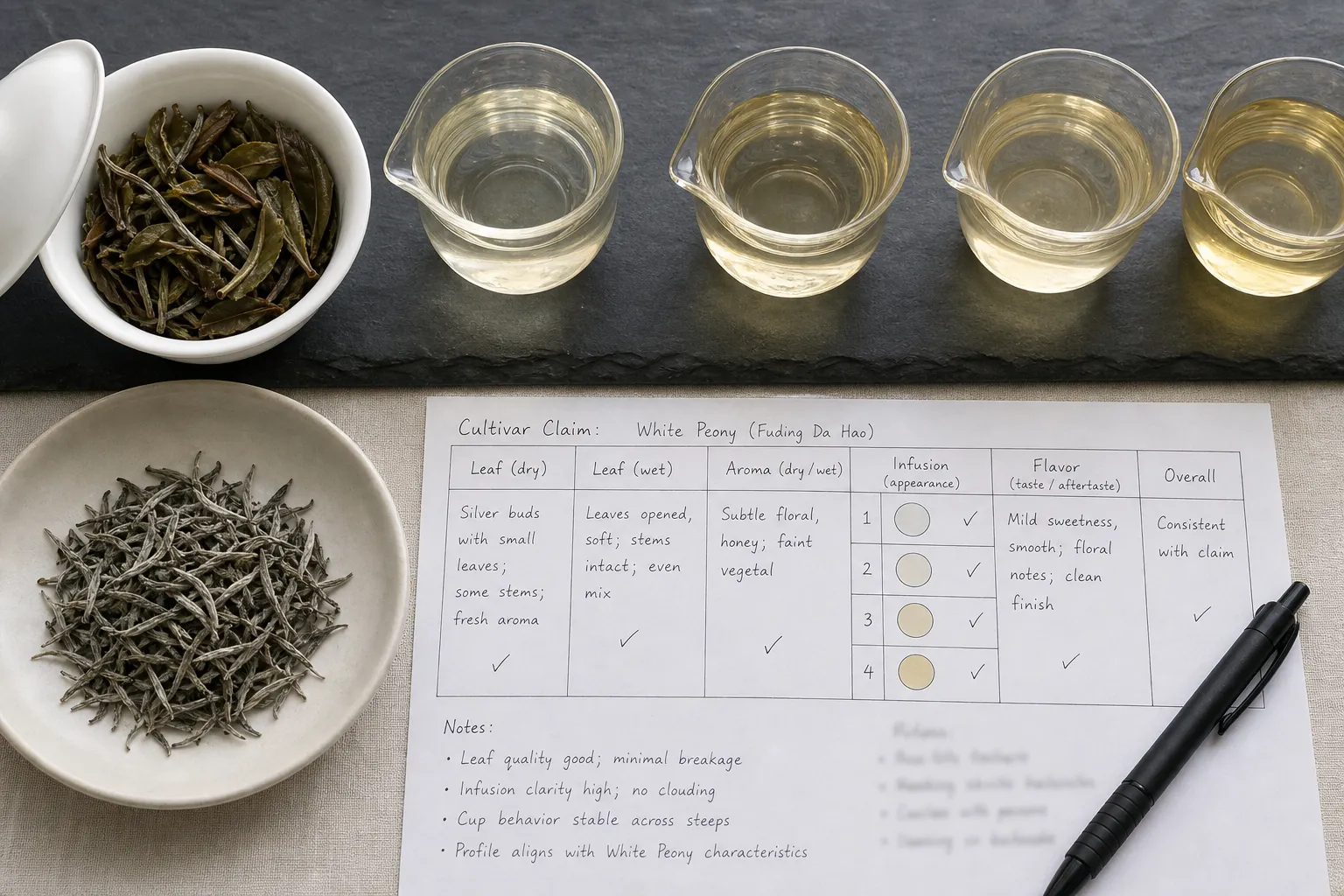
- Brewing behavior: In a gaiwan, a tea that opens gradually over several short steeps gives you more information than a product page can.
- Decision cues: Notice whether the liquor gains body, whether the aftertaste holds, whether bitterness appears quickly, and whether the leaves rehydrate in a way that fits the grade claim.
These cup-level checks do not verify the cultivar, but they keep your decision attached to the tea in front of you.
Where Origin Cues Are Easy to Overread
The common mistake is treating cultivar origin relationships as a clean chain: name equals place, place equals quality, quality equals flavor. Real buying decisions are not that tidy. A cultivar name may be associated with a production story in a seller’s language, but the available material for this page does not support turning any specific name into a firm regional conclusion.
That matters most when labels are short. If a listing gives you a familiar name, a romantic origin phrase, and a high price, you still need ordinary buying evidence. Where was it harvested? What year or season is claimed? Is the tea loose or pressed? How was it stored? Are there photos of the dry leaf and infused leaf? Does the seller explain the tea in concrete terms, or mostly repeat prestige language?
White tea market confusion often grows from this gap between naming and support. Beginners may see Da Bai white tea and assume the important question has already been answered. More careful buyers slow down and ask what the name is attached to: plant material, region, style, marketing shorthand, or the seller’s own classification habit.
Regional naming systems can also be hard to read from the outside because labels may combine plant names, place names, style names, grade names, and aging language in one small space. Without stronger documentation, avoid building a hard chain from one label term to a precise origin. A cautious origin cue is still useful, but only when it leads to more checks.
The safer sentence is: “This name may be relevant to origin, but I need the leaf, harvest note, storage context, and seller explanation to agree.”
Questions to Ask When a Seller Uses a Cultivar Name
When a white tea seller description includes a cultivar name, read it like a prompt. The goal is not to interrogate every small purchase; it is to separate informative labeling from decorative labeling.
Ask first what the name is meant to explain. Is the seller using it to describe plant material, region, flavor expectation, or market identity? A clear description usually connects the name to other concrete details. A weak one lets the name stand alone.
Then check the picking and style. If the tea is sold as Silver Needle, the appearance should invite attention to buds. If it is White Peony, the bud-and-leaf set should be part of the story. If it is Gongmei or Shoumei, larger leaf material, processing, storage, and body may become more relevant to your cup judgment. The cultivar name does not replace these style cues.
Ask about harvest information. A simple year, season, or batch note can be more useful than a polished paragraph. It gives you something to compare against aroma, leaf condition, and price. If the tea is aged or pressed, storage context becomes especially important. Age language alone is not enough; storage smell, wrapper condition, dry leaf aroma, and infusion clarity all matter.
Ask what the seller shows, not only what the seller says. Clear photos of dry leaf and wet leaf are useful. So are brewing notes that mention leaf amount, water temperature, vessel, and steep time. A seller does not need to provide technical paperwork for an everyday tea purchase, but a label built only around a cultivar name leaves too much guesswork.
Finally, compare across samples. If two teas mention the same plant variety but look, smell, and brew very differently, that does not automatically make one label wrong. It reminds you that cultivar is only one variable. Picking standard, processing, age, storage, and handling can all change what arrives in the cup.
A Compact Label-Reading Checklist
Use this quick sequence when interpreting cultivar names:
- Name: What cultivar or plant variety is mentioned, and is it explained or merely displayed?
- Style: Does the tea present itself as Silver Needle, White Peony, Gongmei, Shoumei, loose leaf, or pressed cake?
- Appearance: Do the buds and leaves support the grade or style language on the label?
- Harvest note: Is there a year, season, batch, or picking description that helps narrow the claim?
- Aroma: Does the dry and warmed leaf smell clean, coherent, and consistent with the seller’s description?
- Storage: For older or pressed tea, is there enough context to judge condition cautiously?
- Brewing behavior: Does the tea open in the cup with reasonable body, clarity, and aftertaste for its style?
- Seller clarity: Does the description answer practical white tea buying questions, or rely mostly on prestige words?
This checklist does not prove origin. It helps you avoid giving one label term more authority than it deserves.
What Cultivar Names Cannot Tell You
Cultivar names are not a complete origin record. They do not confirm where a tea was grown, who made it, whether the label is accurate, whether the tea is worth its price, or whether the flavor will suit you. They also do not settle age claims. A pressed Shoumei cake with a cultivar name still needs storage context, aroma checks, liquor observation, and careful tasting.
They cannot promise quality. A familiar name attached to careless processing can still brew thin, harsh, dull, or unbalanced. A less familiar description may still produce a pleasant cup if the leaves were handled well and stored cleanly. For the reader, this is freeing: you do not have to memorize every plant name before buying white tea. You need to know how much confidence the name deserves.
They also cannot replace comparison. If you are choosing between two samples, brew them with the same leaf amount, vessel, water temperature, and timing. Let the cultivar name sit in the background while liquor color, aroma, texture, and finish do the practical work. After tasting, return to the label and ask whether the description helped you understand the cup or merely decorated it.
The best use of cultivar names is modest. They can point your attention toward possible origin context and plant material. They can help you form better questions for the seller. They can make your tasting notes more organized. But the final decision should come from the whole set of clues: label, leaf, scent, infusion, storage, and how the tea behaves in your own brewing setup.
For your next purchase, choose one tea with a named cultivar and one without a prominent plant-name claim. Brew them side by side in the same gaiwan or small pot. Keep the water temperature and steep time steady, then write down what the leaves show before deciding how much the name actually helped.