
Origin and style
Can White Tea Come from Outside China
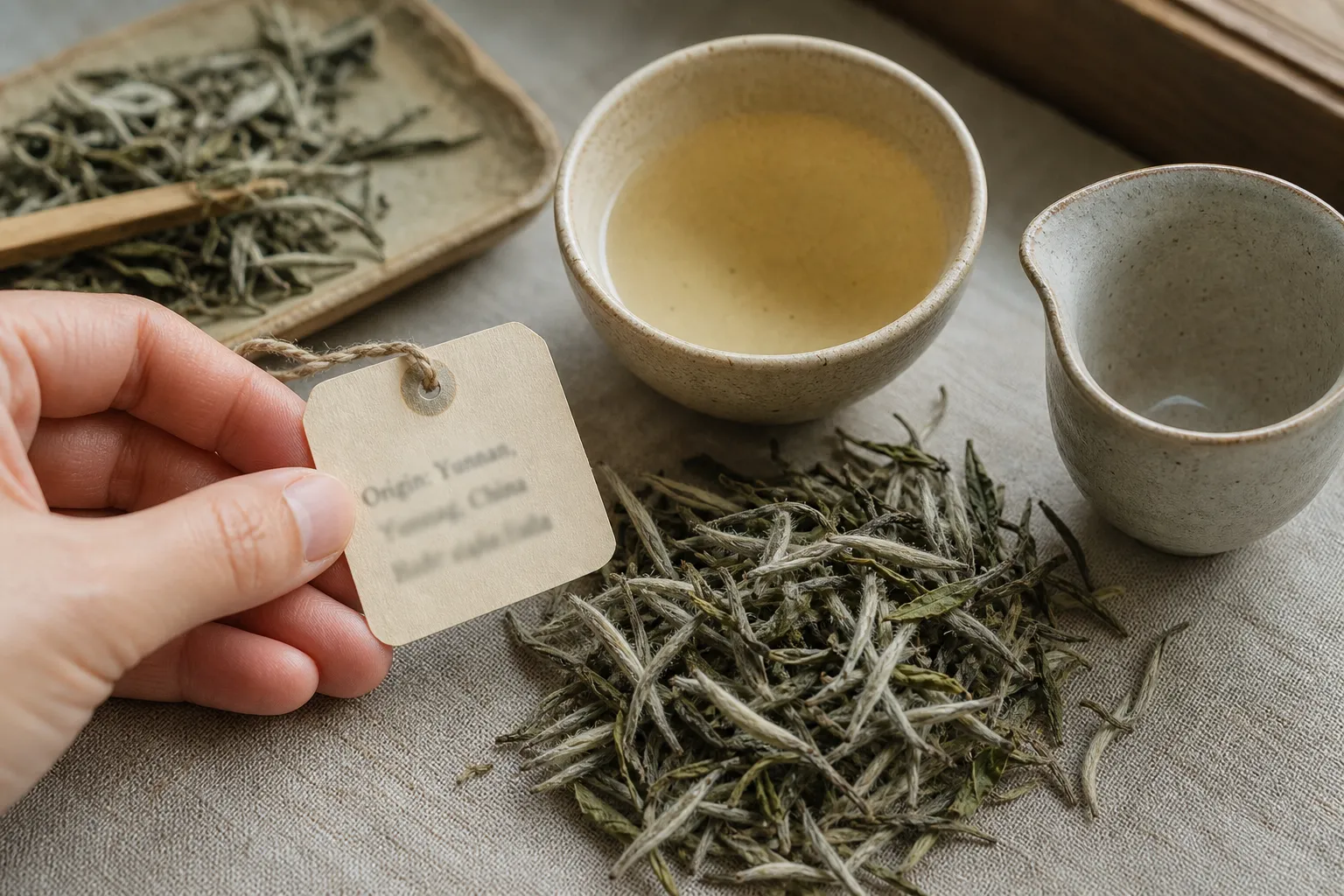
A non-Chinese label on pale buds or lightly handled leaves should make you pause, not dismiss the tea. Yes, white tea outside China can exist in the practical market sense when the leaves are made in a white tea processing style: withered, dried, gently handled, and not shaped or oxidized like many other tea types. That does not mean every non Chinese white tea will taste, age, or brew like a familiar Chinese Silver Needle, White Peony, Gongmei, or Shoumei.
Origin is one clue. Processing, leaf appearance, aroma, harvest detail, cultivar information, storage condition, and seller transparency matter more once the leaves meet water.
upward
Read the full overview first
Use the broader guide first if you need the full scope before this page.
What “White Tea” Means on a Non-Chinese Label
A white tea label usually points to processing before it proves place. The useful question is not only “Which country is this from?” but “What was done to the leaves after picking?”
A stronger label may say the tea was withered and dried with minimal shaping. It may name the harvest season, pluck style, cultivar, or leaf grade. A weaker one may use “white tea” as a soft flavor promise, with no clear harvest, processing, or storage detail. The first gives you something to check. The second leaves too much to guess.
China remains the main reference point for many drinkers because white tea culture, classic variety names, and familiar buying language are strongly tied to Chinese tea. That history shapes expectations: downy buds, soft hay or floral notes, pale liquor, gentle sweetness, or the fuller body of leafier styles. But a historical reference point is not the same as a rule that only one origin can make tea in this style.
The practical boundary is simple: a non-Chinese origin can be plausible, but the label should earn your attention through details you can verify in the dry leaf, aroma, and cup.
What Origin Can and Cannot Prove
A country name can tell you where the leaf was grown or where the seller says it was sourced. It cannot, by itself, prove careful processing, freshness, traditional character, storage quality, or how the tea will behave in your gaiwan.
That distinction matters because origin is often treated too neatly. A familiar Chinese origin can still be poorly stored, roughly processed, or vaguely labeled. A non-Chinese origin can still be thoughtfully made, clearly described, and pleasant to brew. The reverse can also be true. Origin narrows the question; it does not answer it.
Use the place name as the beginning of white tea label evaluation, not the end.
Ask what the seller adds around it:
- Is the harvest season, year, or picking standard named?
- Does the label describe buds, leaf-and-bud sets, or mature leaves?
- Is cultivar information included, or only a country name?
- Does the processing note mention withering and drying?
- Are packing or storage conditions described in concrete language?
- Are taste claims separated from origin claims?
This helps avoid two opposite mistakes. One says anything outside China is automatically less authentic. The other says a newer origin is automatically rare, special, or better value. Neither assumption helps you judge the leaf in front of you.
A better rule is slower: origin plus processing plus observable cup behavior.
How to Read the Leaf and Cup
Start with the dry leaf before you accept the label’s promise. White tea leaf appearance can show whether the material resembles buds, leaf-and-bud plucks, or broader mature leaves. It can also reveal breakage, uneven sorting, excess stems, or a style that seems closer to a generic light tea than a carefully presented white tea.
Do not expect every tea in this category to look like Silver Needle. A bud-heavy tea, a White Peony-like leaf-and-bud style, and a leafier Shoumei-like tea can all look different. The point is not to force every origin into a Chinese category. The point is to see whether the label’s description matches the material.
Then smell the dry leaf. White tea aroma evaluation is not a search for one approved scent. It is a check for coherence. Fresh hay, light florals, soft fruit, grain, honeyed warmth, or gentle herbal notes can appear in different examples. Flat, dusty, stale, smoky, sour, or storage-heavy smells call for more caution, especially when the seller gives little storage context.
Brew gently first. Use a moderate leaf amount, water below a hard boil if the tea is bud-heavy, and short early steeps in a gaiwan or small pot. Watch the liquor color and body. A tea made in this style should not need aggressive extraction to show something; if it only appears after harsh brewing, the label may be promising more than the leaves can give.
Infusion behavior is one of the best checks because it brings processing and leaf quality into the cup. Notice whether the first steeps open gradually, whether aroma stays connected to taste, and whether later rounds become sweet, woody, thin, rough, or simply quiet. None of these observations proves origin. They help you decide whether the tea is worth buying again.
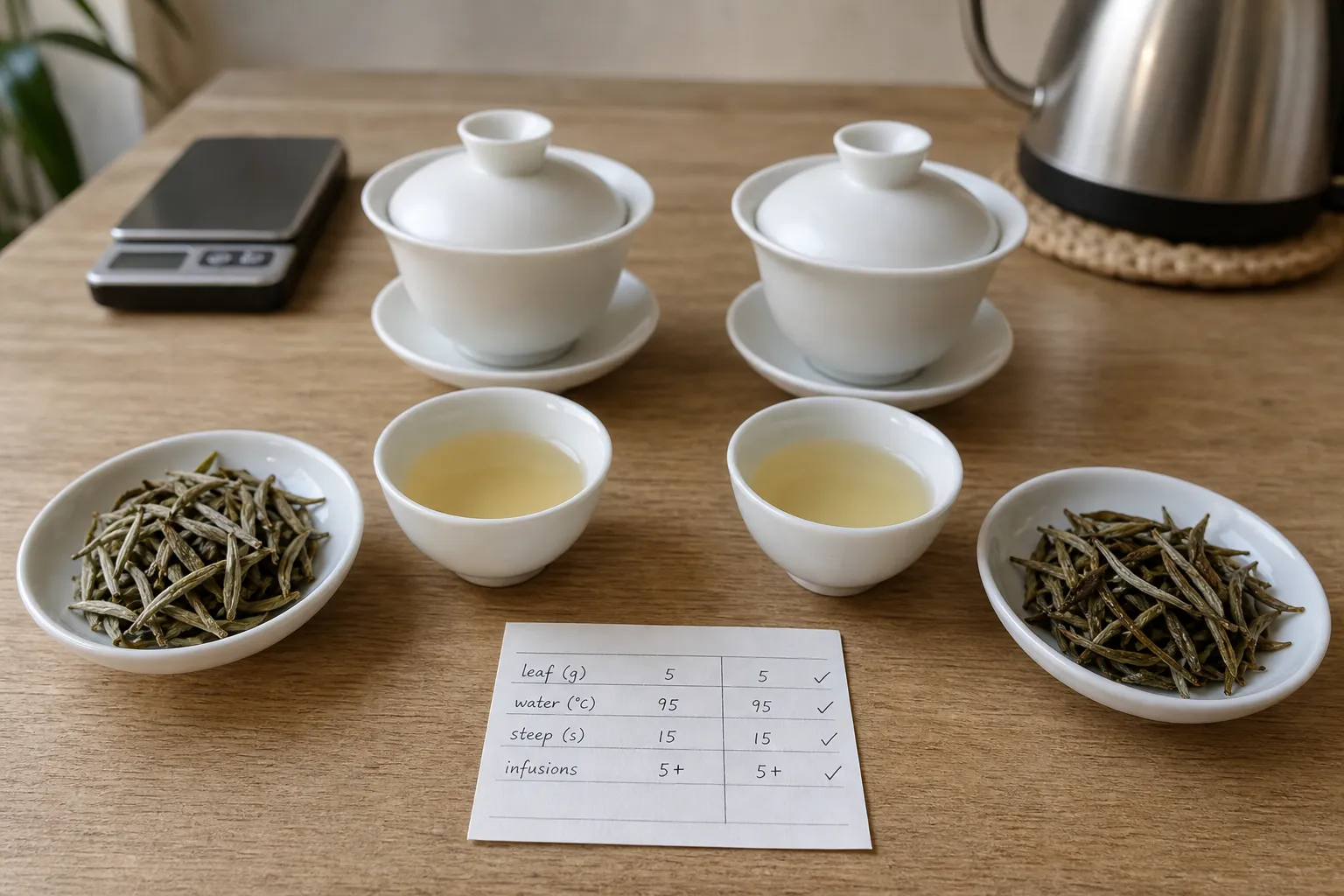
If you can, brew the non-Chinese sample beside a known reference. Use the same vessel, water temperature, leaf weight, and timing as a familiar White Peony or Shoumei. You are not trying to crown a winner. You are learning whether the unfamiliar label behaves like white tea in practice.
The Common Confusion: China, Style, and Quality
The usual mistake is treating three ideas as one: Chinese origin, white tea processing style, and good quality.
Chinese origin
May matter for cultural context, variety names, regional expectations, and market language.
Processing style
Matters for how the leaf was handled after harvest.
Quality
Depends on raw material, timing, handling, drying, sorting, storage, packing, and seller honesty.
These ideas overlap, but they are not identical.
This is why broad lists of white tea growing regions should be read carefully. Without strong sourcing, long country lists or confident regional rankings can make the market look clearer than it is. A seller page may show that a product is being marketed as white tea from a certain place, but that alone does not prove broader production patterns or quality.
The same caution applies to names borrowed from Chinese categories. If a non-Chinese tea is called “Silver Needle style” or “White Peony style,” read the word “style” closely. It may be a useful comparison of pluck and appearance, or it may be loose marketing. Check whether the buds are actually bud-heavy, whether leaf-and-bud sets are visible, and whether harvest information is explained plainly.
The safest reading is neither suspicious nor impressed. Let the label make a claim; let the dry leaf, aroma, and infusion behavior answer it.
When a Non-Chinese Label Deserves More Trust
A stronger label does not need dramatic language. It needs specific language.
Look for harvest information first. A picking date, season, or pluck description gives you a better starting point than a vague “rare white tea” phrase. If the packet says buds, the dry leaf should mostly show buds. If it says leaf-and-bud, you should see that mix. If it says aged tea, storage context becomes important; age language without storage detail should be read with care.
Cultivar information can also help when it is presented plainly. It does not guarantee flavor, but it tells you the seller is not relying only on a country name. In the same way, a processing note helps separate a white tea processing style from a lightly oxidized tea, a green tea marketed as white, or a product described mainly through color and softness.
Seller transparency matters most when the origin is less familiar to you. A clear seller usually separates what is known from what is uncertain. They may describe the farm or region, but they should not ask you to treat that alone as proof. They may give tasting notes, but the notes should not replace harvest, processing, and storage information.
A weak label often leans on mood: pure, rare, ancient, luxury, clean, or wellness-colored language with little about the leaf. Those words do not help you set water temperature, choose a vessel, or compare the next steep. For a practical buyer, that is a reason to buy a small sample first, not a large cake or expensive tin.
A Simple Buying and Brewing Check
Before buying a full quantity of non Chinese white tea, use a small checklist:
- Origin: Is the country or region stated without being treated as automatic proof?
- Processing: Does the seller explain withering, drying, or minimal handling?
- Material: Do the buds and leaves match the claimed style?
- Harvest: Is there a season, year, or picking description?
- Aroma: Does the dry leaf smell clean, coherent, and not storage-damaged?
- Infusion: Does the tea open gradually without needing harsh brewing?
- Transparency: Does the seller answer basic sourcing questions without exaggeration?
Then brew it in a controlled way. Use the same gaiwan, water temperature, and steep time you would use for a similar Chinese reference. If the result is thin, raise the leaf amount before assuming the tea is poor. If it turns rough quickly, shorten the steep. If the aroma is pleasant but fades early, note that as part of the tea’s character rather than forcing it into a famous category.
This small comparison keeps white tea origin and quality in the right relationship. Origin frames the question. The cup tests the claim.
FAQ
Can white tea really be made outside China?
Yes, when the leaves are processed in a white tea style, a non-Chinese origin can be plausible. The label still needs support from processing notes, leaf appearance, aroma, harvest information, and brewing behavior.
Does non-Chinese white tea taste the same as Chinese white tea?
Not necessarily. Cultivar, pluck style, climate, handling, drying, storage, and age can all change the cup. Compare gently beside a known Chinese reference if you want a clearer sense of body, aroma, sweetness, and finish.
Is Chinese origin always better?
No. Chinese origin carries important cultural and historical context, but it does not automatically prove quality. A poorly stored or vaguely labeled tea can disappoint from any origin.
What is the safest way to try white tea outside China?
Buy a small sample, brew it gently, and compare it with a familiar White Peony or Shoumei using the same vessel, water temperature, leaf weight, and timing. Let the dry leaf and the next steep guide the decision.
The Bottom Line
White tea can come from outside China when the leaves are made and presented in a white tea processing style. A non-Chinese origin label is not automatically false, and it is not automatically equal to a classic Chinese reference.
For your next purchase, ask for the details the cup can test: leaf appearance, harvest information, cultivar information when available, processing notes, aroma, infusion behavior, storage context, and seller transparency. Then brew a small sample beside a familiar tea. The clearest answer comes from the label, the dry leaf, and the next steep working together.