
White tea plant identity
Does White Tea Come from a Different Tea Plant
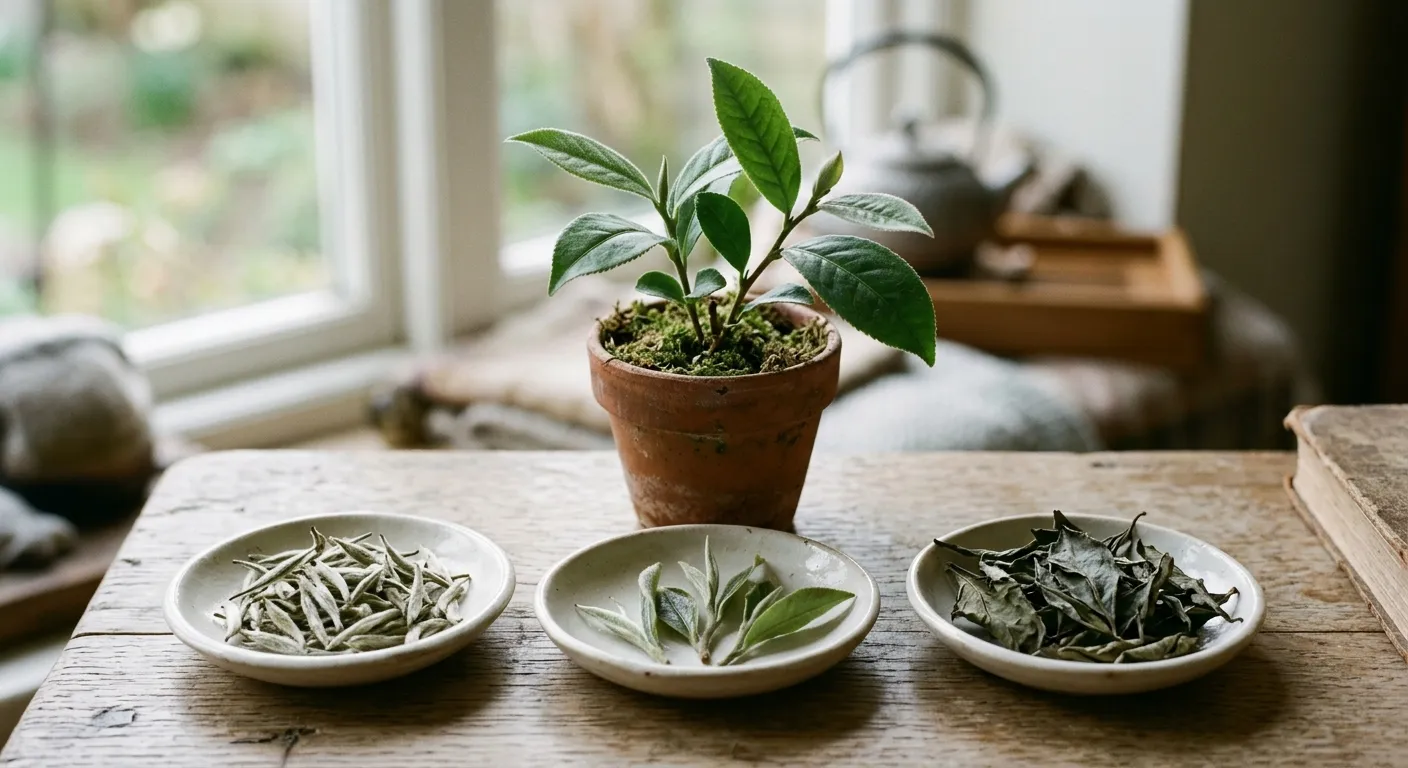
White tea does not usually come from a separate “white tea plant.” In normal tea language, the answer to does white tea come from a different plant is no: white tea is generally made from Camellia sinensis, the same tea plant species used for other true teas.
What changes is usually more specific: the cultivar, growing place, harvest material, plucking standard, and processing style. Those details can make two white teas look and taste very different, but they do not automatically mean they came from different plant species.
That distinction is useful when you are reading a packet of Silver Needle, White Peony, Gongmei, or Shoumei. A label may mention buds, leaves, old trees, a mountain area, or a named cultivar. Those clues may matter, but they should not be read as proof that white tea is made from a separate species only used for white tea.
upward
Start with the broader guide
Use the broader guide first if you need the full scope before this page.
Plant species and tea type are not the same thing
A clear way to read white tea labels is to separate two questions:
- What plant is the tea made from?
- How were the leaves selected and processed?
For true tea, the plant identity is usually discussed through Camellia sinensis. White tea, green tea, black tea, oolong, and pu-erh are commonly described as tea types made from that tea plant, with differences shaped by cultivar, plucking, oxidation, processing, storage, and regional practice.
So “white tea” is not best understood as a botanical species name. It is a tea category. A tea can be called white because of the leaf material selected and the way it is handled, not because it grows on a completely separate plant called the white tea plant.
This is why the same broad plant identity can lead to very different cups. A bud-heavy white tea may look pale, downy, and delicate. A leafier white tea may look darker, broader, and more rustic. An aged white tea cake may brew deeper and rounder than a fresh loose white tea. Those differences are real in the cup, but they do not require a separate species to explain them.
The useful split
Plant identity
Usually discussed through Camellia sinensis for true tea.
Tea category
White tea is a category shaped by leaf material and handling.
Cup difference
Cultivar, plucking, processing, storage, and brewing can still make cups look and taste very different.
Why “white tea plant” is easy to misread
The phrase “white tea plant” can mean several different things in casual product language.
Sometimes it simply means the tea bushes used to make white tea. Sometimes it points toward a cultivar, garden, mountain area, or origin. Sometimes it appears beside a style name such as Silver Needle or White Peony, which can make it sound as if each style has its own plant.
A more careful reading looks like this:
| Label language | What it may be pointing to | What it does not show by itself |
|---|---|---|
| “White tea plant” | Tea bushes or trees used for white tea production | A separate species only for white tea |
| “Silver Needle” | A bud-focused white tea style or grade | One universal plant variety everywhere |
| “White Peony” | A white tea style using buds and leaves | A completely different species from Silver Needle |
| Cultivar name | A cultivated tea plant selection | The whole answer to processing style |
| Origin name | Growing region or production area | Automatic quality or exact plant identity |
The useful habit is to ask what layer the label is describing. Is it naming plant species, cultivar, place, picking standard, processing, age, or style? Marketing language often blends these together, but they are not the same thing.
Cultivar, variety, and origin can still matter
Saying that white tea is generally made from Camellia sinensis does not mean every white tea starts from identical leaf material. Tea plant varieties and cultivars can influence bud size, visible down, aroma, infusion color, and texture.
So the answer is not “white tea comes from a separate species.” But it is also not “the plant never matters.” The plant material matters at a more specific level than the broad species question.
A label may mention a cultivar associated with a region or production tradition. Another tea may name only the origin and grade. A third may use language such as wild, old-tree, high-mountain, or garden-grown. Some of that can be useful, but it should be checked alongside the visible leaf, seller context, harvest information, aroma, and how the tea brews.
This is especially important with terms like “Silver Needle plant variety” or “White Peony plant variety.” Silver Needle and White Peony are better read first as white tea styles or grades. A producer may use a named cultivar for them, but the style name alone is not the same as a full botanical identity.
Plucking choices can make white teas look like different plants
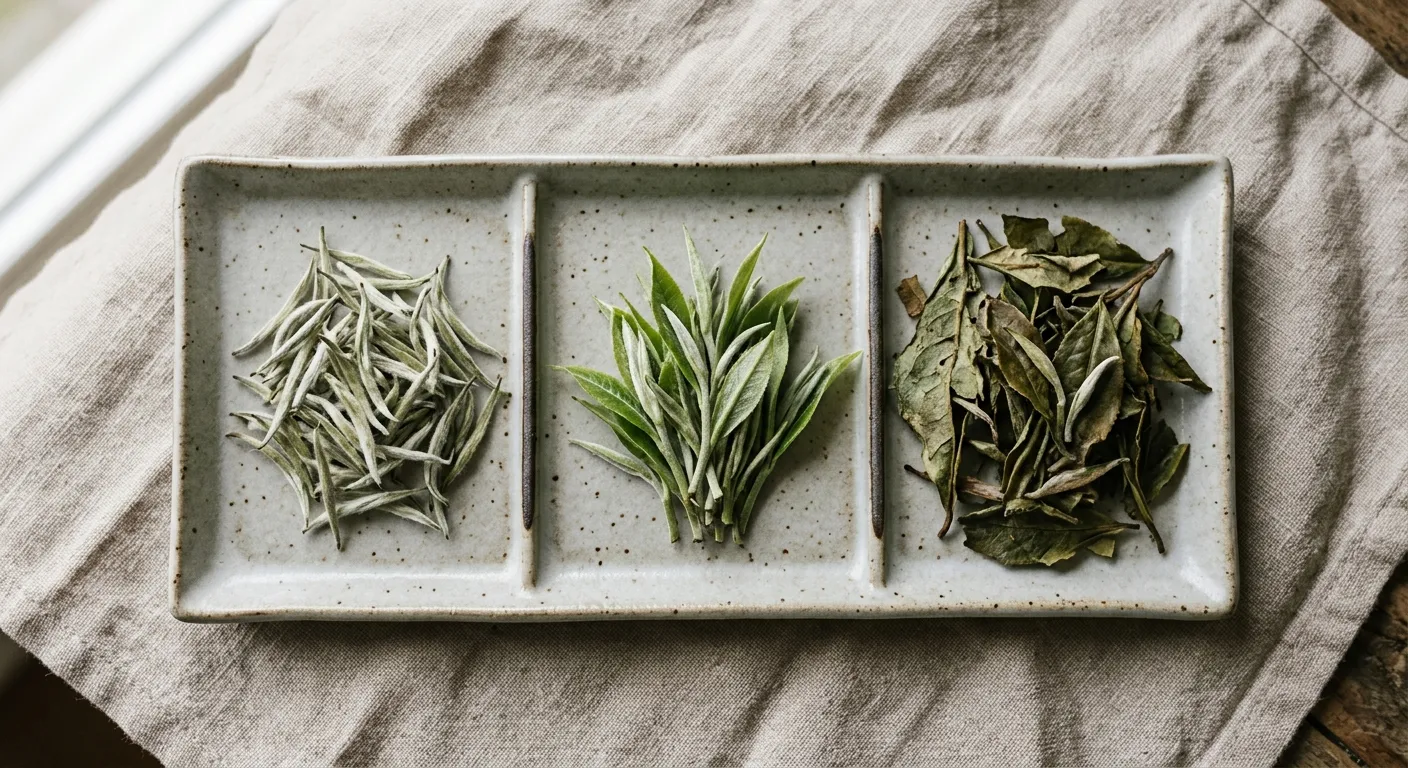
White tea can look very different from one style to another because the picked material changes. The harvest may use mostly buds, buds with young leaves, or more mature leaves.
Before brewing, that can show up clearly:
Bud-heavy material
Often looks finer, paler, and more downy.
Bud-and-leaf material
May show silvery buds mixed with green or olive leaves.
Leafier material
May look broader, darker, and more uneven, especially in compressed or aged forms.
These differences can make two white teas seem as if they came from different plants. Sometimes they may come from different cultivars or regions. Often, though, part of the difference is simply bud selection, leaf selection, and grade.
They may also brew differently. Bud-heavy teas can feel light, subtle, and slow to release flavor. Leafier white teas may give more body, color, herbal notes, or woody depth, depending on processing, storage, and brewing. These are practical cup differences, not plant-species proof.
Processing is the main reason it is called white tea
White tea is usually described through a relatively simple handling sequence compared with many other tea types: the leaves are withered and dried, often with less shaping or intensive rolling. Exact methods vary by region, producer, weather, leaf material, and desired style.
That is why “Camellia sinensis white tea” can be a useful phrase. It keeps the plant identity and tea category together without treating them as the same thing.
Withering and drying can influence:
- whether the aroma seems grassy, hay-like, floral, fruity, woody, or warm;
- how quickly the leaves release flavor;
- how pale or deep the infusion appears;
- how the tea changes with storage;
- whether the cup feels delicate, rounded, sweet, drying, or heavier.
Processing does not erase cultivar or origin. It works with them. Tender buds will not behave exactly like broader leaves, even if both are processed as white tea. But the category “white tea” is mainly a plucking-and-processing idea, not a separate plant species.
How to read a white tea label without overreading it
When a label makes you wonder whether the tea comes from a different plant, read it in layers.
- First, look for the broad tea type. If it says white tea, that tells you the category. It does not identify the cultivar by itself.
- Second, look for the style name. Silver Needle, White Peony, Gongmei, and Shoumei point toward different leaf-selection and grade traditions. They are not simply different species.
- Third, look for origin or cultivar notes. A region name, mountain name, garden name, or cultivar name may help explain why one white tea looks and brews differently from another. Still, those notes are only part of the picture.
- Fourth, look at the leaf material. Are there mostly downy buds? Buds plus leaves? Large mature leaves? Broken fragments? A compressed cake? The dry leaf often tells you more about plucking and handling than a poetic product name does.
- Finally, brew with attention. A tea that sounds similar on the label may behave differently in the cup because of harvest, drying, storage, age, or brewing method. If the infusion is thin, harsh, muted, or unusually dark, the cause may be water temperature, leaf quantity, age, storage, or processing rather than plant species.
This keeps you from treating every attractive label phrase as proof. It also helps you compare two white teas without reducing the difference to a single cause.
Where the answer has limits
The clean answer is that white tea is generally not from a separate species called a white tea plant. But a label can still refer to a specific cultivar, local plant type, regional selection, or production tradition. Without clear producer or seller information, it can be hard to confirm exactly which cultivar was used.
Appearance also has limits. Downy buds may suggest bud-heavy picking. Larger leaves may suggest a leafier grade. A darker liquor may suggest age, storage, handling, drying style, or stronger brewing. None of those observations, on its own, confirms exact plant identity.
The more useful questions are:
- What white tea style is named?
- Does the label clearly mention cultivar or origin?
- Does the dry leaf match the claimed bud or leaf selection?
- Does the aroma seem fresh, aged, stored, floral, grassy, fruity, woody, or muted?
- Does the seller explain harvest and processing plainly, rather than relying only on premium language?
Those questions usually help more than searching for one single “white tea plant.”
Bottom line
White tea is best understood as a tea type made from the tea plant, not as a drink that requires a separate white-tea-only species. The differences that matter in the cup usually come from cultivar, origin, bud and leaf selection, withering, drying, storage, and brewing.
If you see “white tea plant” on a label, read it carefully. It may be casual shorthand, cultivar language, or marketing wording. To judge the tea more usefully, look at the named style, the visible leaves, the harvest and origin details, and the way the tea infuses in your own cup.