
Buyer Evidence
Does Origin Prove White Tea Quality
Origin can help you understand a white tea, but it does not prove quality by itself. A place name may give useful context about style, market position, or the seller’s sourcing story, yet the cup still has to support the claim. If you are asking “does white tea origin prove quality,” the practical answer is no: origin is one clue, and it matters only when it lines up with observable leaf cues, aroma, liquor behavior, storage condition, processing style, seller transparency, and price context.
Treat origin as the start of the question, not the answer. The label may tell you where to look; the dry leaf, brewed tea, and seller details tell you how much trust the claim deserves.
upward
Read the full overview first
Use the broader guide first if you need the full scope before this page.
When Origin Helps
An origin claim is useful when it gives structure to your evaluation. It may suggest whether the seller is presenting the tea as a fresh spring white tea, an aged cake, a regional style, a small-lot production, or a gift-grade tea. That context can shape expectations before you open the bag.
Useful context is not the same as proof. A meaningful origin claim should make the tea easier to examine. If the seller names a place, harvest period, producer, storage condition, or processing approach, those details should connect to the tea in front of you.
The strongest origin wording is usually specific and calm. A clear harvest note, production style, storage description, and brewing suggestion can be more helpful than a dramatic place name. Origin becomes weaker when it appears alone. A packet that says only “famous origin” or “premium mountain tea” gives you mood, not much buying evidence. The tea may still be enjoyable, but that wording does not show whether the leaves were well handled, well stored, honestly represented, or suited to your taste.
What to Check Before Trusting the Label
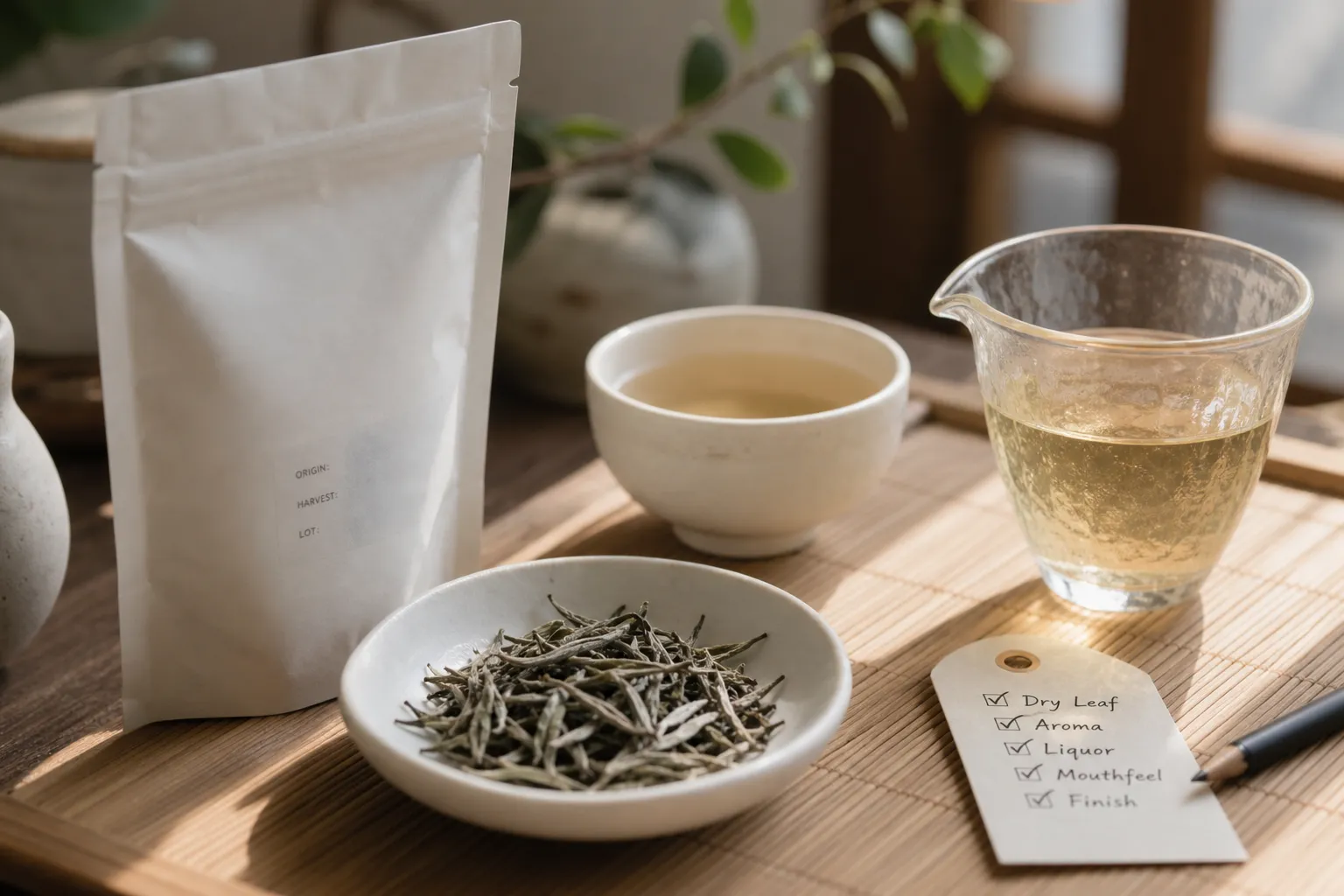
The simplest way to test white tea origin claims is to move from label to leaf, then from leaf to cup. You are not trying to authenticate a region like a laboratory. You are asking whether ordinary buyer-level signs support the story.
Start with dry leaf appearance. Check whether the leaves look reasonably intact for the stated style, whether buds and leaves match the suggested grade, and whether the color looks coherent rather than strangely mixed or tired. White tea varies by grade, age, storage, and processing, so appearance is not a verdict. It is a first check. If the label promises careful handling but the leaf looks heavily broken, dusty, or inconsistent, slow down.
Then smell the dry leaf. White tea aroma cues often matter more than prestige language. Fresh white tea may suggest clean plant, hay, floral, melon, soft fruit, or honeyed notes, depending on style and storage. Aged white tea may move toward deeper sweetness, dried fruit, herbs, wood, or mellow warmth. These notes are not requirements. The better question is whether the aroma feels clean, coherent, and connected to the seller’s description. Flat, musty, sour, smoky, or storage-heavy aromas deserve caution, especially when the tea is presented as carefully kept.
Next, brew it plainly. Use a familiar vessel and a simple method so you can observe liquor behavior without overcomplicating the test. Notice whether the infusion opens gradually, whether the body feels thin or rounded, whether bitterness arrives quickly, and whether the aftertaste has staying power. A good label cannot rescue a cup that feels dull, harsh, or confused across several infusions. At the same time, one awkward brew does not condemn the tea; water temperature, leaf amount, vessel size, and steeping time can change the result.
Storage matters most for older white tea. Age language can sound impressive, but storage shapes aroma, texture, and drinkability. If a tea is presented as aged, ask how it was stored, whether the wrapper or packaging condition makes sense, and whether the aroma feels clean rather than damp or stale. Origin and age together may sound persuasive, but neither one shows that the tea was stored well.
Processing also matters. White tea quality is not only about where the leaf grew. Withering, drying, handling, compression, and later storage all affect how the tea smells, brews, and ages. Origin describes one part of the story; processing and storage shape what you actually drink.
A Quick Buyer’s Check
Use this compact check when a white tea label leans heavily on place:
Origin wording
Ask whether the place claim is specific or vague. Specific language is easier to compare with other details.
Dry leaf
Ask whether the leaves match the stated grade or style. Appearance can reveal handling, breakage, and consistency.
Aroma
Ask whether the scent feels clean and coherent. Aroma often shows storage and processing problems early.
Liquor
Ask whether the cup has balance across infusions. Brewing behavior tests more than the label can show.
Storage
Ask whether age or storage is explained clearly. Older white tea depends heavily on storage condition.
Seller context
Ask whether harvest, style, and price are explained calmly. Transparency makes the claim easier to assess.
This is not a scoring system. It is a way to slow down. If several cues agree, the origin claim becomes more meaningful. If the label sounds strong but the leaf, aroma, and cup disagree, treat the claim as weak.
Why Buyers Overread Origin Claims
Origin language is powerful because it feels concrete. A place name seems easier to trust than a vague tasting note. It can also carry cultural weight, price expectations, and collector language. For a new buyer, that can make the label feel like a shortcut: if the tea comes from the “right” place, the quality must be good.
That shortcut is where mistakes happen. White tea buying evidence should come from several angles. A famous or carefully worded origin may point toward a tradition, market category, or sourcing route, but it does not automatically verify leaf quality. A lesser-known place may produce tea that is clean, well processed, and enjoyable. A famous place name may still appear on tea that is ordinary, poorly stored, or not well matched to your taste.
Price can intensify the confusion. Higher price often makes buyers look for a reason to believe, and origin is easy to print, repeat, and remember. Ask what the price is claiming to reflect: scarce material, careful processing, older storage, smaller production, better selection, attractive packaging, or stronger branding. If the seller cannot explain the price beyond origin, the support remains thin.
This does not mean you should ignore origin. It means you should not let it do all the work. A place name can frame the conversation; it should not end it.
What Makes an Origin Claim More Meaningful
An origin claim becomes more useful when it connects to details you can inspect or ask about. Helpful sellers usually make the tea easier to understand, not more mysterious. They may explain harvest season, leaf grade, processing style, storage condition, compression date if relevant, or recommended brewing approach. None of these details promises excellence, but together they give you more ways to judge whether the story holds.
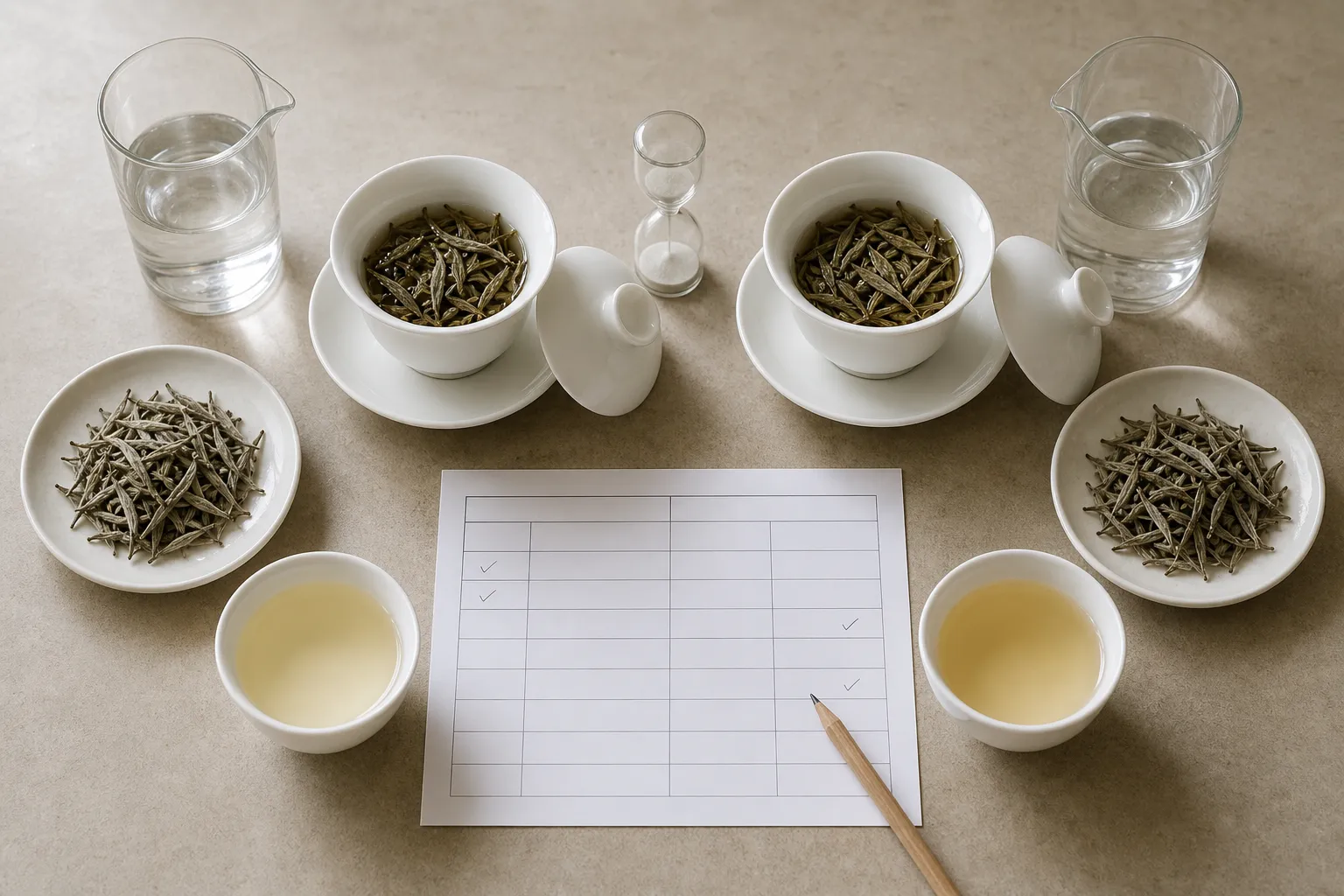
Side-by-side tasting is one of the clearest buyer-level tools. If you have two white teas with different origin claims, brew them with similar leaf amounts, water, vessel, and steeping rhythm. Compare dry leaf aroma first, then early infusion clarity, body, sweetness, astringency, and aftertaste. The goal is not to declare one region superior. The goal is to learn whether the claimed origin corresponds to a distinct and enjoyable cup.
This also protects you from label bias. If you expect the more famous origin to win, you may overlook a quieter tea that brews better for your preferences. If you taste before looking at price, you may notice that a costly origin claim does not always lead to a more satisfying session.
For aged white tea, compare storage impressions before prestige. Clean aroma, stable sweetness, and comfortable liquor matter more than a dramatic age or place story. If the tea smells damp, stale, or oddly sharp, do not let origin language talk you out of noticing it.
Where the Evidence Runs Out
There is a limit to what an ordinary buyer can know from a label and a cup. Without reliable documentation, independent verification, or stronger sourcing records, you cannot fully confirm a white tea’s origin from taste alone. You can judge whether the tea is pleasant, clean, coherent, and fairly represented. You can ask whether the seller’s details are specific. You can compare samples. But those checks should not become certainty about authenticity.
This article does not rank white tea regions or define legal origin standards. The available material for this page does not provide usable public references for claims about specific regions, production rules, certification systems, or authentication methods. That limitation matters. A narrow answer is more useful than pretending every origin phrase can be verified from general tea knowledge.
The practical boundary is simple: origin can support a quality judgment only when other signs agree. It cannot replace tasting, inspection, storage questions, or seller transparency. If the tea looks careless, smells off, brews harshly, or comes with a vague sales story, a respected place name is not enough. If the tea looks well handled, smells clean, brews with balance, and comes with clear context, the origin claim becomes more credible as part of the whole picture.
A Practical Answer for the Next Purchase
Before buying white tea because of origin, pause and ask four questions:
- What exactly is being claimed: place, harvest, age, grade, processing, or storage?
- What can I verify from the dry leaf, aroma, and brewed liquor?
- Does the seller explain the tea clearly without leaning only on prestige language?
- Would I still want this tea if the famous place name were removed?
That last question returns the decision to the cup. Good white tea should not need origin language to carry the entire experience. The tea may still be connected to a meaningful place, but quality shows up through handling, aroma, infusion behavior, storage, balance, and the honesty of the surrounding information.
So, does origin prove quality? No. It can be a helpful context clue, and sometimes an important one, but it is not proof. Treat origin as one piece of white tea buying evidence. Let the leaves, the scent, the liquor, the storage story, the seller’s clarity, and your own side-by-side tasting decide how much weight that place name deserves.
FAQ
Can a famous white tea origin still matter?
Yes. A known origin can help frame expectations and may point to a recognized style or sourcing route. It still needs support from leaf appearance, aroma, brewing behavior, storage details, and seller transparency.
Is a lesser-known origin a bad sign?
No. A less familiar place name does not make a tea low quality. It means you should judge the tea through the same practical checks: clean aroma, coherent leaf, balanced liquor, clear processing information, and fair price context.
Can taste alone confirm white tea origin?
Not fully. Tasting can show whether a tea is enjoyable, clean, and consistent with its description, but it cannot confirm origin with certainty. Use tasting as one check, not as an authentication method.