
Taste guide
What Does White Tea Taste Like
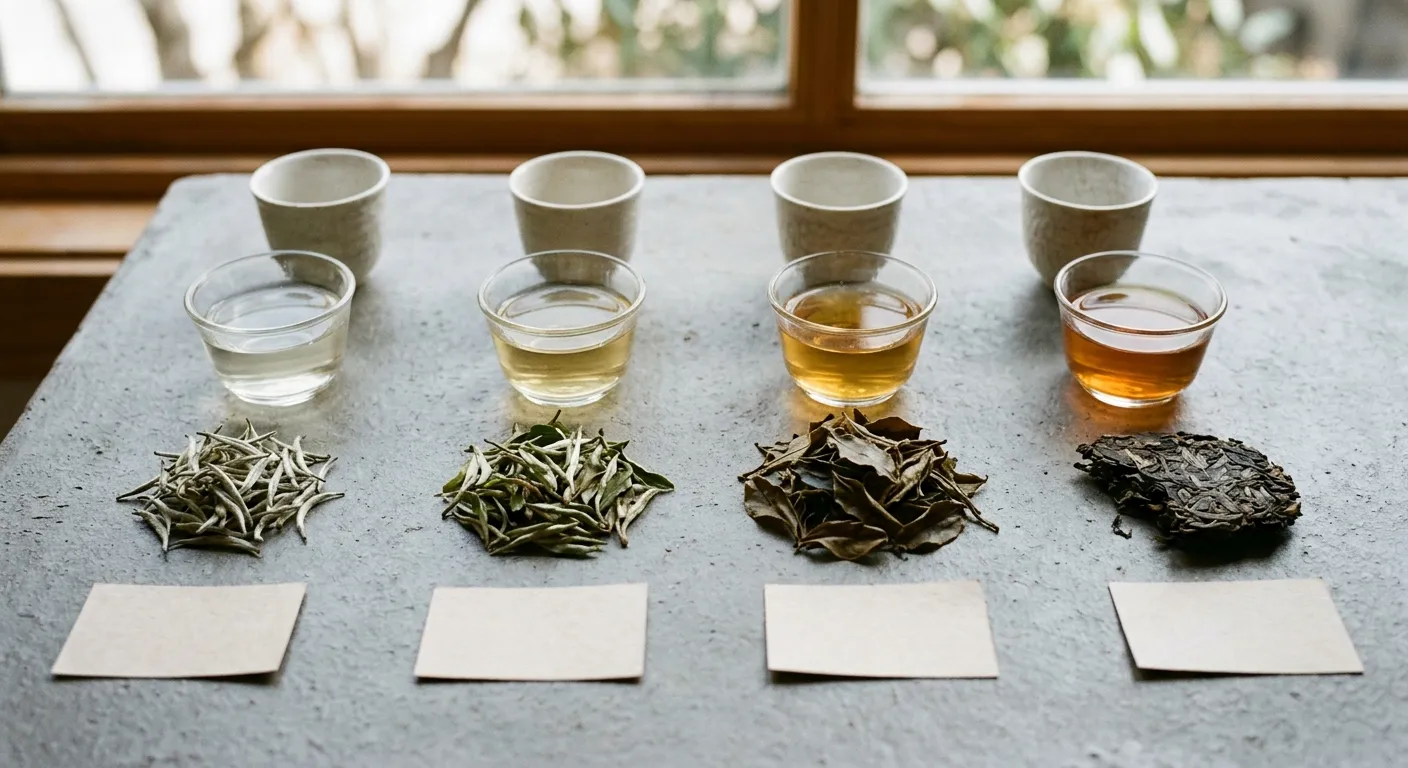
White tea taste is usually light, clean, and subtle rather than loud. In many cups, it can taste softly sweet, floral, grassy, hay-like, fruity, herbal, woody, or gently creamy. The better question is not “what does all white tea taste like?” but “what changed this cup?”
A bud-heavy Silver Needle brewed gently may feel pale, silky, and almost quiet. A leafier White Peony, Gongmei, or Shoumei can taste broader, more herbal, more dried-fruit-like, or more autumnal. Freshness, age, storage, water temperature, steep time, vessel size, and leaf amount all shape the result.
If your white tea tastes weak, bitter, grassy, sour, smoky, or damp, the cause may be brewing, leaf style, storage, or tea condition rather than white tea as a single category.
upward
Start with the broader guide
Use the broader guide first if you need the full scope before this page.
White Tea Is a Range, Not One Flavor
A useful way to understand white tea flavor is to think in ranges:
Light and bud-like
Soft sweetness, faint flowers, melon rind, cucumber, fresh linen, warm milk, or a clean mineral finish.
Leafier and more aromatic
Meadow grass, dried hay, wildflower, honeyed edges, apricot skin, herbs, or light malt.
Darker or aged in character
Dried fruit, date, wood, autumn leaves, gentle spice, or rounded broth-like sweetness.
Poorly brewed or poorly stored
Thin wateriness, sharp bitterness, stale cardboard, sourness, heavy smoke, damp paper, or a flat dusty finish.
These are landmarks, not promises. One white tea may show only two or three of them. Another may shift across several infusions.
The main point: do not judge white tea only by liquor color. A good cup may look pale but still have clear aroma, soft texture, and a lingering finish. A cup that looks pale and tastes like warm water may simply need more leaf, hotter water, or a longer steep.
Common White Tea Flavor Notes and What They May Suggest
Flavor or aroma note
Often pleasant when...
Less promising when...
Floral
It feels fresh, light, and connected to sweetness.
It smells perfumed, artificial, or detached from the tea.
Hay or dried grass
It is clean, warm, and sweet-dry.
It becomes dusty, stale, or barn-like.
Fresh grass
It feels spring-like and crisp.
It turns harsh, raw, or sharply vegetal.
Honeyed sweetness
It appears in the aroma, texture, or aftertaste.
It exists only in the seller’s description.
Melon or pear
It appears lightly in pale, bud-heavy tea.
The brew is so weak that the note disappears.
Dried fruit
It feels rounded and clean, especially in darker or older teas.
It turns sour, heavy, or unpleasantly fermented.
Wood or autumn leaves
It feels warm, dry, and calm.
It smells damp, moldy, or storage-damaged.
Bitterness
It is faint and balanced by sweetness.
It dominates after hot water or long steeping.
Smoke
It is very light and not dirty.
It is strong, acrid, or covers the tea’s own aroma.
Mustiness
Rarely a good sign in the cup.
It may point to poor storage or contamination concerns.
Clean hay in white tea can be normal. Damp, sour, or moldy hay is different. That distinction matters because one may call for a brewing adjustment, while the other may be a reason to set the tea aside.
Is White Tea Supposed to Taste Sweet or Bitter?
White tea often tastes lightly sweet, but not like sugar. The sweetness may show as a soft finish, a honey-like aroma, gentle roundness on the tongue, or a clean aftertaste that returns after swallowing.
Bitterness can appear too. It is not automatically a flaw. The question is how much bitterness there is, where it appears, and what caused it.
White tea may taste more bitter when:
- water is too hot for a delicate bud-heavy tea;
- the steep is too long;
- too much leaf is packed into a small vessel;
- broken leaf pieces release flavor quickly;
- the tea has more mature leaf, stem, or structure;
- the drinker is comparing it with flavored or sweetened tea.
A slight bitter edge can give the cup shape. Harsh, drying bitterness that overwhelms aroma usually means the brewing needs adjustment, or the tea may not suit that preparation.
If you are new to white tea, do not chase sweetness by making the brew weaker and weaker. That may remove the rough edge, but it can also erase aroma and body. Change one variable at a time: a little cooler water, a shorter steep, a more careful leaf amount, or a smaller vessel.
Why White Tea Can Taste Weak, Watery, or Too Pale
A weak or watery cup is one of the most common beginner frustrations. The tea may smell faintly pleasant but taste like almost nothing. That does not always mean the leaf is bad.
Start with the simple variables:
Leaf amount
Fluffy white tea leaves take up space. A teaspoon can be misleading when the leaves are large and light. If the cup is watery, use more leaf before assuming the tea has no flavor.
Water temperature
Very cool water can keep delicate teas smooth, but it can also under-extract them. If the aroma is quiet and the taste is thin, try slightly hotter water.
Steep time
A short steep may work in a small gaiwan with plenty of leaf. In a mug or larger teapot, the same time may be too brief.
Vessel size
A large pot with a small pinch of tea often produces thin liquor. Match leaf amount to water volume.
Leaf style
Bud-heavy teas can be subtle even when brewed well. Leafier teas often give a broader, more obvious flavor.
Freshness and storage
Tea that has absorbed kitchen odors, moisture, or stale air may lose clarity. More leaf may make it stronger, but not necessarily better.
A good test is to smell the dry leaf, the warmed leaf, and the wet leaf after the first infusion. If the wet leaf is aromatic but the liquor is weak, brewing is likely the issue. If the leaf itself smells flat, stale, or off, brewing can only help so much.
Why White Tea Tastes Grassy, Hay-Like, or Herbal
Grassy white tea taste can be pleasant or distracting depending on the form it takes.
A fresh grassy note may feel green, spring-like, and crisp. It often appears more clearly when the tea is young, lightly brewed, or made from tender material. Some drinkers enjoy this brightness; others find it too close to raw greens.
A clean hay flavor can be warm, dry, and comforting. Dried meadow grass, straw, or sun-warmed field notes are common descriptions for leafier white teas. These notes may be more noticeable in White Peony, Gongmei, and Shoumei than in very bud-heavy teas.
A stale grassy note is different. If the tea smells dusty, old, damp, or like cardboard, the issue may be storage, packaging, or exposure to air and moisture.
To soften an overly grassy cup:
- use slightly cooler water;
- shorten the first steep;
- briefly awaken compressed tea if it feels tight or dusty;
- use a vessel that gives the leaves room to open;
- compare the same tea with more leaf but shorter time.
If the grassy note becomes sweeter and more floral after adjustment, it was probably a brewing balance issue. If it remains sour, stale, or musty, the problem may sit in the leaf or storage history.
What Should White Tea Smell Like?
White tea aroma often gives clearer clues than liquor color. Smell the tea at three stages before deciding what the taste means.
Dry Leaf
Dry white tea can smell faintly floral, grassy, sweet, nutty, hay-like, woody, or fruity. Bud-heavy teas may be soft and quiet. Leafier teas may smell more herbal or rustic. Compressed cakes may seem closed until warmed or rinsed.
Warmed Leaf
Place the leaf in a warmed empty vessel and smell before adding water. This can reveal sweetness, flowers, dry grass, fruit skin, or warm grain more clearly than smelling from the bag.
Wet Leaf
After the first infusion, the wet leaf usually gives the most direct clue. A clean white tea aroma may be floral, meadow-like, honeyed, herbal, fruity, or woody depending on style. Less reassuring signs include sharp sourness, heavy smoke, mildew, damp paper, or an odor that seems unrelated to tea.
A faint toasted or woody tone may be acceptable in some teas. Acrid smoke, vinegar-like sourness, or damp-storage odor deserves caution. Age, rarity, or price language should not be used to excuse an unpleasant aroma.
Silver Needle and White Peony Taste: Why They Feel Different
The difference between Silver Needle and White Peony taste is easiest to understand through leaf composition.
Silver Needle
Silver Needle is usually a bud-focused style. In the cup, it can feel pale, soft, silky, and quiet. Common impressions may include light florals, melon, cucumber, fresh hay, creaminess, or gentle sweetness that appears more in the finish than in the first sip. It may disappoint drinkers who expect strong aroma or dark liquor.
White Peony
White Peony includes buds and leaves, so it often has a broader profile. It can taste more floral, more herbal, more fruity, or more structured. Compared with Silver Needle, it may show more body and a clearer mid-palate. It can also become more assertive if brewed hot or long.
Neither style is automatically better. The choice depends on what you want:
- Choose Silver Needle if you enjoy subtle texture, pale sweetness, and quiet aroma.
- Choose White Peony if you want more obvious fragrance, leaf character, and flavor range.
- If Silver Needle tastes like nothing, adjust brewing before dismissing it.
- If White Peony tastes too sharp, shorten the steep or cool the water slightly.
The best comparison is side by side with the same vessel, same water, and measured leaf amounts. Otherwise, it is easy to mistake brewing strength for tea style.
Gongmei and Shoumei Taste Compared with Lighter White Teas
Gongmei and Shoumei are often leafier and can feel more robust than very bud-focused white teas. Depending on leaf material, age, storage, and brewing, they may show dried leaves, herbs, hay, date skin, light wood, dried fruit, or a deeper sweetness.
Compared with Silver Needle and many White Peony teas, Gongmei and Shoumei may:
- produce a darker liquor;
- feel fuller in the mouth;
- tolerate hotter water more comfortably;
- show more rustic, herbal, or autumnal notes;
- work well with longer steeps or casual pot brewing.
This does not mean every Gongmei or Shoumei is heavy or dark. Some are still light and floral. Others can be coarse if the material, processing, or storage is poor. The useful distinction is not “cheap versus premium,” but bud-to-leaf ratio, leaf maturity, compression, age, and how the tea responds in water.
If delicate white teas taste too faint to you, a leafier style may be easier to read. If you prefer very clean, airy, high-note cups, some leafier teas may feel too earthy or broad.
How Aged White Tea Taste Differs from Fresh White Tea
Fresh white tea often leans toward light flowers, fresh grass, soft hay, melon-like sweetness, or gentle herbal notes. Aged white tea taste, when storage has been clean and the tea has changed in a pleasing direction, may become rounder, darker, softer, fruitier, woodier, or more date-like.
Age alone is not a flavor guarantee.
An older tea can taste flat if it was weak to begin with or stored poorly. It can also smell stale, sour, smoky, or damp if storage conditions were unfavorable. When tasting aged white tea, pay attention to:
- whether the aroma is clean or musty;
- whether sweetness appears in the cup, not only in the description;
- whether the liquor feels rounded or simply dull;
- whether the aftertaste is comfortable or drying and stale;
- whether the leaf and wrapper context seem consistent with the stated age.
Without strong documentation, age claims should be read as seller context, not proof. The cup still needs to answer the practical question: does the tea smell clean, brew clearly, and leave a pleasant finish?
Does White Tea Cake Taste Different from Loose Leaf White Tea?
White tea cake can taste different from loose leaf white tea, but compression is only one variable. A cake changes how water reaches the leaf. Tight pieces may open slowly, giving a lighter first infusion and stronger later cups. Loose leaf often releases aroma more quickly and evenly.
A compressed tea may taste:
- slow to open in the first steep;
- deeper after the leaves loosen;
- slightly woodier or warmer if it has been stored for some time;
- uneven if chunks are not separated carefully;
- dusty or muted if the outside has absorbed odor or aged poorly.
For a cake, break off pieces with both surface and inner material when possible. Too much powder can make the brew harsh. One dense chunk may under-brew at first and then suddenly release strength. Give the leaf enough room to expand.
Loose leaf is often easier for beginners because the brewing response is more immediate. Cake tea asks for more attention to piece size, steep time, storage aroma, and whether the compressed leaf has opened fully.
How Water Temperature Changes White Tea Flavor
Water temperature can move white tea from soft and sweet to sharp and bitter, or from faint and watery to clear and expressive.
Cooler water often emphasizes softness. It may protect delicate aromatics and reduce bitterness, especially in bud-heavy teas. The tradeoff is that the cup can become too quiet if the leaf amount is low or the steep is short.
Hotter water often brings out body, aroma, and deeper flavor. It can help leafier teas, aged teas, and compressed teas open. The tradeoff is that it may also pull out bitterness, astringency, or rough green notes.
A practical starting path:
- For delicate bud-heavy tea: begin with moderately hot water, not boiling, and adjust upward if the cup is thin.
- For White Peony: use a balanced temperature and adjust by taste.
- For Gongmei, Shoumei, aged tea, or cake: slightly hotter water may work well, especially after the first infusion.
- For bitterness: shorten time before lowering temperature dramatically.
- For wateriness: increase leaf or temperature before extending the steep too far.
Time and temperature work together. A hotter, shorter steep can taste clearer than a cooler, longer one. A cooler, longer steep can taste smoother but flatter. The best setting is the one that reveals aroma without making the finish harsh.
What Good White Tea Aftertaste Feels Like
White tea aftertaste is often more important than first impact. Because many white teas are not loud, the finish tells you whether the cup has depth.
A pleasing white tea aftertaste may feel:
- lightly sweet at the back of the mouth;
- clean without sharpness;
- soft and coating rather than scratchy;
- floral or hay-like after swallowing;
- gently fruity or woody in older or leafier teas;
- present for a while without becoming bitter.
A weak tea may disappear immediately. A harsh tea may leave a dry, rough, or unpleasantly bitter finish. A stale tea may leave a papery or dusty sensation.
Expectations also shape judgment. If you expect white tea to behave like black tea, it may seem too subtle. If you expect it to be only soft and sweet, a structured leafier tea may seem too strong. Taste the finish before deciding.
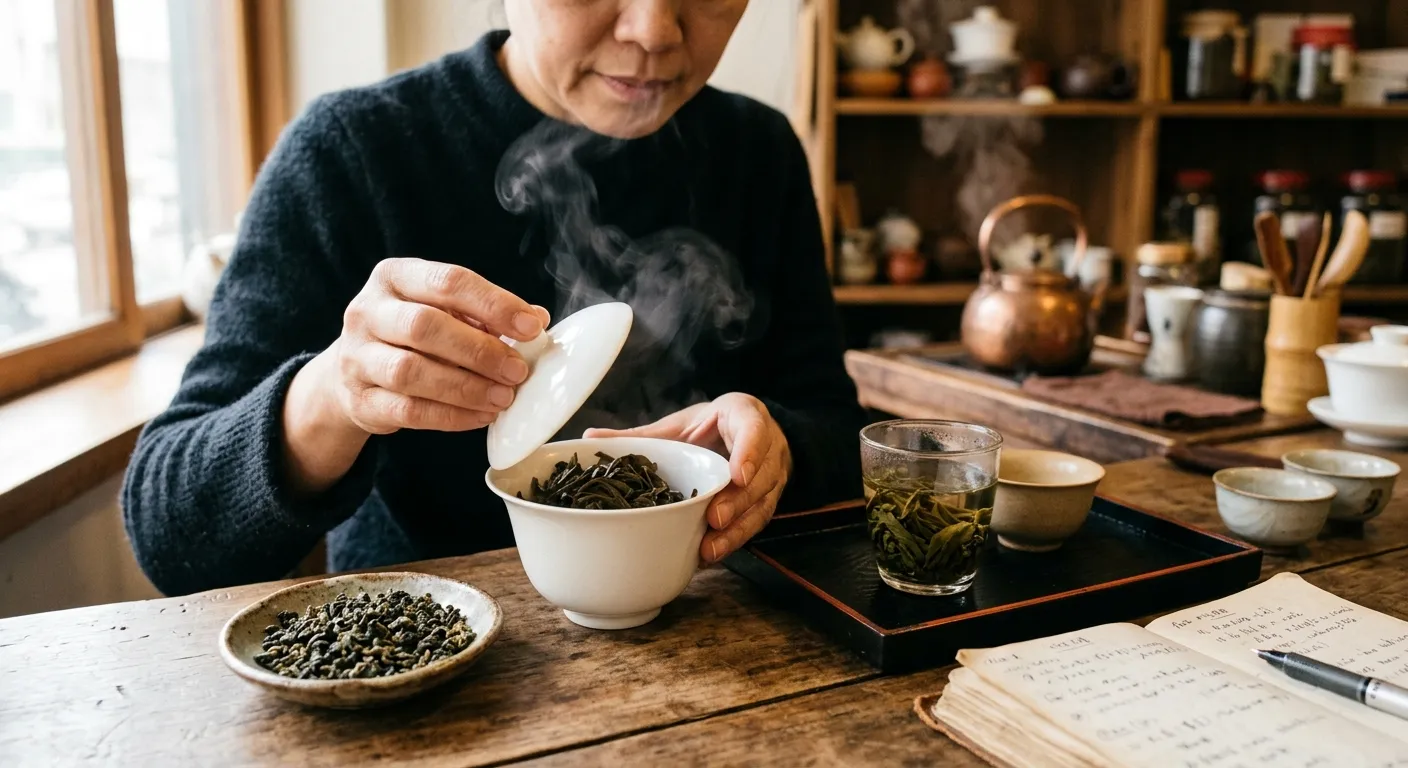
How to Taste White Tea for the First Time
For a first tasting, keep the process simple and repeatable.
Use a plain vessel
A small teapot, gaiwan, or simple mug with a strainer is enough. Avoid strongly scented cups or flavored foods nearby.
Warm the vessel and smell the dry leaf
This helps you notice aroma before water changes it.
Measure more carefully than you think
Fluffy leaves can fool the eye. If the tea is large and airy, a loose spoonful may be less leaf than expected.
Make one balanced infusion
Use moderately hot water and a short-to-medium steep. Do not begin with extremes.
Taste in three moments
First sip for texture, second sip for flavor, and after swallowing for finish.
Adjust only one variable
If it is thin, use more leaf or hotter water. If it is bitter, shorten the steep. If it is grassy, try slightly cooler water or less time. If it is closed, give it another infusion.
Write down plain words
“Sweet hay,” “too watery,” “floral smell but thin taste,” or “nice finish, bitter front” is more useful than forcing poetic tasting notes.
The goal is not to find the correct description. It is to connect what you smell and taste with the leaf style and brewing choices in front of you.
A Practical Judgment Frame for White Tea Taste
When deciding whether a white tea tastes good, disappointing, or simply different from your expectation, ask five questions:
What is the leaf style?
Bud-heavy, bud-and-leaf, leafier, loose, or compressed?
What did the aroma say before the taste?
Clean, floral, grassy, hay-like, fruity, woody, stale, smoky, sour, or damp?
Did the brewing match the leaf?
Enough leaf, suitable water temperature, reasonable steep time, and enough room to open?
Is the flavor balanced?
Sweetness, grassiness, bitterness, body, and finish should feel connected rather than chaotic.
Does the aftertaste invite another sip?
A good cup does not have to be strong, but it should feel clean and coherent.
White tea can be quiet, but quiet is not the same as empty. It can be grassy, but grassy is not the same as stale. It can be aged, compressed, or leafier, but those words do not automatically make the cup better. The clearest judgment comes from matching sensory clues — aroma, liquor, texture, finish, and storage impression — to the actual leaf and the way you brewed it.