
Processing clue
What Does Sun-Dried White Tea Mean
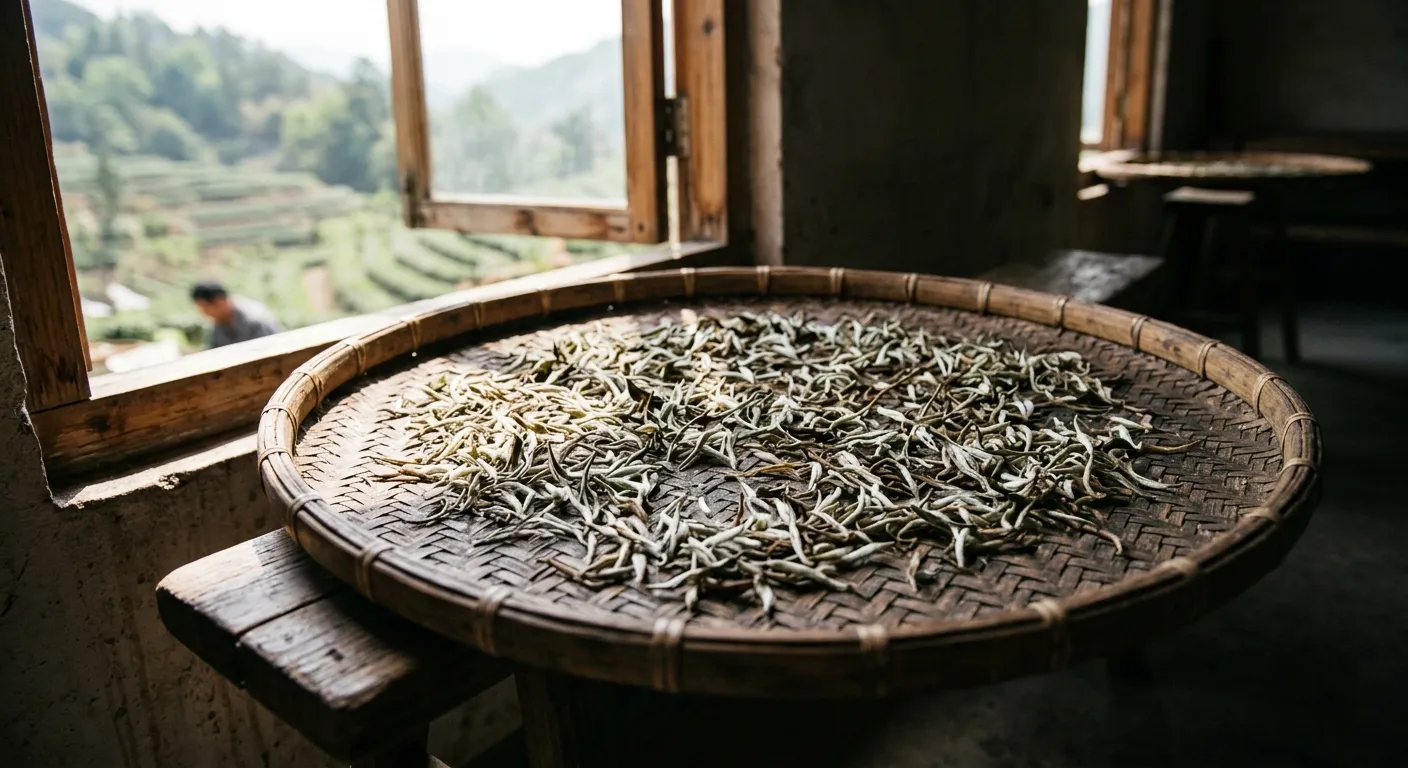
“Sun-dried white tea” usually means the tea was dried with some exposure to sunlight rather than only through indoor or machine-controlled drying. As a buying phrase, sun dried white tea is best read as a processing clue, not a full quality statement.
The label may point to how moisture was reduced after picking and withering. It does not, by itself, tell you how carefully the leaves were handled, how evenly they dried, how they were stored, where they came from, or whether the seller can explain the process clearly.
If you see “sun-dried” on a wrapper, product page, or tea menu, use it as a reason to look closer—not as the final answer.
upward
Start with the broader guide
Use the broader guide first if you need the full scope before this page.
The plain meaning: a drying description, not the whole process
White tea is generally described through a relatively simple processing path: leaves are picked, withered, and dried. “Sun drying white tea” points to the drying part of that sequence. In ordinary buyer language, it suggests that sunlight played some role in reducing moisture in the leaf.
The loose part is “some.” The phrase may refer to leaves dried mostly outdoors, leaves exposed to sun for part of the drying stage, or a seller’s broader way of saying the tea was made in a less mechanized style. Without clear producer notes, the exact meaning is hard to confirm from the label alone.
That is why “sun-dried” should not be treated as a complete definition of the tea. A white tea drying method is only one variable. The final cup can also be shaped by picking standard, leaf maturity, withering conditions, handling, storage, age, compression if it is a cake, and brewing choices.
A careful reading is:
- It may indicate sunlight exposure during drying.
- It does not automatically confirm a specific regional tradition.
- It does not mean the tea is better than a non-sun-dried version.
- It does not replace checking the dry leaf, aroma, infusion, storage, and seller details.
In short, the meaning is practical but limited: it tells you where to start your questions.
What the label can and cannot tell you
A sun dried white tea label becomes more useful when it sits beside concrete information: tea type, harvest season, picking grade, origin context, production notes, storage condition, and clear photos of the leaf.
It becomes much weaker when it appears alone with broad words like “traditional,” “natural,” or “handmade.” Those words may describe real practices in some cases, but they are also common in tea marketing. A tea can sound rustic and still be poorly handled. Another tea can involve more controlled drying assistance and still be clean, balanced, and enjoyable.
Drying method versus quality is not a one-way ranking.
Useful questions to ask
- Was sunlight used for the whole drying stage or only part of it?
- Was the tea later finished with another drying step?
- Was it sold as loose leaf or pressed after drying?
- How was it stored after production?
- Does the seller describe the leaf grade and harvest context?
- Are there clear dry-leaf and brewed-leaf photos?
- Does the cup match the description, or does the label do most of the work?
A transparent seller does not need to turn “sun-dried” into a grand quality signal. The stronger sign is usually whether the description is specific, modest, and consistent with what you can observe.
How to inspect sun-dried white tea in your own cup
Because the label alone is limited, the next step is sensory interpretation. You do not need lab tools or professional credentials. Look, smell, brew, and keep the wording in proportion.
Start with the dry leaf
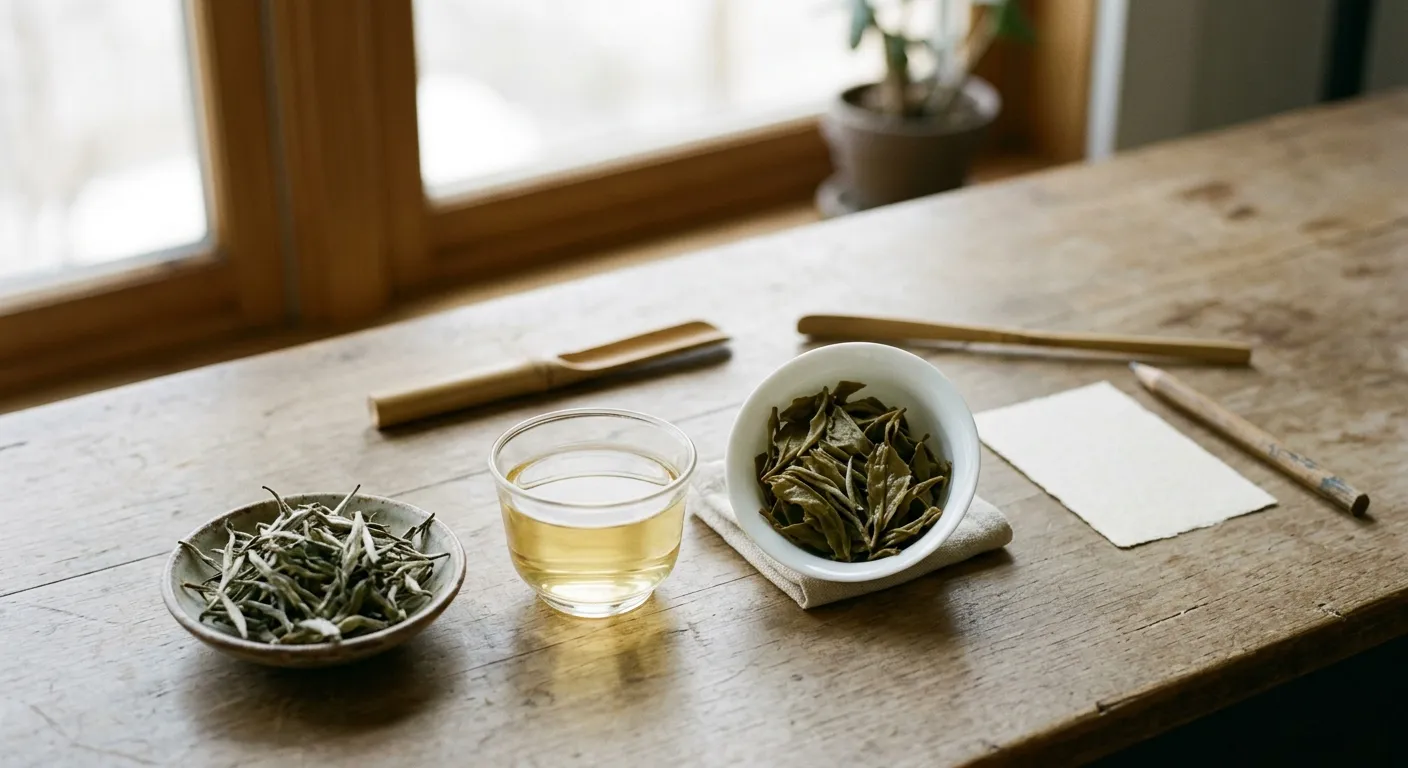
White tea leaf appearance can give useful clues, though not final answers. Look at the overall condition of the leaf. Is it mostly intact, broken into fragments, dusty, damp-looking, or unevenly colored? Are buds and leaves recognizable? Does the tea look clean and dry, or tired and poorly stored?
For loose tea, intact leaf shape and visible buds or leaf sets may help you understand grade or picking style. For pressed cakes, check the surface and edge. Are the leaves compressed but still identifiable, or mostly crumbs and powder?
Neither loose leaf nor cake form confirms the drying method. Appearance simply helps you judge whether the tea seems carefully handled.
Avoid reading too much into color alone. White tea can vary in shade because of age, leaf material, storage, and processing. A darker leaf is not automatically a flaw, and a pale leaf is not automatically superior.
Smell before brewing
Aroma often tells you more than package language. Before adding water, smell the dry leaves in a warm cup or gaiwan if you can. Depending on the tea, you may notice gentle hay-like, floral, woody, sweet, herbal, or dried-fruit impressions. You may also notice flatness, mustiness, smoke, sourness, or storage odors.
A sun-dried label does not promise one aroma. Some teas described this way may smell warm, soft, and meadow-like. Others may be quiet or uneven. What matters is whether the aroma is clean, coherent, and pleasant to you, and whether any storage note overwhelms the leaf.
If the description sounds refined but the tea smells stale or damp, trust the cup more than the phrase.
Watch the infusion behavior
White tea infusion behavior helps you see whether the tea brews with balance or falls apart quickly. Use a simple method: brew a small amount with moderate water temperature and taste across several infusions, or brew one western-style cup and observe how it opens.
Notice:
- Does the liquor feel thin, rough, soft, sweet, drying, or heavy?
- Does the aroma carry into the cup?
- Does bitterness appear immediately, or only when pushed?
- Do later infusions fade gracefully or collapse into flatness?
- Does the brewed leaf look flexible and whole, or broken and harshly spent?
These observations cannot confirm sun drying. They can help you decide whether the tea is enjoyable and whether the processing and storage seem sensible. The label may start your curiosity; the brewed cup should carry the decision.
Why sun drying is not the same as quality
It is tempting to treat “sun-dried” as shorthand for better white tea because the phrase sounds simple, traditional, and close to the leaf. That shortcut is unreliable.
Drying is about removing moisture, but quality depends on control as much as romance. One attractive processing word can distract from practical signs: damaged leaf, unclear storage, vague origin language, missing harvest information, exaggerated flavor promises, or a seller who cannot explain what the term means for that tea.
A more useful buying frame is to separate method from result.
What does the label say?
“Sun-dried,” “traditional,” or similar wording.
What does the seller explain?
Drying, harvest, grade, storage, or production context.
What can you observe?
Leaf condition, aroma, liquor clarity, brewed-leaf texture.
What remains uncertain?
Exact drying conditions, timing, regional method, and quality cause.
What should guide the purchase?
The whole context, not the phrase alone.
This does not make the term meaningless. It can be part of a real processing description. It simply should not carry more weight than it can bear. A good tea can be described as sun-dried; a weak tea can also be described that way.
What changes the answer
The meaning of “sun-dried white tea” becomes clearer or blurrier depending on context.
If the tea comes with detailed production notes, the phrase may be a fairly direct description of the drying stage. If it appears only as a decorative word in a short sales line, it is more like market language.
If the tea is aged or compressed, storage history matters even more because age and storage can strongly affect aroma, color, and texture. If the tea is a delicate bud-heavy style, leaf condition and freshness cues may shape your first impression. If it is a coarser leaf grade or a cake intended for longer keeping, you may focus more on sweetness, body, and clean storage character.
Brewing also changes what you perceive. A tea that seems flat in a large mug may show more aroma in a small gaiwan. A tea that tastes sharp with very hot water may soften with a gentler approach. A tea that seems too mild may need more leaf, longer time, or a smaller vessel.
These adjustments do not confirm the drying method, but they help you judge the tea fairly before blaming or praising the label.
A short buying check before you trust the phrase
Before treating a sun dried tea quality signal as meaningful, run through a quick check:
- Read the wording carefully. Does the seller explain how the tea was dried, or only use “sun-dried” as an attractive adjective?
- Look for basic tea identity. Tea type, harvest context, leaf grade, and form matter more than one processing word.
- Inspect the leaves. Check whether the leaf looks clean, reasonably intact, and consistent with the description.
- Smell for storage issues. A clean aroma matters more than romantic wording.
- Brew before judging deeply. Flavor, texture, and aftertaste should support the idea that the tea was well handled.
- Keep uncertainty visible. Without producer-level detail, you may not know the exact drying conditions.
This is especially important for premium-priced tea. A higher price should come with more clarity, not just more poetic language.
Common confusion around “sun-dried” white tea
One common misunderstanding is that sun-dried means fully traditional white tea processing. It may point in that direction, but the phrase alone does not establish the whole method. Traditional white tea processing is broader than one drying word, and producers may make different handling choices.
Another confusion is that sun-dried means more natural in a way that automatically makes the tea better. “Natural” is not a tasting note, a storage record, or a quality assessment. The tea still has to smell clean, brew well, and make sense for its price.
A third confusion is that sun drying creates a fixed flavor profile. In practice, the final cup can vary with leaf material, withering, drying conditions, storage, age, and brewing. It is safer to expect a range of possible aromas rather than one promised taste.
The clearest answer to “what is sun dried white tea?” is not a slogan. It is white tea described as dried with sunlight involved, and that description should be checked against what the tea actually shows.
Bottom line
Sun-dried white tea means the seller is pointing to sunlight as part of the drying method. That can be useful processing context, but it is not a stand-alone measure of quality, authenticity, origin, storage, aging potential, or flavor.
Treat the phrase as an invitation to inspect the tea more carefully. Look at the leaf, smell the dry and wet aroma, brew it attentively, notice the infusion behavior, and compare all of that with the seller’s transparency. If the cup and context support the label, the phrase becomes meaningful. If the label is doing all the work, stay cautious.