
Brewing diagnosis
Why Does My White Tea Taste Weak or Watery
If your white tea tastes weak, the cause is usually not one single flaw in the tea. More often, the cup is under-extracted or diluted: too little leaf, too much water, a vessel that is larger than you realized, water that is too cool, or a steep that ends before the leaves have opened.
White tea can be quiet, but it should not taste like plain hot water. A thin cup often means the brew has not pulled enough aroma, body, sweetness, or aftertaste for the amount of water in the cup.
Before blaming the label, price, age claim, or “premium” wording, check the next brew in this order: dry leaf aroma, leaf amount, water volume, vessel size, water temperature, steep time, and how the flavor changes across infusions.
upward
Read the full overview first
Use the broader guide first if you need the full scope before this page.
Start with leaf-to-water ratio
A weak white tea brew often begins with too little leaf for the amount of water used. Many white teas are bulky. Whole buds, open leaves, and fluffy loose material can fill a spoon while weighing less than expected. A scoop may look generous and still be too little for a large mug or teapot.
If the cup tastes empty, ask this before judging the tea: was there enough leaf for this much water?
Try a simple test
- Use the same tea.
- Keep the same water temperature.
- Keep the same steep time.
- Use more leaf, or use less water.
- Taste whether the body, sweetness, and finish become clearer.
If the tea suddenly feels fuller, the problem was probably ratio rather than grade, age, or authenticity. A delicate white tea in a large mug can taste diluted even when the leaves are in good condition. The same leaves in a smaller cup, gaiwan, or compact teapot may show more texture because the concentration is tighter.
This does not mean small vessels are always better. It means the vessel size has to match the amount of leaf.
Check water temperature and steep time
White tea is often described as delicate, which can lead people to brew it too cautiously. Very cool water may produce a pale, fragrant cup, but it can also leave the liquor thin if the leaves need more heat to open.
This is especially common with:
- larger leaf white teas
- compressed white tea
- older white tea
- tightly stored cakes or chunks
- leaf material that opens slowly over several infusions
If your leaf amount and water volume seem reasonable, try slightly warmer water before deciding the tea lacks flavor.
Steep time matters just as much. A short infusion can work when there is plenty of leaf in a small vessel. The same short steep in a large mug may barely extract the tea. If the wet leaves smell pleasant but the cup tastes faint, the leaves may simply need more time.
Signs the tea may need more heat or a longer steep
- The wet leaves still look tight or only partly opened.
- The leaf aroma is clearer than the liquor aroma.
- The tea has color but little sweetness or body.
- The aftertaste fades almost immediately.
- Later infusions taste similar instead of gradually developing.
Move gradually. More heat or time can bring out flavor, but too much can make some white teas rough, dry, or flat. Adjust one variable at a time so you can tell what changed the cup.
Vessel size can make white tea taste watery
Vessel size is easy to overlook. A large teapot with a small amount of leaf can make even fragrant tea seem distant. A tall mug may also hold more water than you think.
Small vessels, such as a gaiwan or compact teapot, often make concentration easier to control. They allow more leaf relative to water and make short infusions practical. A large mug or teapot can still work, but it usually needs a larger leaf dose and a suitable steep.
Think of vessel size as a dilution question. If the dry leaf smells sweet, floral, hay-like, fruity, or gently woody, but the brewed tea tastes like almost nothing, the aroma may be spread across too much water.
Pale liquor and faint aroma in a large mug
This may suggest too much water for the leaf used. Try using more leaf or less water.
Pleasant aroma but thin body
This may suggest extraction is too light. Try steeping longer or using slightly warmer water.
First infusion watery, later infusion stronger
This may suggest the leaves needed time to open. Try extending the first steep.
Good flavor in a small cup, weak flavor in a teapot
This may suggest vessel capacity changed the ratio. Recalculate leaf amount for the pot.
No vessel is automatically correct. The point is to match leaf, water, and time to the way you are brewing.
Look at leaf style, freshness, and storage
If the brewing variables are sensible and the tea still tastes weak, look at the leaves themselves.
White tea style affects what “full” should mean. Bud-heavy teas may feel soft, clean, and subtle rather than thick. Leafier styles may bring more body, darker sweetness, or a broader aftertaste. Compressed or aged white tea may need extra time to open, especially if the material is dense.
“High grade” does not always mean a louder cup. A tea can be bud-rich, expensive, rare-sounding, or beautifully packaged and still brew gently. The better question is whether it has clarity, aroma, texture, and a finish that fit its style.
Freshness and storage also matter, but not in a simple fresh-good, old-bad way. Some young white teas taste light because their character is gentle and green-leaning. Some older white teas can become rounder or deeper, while others may fade if storage was poor. An age claim by itself does not prove the tea will taste fuller.
Use your senses
- Does the dry leaf have a clear aroma before brewing?
- Does the wet leaf smell more expressive than the cup?
- Does the liquor have any sweetness, even if it is light?
- Is there an aftertaste after swallowing?
- Do later infusions improve, fade, or stay empty?
- Does the tea taste clean and soft, or flat and lifeless?
Dry leaf that smells stale, musty, flat, or like surrounding household odors may brew into a dull cup. Leaves stored near moisture, heat, strong smells, or repeated air exposure can lose aromatic clarity. Still, one clue is not enough on its own. Check aroma alongside appearance, infusion behavior, packaging or seller context, and the way the tea responds to brewing changes.
Do not confuse subtle with watery
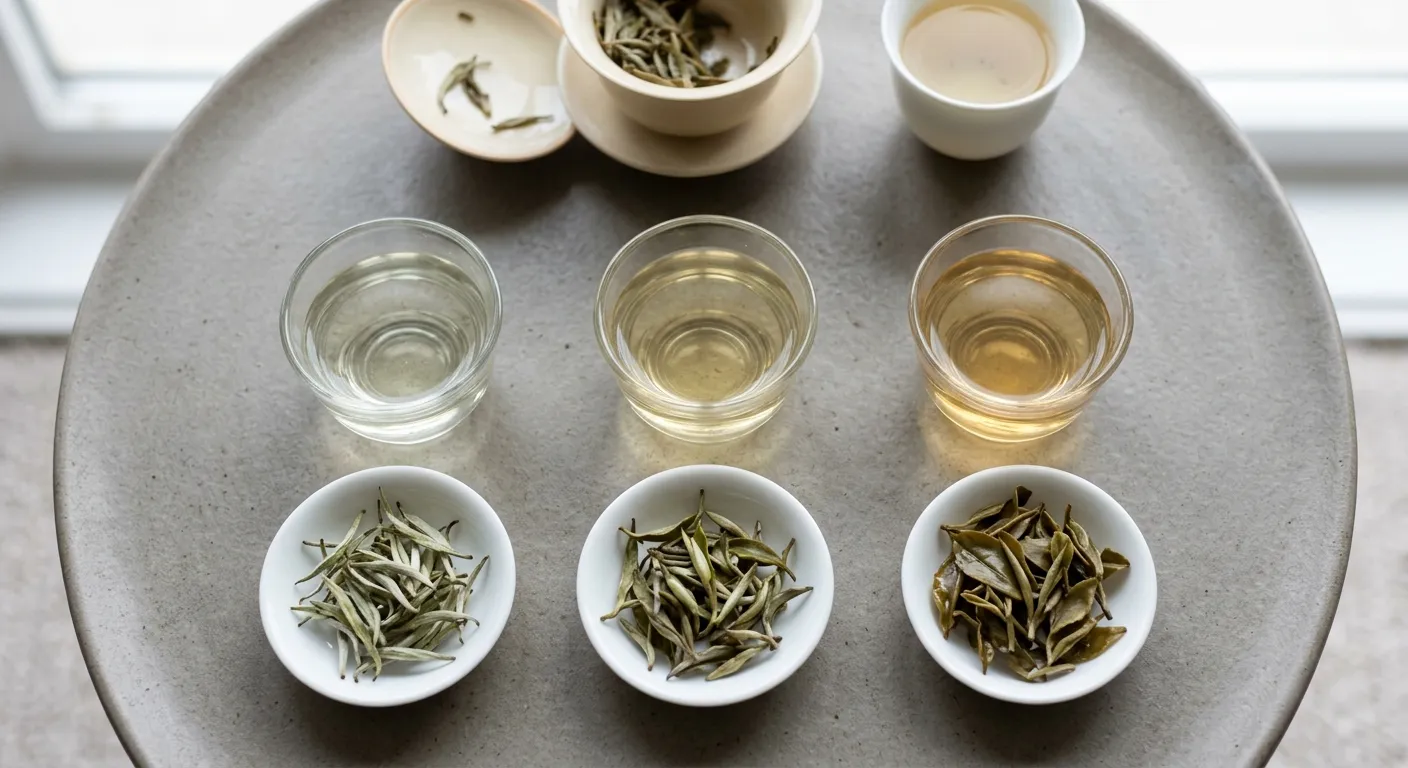
White tea is often quieter than roasted oolong, black tea, or heavily fermented tea. That quietness can be part of its appeal. A good light cup may show soft florals, fresh hay, melon-like sweetness, warm grain, dried herbs, honeyed edges, or a gentle cooling finish. It may not feel heavy.
Watery white tea is different. It feels diluted rather than delicate. The liquor may have color but little aroma. The first sip may seem fine, then vanish. The aftertaste may be almost absent. It can feel as if the leaves only passed near the water instead of truly infusing.
Subtle white tea
Light body, recognizable aroma, and a gentle finish.
Watery white tea
Little aroma, little body, little sweetness, and almost no aftertaste.
Under-extracted white tea
Good aroma in the wet leaf, but a cup that tastes weaker than the leaves smell.
Faded white tea
Dry and wet leaves both smell dull, and brewing changes do not bring much back.
This keeps the diagnosis practical. Not every thin cup is a quality problem. But if several brewing adjustments still leave the tea hollow, the leaves may be tired, poorly stored, or simply not the style you enjoy.
What to change in the next cup
Do not redesign the whole method at once. Change one or two things so the cup can teach you something.
A useful order:
- Use more leaf if you brewed in a large mug or pot.
- Use less water if the vessel is bigger than needed.
- Steep longer if the wet leaves smell good but the tea tastes faint.
- Use slightly warmer water if the leaves remain tight or muted.
- Watch the infusion count because some white teas open slowly.
- Check leaf condition if aroma, body, sweetness, and finish stay weak across several attempts.
Seller language can shape expectations, but it cannot replace tasting and brewing checks. Words such as premium, rare, aged, delicate, old tree, or high grade do not tell you how concentrated your cup will taste. Price and packaging do not either.
A tea may be subtle by style, poorly matched to your method, or genuinely faded. The cup needs to be tested before you decide.
When a weak cup is not really a problem
Sometimes the answer is simple: the tea is light because the style is light. If it has a clean aroma, soft sweetness, and a finish that lingers, it may not need to become stronger.
But if your white tea tastes watery in the sense of hollow, diluted, and quickly disappearing, start with the practical variables: leaf amount, water volume, vessel size, water temperature, and steep time. Then look at infusion count, leaf style, freshness, and storage condition.
A thin white tea flavor is often fixable. When it is not, the cup still gives useful information: the leaves may be faded, the storage may have dulled them, or the tea may not offer the body and aftertaste you were hoping for. Keep the diagnosis close to the cup. The next brew will usually tell you more than the label does.