
Taste check
Is White Tea Supposed to Taste Sweet or Bitter
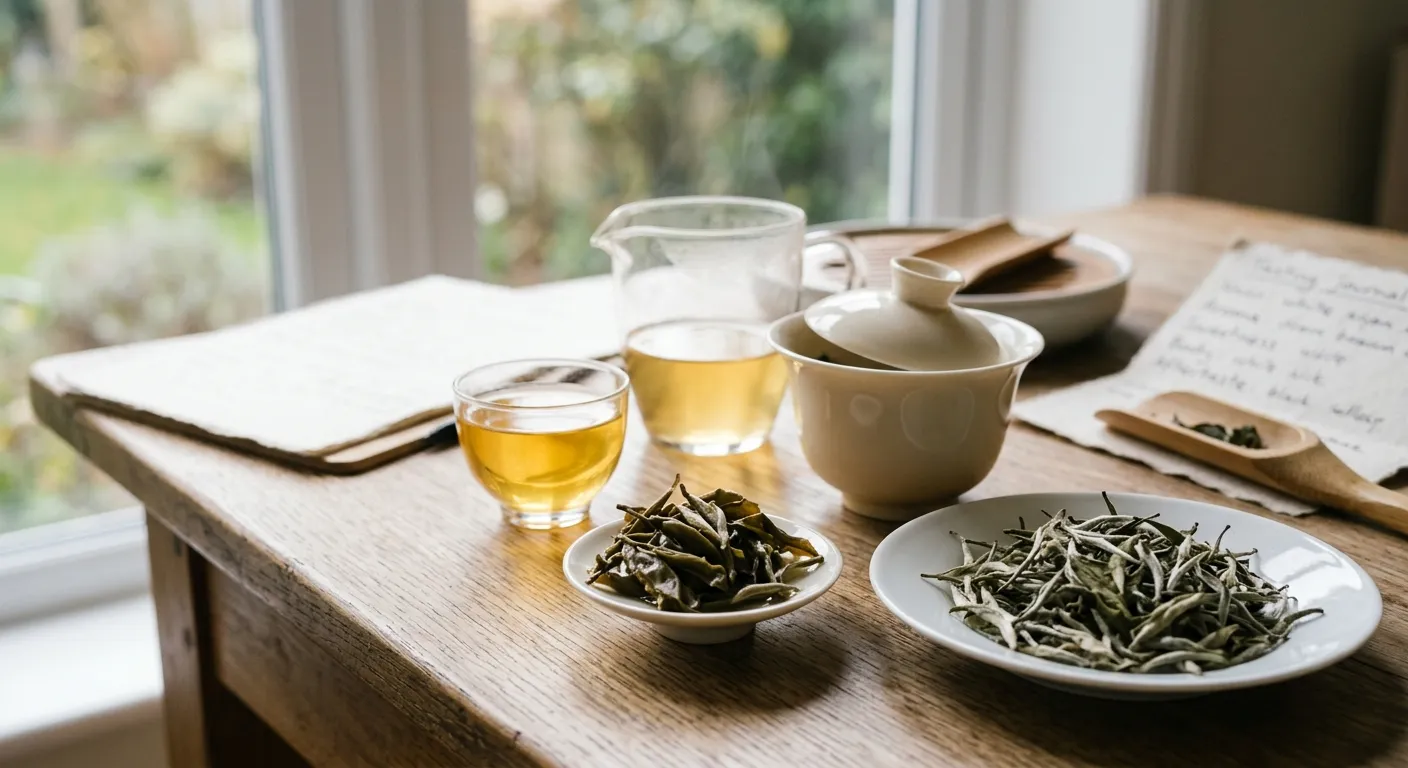
White tea usually leans gentle rather than sharply bitter, but the better standard is balance. If you are asking is white tea sweet or bitter, a normal cup often suggests soft sweetness, light florals, hay, fresh fruit, dried fruit, or mellow warmth, depending on the leaf and the brew. A little dryness or bitter edge can also appear, especially in a stronger infusion.
What is less encouraging is a cup that tastes harsh, aggressively bitter, stale, flat, sour, or rough from the first sip. Before blaming the tea itself, check the leaf condition, aroma, water temperature, steep time, leaf amount, vessel, and storage context.
upward
Start with the broader guide
Use the broader guide first if you need the full scope before this page.
What sweetness in white tea actually means
White tea sweetness is not usually sugar-like. It is more often a soft impression: a rounded finish, a nectar-like aroma, a gentle fruit note, or a smooth aftertaste that makes the liquor feel less sharp.
Some cups smell sweet before they taste sweet. Others only seem sweet after the first light bitterness or dryness fades.
That is why two drinkers can describe the same cup differently. One may notice melon, honey, dried grass, or warm grain. Another may simply say it tastes light. If you are used to roasted tea, black tea, coffee, sweetened drinks, or strongly scented blends, white tea’s quieter sweetness can be easy to miss.
A better question than “Does this taste sugary?”
- Does the bitterness stay soft, or does it dominate?
- Does the finish become rounder after swallowing?
- Does the aroma suggest flowers, hay, fruit, honey, or warm dry leaves?
- Does the cup feel clean and gentle, even if it is not intensely sweet?
If the answer is mostly yes, your white tea may be within a normal taste range even if it is not obviously sweet.
When bitterness is normal
White tea bitterness is not automatically a flaw. A mild bitter edge can appear when the infusion is concentrated, when the tea contains smaller leaf pieces, when the steep runs long, or when the cup is tasted very hot. In many brewing sessions, a little bitterness gives the tea structure instead of making it feel watery.
The concern is bitterness that feels harsh, metallic, burnt, sour-stale, or unpleasantly mouth-coating. That kind of cup deserves a brewing reset before you decide the tea is poor.
Use the table as a tasting check, not a final verdict. One cup can mislead you if the brew was too strong, too weak, or made with water that pushed the tea harder than you prefer.
Why white tea tastes sweet in some cups
A white tea often seems sweeter when the brew is balanced: enough leaf to give aroma, enough time to bring body, and not so much heat or steeping pressure that bitterness takes over.
Dry leaves may smell clean, soft, grassy, floral, fruity, or lightly warm. Wet leaves may open with a gentle, fresh, or mellow aroma rather than a sharp or stale one.
Leaf appearance can shape expectation, too. Bud-heavy teas may look pale, downy, and delicate. Leafier white teas may look more open, varied, or darker. These cues do not prove flavor by themselves, but they help you connect what you see with what you taste.
A pale liquor is not automatically weak. A darker liquor is not automatically bitter. Judge the cup by aroma, texture, aftertaste, and balance.
Sweetness can also become clearer when the tea cools slightly. Try three small sips:
- First sip: notice whether the opening is soft, grassy, floral, fruity, or sharp.
- Second sip: notice whether bitterness grows or stays light.
- Third sip: wait a few seconds and check the finish.
If the finish becomes cleaner, rounder, or more aromatic, that may be the sweetness people are describing.
Why white tea turns bitter
White tea can turn bitter when the brew extracts more forcefully than the leaf style or your palate can comfortably handle. The main variables are steep time, water temperature, leaf amount, vessel size, and broken material.
Start with steep time. If you brewed for several minutes and the liquor is harsh, make the next infusion shorter. In a small gaiwan or small teapot with a generous amount of leaf, even a modest increase in time can make the cup much stronger. In a large mug with a small amount of leaf, a longer steep may still taste light rather than bitter. Vessel size changes concentration.
Then check water temperature. White tea does not need the hottest possible water in every situation. Very hot water can make some cups feel more intense and less gentle. Slightly cooler water may bring out a softer profile, though it can also make the tea seem thin if the steep is too short. Treat temperature as a practical dial, not a universal rule.
Leaf amount is the next dial. Too much leaf can make the liquor strong, drying, or bitter. Too little leaf can make it thin and unsatisfying, which sometimes leads people to steep longer and accidentally create a rougher cup. If the tea tastes both weak and bitter, rebalance the method instead of simply adding time.
Also look at the leaves. Many small fragments, dust, or crushed pieces can infuse quickly. That does not always mean the tea is bad, but it can make bitterness appear faster than expected. Whole leaves and buds behave differently from a packet with many broken bits.
A quick reset for a bitter cup
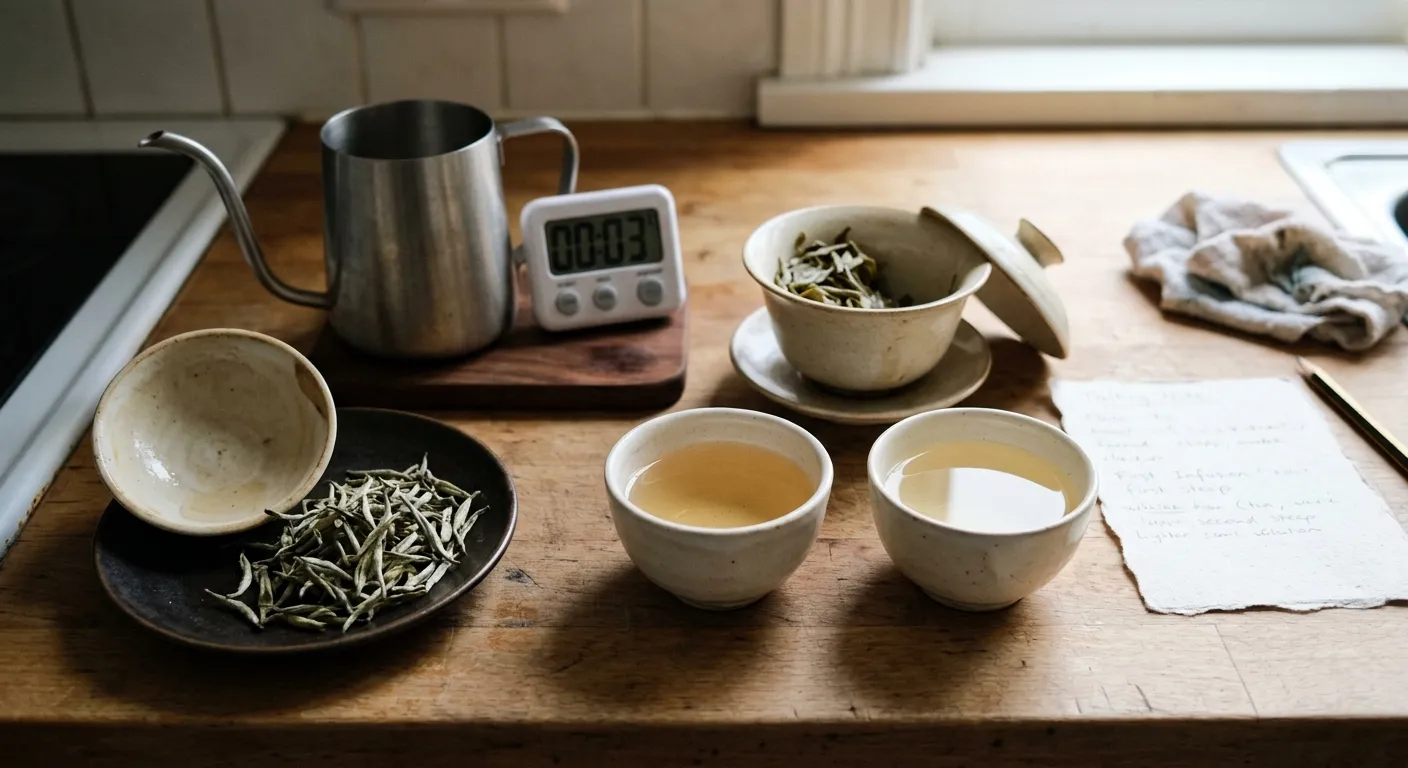
When a white tea turns bitter, use the same tea but make the next brew gentler.
Try this
- Use slightly less leaf than before.
- Use hot water, but not the most aggressive boil.
- Shorten the first steep.
- Taste once while hot, then again after the cup cools a little.
- Smell the wet leaves before judging the flavor.
If the bitterness drops and the aroma becomes clearer, the earlier cup was probably pushed too hard for your taste. If the bitterness remains harsh even with a gentler brew, inspect the dry leaf aroma, wet leaf aroma, broken material, and storage context more carefully.
This reset is especially useful with a new white tea. The first brew tells you something, but it should not be the only evidence. A second, gentler brew can show whether the tea has sweetness hidden under heavy extraction or whether the roughness belongs to the leaf condition.
Leaf style, age, and storage can change the balance
Not every white tea aims for the same kind of sweetness. A bud-forward tea may seem soft, pale, and delicate. A leafier tea may feel broader, more herbal, more rustic, or more textured. A pressed cake may brew differently from loose leaves, especially if it breaks into small pieces when pried apart.
Age and storage add more uncertainty. Some older white teas are described with mellow, dried-fruit, herbal, woody, or warm notes, but age claims alone do not prove sweetness or quality. Storage matters. A tea can be old and still taste dull, flat, damp, or harsh. A younger tea can be more enjoyable if the leaf, handling, and brewing suit your palate.
Keep the judgment sensory:
- Do the dry leaves smell clean, pleasant, and recognizable?
- Do the wet leaves smell lively, mellow, or at least coherent?
- Does the liquor taste stale, sour, musty, or unusually flat?
- Does the seller provide clear harvest, storage, or handling context?
- Does the taste improve when brewed more gently?
If the tea smells questionable before brewing, sweetness in the cup may be unlikely. If the aroma is clean but the liquor is bitter, brewing variables are still worth adjusting.
Common confusion: delicate does not mean flavorless
People often ask whether white tea should taste sweet or bitter because white tea can be quiet. Quiet tea is easy to misread. A cup may be light in color but still aromatic. It may have little obvious sweetness but still be balanced. It may have a little dryness without being badly bitter.
The opposite confusion also happens. Product descriptions can make white tea sound automatically honeyed, fruity, premium, or smooth. Those notes are possibilities, not promises. A tea described with sweet language may still turn bitter if brewed too hard, stored poorly, or simply mismatched with your palate.
A useful standard is balance rather than sweetness alone. A balanced white tea does not have to taste dessert-like. It should offer some combination of aroma, clarity, texture, and finish. If bitterness is present, it should not crush everything else.
How to decide if your cup is normal
Do not decide from the label alone. Use the cup in front of you.
Your white tea is probably within a normal range if:
- the aroma is clean;
- the bitterness is light or brief;
- the finish is soft, floral, grassy, fruity, warm, or gently dry;
- the tea becomes more pleasant as it cools slightly;
- a shorter or gentler brew improves the balance.
Be more cautious if:
- the bitterness is harsh from the start;
- the aroma is stale, sour, damp, or flat;
- the liquor tastes rough even after a gentler brew;
- the leaves look heavily broken and infuse too quickly for your method;
- the seller’s age, origin, or premium language is doing more work than the tea itself.
So, should white tea taste sweet? Often, yes, but usually in a subtle way. Should white tea taste bitter? A little bitterness or dryness can be normal, but it should not be the whole cup. The best practical answer is that white tea should taste balanced: gentle enough to show aroma, structured enough not to feel empty, and clean enough that you want another sip.