
What Flavor Notes Are Common in White Tea
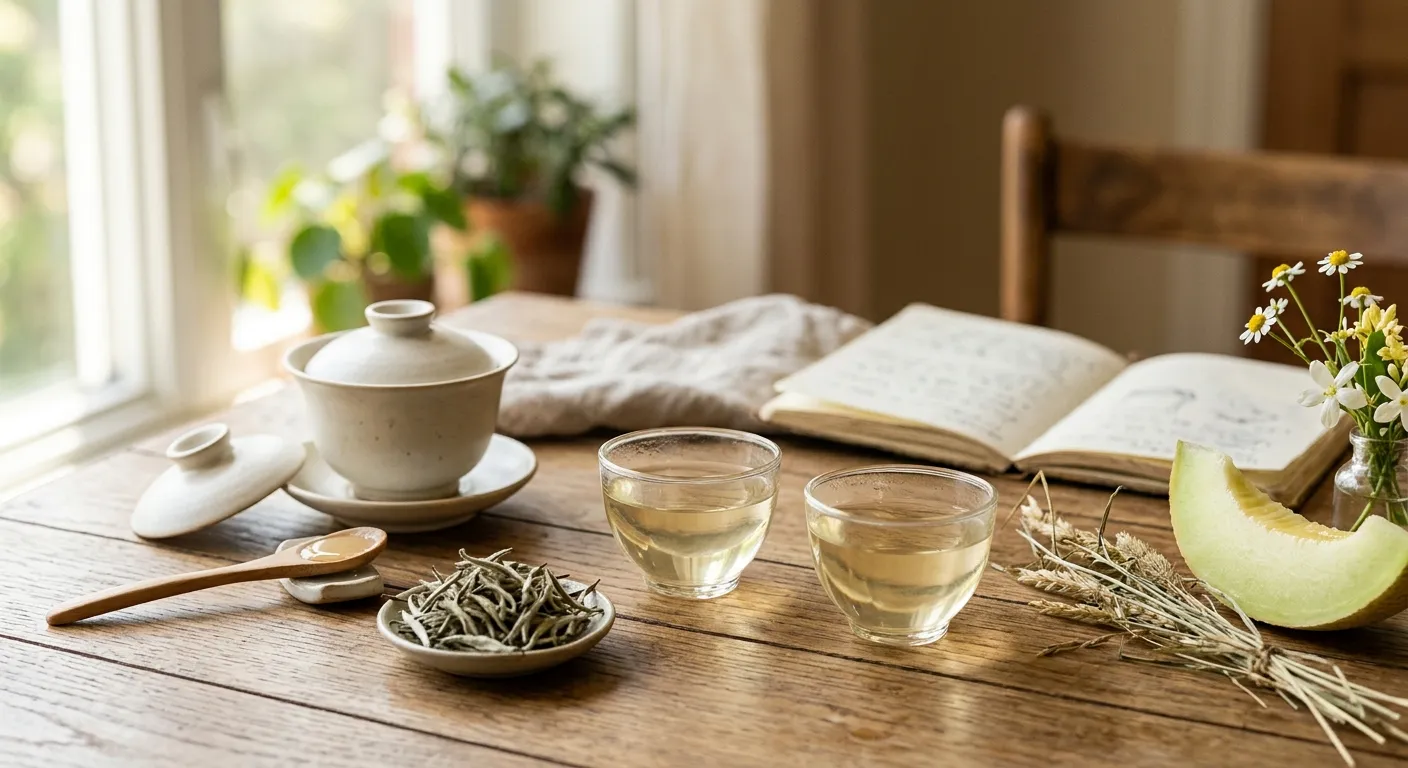
White tea flavor notes often sit in a gentle range: fresh hay, meadow flowers, light honey, melon, cucumber, soft grass, pale dried fruit, and sometimes nutty, woody, herbal, or aged aromas. The exact cup depends on the leaf material, bud-to-leaf ratio, brewing style, water temperature, freshness, age, and storage condition.
The useful question is not whether white tea “should” taste like one fixed description. It is whether the dry leaf, wet leaf, liquor color, sweetness, mouthfeel, and finish point in the same direction. Tasting language can help you recognize what is in the cup, but it should not be used as proof of origin, grade, age, or quality by itself.
upward
Read the full overview first
Use the broader guide first if you need the full scope before this page.
The core white tea flavor range
Most white tea tasting notes fall on the lighter side of tea flavor. Instead of roasted, malty, smoky, or sharply brisk impressions, many cups lean toward quiet sweetness, pale plant aromas, and a soft finish.
That does not mean white tea is always delicate or always sweet. Some infusions can taste grassy, woody, drying, flat, or sharp when the leaf, storage, water, or steeping is not working well.
A practical white tea flavor profile often falls into these families:
These are possibilities, not required markers. A white tea without melon is not automatically poor. A tea that smells floral is not automatically high-grade. The point of white tea tasting vocabulary is to name what your cup is already showing.
Fresh, floral, hay, and honey notes
Floral notes in white tea can be quiet. They may show more as a lifted aroma than as a clear flower taste on the tongue. Some drinkers notice them most in the dry leaf or in the first few seconds after hot water touches the leaves. If the tea is brewed too strong, that airy edge can be covered by bitterness, grassiness, or drying texture.
Hay notes are common because many white teas carry a warm, field-like aroma. Clean hay can feel pleasant: soft, golden, and sun-warmed. Stale hay, cardboard, or damp storage smells are different. Those may point toward tired leaf, poor storage, or simply a tea that does not suit your taste. The wet leaf after the first infusion usually makes this distinction easier.
Honey notes usually appear less like actual sugar and more like roundness. You may notice a mild coating sensation, a soft sweetness after swallowing, or a warm aroma that suggests nectar. If the cup smells honeyed but tastes thin, try a little more leaf, a longer steep, or a smaller vessel. If it starts sweet and then turns sharply dry, the steep may be too long or too hot for that leaf.
Fresh grass can show up in younger or greener-tasting white tea. A little grassiness can feel clean and lively. Too much can make the cup seem raw, sharp, or vegetable-like. Before judging the tea itself, adjust the brewing: slightly cooler water, shorter contact time, or fewer leaves can soften the green edge.
Melon, cucumber, and pale fruit notes
Melon notes in white tea are usually subtle. Think honeydew, pale cantaloupe flesh, or the watery sweetness near a melon rind rather than bold tropical fruit. Cucumber sits close to this family: cool, clean, watery, and green without necessarily being grassy.
These impressions are easy to miss when the liquor is very hot. Letting the cup cool briefly can make pale fruit notes easier to notice. Sometimes the empty cup after drinking carries the aroma more clearly than the hot liquor itself.
Dried fruit notes belong to a deeper part of the white tea taste range. Some cups may suggest dried apricot, date, fig, or raisin-like sweetness. These notes should not be treated as a sure sign of age, but they can appear in teas that feel warmer, darker, or more developed. If dried fruit comes with clean sweetness and a smooth finish, it may be pleasant. If it comes with sourness, mustiness, or a damp smell, storage deserves closer attention.
A simple tasting step helps: compare the first hot sip, the warmer middle of the cup, and the cooled last sip. White tea often changes across temperature. A note that seems absent at first may become clearer as the liquor cools.
What changes white tea tasting notes?
The same tea can taste different depending on how it is brewed, stored, and compared. Before deciding that a tea “has” or “does not have” a note, look at the variables you can observe.
Bud-to-leaf ratio
Teas with more buds often feel softer, paler, downier, or more delicate in aroma. Teas with more open leaves may show more body, hay, herb, or woody impressions. This is a practical cue, not a strict rule.
Leaf appearance and grade language
Silver-colored buds, mixed buds and leaves, larger leaves, broken pieces, and compressed material can all brew differently. Names and grades can help set expectations, but the cup matters more than the label.
Dry leaf aroma
Smell before brewing. Dry leaf may show flowers, hay, dried herbs, honey, wood, or storage character. If it smells flat, dusty, smoky, damp, or strongly scented in a way that does not fit the tea, pay attention.
Wet leaf aroma
After the first infusion, the wet leaf often reveals more than the dry leaf. Fresh grass, warm hay, cooked greens, flowers, fruit, wood, or stale storage can become clearer here.
Liquor color
White tea liquor can range from very pale yellow to deeper gold, amber, or brownish tones depending on leaf, age, brewing, and storage. Color alone does not prove strength or quality. A very pale cup may still be aromatic; a darker cup may be smooth or simply over-extracted.
Water temperature and steep time
Hotter water and longer steeps can pull out more strength, texture, and bitterness. Cooler water and shorter steeps can preserve lighter aroma, but they may also make the tea seem thin. If you are trying to identify delicate white tea aroma notes, change one variable at a time.
Vessel size
A large mug with a small amount of leaf may produce a faint cup. A small gaiwan or compact teapot with more leaf can show aroma more clearly across several short infusions. The goal is not one correct setup; it is repeatability.
Freshness, age, and storage
Younger-tasting white tea may show fresher grass, flowers, cucumber, and pale fruit. Older or storage-influenced tea can move toward dried fruit, wood, herbs, nuttiness, or deeper aged aromas. Age claims should be checked alongside appearance, smell, wrapper context if available, seller information, and the actual cup. Age language alone is not proof.
How to taste without overreading the label
Tasting notes are useful until they become too fixed. A seller may describe a tea as honeyed, floral, melon-like, aged, or premium. Those words can help you decide what to look for, but they do not guarantee what your water, vessel, and palate will find.
Try three passes.
First pass
Smell the dry leaf and write two plain words. Do not reach for elegant vocabulary too soon. “Dry hay,” “sweet,” “dusty,” “floral,” “green,” or “wood” is enough.
Second pass
Brew lightly and smell the wet leaf. Notice whether the aroma opens, becomes sweeter, turns grassy, or shows storage character. The wet leaf often explains why the liquor tastes the way it does.
Third pass
Drink the liquor in small sips as it cools. Separate aroma, taste, texture, and finish. A tea may smell floral, taste like hay, feel silky, and finish with honeyed sweetness. Another may smell like melon but finish dry. These details are more useful than forcing the whole cup into one note.
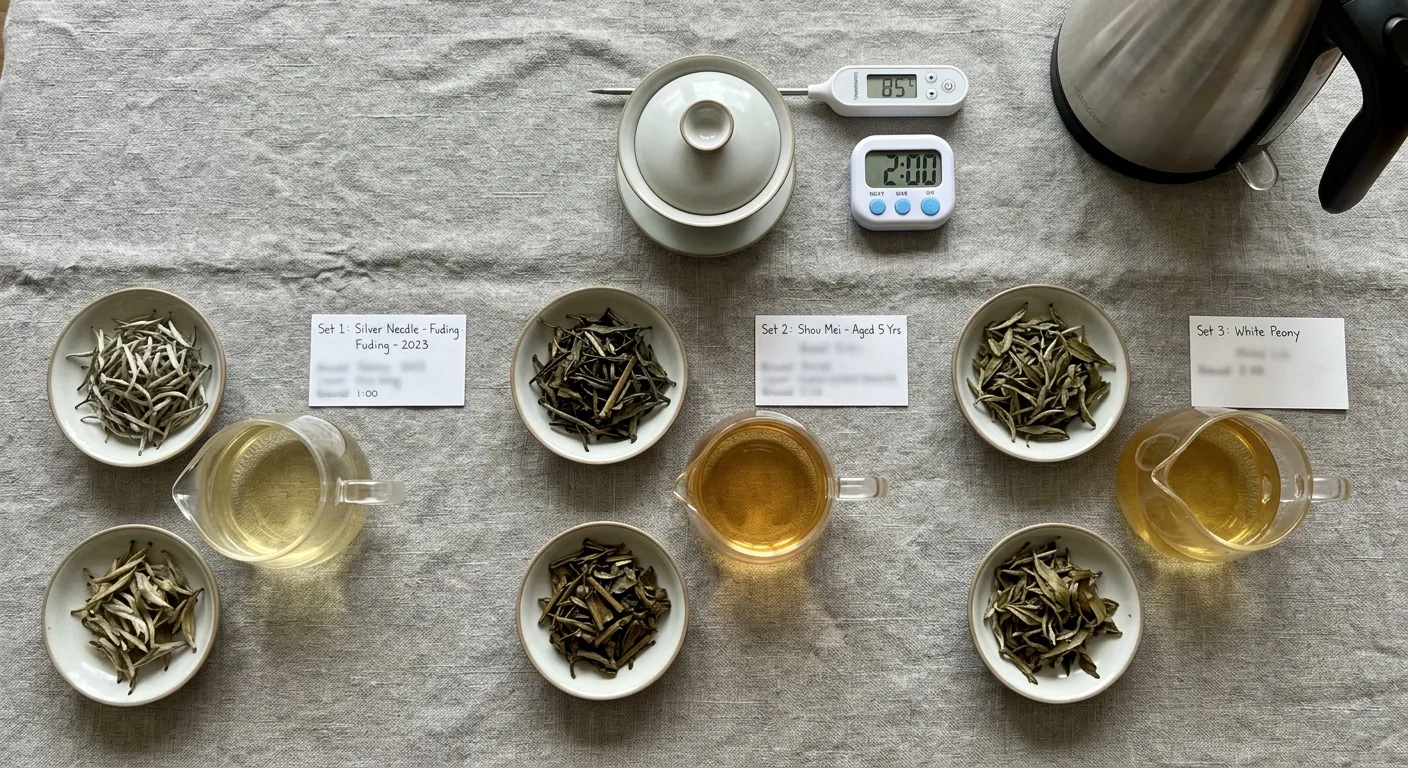
If you are comparing two white teas, brew them with the same leaf amount, water, vessel, and timing. Even an imperfect comparison becomes more meaningful when the conditions are consistent. If one tea tastes thin, try slightly more leaf or a longer steep before dismissing it. If one tastes harsh, reduce time or temperature before deciding the leaf is the problem.
Common confusion around white tea flavor notes
One common confusion is assuming that “delicate” means “flavorless.” White tea can be quiet, but quiet does not have to mean empty. Look for aroma, aftertaste, and texture, not only strong front-of-mouth flavor. Some white teas reveal themselves more in the finish than in the first sip.
Another confusion is treating sweetness as literal sugariness. Honey notes in white tea are often aromatic or textural. The cup may feel rounded, soft, or lingering without tasting sugary.
A third confusion is reading aged white tea notes too confidently. Woody, herbal, dried fruit, or old-paper impressions may appear in older or storage-influenced tea, but they do not prove a specific age. Storage can shape aroma strongly. Clean depth and unpleasant dampness are not the same thing, even if both are described with darker or older-sounding words.
There is also the problem of personal vocabulary. One drinker’s “melon” may be another drinker’s “cucumber.” One person may say “hay,” while another says “dried grass” or “straw.” That is normal. Tasting language is a shared map, not a laboratory result.
A compact white tea taste guide for your next cup
Use this short checklist when you want to identify common white tea tasting notes without making the process fussy.
- Look at the leaf. Is it mostly buds, mixed buds and leaves, larger leaves, broken pieces, or compressed material?
- Smell the dry leaf. Note the first clear impression: floral, hay, honey, grass, fruit, wood, stale, or something else.
- Brew gently first. Start with a moderate infusion rather than pushing the tea hard immediately.
- Check the liquor color. Pale, gold, amber, or darker color gives context, but not a final verdict.
- Smell the wet leaf. This often reveals grass, hay, flowers, herbs, fruit, or storage more clearly.
- Taste as it cools. Melon, cucumber, honey, and floral notes may become easier to notice below very hot drinking temperature.
- Adjust once. If thin, use more leaf or time. If harsh, reduce time or water heat.
- Compare notes to the label last. Let the cup speak first, then see whether seller language helped or distracted you.
The most common white tea flavor notes are best understood as a set of possibilities: floral lift, hay-like warmth, gentle honey, pale melon, cucumber freshness, soft grass, dried fruit, nut, wood, and age-related depth. Your task is not to find every note in every tea. It is to notice what the leaf, aroma, liquor, mouthfeel, and finish are showing in this brewing session.