
White tea naming
Why Is White Tea Called White Tea
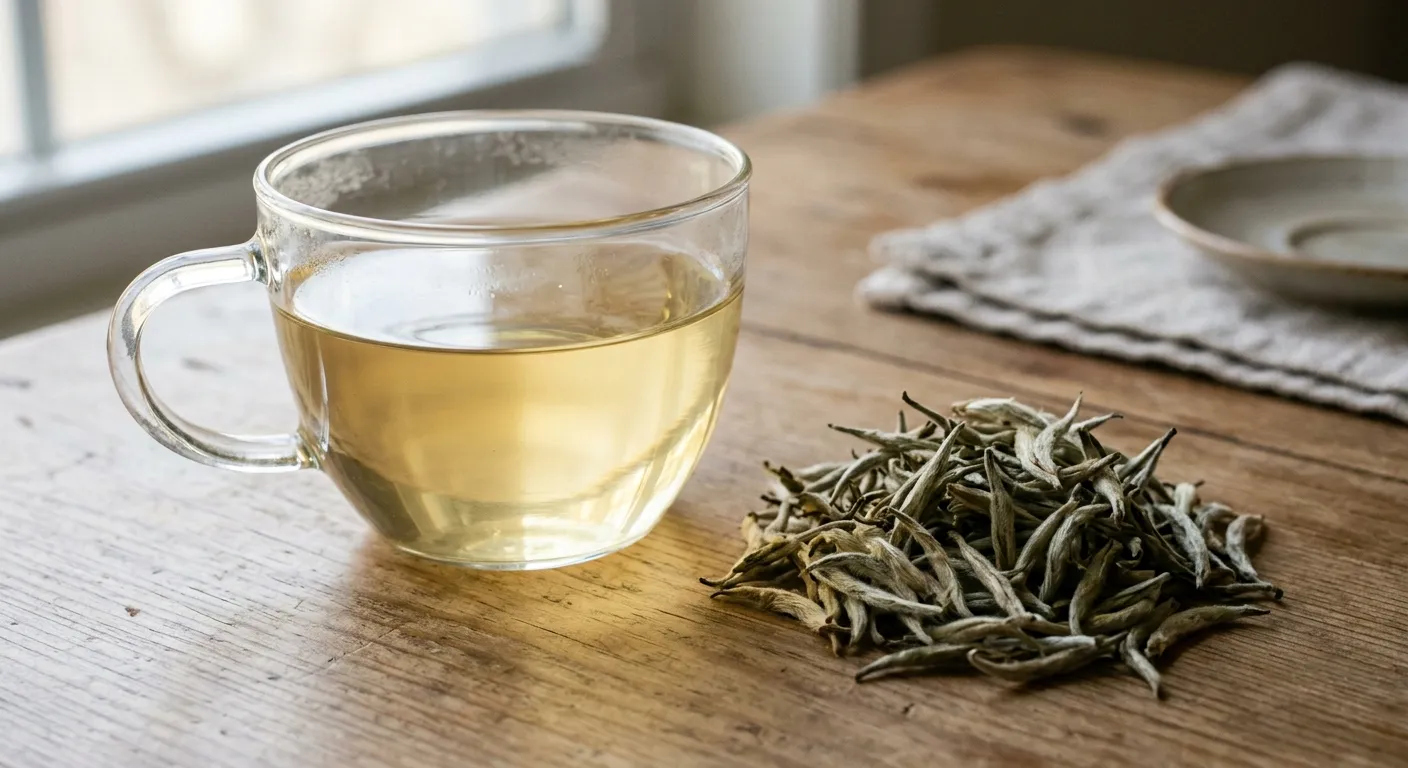
White tea is called white tea because the name points mainly to the pale, silvery-white down on young tea buds, not because the brewed tea is literally white. In the cup, many white teas look pale gold, straw yellow, apricot, or amber, especially if they are brewed strongly or have some age.
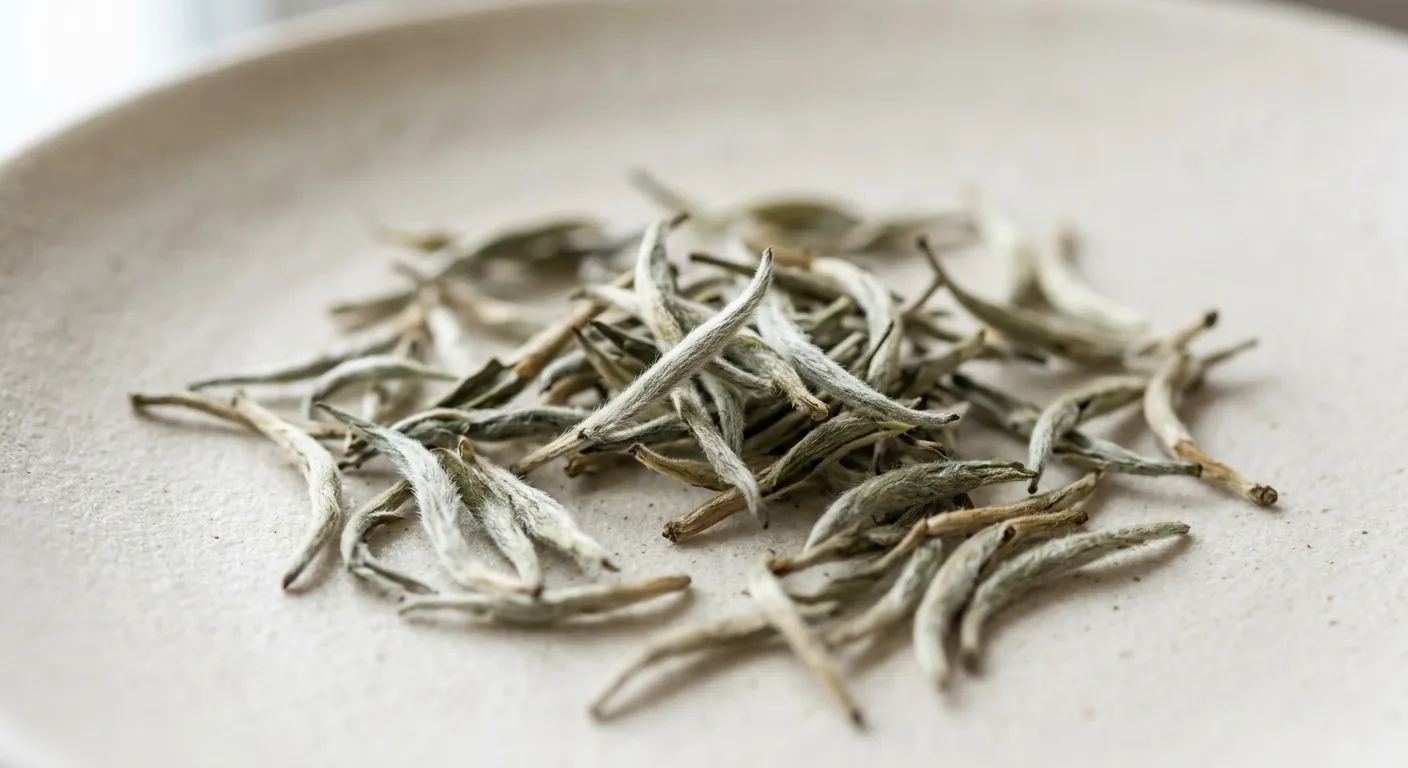
The name makes more sense before brewing, when you look at the dry leaf: tender buds, fine hairs, muted green-grey tones, and a soft silver cast.
upward
Start with the broader guide
Use the broader guide first if you need the full scope before this page.
The “White” Is Easier to See on the Bud
The clearest clue is the young bud.
Many white teas, especially bud-heavy styles, include tender buds covered with fine down. These tiny hairs can look white, silver, pale grey, or frosted depending on the cultivar, harvest, lighting, and handling. On a dry bud, they catch the light and make the leaf material appear much paler than many green or black teas.
That is the practical white tea name meaning: “white” refers more to the appearance of young tea material than to the color of the finished drink.
When you look at dry white tea, check for:
- Bud coverage: more young buds often means more visible pale down.
- Fine white hairs: the soft fuzz on tender buds is usually the strongest visual clue.
- Silvery surface: many buds look more silver than pure white.
- Muted dry-leaf color: white tea may show pale green, grey-green, silver, beige, tan, or brown tones.
- Gentle shaping: many white teas look loose or natural rather than tightly rolled.
This does not mean every white tea should look snowy. Leafier white teas may show fewer visible hairs. Pressed cakes can look darker. Aged white tea may shift toward tan, brown, or amber. The name belongs to the category and its bud-and-leaf tradition, not to a promise that every piece of leaf will look white.
Why the Brewed Tea Is Usually Yellow, Not White
The common confusion is understandable: if it is called white tea, why is the liquor yellow?
White tea brewed liquor is usually pale rather than white. Depending on the tea, water temperature, leaf amount, steep time, and age, the cup may look almost clear with a straw tint, soft yellow, light gold, honey-colored, peachy, or amber.
That does not contradict the name. Tea names often come from dry-leaf appearance, processing style, origin, cultivar, or traditional category language. They do not always describe the exact color of the infusion.
A white tea can have a delicate, pale liquor and still be visibly yellow in a clear cup. “Pale” and “white” are not the same thing.
A simple way to see this difference
- Before brewing: look at the dry buds and leaves under natural light.
- During the first infusion: notice how quickly the liquor takes on color.
- After steeping: look at the wet leaves, where the bud hairs may be less obvious than they were when dry.
The name is usually easier to understand from the dry bud than from the cup.
How Processing Supports the Pale, Downy Look
White tea is commonly associated with a relatively simple processing path: withering and drying. In broad terms, the leaves are not usually rolled and oxidized like many black teas, nor fixed and worked like many green teas.
For this question, processing matters because appearance matters.
Gentler handling can help preserve the fine surface hairs on young buds. The leaf may keep a soft, downy, silvery look instead of becoming glossy, tightly twisted, or darkened through heavier shaping.
Still, “minimal processing” does not mean nothing happens to the tea. White tea is harvested, withered, dried, sorted, stored, and sometimes pressed. Weather, leaf grade, storage humidity, age, and compression can all change how pale or silver the tea appears.
A careful version of the answer is this: white tea is associated with young buds and leaves that often retain pale, silvery, downy features, partly because the processing style is comparatively gentle.
Why Some White Teas Look Less White
Not all white teas show the same amount of silver hair. That is one reason the name can feel confusing when you compare different samples.
A bud-heavy tea may look obviously silvery. A leafier white tea may look more green, olive, brown, or mixed. A pressed cake may look darker on the surface. Broken leaf at the bottom of a bag may show fewer visible hairs than intact buds. Even the same tea can look different under warm indoor light than it does near a window.
This is why the word “white” should not be used as a one-glance quality test. A tea is not automatically better because it looks paler, and it is not automatically suspicious because it contains green, brown, or darker pieces.
Appearance is one clue. Read it alongside aroma, leaf integrity, harvest description, storage condition, and how the tea behaves when brewed.
What the Name Does Not Tell You
The name can help you understand the category, but it does not prove everything a seller might imply.
- It does not prove that the tea is rare.
- It does not prove that the tea is high grade.
- It does not prove a specific origin.
- It does not prove a harvest date.
- It does not prove careful storage.
- It does not prove how the tea will taste.
“White” is a naming clue, not a complete authentication system.
Marketplace descriptions often lean on attractive phrases: silver buds, white down, pale liquor, delicate leaves, early spring picking. Some of those phrases may describe real visual traits, but they still need to be checked against the actual tea.
Look at the leaf. Smell the dry tea. Brew a small amount. Notice whether the liquor, wet leaf, and aroma make sense together.
A tea with visible silvery hairs can still taste flat if it has been stored poorly. A darker-looking aged white tea may still fit its style, but color alone should not carry the whole story.
A Simple Way to See the Naming Logic
Place a few dry leaves on a white plate or plain sheet of paper near a window. Instead of judging the whole pile, pick out one bud or bud-and-leaf set and look closely at the surface.
You may notice:
- a soft halo around the bud,
- fine down lying along the surface,
- a silver-grey cast rather than a bright green shine,
- pale tips mixed with darker leaves,
- a dry texture that looks gently handled rather than heavily shaped.
Then brew the same leaves lightly in a clear cup or glass sharing pitcher. The liquor may be pale yellow, light gold, or slightly deeper. That contrast is the point: the name is easier to understand from the bud than from the liquid.
If your tea has few visible buds, the connection may be less obvious. That does not automatically make the tea wrong. It may be a leafier white tea, a different grade, an aged tea, or a tea whose appearance has changed through storage and handling.
The Short Answer
White tea is called white tea because the name is commonly associated with the pale, silvery-white hairs on young tea buds and the light, downy appearance of some gently processed bud-and-leaf material.
The brewed tea is usually not white. It is more often pale yellow, gold, or amber, depending on the tea and how it is brewed.
To avoid the common misunderstanding, look at the dry leaf before judging the cup. If you see young buds with fine white or silvery hairs, the name starts to make visual sense. If the infusion is yellow, that is not a contradiction. The “white” belongs first to the leaf’s appearance and category language, not to a promise of white-colored liquor.