
Tasting diagnosis
Why Does White Tea Taste Grassy
White tea tastes grassy when green, fresh, vegetal, hay-like, or raw-leaf notes stand out more than the soft sweetness many drinkers expect. That flavor does not point to one certain cause. It can come from the leaf style, a hot or long steep, a heavy leaf dose, broken material extracting quickly, very fresh-smelling tea, or storage that has dulled sweeter aromas and left a sharper green edge.
Before judging the tea, check the dry leaf smell, leaf appearance, water temperature, steep length, brewing vessel, and seller description. A grassy note in white tea is not automatically good or bad. The more useful question is whether it tastes clean and fresh, stale and papery, harsh and bitter, or simply stronger than expected.
upward
Start with the broader guide
Use the broader guide first if you need the full scope before this page.
First, Decide What “Grassy” Means in This Cup
“Grassy” is a broad tasting word. One person may use it for a pleasant fresh white tea flavor, like cut hay, spring greens, or a clean meadow note. Another may mean something less pleasant: raw vegetable stems, lawn clippings, plant sap, or a drying green bite.
Try separating the note into a few possibilities:
Fresh-green
Light, clean, sweet-edged, and not especially bitter.
Hay-like
Dry, warm, pale, and often gentle rather than sharp.
Vegetal
Closer to steamed greens, pea shoots, or green stems.
Raw or sharp
Green plus biting, drying, or bitter.
Stale-green
Flat, dusty, cardboard-like, or storage-affected.
This matters because a clean grassy white tea may only need a gentler brew. A harsh or stale green taste asks for a closer look at the leaf condition and storage context.
Also notice when the grassy note appears. If it is obvious in the dry leaves but softens in the cup, it may be part of the tea’s normal aroma. If it appears only after a long steep, the brew may be too strong. If the dry leaf smells dull, musty, smoky, perfumed, or like the cupboard around it, storage may be shaping the flavor.
The Quick Brewing Check: Cooler, Shorter, Lighter
The easiest way to test a grassy cup is not to debate the label. Brew the same leaves more gently and see what changes.
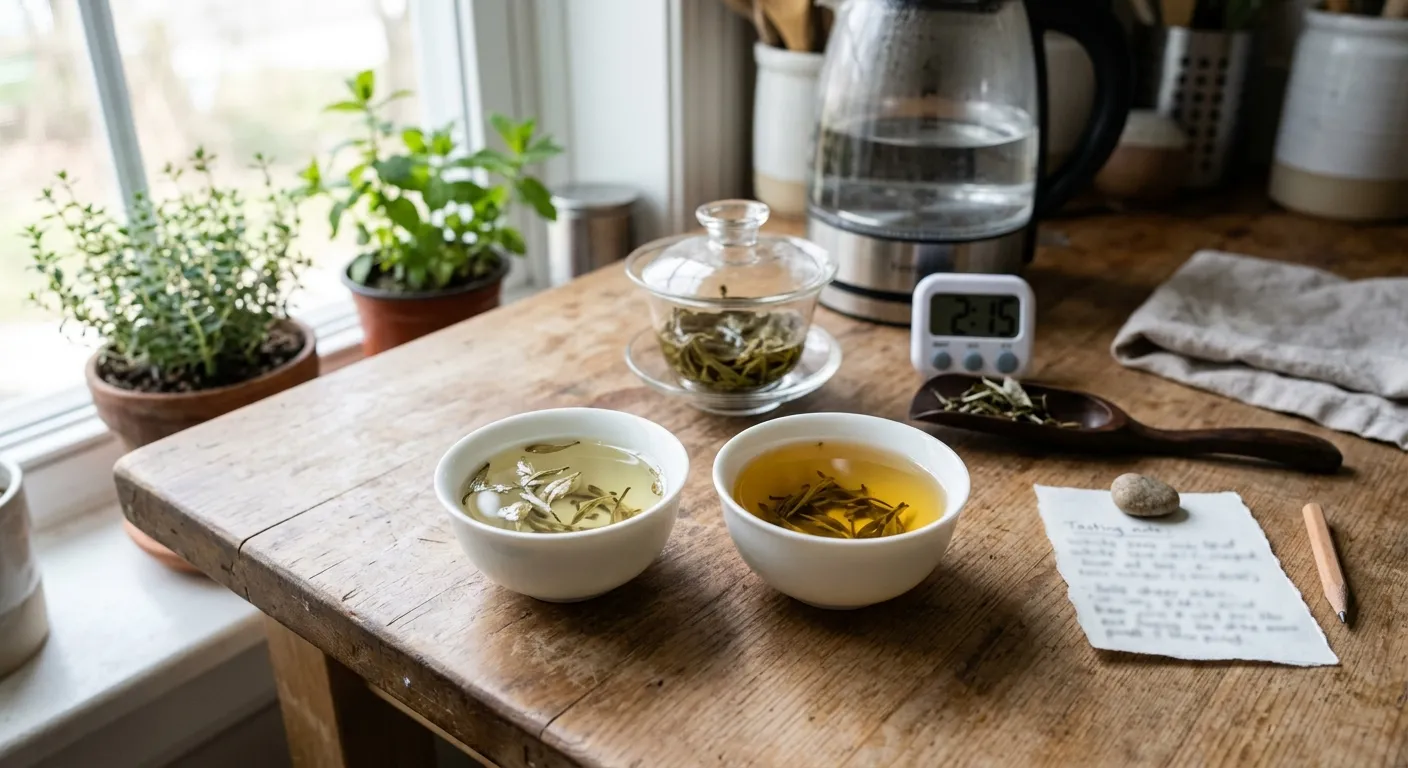
A simple side-by-side is enough: one cup brewed as before, one cup brewed cooler and shorter. If the second cup becomes sweeter, clearer, or more floral, the grassy note was partly a brewing issue.
White tea can be easy to misread because the liquor is often pale. A light color does not always mean weak extraction. If you keep extending the steep to chase a darker cup, the tea may become more planty and drying even while it still looks delicate.
The brewing vessel changes perception too. A small gaiwan or small pot with a generous leaf dose can make aromas vivid, but it can also magnify sharp green notes. A large mug where leaves sit for a long time may taste soft at first, then stewed and flat. Neither method is wrong; they simply concentrate flavor differently.
Water can also affect the cup in a practical way. If many teas taste flat, chalky, metallic, or strangely sharp with the same water, try the white tea with another drinking water you already trust. If the grassy edge changes, the water was part of the result.
What the Leaves Can Tell You Before Brewing
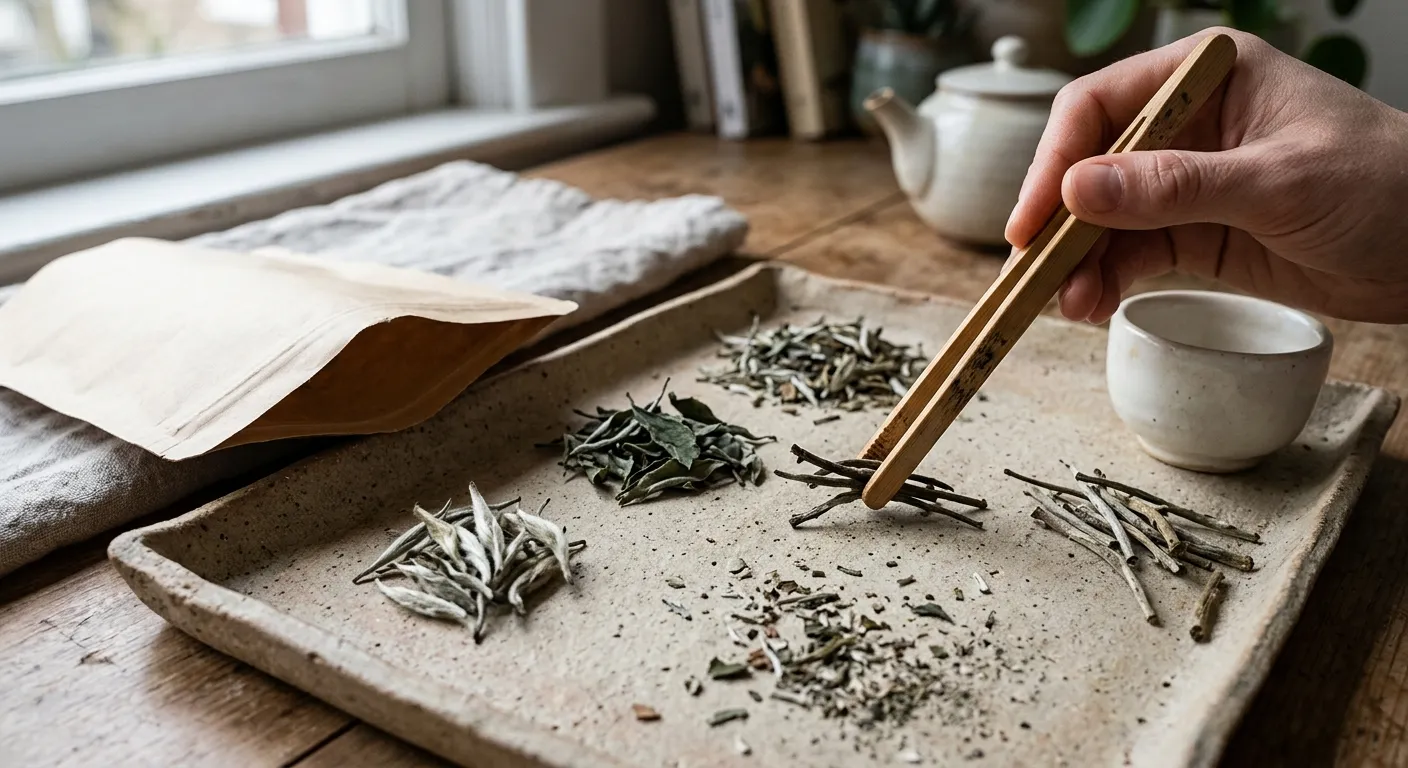
A white tea aroma check starts before the kettle. Smell the dry leaf in a clean container, then look at the leaf under normal light.
Useful clues include:
- Very green-looking leaves: These may prepare you for a greener taste, but color alone does not prove freshness, quality, or processing style.
- Many broken pieces: Smaller fragments usually infuse quickly, so grassy or bitter edges may appear sooner.
- Dust or powder: Fine material can cloud the cup and make extraction feel sharper.
- Mixed leaf sizes: Uneven pieces may brew unevenly; small bits release flavor before larger leaves fully open.
- Dull aroma: If the tea smells flat before brewing, the cup may lack the sweetness that balances green notes.
- Outside odors: Perfume, spices, dampness, smoke, cardboard, or cupboard smells point toward storage influence.
White tea leaf appearance is useful, but it is not a verdict. A broken tea is not automatically poor. A greener tea is not automatically fresh. A bud-heavy tea is not automatically gentle. The leaf gives clues; the cup shows whether those clues matter.
Wet leaves can add one more check. If they smell clean, sweet, and plant-like, the grassy note may simply belong to the tea. If they smell sour, musty, stale, or oddly scented, the issue may sit outside normal fresh-green character.
Clean Green Is Different From Stale Green
Tea descriptions often use words such as fresh, spring, meadow, green, or vegetal. Those words can shape expectations before the first sip. A seller may describe a tea as bright or fresh, and then every green note becomes easier to notice. That does not make the description wrong, but tasting language should not replace tasting.
A pleasant fresh white tea flavor often feels lifted and clean. It may sit beside gentle sweetness, pale florals, or hay-like warmth. A stale green note feels flatter: dusty, papery, less fragrant, and sometimes rough without much sweetness around it.
Storage context is worth checking:
- Was the tea sealed, or stored open?
- Was it near spices, coffee, incense, cleaning products, or scented packaging?
- Does the dry leaf smell like the storage area rather than like tea?
- Was it exposed to noticeable humidity or heat?
- Does the wrapper or bag smell stronger than the leaf itself?
If storage odors are present, do not read grassy flavor as a clean marker of origin, grade, age, or purity. A grassy note surrounded by damp, musty, perfumed, smoky, or cardboard-like aromas is different from a clean green note in an otherwise clear cup.
Age claims also need restraint. Older white tea is often discussed through changing aroma and texture, but a grassy flavor alone does not verify or disprove age. Look at the whole sample: appearance, dry aroma, seller information, packaging, storage condition, and how the liquor behaves over several infusions.
When Seller Language Makes the Tea Seem Grassier
Seller descriptions can influence perception. Words like “early,” “fresh,” “spring,” “wild,” “premium,” “meadow,” or “delicate” can make you expect clean green brightness. If the cup instead tastes raw or weedy, the mismatch feels stronger.
Translate the description into something observable:
- If it is described as fresh, does the dry leaf smell lively or only green?
- If it is described as delicate, does the cup feel soft, or just pale?
- If it is described as meadow-like, is the note sweet and hay-like, or sharp and weedy?
- If it is described as premium, does the leaf look carefully handled, or is there much dust and breakage?
- If it is described as aged, is there aroma depth beyond a simple stale-green taste?
Marketing language can be a prompt, but it should not do the judging for you. A grassy note in white tea does not prove high quality, poor quality, freshness, age, origin, or safety. It only tells you that green, vegetal, hay-like, or raw-leaf notes are noticeable in this brewing session.
A Simple Retest Before You Decide
If your white tea tastes grassy, run one small retest before deciding the tea is the problem:
- 1. Smell the dry leaf. Note whether it is clean, sweet, hay-like, sharp, dusty, damp, or affected by outside odors.
- 2. Use slightly less leaf. This lowers concentration without changing everything.
- 3. Brew cooler and shorter. Keep the first infusion gentle.
- 4. Decant fully. Do not let the leaves sit in hot water after the steep.
- 5. Taste before judging the label. Notice whether the grassy note becomes softer, sweeter, or less bitter.
- 6. Smell the wet leaf. Clean green is different from stale, sour, musty, or perfumed.
If the gentler brew tastes balanced, the original grassy cup was probably a brewing mismatch. If every attempt remains harsh, flat, or storage-tainted, the tea may not suit your taste, or it may have been handled or stored in a way that left the green edge exposed. Keep the conclusion modest: the cup gives evidence about this sample, not every tea with the same name.
What Not to Conclude From One Grassy Cup
A grassy white tea can tell you something, but not everything. One tasting session should not be used to make firm claims about processing, harvest timing, origin, authenticity, pesticide status, wellness value, or premium grade. A single flavor note is too narrow for that.
What you can reasonably say is more practical:
- The tea has a noticeable green or grassy note in this brew.
- Temperature, steep length, dose, vessel, and water may be affecting it.
- Leaf breakage, dry-leaf aroma, and storage odors are worth checking.
- Seller descriptions can shape expectations, but they should not replace tasting.
- A second, gentler brew is the simplest way to separate brewing intensity from leaf character.
White tea does not need to match one fixed flavor profile, and grassy notes are not automatically a flaw. The useful question is whether the green taste is clean, balanced, and pleasant — and whether it changes when you brew with more restraint.