
Cup comparison
White Tea vs Green Tea Taste: What Changes in the Cup
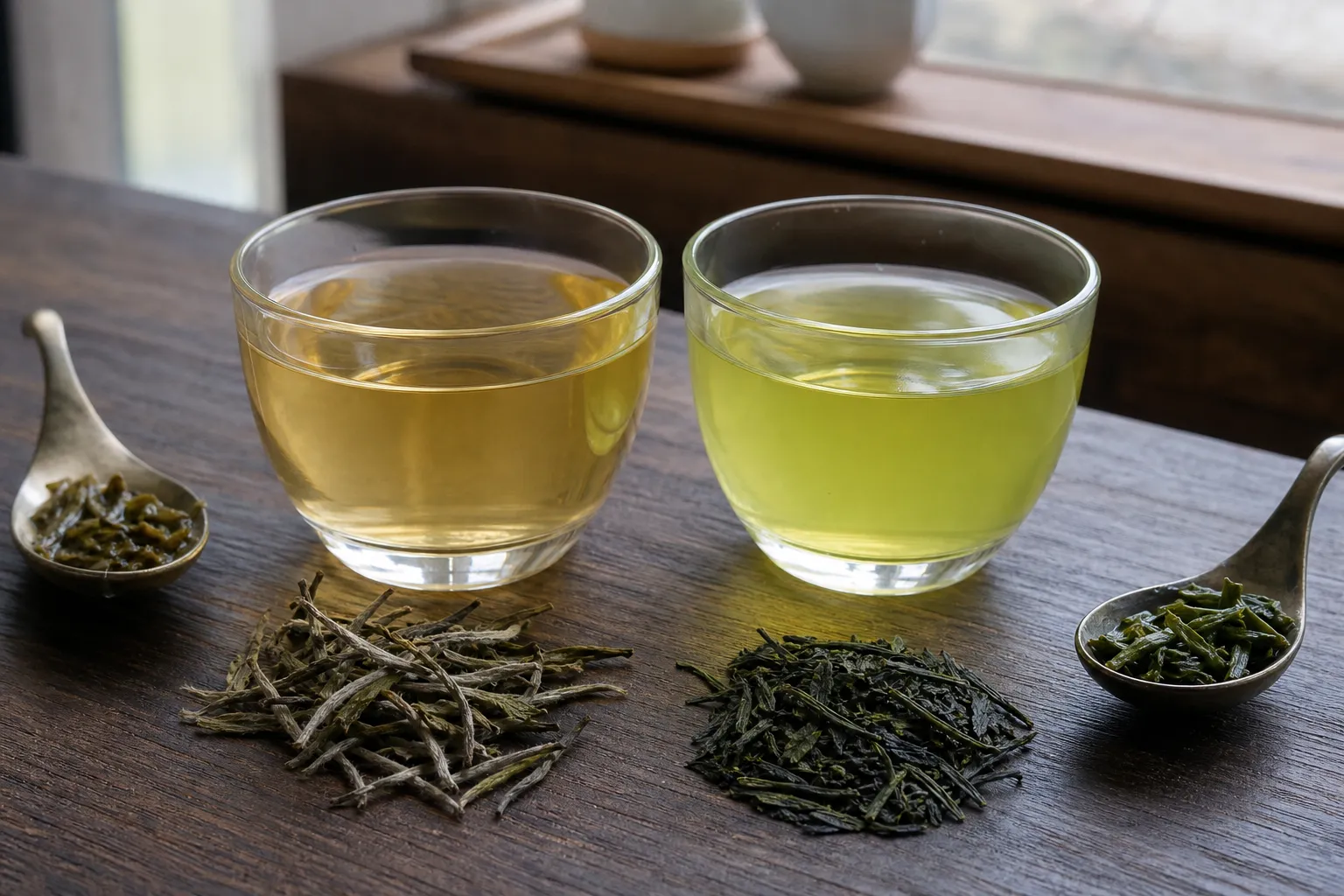
White tea vs green tea taste usually changes in three places first: aroma, texture, and how quickly the cup becomes sharp. White tea often tastes softer, rounder, and more quietly sweet. Green tea often tastes brighter, greener, and more direct. That is a useful starting point, not a rule.
A bud-heavy white tea, a leafier white tea, a fresh green tea, an older sample, hot water, or a long steep can all change the cup. If you are asking, “does white tea taste like green tea?” the practical answer is: sometimes, especially when both teas are light, fresh, and brewed gently. The difference becomes clearer when you compare aroma, body, bitterness, astringency, and finish instead of relying on the label.
upward
Read the full overview first
Use the broader guide first if you need the full scope before this page.
The Short Answer in the Cup
White tea often leans toward hay, honey, dried flowers, soft fruit, warm grain, or a mellow herbal sweetness. Green tea more often brings fresh grass, steamed greens, herbs, toasted grain, seaweed-like savoriness, or sharper plant notes.
The simplest comparison looks like this:
White tea often moves toward
- Aroma: soft florals, hay, dried herbs, honeyed warmth.
- Sweetness: gentle, lingering, sometimes fruit-like.
- Body: light to rounded, sometimes silky.
- Bitterness: usually quieter, but possible with hard brewing.
- Astringency: often soft, though leafier grades can dry the mouth.
- Finish: slow, mellow, sometimes sweet or warm.
Green tea often moves toward
- Aroma: fresh greens, grass, herbs, savory or nutty notes.
- Sweetness: brighter, sometimes balanced by vegetal sharpness.
- Body: light to medium, sometimes crisp or brisk.
- Bitterness: can appear sooner with heat or time.
- Astringency: often more noticeable when over-extracted.
- Finish: cleaner, greener, sometimes brisk or savory.
Use the comparison as a tasting map, not a category law. The actual result still depends on leaf quality, freshness, storage, water temperature, steep time, dose, and vessel.
“Mild vs Strong” Is Too Simple
The common shortcut is to call white tea delicate and green tea grassy. That can help a beginner start, but it misses a lot.
White tea can seem quiet in the first sip and then become more interesting in the finish. Its sweetness may not feel sugary. It may show as a soft coating on the tongue, a warm dried-grass aroma, or a gentle fruit-like echo after swallowing. Some cups feel pale and silky; others, especially leafier or older-looking samples, can feel fuller and more rustic.
Green tea can feel more immediate. The aroma may rise quickly from the cup, and the first sip may show a clearer plant edge. Depending on the tea and preparation, that edge can feel fresh, savory, nutty, brisk, or slightly sharp. If brewed hard, green tea may show bitterness or a dry grip sooner than many white teas. White tea can also turn rough when steeped too hot, too long, or with too much leaf.
Aroma: Quiet Does Not Mean Empty
Aroma is often where the white tea and green tea flavor difference becomes easiest to notice.
With white tea, the fragrance may sit close to the cup: dried meadow grass, pale flowers, warm straw, faint melon, honey water, almond skin, or soft herbs. Silver Needle-style teas may seem especially quiet if brewed lightly. Leafier white teas may show more woody, herbal, or dried-fruit edges.
Green tea aroma often announces itself faster. It may suggest cut grass, cooked greens, fresh herbs, toasted grain, chestnut-like warmth, or marine savoriness. Some green teas smell vivid and clean; others can become harsh, stale, or flat if the sample is old or poorly stored.
For a fair comparison, smell the dry leaf and the wet leaf. Dry leaves can be subtle, but the wet leaf after the first infusion often reveals more. If the green tea smells vivid and the white tea seems faint, sip both again as they cool. White tea aroma can become easier to read when the cup is warm rather than steaming hot.
Sweetness, Vegetal Notes, and Body
When readers compare white tea to green tea flavor, they often expect one tea to be simply sweeter. In practice, sweetness has shape.
White tea may feel sweet because its bitterness is low, its aroma is soft, and the finish stays rounded. The sweetness may appear after the sip rather than at the front. It can suggest nectar, hay, dried fruit, or warm grain, but only when the tea has enough leaf character and the brew is not too thin.
Green tea can also be sweet. Some cups show a fresh spring-like sweetness, a nutty sweetness, or a savory-sweet balance. But green tea sweetness is often paired with stronger vegetal notes, so it may feel less soft even when sweetness is present.
Vegetal notes can overlap, especially in very fresh white tea or lightly brewed green tea. Still, green tea more often makes the plant character obvious: grass, greens, herbs, or cooked vegetable impressions. White tea may have plant notes too, but they often read drier, softer, or more hay-like.
Body is texture, not just flavor strength. A weak white tea may taste like lightly scented water. A better-balanced white tea can feel soft, layered, and quietly coating. Green tea can feel crisp, clean, juicy, or brisk. If either tea tastes empty, the issue may be the sample, the dose, or the steeping method rather than the category.
Bitterness, Astringency, and Finish Change Fast
Bitterness is easy to misread. A bitter cup does not automatically mean “green tea character,” and a gentle cup does not automatically mean “white tea quality.”
Green tea can become bitter or sharply dry with water that is too hot, too much leaf, or too long a steep. White tea is often more forgiving, but not immune. Bud-heavy white tea can become flat and heavy if pushed too hard. Leafier white tea can become woody, drying, or rough. Broken leaves and dusty fragments extract quickly in either type.
Astringency is the drying or puckering feeling on the tongue, cheeks, or gums. It may be softer in many white tea sessions and more noticeable in many green tea sessions, but preparation matters. A short, cooler infusion may make a green tea feel sweet and clean. A long, hot infusion may make the same tea taste harsh. A white tea brewed too lightly may seem smooth only because little has been extracted.
The finish is often the better judge. White tea can leave mellow sweetness, a floral trace, or a warm hay-like aftertaste. Green tea can leave a cleaner vegetal finish, a savory echo, or a brisk dryness. If both teas taste similar in the first sip, wait ten seconds after swallowing. The aftertaste often tells you more than the first hit of aroma.
What Changes the Answer in Your Own Cup
The answer depends on steep time, water temperature, leaf amount, leaf condition, and the sample you are comparing. A fair tasting does not need special equipment, but it does need consistency.
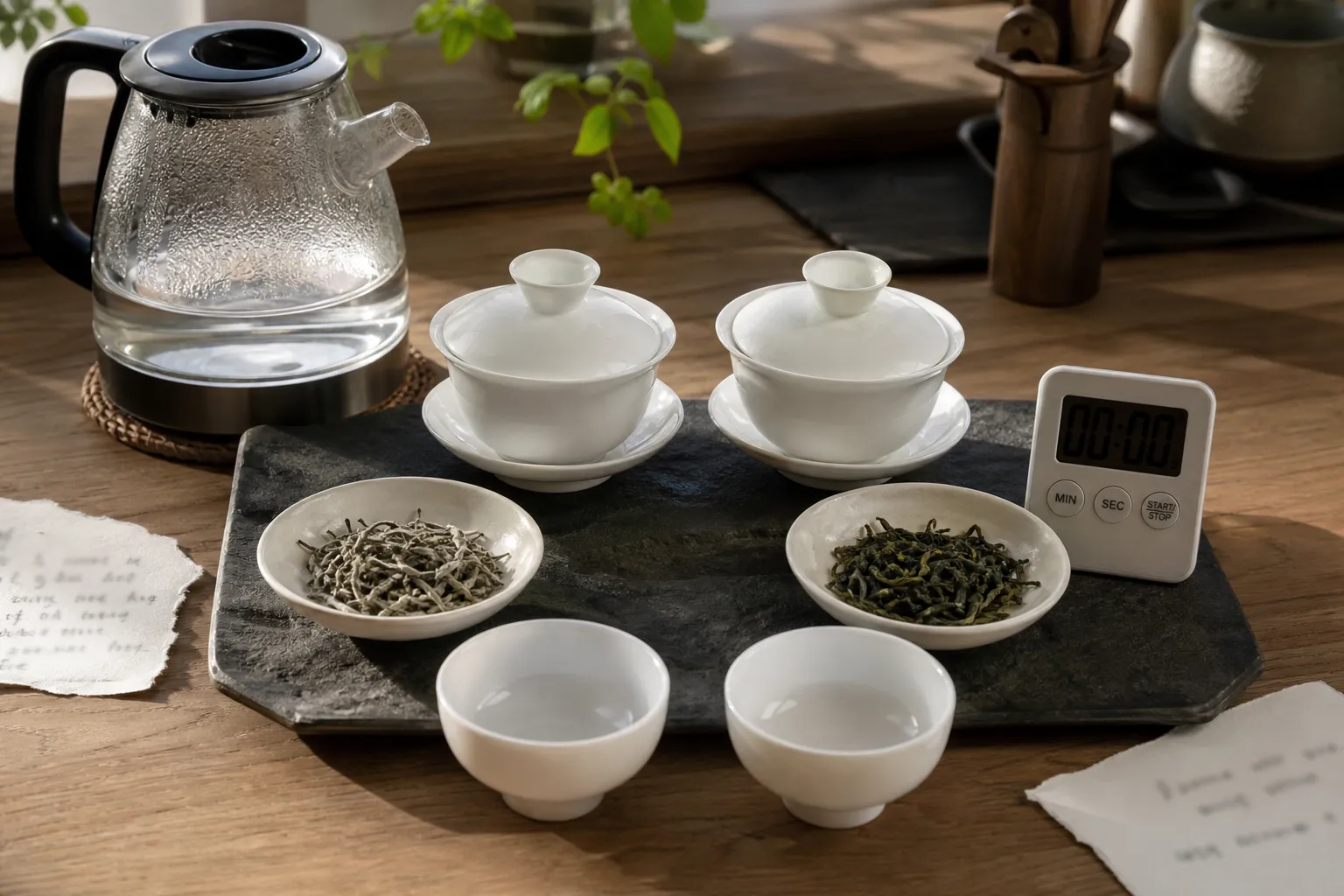
Use the same vessel size for both teas. Use similar leaf amounts by weight if you can. If you cannot weigh the leaves, remember that fluffy white tea leaves may take up more space than compact green tea leaves. A spoonful of each may not be an equal dose.
Water temperature matters because hotter water extracts faster. If both teas are brewed very hot, the green tea may become sharp quickly, while the white tea may lose some of its softer aroma. If both are brewed too cool, the white tea may taste faint and the green tea may seem flatter than it should. The goal is not one universal temperature; it is to avoid judging either tea from an obviously stressed brew.
Steep time matters just as much. A very short steep may make both teas taste light and sweet. A long steep may exaggerate bitterness, drying texture, or heavy plant notes. If you are comparing them for taste, try two rounds: one gentle infusion and one slightly longer infusion. Notice which tea opens gracefully and which tea becomes rough.
Sample condition also matters. Old, stale, damp, crushed, or poorly stored leaves can make either tea taste dull. A weak green tea may taste like flat vegetables. A tired white tea may taste like paper, dust, or empty straw. Those results say more about the sample than about the whole tea family.
A simple comparison method
- 1. Smell the dry leaves before brewing.
- 2. Brew both teas gently for the first round.
- 3. Taste while hot, then again when warm.
- 4. Note aroma, sweetness, body, bitterness, astringency, and finish.
- 5. Brew a second round slightly longer.
- 6. Decide which differences remain and which were caused by brewing.
You are not trying to prove which tea is better. You are trying to see what changes in the cup.
Common Confusion: Labels Do Not Taste the Tea for You
The biggest misunderstanding is treating the label as the flavor. “White tea” and “green tea” are broad categories. Within each, the cup can change with leaf grade, harvest style, freshness, storage, processing choices, and brewing. This page stays with observable cup-level comparison rather than making firm claims about caffeine, wellness effects, or category rules that need stronger sourcing.
Another confusion is assuming white tea is always weaker. Sometimes it is simply brewed too lightly. Large, airy leaves need enough contact with water. A pale infusion can still have aroma, but if the body is watery and the finish disappears immediately, try a little more leaf or a longer steep before judging.
The opposite confusion is assuming green tea is supposed to be bitter. Bitterness may be part of a cup, but harshness is often a brewing signal. If the green tea tastes aggressively sharp, reduce heat, shorten the steep, or use less leaf. Then compare again.
It is also easy to compare an ordinary sample of one tea against a better sample of the other. That will not tell you much about white tea and green tea as categories. Keep the conclusion narrow: “This white tea tastes softer than this green tea,” not “all white tea tastes softer than all green tea.”
Which One Might You Prefer?
Choose white tea if you are drawn to a quieter cup: soft aroma, gentle sweetness, rounded texture, and a finish that may unfold slowly. It can be appealing when you enjoy small changes across infusions rather than one bold first sip.
Choose green tea if you like a brighter cup: fresh plant notes, briskness, clearer savory or grassy edges, and a more immediate aroma. It can feel vivid in the first infusion, especially when the leaf is fresh and the brewing is controlled.
If you are unsure, taste them side by side with the same water and vessel. Keep the first steep gentle, then push the second steep a little. If the white tea becomes sweeter and more layered as it cools, that may be part of its appeal. If the green tea stays clean, fresh, and lively without turning harsh, that may be part of its appeal.
The best answer is not that one tea tastes better. White tea and green tea often place emphasis in different parts of the cup: white tea in softness, slow sweetness, and lingering warmth; green tea in freshness, vegetal clarity, and brisk structure. The difference becomes clearest when the comparison is brewed fairly and judged by aroma, body, bitterness, astringency, and finish rather than by the name on the packet.
FAQ
Does white tea taste like green tea?
Sometimes. Light, fresh, gently brewed samples can overlap. White tea often tastes softer, warmer, and more floral or hay-like, while green tea often tastes fresher, greener, and more brisk.
Is white tea sweeter than green tea?
It can seem sweeter because it often has less obvious bitterness and a softer finish. Green tea can also be sweet, but its sweetness is more likely to sit beside vegetal, savory, or brisk notes.
Why does my white tea taste weak?
It may be under-brewed, low in leaf amount, old, poorly stored, or simply a very subtle sample. Try slightly more leaf or a longer steep before deciding the tea itself is empty.
Why does my green tea taste bitter?
The water may be too hot, the steep may be too long, or the leaf amount may be too high. Shortening the infusion or using cooler water can show whether bitterness is part of the tea or mostly a brewing issue.