
Beginner Comparison
White Tea vs Green Tea: The Basic Difference for Beginners
The basic white tea vs green tea difference is practical: white tea is usually handled in a way that leaves more of the leaf’s quiet texture, aroma, and slow-building character visible, while green tea is usually shaped to keep a fresher, greener, more immediate cup. For a beginner, the difference is easier to understand through dry leaf appearance, cup color, aroma, taste, brewing response, and label language than through broad claims about which tea is “better.”
White tea often asks you to notice softness, texture, and a quieter aroma. Green tea often asks you to notice freshness, vegetal notes, and a more active first infusion. These are tendencies, not rules. Leaf grade, harvest, storage, age, vessel, water temperature, and steeping time can all change the result.
upward
Start with the broader guide
Use the broader guide first if you need the full scope before this page.
The short answer: what changes in the cup
White tea often feels more spacious. Its aroma may seem subtle at first, and the taste may build across several sips instead of arriving all at once. Some cups lean floral, hay-like, mellow, lightly fruity, or softly sweet, but those notes are possibilities, not promises.
Green tea often gives a quicker first impression. Many green teas are described through freshness, green aroma, light bitterness, savoriness, grassy notes, or a cleaner snap in the finish. A delicate green tea can still be gentle, and a poorly brewed green tea can taste sharper than the leaf was meant to be.
So the difference between white and green tea is not simply “white is mild, green is strong.” A better beginner version is:
- White tea often rewards attention to aroma, texture, and aftertaste.
- Green tea often shows its character faster through freshness, brightness, and a more active first steep.
- Both can taste delicate or intense depending on the leaf and brewing.
- Neither category automatically means higher quality, lower caffeine, or a stronger wellness effect.
Simple comparison charts can help with orientation, but they often make the categories sound more fixed than they are.
Processing style is the starting point, not a ranking
White tea processing style and green tea processing style are usually the main reason these teas behave differently. That is useful, as long as processing does not turn into a purity contest.
White tea is commonly understood as a tea style with relatively simple handling after harvest. For beginners, the practical clue is that the leaf is usually not shaped toward the same vivid green, brisk profile associated with many green teas. This helps explain why many white teas look looser, show more bud or leaf texture, and brew into a softer-looking cup.
Green tea is commonly understood as a style handled to preserve a fresh green character. In the cup, many green teas are more visibly green, more immediately aromatic, and more sensitive to water that is too hot or steeping that runs too long.
But processing language can be overused in sales copy. “Less processed” does not automatically mean better, cleaner, or more beneficial. “Green” does not mean fresh in your cup if the tea has been poorly stored. Processing is a map, not a verdict.
Use it this way
- If a label says white tea, expect subtle aroma, leaf appearance, and gentle extraction to matter.
- If a label says green tea, expect freshness, timing, and water temperature to be more noticeable.
- If a seller builds a broad superiority claim from processing alone, check the leaf, aroma, storage, and cup before trusting it.
What to look for before and after brewing
You do not need technical language to compare these teas. Look, smell, brew, and taste in a steady order.
Dry leaf appearance
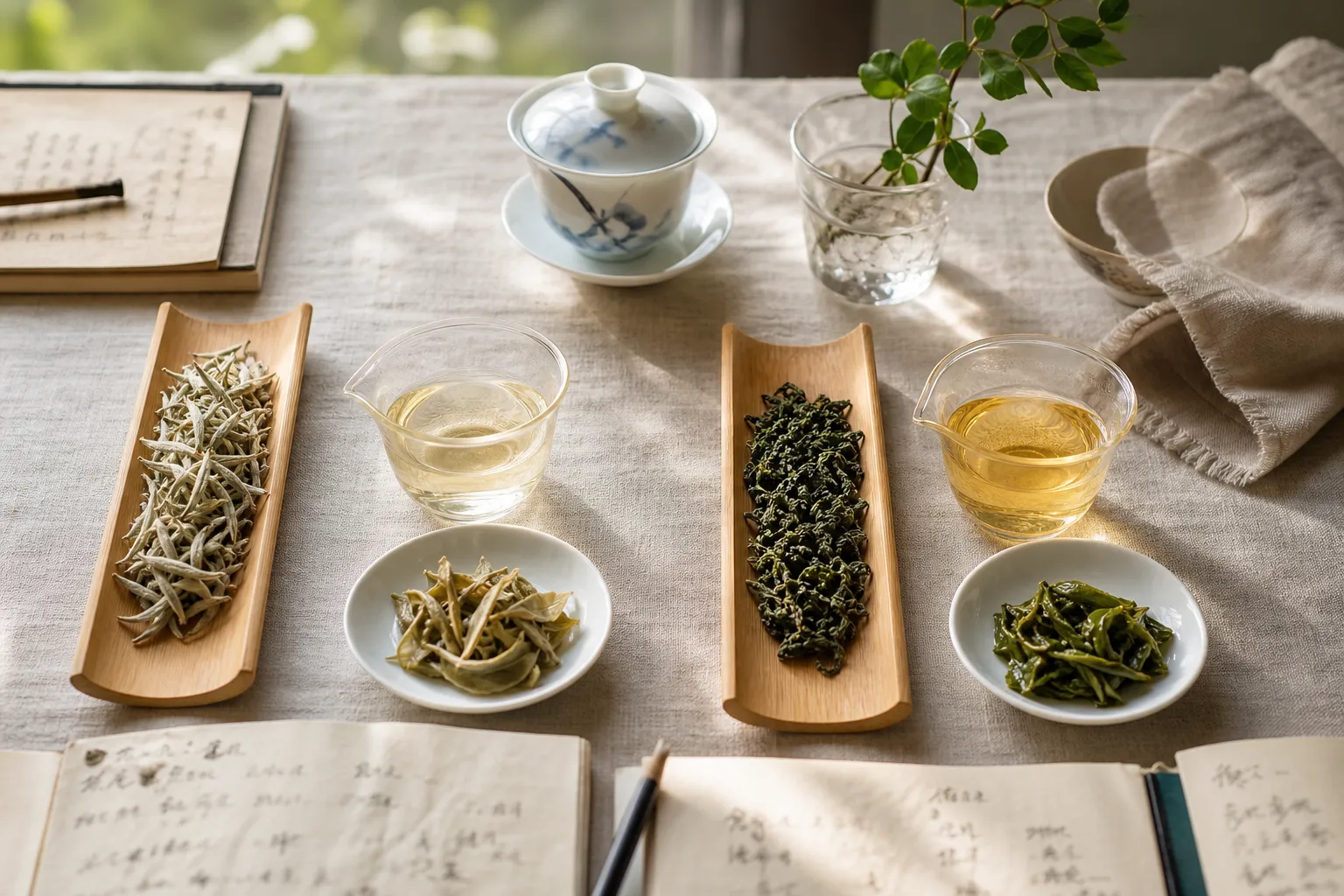
White tea leaf appearance may include pale buds, mixed leaf sizes, silvery down on some bud-heavy styles, or a looser look. Some white teas are neat; others look more rustic. That does not decide quality by itself. It only gives you a first clue about how the tea may brew.
Green tea leaf appearance often looks more visibly green, though shade, shape, and size vary widely. Some leaves are fine and delicate; others are rolled, twisted, curled, or flattened. Do not assume the brightest green leaf is always best. Color can reflect style, storage, lighting, and age.
The useful question is not “Which looks prettier?” It is “Does the leaf appearance match the label and the cup?”
Infusion color
White tea cup character often appears pale gold, straw-colored, light amber, or softly yellow depending on leaf type, amount, age, and steeping. Some aged or compressed white teas brew darker than beginners expect. That is not automatically a problem; compare color with aroma and taste.
Green tea cup character often sits in the green-yellow, yellow, or light golden range, with plenty of variation. A very dark, harsh, or flat cup may point to brewing choices, storage, or leaf condition, but color alone is not enough to diagnose the issue.
Aroma
With white tea, smell the dry leaf first, then the wet leaf after a short infusion. Beginners sometimes miss white tea because they expect a loud aroma. Depending on the tea, you may notice dried flowers, warm hay, light fruit, honeyed edges, or a soft leafy note. If the aroma feels hidden, warm the vessel first and smell the leaf before adding water.
With green tea, the aroma may be more immediate. You might notice fresh greens, toasted edges, seaweed-like savoriness in some styles, or a clean grassy lift. If the aroma turns dull or stale, storage or age may be part of the issue.
Taste and texture
White tea often makes more sense when you pay attention to texture. Is the cup thin, silky, round, drying, or sweet in the finish? A quiet first sip may open into a longer aftertaste. If the cup tastes like warm water, try more leaf, a longer steep, a slightly hotter brew within reason, or a vessel that holds heat better.
Green tea often reveals timing problems quickly. Too much heat or too long a steep can make some green teas taste sharp or bitter. A more careful brew may show freshness and clarity instead. This is why some beginners think they dislike green tea when the real problem is extraction.
Why the same brewing method may not work
White tea brewing expectations should stay flexible. Some white teas respond well to a generous amount of leaf and repeated short infusions. Others are easy in a mug or pot with a slightly longer steep. The important point is that white tea may not announce itself instantly. If you brew it too weakly and judge only the first sip, you may miss the body and finish.
Green tea brewing expectations are often less forgiving. Many green teas can become rough when brewed with water that is too hot or steeped too long. That does not mean green tea is difficult, but timing and temperature often show up more clearly in the final taste.
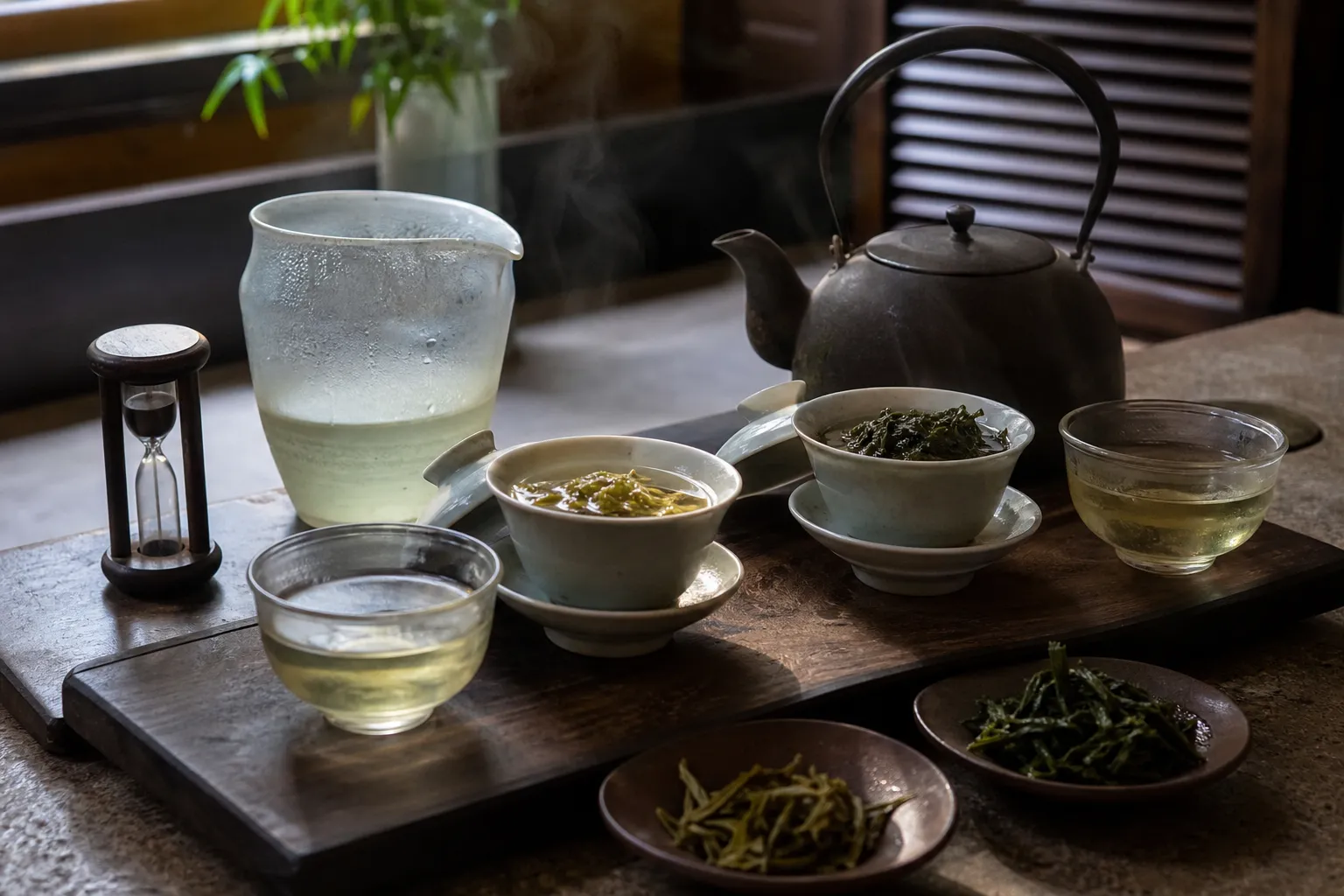
If you are comparing white tea compared to green tea at home, keep it simple:
- Use separate cups or vessels so aromas do not mix.
- Start with moderate water temperature rather than boiling water for everything.
- Keep the first steep short enough that neither tea is pushed to extremes.
- Smell the wet leaf before deciding which one you prefer.
- Taste again as the cup cools, because sweetness, bitterness, and aroma can shift.
This is not a formal tasting protocol. It is just a way to avoid blaming the tea category for a brewing mismatch.
Label language to read carefully
Green tea label language and white tea label language can both help, but they can also create overconfidence.
For white tea, labels may emphasize bud content, named styles, harvest timing, region, age, or gentle processing. These details can guide expectations, but none of them proves the tea will taste good. “Silver” wording, old-looking wrappers, or premium phrasing still need to be checked against leaf appearance, aroma, infusion behavior, and seller context.
For green tea, labels may emphasize freshness, season, cultivar, shape, steaming or firing style, or origin. These details can help you predict brewing needs, but they still need practical confirmation. A fresh-sounding label does not protect a tea from poor storage or stale aroma.
Category
White tea or green tea.
Style clue
Bud-heavy, leafier, pan-fired, steamed, loose, compressed, young, or aged.
Proof in the cup
Aroma, clarity, texture, balance, and brewing response.
This prevents a common mistake: treating label language as tasting evidence. Labels can guide your expectations, but the cup has to confirm them.
Common misunderstandings
One misunderstanding is that white tea is always lower in caffeine. This page should not make a firm caffeine comparison because caffeine depends on the leaf, picking standard, processing, amount used, water, and steeping. For beginners, it is better not to choose either tea from a simple caffeine chart alone.
Another misunderstanding is that white tea is automatically sweeter. Many white teas can feel soft or gently sweet, but some are woody, leafy, drying, or very subtle. Green tea can also have sweetness when brewed well. Sweetness is a cup result, not a category guarantee.
A third misunderstanding is that green tea is automatically bitter. Bitterness can come from the tea, the style, the water, the leaf amount, or the steeping time. If a green tea tastes harsh, adjust the brew before dismissing the whole category.
A fourth misunderstanding is reading “less processed” as “better.” Processing is craft, not a moral scale. A well-made green tea and a well-made white tea are shaped toward different cup experiences.
The last misunderstanding is letting wellness language choose the tea for you. White tea and green tea are often discussed around caffeine, antioxidants, and general wellness, but those points should stay secondary here. For this comparison, choose first by taste, brewing fit, storage confidence, and how the tea fits your routine.
A simple way to choose your first one
Choose white tea first if you want a quieter tea for slow tasting. It can be a good starting point when you want to explore aroma, mouthfeel, and how a cup changes as it cools. It may also suit you if you are curious about bud-heavy versus leafier styles, or about how some white teas change with careful storage.
Choose green tea first if you want a brighter tea with a clearer fresh edge. It can be easier to read in the first cup, as long as you pay attention to water temperature and steep time.
If you are unsure, buy small amounts of both instead of committing to a large package. Brew them on the same day with gentle methods and compare what you notice:
- Which dry leaf smells more inviting?
- Which cup stays pleasant as it cools?
- Which one becomes unpleasant faster when slightly oversteeped?
- Which label details actually match the aroma and taste?
- Which tea would you want to brew again tomorrow?
That last question is often more useful than a long category debate. A beginner white tea comparison and a beginner green tea comparison both become clearer after two or three careful cups.
The practical takeaway
The white tea and green tea difference is best understood through processing style and cup behavior, then checked against your own brewing. White tea often leans toward subtle aroma, softer texture, and a slower reveal. Green tea often leans toward freshness, clearer brightness, and a more temperature-sensitive brew.
These are useful tendencies, not guarantees. Do not assume one is always gentler, sweeter, stronger, more refined, or better for your body. Look at the leaf, smell it dry and wet, brew it carefully, and let the cup show you what the label can only suggest.