
Processing comparison
Is White Tea Less Processed Than Green Tea
Yes, in the usual tea-processing comparison, white tea is generally less processed than green tea. White tea is typically made through withering and drying, while green tea usually includes an early heat step, often called fixation, to slow enzyme-driven oxidation before shaping and drying.
That does not mean white tea is untouched, automatically better, or higher quality. “Less processed” is a useful shortcut only when it refers to the actual steps used on the leaf.
A simple way to read the difference is this: white tea often keeps more of the leaf’s original shape and surface because its process is built around moisture loss and careful drying. Green tea is shaped more actively by heat earlier in the process.
upward
Read the full overview first
Use the broader guide first if you need the full scope before this page.
The Basic Processing Difference
Both white tea and green tea come from the tea plant. The difference is what happens after picking.
White tea usually follows a shorter path
- Fresh buds or leaves are picked.
- The material is withered so moisture gradually leaves the leaf.
- The tea is dried until it is stable enough for storage and transport.
Green tea usually follows a more active path
- Fresh leaves are picked.
- The leaves are heated early through fixation.
- The tea may be rolled, flattened, curled, twisted, or otherwise shaped.
- The tea is dried.
That early heating step is the main divider. Green tea fixation uses heat to reduce enzyme activity and keep the leaf closer to a green-tea profile. White tea usually does not rely on the same early heat step; its character is closely tied to withering and drying.
So in a simple white tea processing vs green tea comparison, white tea is generally less intervention-heavy. Green tea is not “overprocessed.” It is processed differently, with a step designed to guide color, aroma, and taste.
Why Withering And Drying Matter
White tea withering is not the same as leaving leaves unattended. It is a managed stage where fresh material loses moisture under conditions that can vary by producer, weather, batch size, leaf grade, region, and drying method.
That is why “minimally processed white tea” can be useful in casual language but weak as a quality claim. A shorter process still needs skill.
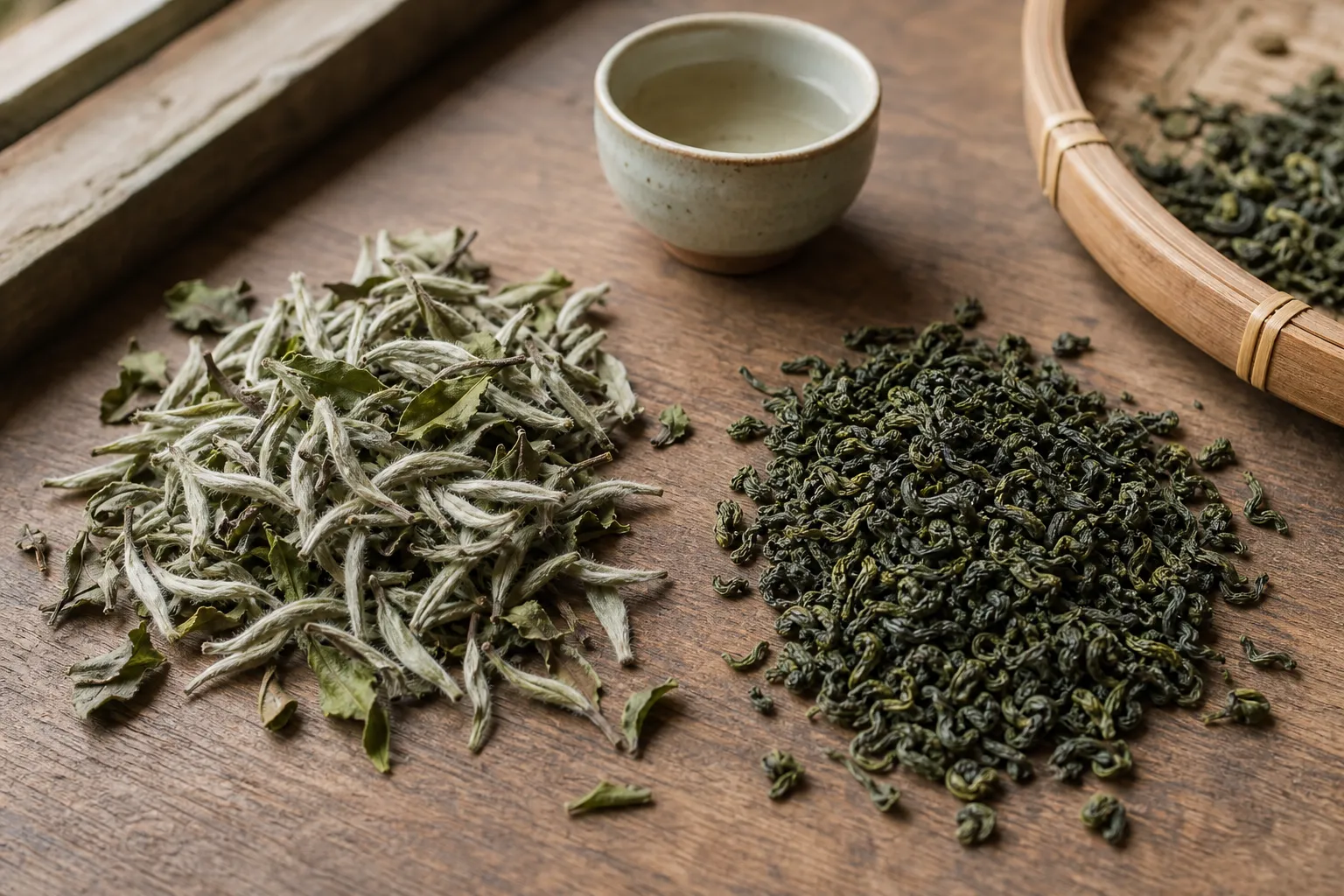
During withering, the leaf softens and moisture drops. Its color may shift from fresh green toward muted green, grey-green, silvery, olive, tan, or brownish tones, depending on the material and handling. Bud-heavy white teas may keep a pale, downy look. More mature grades may show larger leaves, stems, and warmer colors.
Drying is just as important. Tea cannot remain moist and store well. If drying is too harsh or uneven, the cup may lose delicacy or the tea may age poorly. If drying is insufficient, storage concerns become more serious.
For a buyer, the visible clues are modest but useful. White tea may look looser or less tightly shaped than many green teas. It may show intact buds, larger leaves, visible stems, or a fluffier structure. Its dry aroma may suggest hay, dried flowers, soft herbs, honeyed grain, melon rind, or warm dry wood. These signs can fit a gentler-looking process, but they do not prove quality on their own.
What Green Tea Fixation Changes
Green tea processing is easy to misread because “processed” can sound negative. In green tea, fixation is not a flaw. It is one of the steps that defines the style.
The leaf is heated early to slow the enzyme activity that would otherwise keep oxidation moving. Different green teas use different fixation methods and shaping styles, which is why finished leaves can look flat and glossy, curled, twisted, needle-like, or broken-looking.
This is the cleanest comparison: white tea usually changes more slowly through withering before drying, while green tea interrupts oxidation earlier through heat and then develops its final form through shaping and drying.
That difference often shows in the cup. Green teas may lean fresh, grassy, nutty, marine, vegetal, chestnut-like, or steamed-green, depending on style. White teas often feel softer, with dried-floral, hay-like, lightly fruity, honeyed, or mellow herbal impressions. These are tasting directions, not fixed outcomes. Leaf grade, storage, water temperature, brewing time, and freshness can change the brew dramatically.
A green tea can taste delicate and transparent. A white tea can taste bold, woody, or deeply sweet, especially when made from mature leaves or stored for some time. Processing category explains the starting point; it does not predict every cup.
Where “Less Processed” Misleads
“Less processed” is useful only when it stays tied to tea-making steps. It becomes misleading when it turns into marketing shorthand.
It does not automatically mean:
- Better quality
- Cleaner flavor
- Higher value
- Stronger aroma
- Safer storage
- More authentic origin
- A better wellness outcome
A poorly made white tea is still poorly made, even if it uses fewer major steps. A carefully made green tea can be excellent, even though fixation and shaping make it more actively processed. The better question is not only “how many steps?” but “how well were those steps handled for this leaf?”
This matters when reading labels. Words such as “minimal,” “natural,” “pure,” or “traditional” may describe an intended style, but they are not enough to judge the tea. Look for more concrete details: tea type, harvest material, region if provided, year if relevant, loose or compressed form, storage context for aged tea, and clear processing notes.
The same boundary applies to wellness-adjacent comparisons. White tea and green tea are often discussed in that context, but processing differences mainly help explain flavor, appearance, oxidation, storage behavior, and brewing response. They should not be stretched into health-outcome claims.
What You Can Check Before Buying Or Brewing
If you are choosing between white tea and green tea, do not stop at which one is less processed. Ask what the processing difference means for the tea in front of you.
Start with the dry leaf
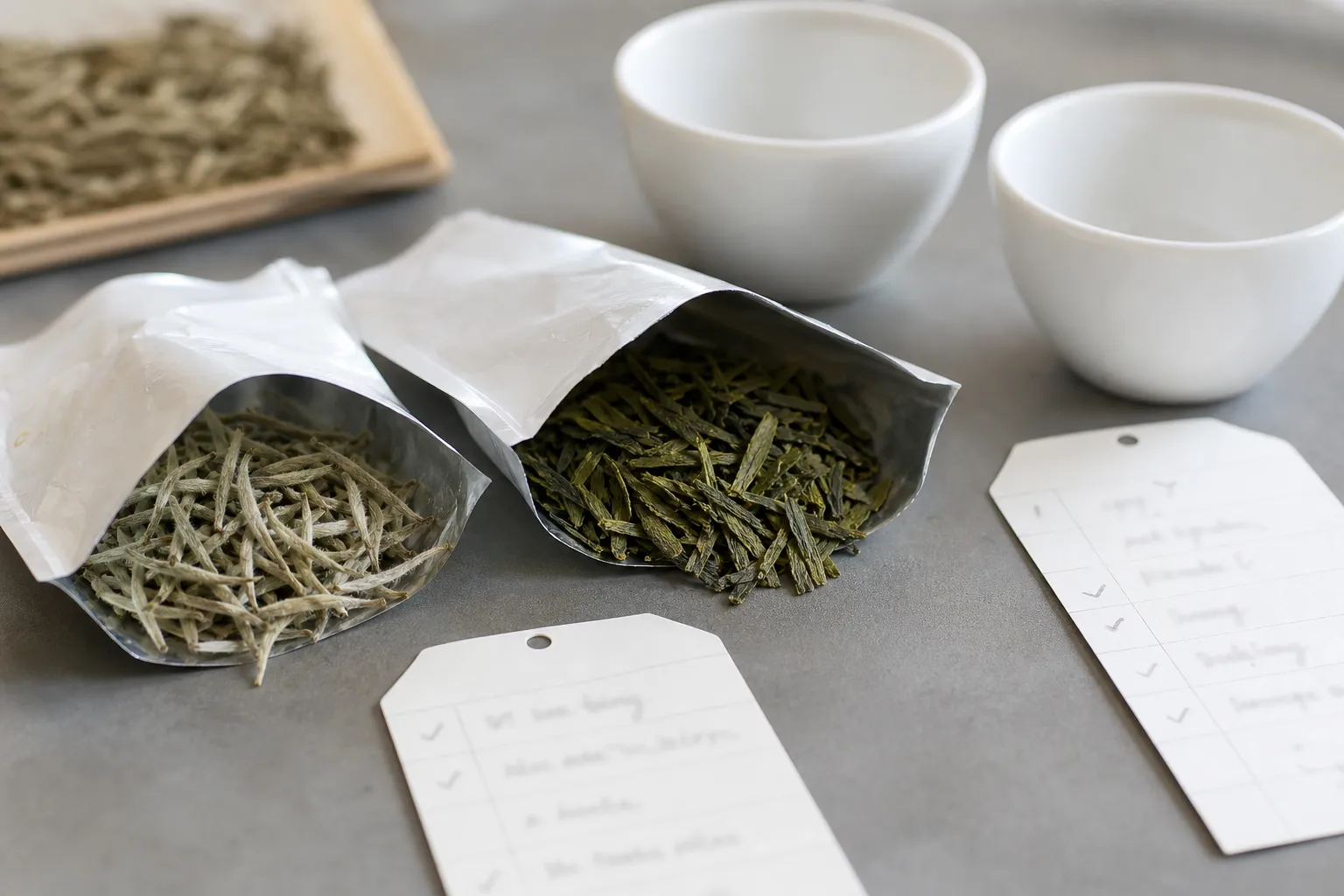
White tea often shows more visible clues about pluck style: buds, down, stems, broad leaves, broken edges, or compressed cake material. Green tea often shows stronger shaping cues: flattened leaves, rolled strips, tight curls, pellets, or needle-like forms. Neither look is automatically superior, but each tells you something about how the maker handled the leaf.
Then smell the dry tea
White tea may suggest dried meadow, soft flowers, hay, grain, or gentle fruit. Green tea may show fresher green notes, toasted notes, steamed leaf, nuts, or seaweed-like aromas in some styles. If the aroma is flat, stale, unintentionally smoky, damp, or musty, storage or age may be the issue rather than the category.
Brew with restraint before judging
White tea can seem thin if the leaf ratio is too low, the water is too cool, or the infusion is too short for the grade. Green tea can turn sharp if the water is too hot or the steep runs too long. Processing sets expectations; brewing choices decide what you actually taste.
Compare label claims with visible details
Terms such as “sun-dried,” “shade-withered,” “pan-fired,” “steamed,” or “baked” can be meaningful when used clearly. A simple listing with harvest, leaf material, processing, and storage context is often more useful than dramatic wording built around “pure” or “minimal.”
The Practical Answer
White tea is generally considered less processed than green tea because its typical path centers on withering and drying, while green tea includes fixation to slow oxidation and shape a green-tea profile.
The important limit is that less processed does not mean unprocessed, and it does not settle quality. White tea still depends on careful withering, drying, storage, and honest description. Green tea’s fixation is not a defect; it is part of what makes green tea green tea.
When comparing the two in a shop or at your tea table, use “less processed” as a clue, not a verdict. Then check the leaf shape, aroma, infusion color, flavor balance, storage condition, and clarity of the seller’s wording. Those details will tell you more than the category label alone.
FAQ
Is white tea unprocessed?
No. White tea is processed, but usually through a simpler path centered on withering and drying. The leaves still need skilled handling to become stable, drinkable tea.
Is green tea more processed because it is lower quality?
No. Green tea is more actively processed in the sense that it usually includes fixation and shaping, but those steps define the style. They do not make the tea lower quality by themselves.
Does less processed mean white tea tastes lighter?
Not always. Some white teas are soft and delicate, especially bud-heavy teas. Others can be full, woody, fruity, or deeply sweet, depending on leaf grade, storage, age, and brewing.
Should I choose white tea because it is less processed?
Choose it if you like the flavor direction, leaf style, and brewing experience. “Less processed” can help explain the category, but it should not replace checking the tea’s appearance, aroma, storage, and seller details.