
Leaf comparison
Why White Tea Often Looks Different from Green Tea
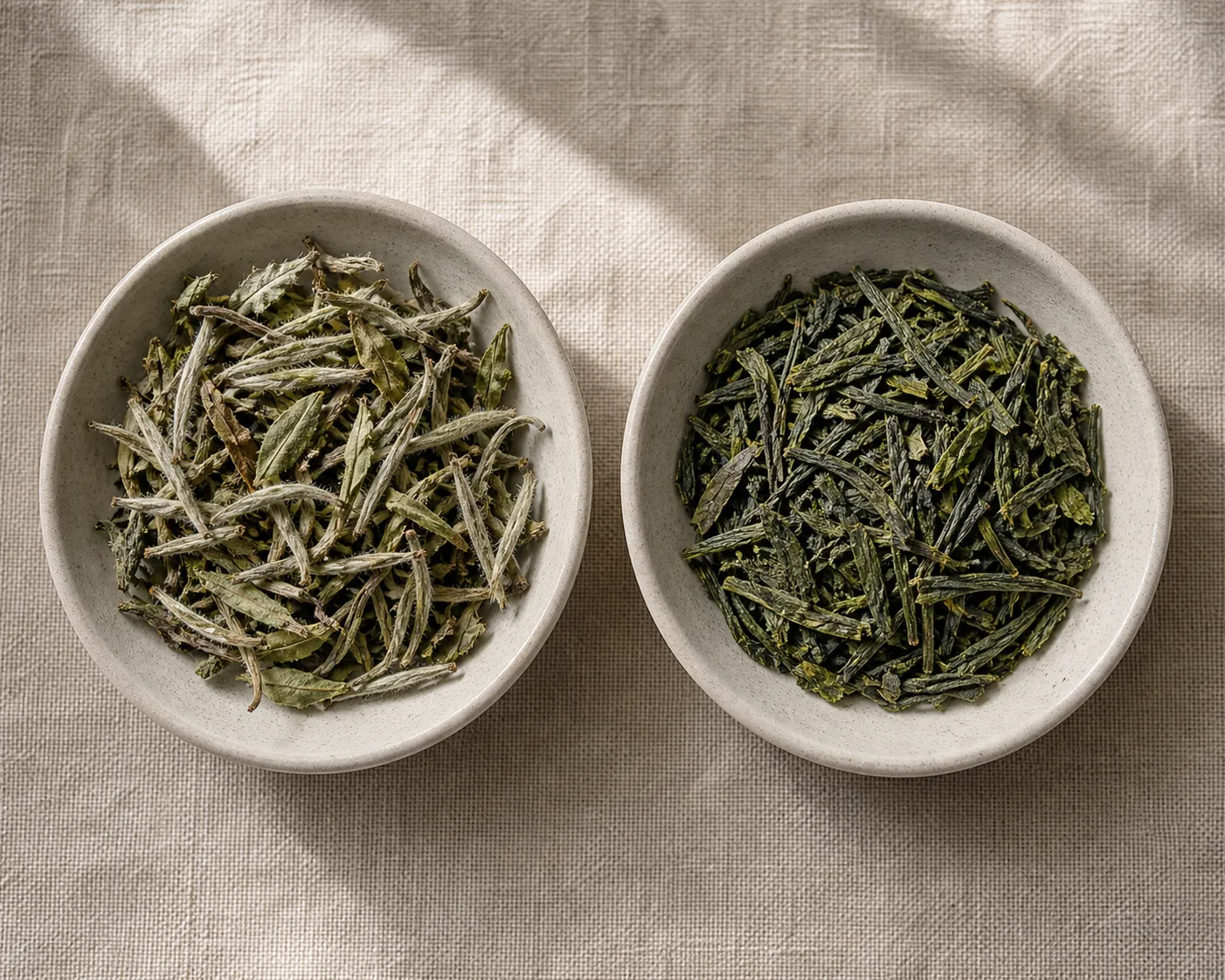
White tea often looks different from green tea because the visible leaf material, surface texture, shaping, and color range can differ. In a typical white tea vs green tea leaves comparison, white tea may show more visible buds, pale silvery down, looser shapes, and colors that move from muted green to tan or brown. Green tea often looks more shaped: flatter, curled, rolled, twisted, needle-like, or more evenly formed, depending on style.
Still, appearance is only the first clue. It is not enough by itself to confirm tea type, quality, origin, age, freshness, or processing. A better reading comes from checking the dry leaf, infused leaf, aroma, liquor color, taste, storage condition, and seller-provided harvest context together.
upward
Start with the broader guide
Use the broader guide first if you need the full scope before this page.
The Short Visual Answer
Place a bud-heavy white tea beside many green teas, and the first difference is often surface and structure.
White tea can look softer and less tightly finished. Some lots show pale buds covered with fine silvery down. Some show larger leaves with a loose, open, slightly twisted look. Others look darker, browner, or more mixed in color, especially when the tea is older, leafier, compressed, or broken from handling.
Green tea often gives a more shaped impression. Depending on the tea, the leaves may be flatter, slimmer, curled, rolled, twisted, or needle-like. The color may look greener, but not always bright green. Some green teas are deep olive, dull green, yellow-green, or slightly grayish after storage or rough handling.
The simple answer: white tea leaf appearance often emphasizes buds, down, loose structure, and wider color variation, while green tea leaf appearance often emphasizes shaped leaves and a greener or more uniform look. Those patterns are useful, but they have many exceptions.
What the Dry Leaves Can Suggest
Dry leaves are usually where the difference feels most obvious, especially when you are comparing samples before brewing.
A bud-heavy white tea may look pale, soft, and slightly furry. The “white” in white tea is often connected in everyday tea language to this visible down on young buds, not to a rule that every white tea must look white. A Silver Needle-style sample, for example, may appear mostly bud-based, with slim pale buds and a silvery cast.
A White Peony-style sample may show both buds and broader leaves. The dry leaf can look more mixed: light buds, greenish leaves, brown edges, and tan fragments in the same sample.
Leafier white teas can vary even more. Gongmei or Shoumei-style material may include larger leaves and more uneven pieces. Some dry leaves may look greenish; others may lean tan, russet, brown, or gray-green. That variation can reflect grade, leaf maturity, storage, age, compression, and handling. Without stronger context for a specific tea, color should stay a clue, not a conclusion.
Green tea leaves often look more intentionally shaped. Some are flattened, some are tightly curled, some are rolled into compact forms, and some are long and narrow. This can make green tea look neater than a loose white tea, though neatness is not the same as better quality. A green tea with small buds can look delicate and pale; a white tea with larger leaves can look rougher and darker. The categories overlap more than product photos sometimes suggest.
Four dry-leaf clues to compare
- Bud presence: white tea may show visible buds, but green tea can also include buds.
- Surface texture: white tea can show silvery down, but fuzz alone does not confirm type or quality.
- Shape: green tea is often flatter, rolled, curled, or otherwise shaped, while white tea may look looser.
- Color spread: white tea can show wider variation within one sample, while some green teas look more uniform.
These clues are useful because they slow down judgment. They become less useful when treated as shortcuts.
Why White Tea Can Show More Buds and Down
One common reason white tea looks different is that some white teas visibly preserve young buds and their fine surface hairs. When those buds remain intact, the dry leaf can look pale, soft, or silvery. This is especially noticeable in bud-forward white teas.
The visual effect can also mislead. “Silvery” does not mean every white tea should look silver. Many white teas are leafier. Some are compressed into cakes. Some have aged or darkened. Some contain broken material from transport or storage. A white tea can still fit its category and look green, brown, tan, or mixed.
The same caution applies to fuzz. White tea silvery down can be a helpful sign to notice, especially when comparing white tea buds vs green tea leaves, but it does not carry the whole judgment. Some green teas also include fine buds or downy surfaces. Some white teas have less visible down because of leaf grade, maturity, age, or handling.
A useful habit is to ask: what else agrees with the visual clue? If the sample shows downy buds, a soft aroma, a pale or golden infusion, and intact wet buds after brewing, the observations support one another. If it looks fuzzy but smells stale, brews harshly, or comes with unclear seller context, the fuzz should not do too much work.
Why Green Tea Often Looks More Shaped
Green tea commonly appears more shaped because many examples are visually defined by flat, curled, rolled, twisted, or needle-like leaves. The exact look depends on style and handling, so it is better to describe what you see than force every sample into one rule.
A flatter green tea may look pressed and tidy. A rolled green tea may look compact and dense. A curled green tea may look wiry or spiral-like. A needle-like green tea may look long, slim, and aligned. These forms can make green tea look more deliberate beside a looser white tea.
But green tea leaf appearance is not always bright, flat, and uniform. Some green teas are darker. Some include broken pieces. Some are curled rather than flat. Some look pale or bud-heavy. If you compare only one white tea and one green tea, it is easy to mistake a style difference for a category rule.
Product photos can add confusion. A bright studio image may make green tea look more vivid than it appears in a real packet. A white tea photo may emphasize silver buds while leaving out leafier grades. Images can help with orientation, but real samples vary by lighting, age, storage, grade, compression, and the amount of broken leaf in the bag.
Dry Leaf vs Infused Leaf
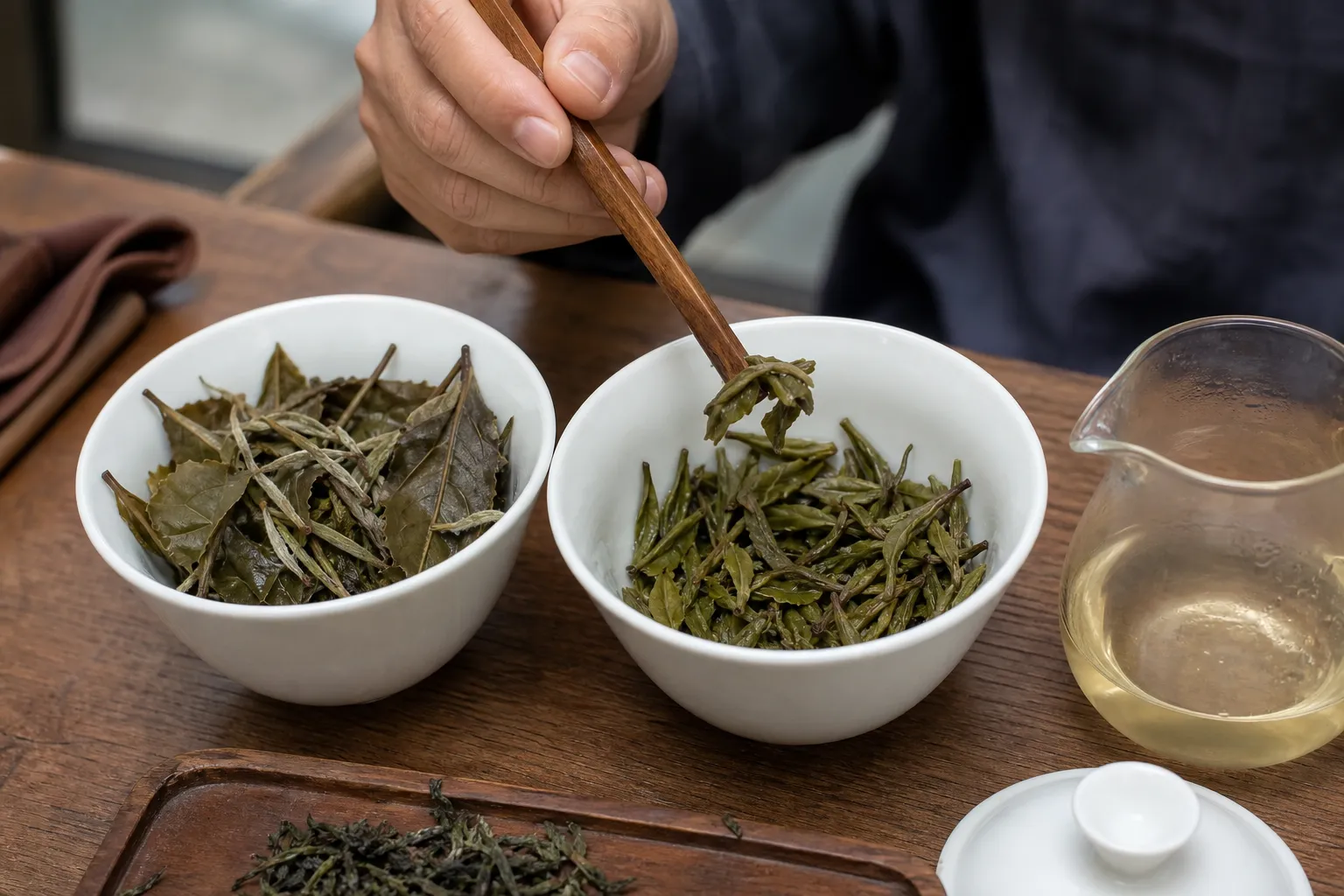
The dry leaf gives the first impression. The infused leaf often gives the better second look.
After brewing, white tea leaves may open into buds, tender leaves, larger mature leaves, or mixed material. A bud-heavy white tea may keep its slim bud shape. A leafier white tea may unfurl into broader leaves with varied tones. Some white teas look much darker when wet than they did when dry. Others show green, tan, olive, or brown patches in the same leaf set.
Green tea leaves can also change strongly in water. Rolled or curled leaves may open into recognizable leaf pieces. Flat leaves may soften and widen. A dry tea that looked compact may reveal larger leaves than expected once infused.
When inspecting wet leaves, look for
- How much the leaves open: tightly shaped teas can look very different after brewing.
- Whether buds remain visible: buds can support the dry leaf impression, but not settle every question.
- Leaf size and maturity: broader leaves may suggest different picking material, but need context.
- Color after infusion: wet leaf color helps, especially when read with aroma and taste.
The infused leaf is not a final verdict. It is another observation point. It can confirm, complicate, or correct what the dry leaf seemed to suggest.
What Can Change the Appearance
Grade and plucking style
Bud-heavy material looks different from leafier material. A tea made mostly of young buds will not resemble a tea with larger leaves, even if both sit under the same broad tea type.
Processing and shaping
A green tea that is rolled or flattened will not look like a loose white tea. A white tea that is compressed, broken, or stored for a long time may not look like a fresh loose bud tea.
Age and storage
Age and storage can shift color. This is especially important when comparing new loose white tea with older or compressed material. Darker color does not automatically mean older tea, poor storage, or better flavor. It simply gives you a reason to check other signs.
Handling and breakage
A bag with many fragments can look less clear than a sample with intact buds and leaves. Smaller pieces may also release flavor faster in the cup.
Lighting and photography
A product image, a phone photo, and a tea table under warm light can make the same leaves look different. For a more reliable comparison, use neutral light and place both dry and wet leaves in a plain vessel.
Common Misreadings
The most common mistake is treating one visible feature as a verdict.
A greenish white tea is not automatically green tea. Many white teas can show green tones, especially when the material is young, less oxidized-looking, or not heavily aged. A dark white tea is not automatically old, rare, or better. A fuzzy tea is not automatically high quality. A flat green tea is not automatically superior to a curled one. A neat shape is not the same as good flavor.
Another misreading is assuming that white tea must look delicate and green tea must look uniform. Some white teas are leafy, rustic, mixed, or dark. Some green teas are irregular, broken, or bud-rich. If your sample does not match a simple online image, that does not automatically mean something is wrong.
The better question is not “Does this look exactly like the category?” but “Do the visible clues, aroma, infusion behavior, seller notes, and taste point in the same direction?”
For example, if a tea is sold as white tea and shows visible buds, loose leaves, muted colors, and a gentle infusion, the appearance may fit the label. If it is sold as green tea and shows shaped leaves, a greener cast, and an infusion profile that matches the seller’s description, the look may also fit. If the visuals and the description seem to clash, ask for more context before deciding what the leaves mean.
A Careful Way to Compare Two Samples
If you are comparing white tea vs green tea leaves at home, keep the process simple.
- First, spread a small amount of each dry tea on a white plate or plain tray. Look for buds, down, leaf size, color range, and shape. Do not decide yet.
- Second, smell the dry leaves. Appearance without aroma is thin evidence. A stale, flat, or musty smell changes how you should read an attractive leaf.
- Third, brew both samples in a consistent way if you are comparing them side by side. You do not need a complicated setup. The point is to avoid giving one tea a much stronger or weaker extraction by accident.
- Fourth, look at the wet leaves. Notice whether the shaped green tea opens into fuller leaves, whether the white tea shows buds or broader leaves, and whether the wet material matches what the dry leaf suggested.
- Finally, taste with restraint. Appearance can prepare you for what to notice, but the cup still matters. A beautiful dry leaf can brew flat. A plain-looking leaf can be pleasant. Visual clues help you ask better questions; they do not replace the tea.
Where the Answer Stops
The practical takeaway is clear: white tea and green tea often look different because visible buds, leaf shapes, surface down, color range, and shaping styles often differ. But those differences are not absolute.
For this page, no public reference links were available to support firm technical claims about processing standards, harvest rules, morphology, oxidation, drying, rolling, classification, or aging effects. So the answer should stay observation-led: use appearance as the first clue, then check aroma, infused leaves, liquor, taste, storage context, and seller-provided harvest information before making a stronger judgment.
If one line is worth keeping, it is this: leaves can suggest; they cannot certify.