
What to Change First When White Tea Tastes Bitter
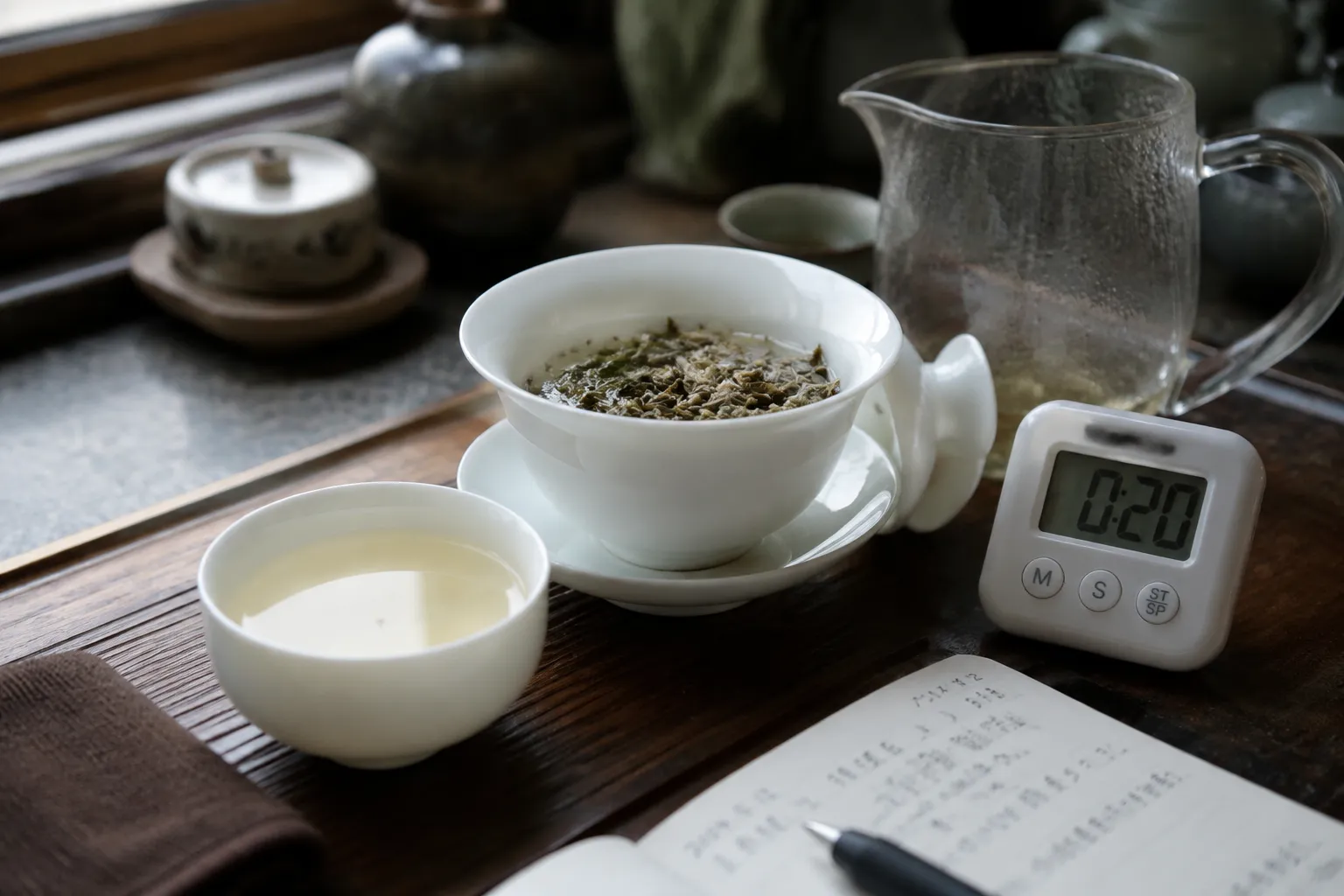
If your white tea tastes bitter, change the steep time first. Keep the same leaf amount, same vessel, and similar water temperature for the next cup, but pour sooner. Time is the cleanest first variable because an overlong infusion can make a light, floral, grainy cup turn sharp or drying before the leaf itself has been fairly judged.
For the cup already in front of you, the quick fix is dilution: add hot water until it is drinkable. That softens the bitterness, but it does not tell you what went wrong. The useful test is the next brew: shorten the infusion, taste again, and only then decide whether water temperature, leaf amount, vessel, or leaf condition needs attention.
upward
Read the full overview first
Use the broader guide first if you need the full scope before this page.
Start With Time, Not a Full Reset
Bitterness can come from several places. Changing everything at once makes the next cup hard to read. If you lower the water temperature, reduce the leaf, switch vessels, and shorten the infusion in one move, you may get a smoother cup without knowing which change mattered.
Start with time because it is easy to control. If you brewed western-style in a mug or teapot and let the leaves sit for several minutes, pour earlier while keeping the rest steady. If you used a gaiwan with a generous amount of leaf, shorten more aggressively; a high leaf-to-water ratio can move from fragrant to harsh quickly.
Keep steady
Same tea, vessel, and leaf amount.
Change first
Shorter infusion.
Watch for
Less bitterness, less drying edge, clearer aroma.
Keep steady
Same tea and timing.
Change next
Slightly cooler water, if bitterness remains.
Watch for
Softer liquor without going flat.
Keep steady
Same water and timing.
Change later
Less leaf, if the cup is still too dense.
Watch for
More separation between sweetness, body, and astringency.
The goal is not to erase all strength. White Peony, Gongmei, and Shoumei can have more body and a firmer edge than very bud-heavy Silver Needle. The question is whether the bitterness feels like a brewing problem: sharp, rough, drying, or darker than the aroma seems to support.
If Shorter Time Helps, It Was Probably Over-Extraction
An oversteeped white tea often tastes harsh before it tastes complex. The liquor may darken, the finish may dry the mouth, and the fragrance can become less floral, hay-like, or grain-like. That does not automatically mean the leaves are poor. It means the infusion pulled more than you wanted for that vessel, ratio, and drinking style.
Evidence boundary
The strongest visible source for this page is not white-tea-specific. A public study on Turkish green tea found that brewing temperature and duration affected extraction, color, bitterness, and sensory acceptance. That supports the broad mechanism only: time and heat can change bitterness and flavor balance. It does not provide exact instructions for Silver Needle, White Peony, Gongmei, Shoumei, gaiwan sessions, or compressed white tea.
Treat time as a dial, not a rule. If a western-style cup was bitter after a long steep, pour sooner. If gaiwan bitterness appeared after the session started well, make the next infusion shorter than the one that turned harsh. If the first steep was already rough, shorten the first infusion rather than waiting for later rounds to correct it.
A useful sign: if shorter timing brings back aroma and reduces the dry edge, keep the temperature steady for now. You have found the first likely cause.
Lower Temperature After Timing Looks Reasonable
White tea water temperature matters, but cooler is not always better. Brewing charts often place western-style white tea in a moderate range rather than near a hard boil, but those ranges are broad starting points. They do not account for leaf grade, broken material, compressed cakes, vessel size, water, or personal preference.
If your timing is already short and the cup still tastes sharp, lower the water temperature modestly on the next attempt. Do not make the kettle adjustment a race toward the coolest possible brew. Too-cool white tea can taste thin, muted, or unfinished, especially with larger leaves or compressed pieces that need enough heat to open.
There is an exception worth keeping. Some robust White Peony, Gongmei, or Shoumei styles may respond better to hotter, shorter infusions than to a long warm soak. In that case, bitterness is not solved by cool water alone; it is solved by matching heat with brief contact time.
Use the cup as the check. If cooler water softens roughness while leaving aroma and sweetness intact, keep it. If the bitterness fades but the tea becomes watery, return a little heat and shorten the infusion instead.
Check Leaf Amount and Vessel Before Blaming the Tea
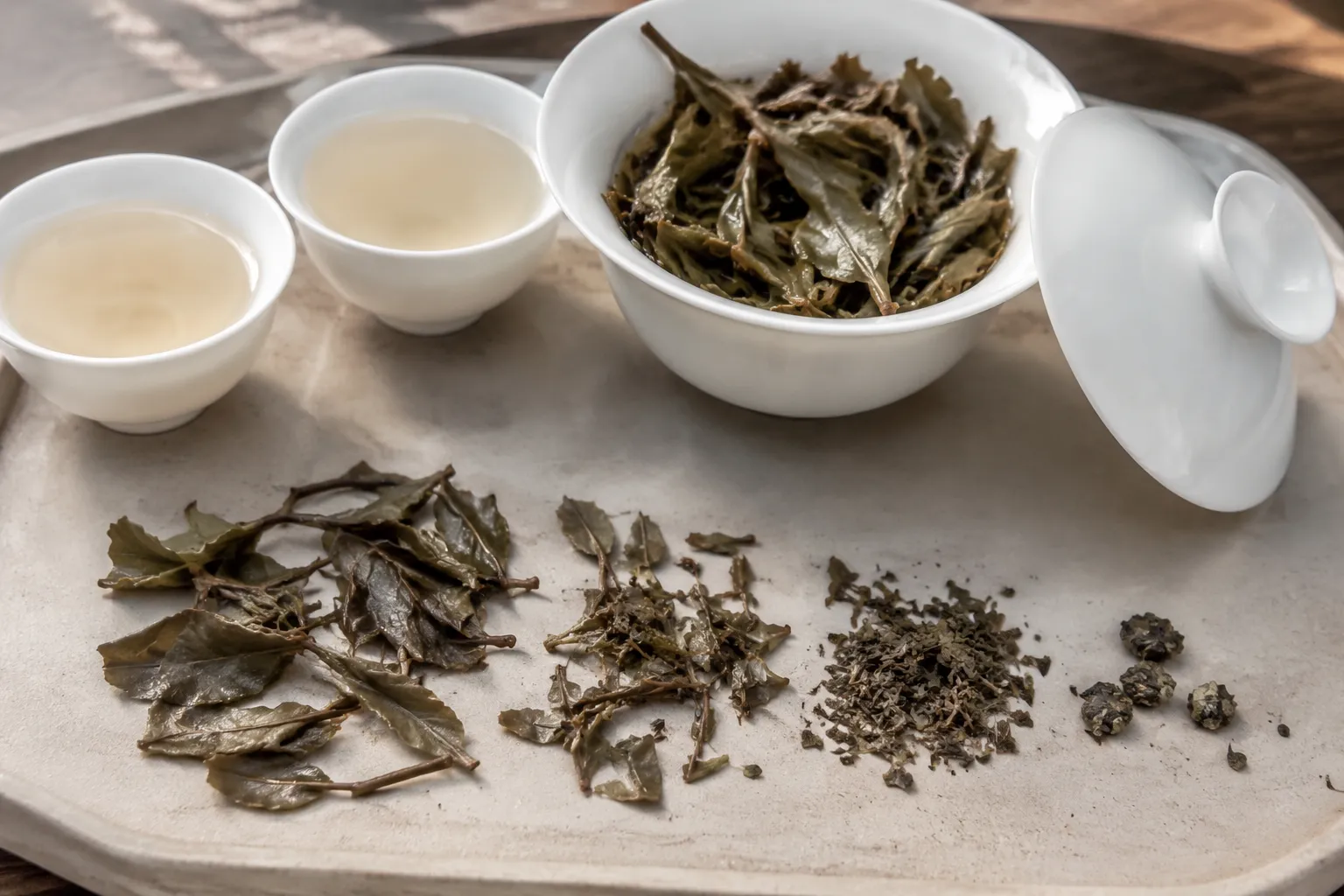
A gaiwan is not just a smaller teapot. It often uses more leaf for less water, so timing has to compress. A tea that tastes balanced in a large mug after a moderate steep may taste bitter in a gaiwan if the same minutes are copied over. The vessel changes ratio, heat retention, and extraction speed.
Leaf amount works the same way. Too much leaf can make the liquor dense, drying, and hard to separate into aroma, sweetness, and texture. That can happen even when the timer looks reasonable. If shorter time and a modest temperature adjustment have not helped enough, reduce the leaf slightly before deciding the tea itself is the problem.
Look at the dry leaf too. A bag with many broken white tea leaves, dust, or small fragments can infuse faster than whole buds and leaves. Broken material exposes more surface area, so the cup may become strong quickly. That does not require a dramatic conclusion about quality; it means the tea may need less time, less leaf, or gentler handling.
Compressed white tea adds another wrinkle. Tight pieces may begin slowly, then open and strengthen in later infusions. If a cake piece tastes mild at first and harsh later, shorten the infusions after the leaves loosen instead of using the first steep as the pattern for the whole session.
When Bitterness Points Beyond Brewing
If careful brewing adjustments do not reduce the harshness, move from the kettle to the leaf. Smell the dry tea before brewing. A stale aroma, musty storage smell, flat paper-like scent, or sharp off note may suggest that storage condition is part of the problem. Aroma is not a lab test, but it is a practical warning sign.
Compare the taste with the style as well. Silver Needle is often expected to be softer and more bud-driven. White Peony can bring more leaf texture. Gongmei and Shoumei may be broader, darker, or more assertive. Assertive is not the same as unpleasantly bitter. If the cup tastes rough after short, careful infusions, check appearance, storage smell, seller-provided harvest or storage context, and whether the material is unusually broken.
Do not use price or premium wording as proof. A costly label does not guarantee a smooth cup, and an inexpensive everyday tea is not automatically the cause of bitterness. The more useful questions are visible: what do the leaves look like, how do they smell, how quickly do they darken the liquor, and does the harshness remain when time, temperature, ratio, and vessel are controlled?
If the same tea stays harsh across careful attempts, stop chasing tiny changes. Use it with shorter steeps, fold it into a more forgiving casual brew, or set it aside and compare it with another sample of the same broad style.
Common Confusion Around Bitter White Tea
Strength is not always better
A stronger cup can have more body, but harsh bitterness and a drying finish are not automatically signs of a better infusion. If the aroma collapses and the finish turns rough, the brew may simply have gone too far.
Not all white tea is fragile
That assumption makes people lower the temperature again and again when the real issue is a long steep or too much leaf in a small vessel. Cooler water can help, but it should be tested after timing, not used as a blanket answer.
Rescue is not diagnosis
Dilute bitter white tea if you want to drink it now. For the next brew, write down one change: shorter time first, then temperature, then ratio and vessel. That sequence gives you information instead of just a less intense cup.
A Small Order for the Next Cup
Use this order when white tea tastes harsh:
- Pour sooner on the next infusion.
- If bitterness remains, lower the water temperature slightly.
- If the cup is still dense or drying, use less leaf.
- If using a gaiwan, shorten timing more than you would for a mug or teapot.
- If the problem persists, check broken leaf, stale aroma, storage condition, and whether the tea style is naturally firmer.
Exact white-tea brewing numbers are less reliable than the cup in front of you. Change one variable at a time and taste the result. For the next cup, start with the timer; it is the fastest way to learn whether the bitterness came from the brew or from the leaf itself.
Sources
Sources and further reading
Reference links are limited to sources considered suitable for public citation in this page.