
Brewing adjustment
How to Adjust White Tea Cake When the Flavor Tastes Muted
If a white tea cake tastes muted, adjust the brew before judging the cake. Loosen the compressed piece more evenly, use a little more leaf, raise the water temperature in small steps, and give the steep more time only after you see how the leaves open. A brief rinse or wake-up infusion can also help a tight cake piece unfold before the main cups.
Then look beyond the first pour. Wet leaf aroma, liquor color, mouthfeel, and repeat infusions often show whether the flavor was hidden by compression or whether the tea is simply quiet. A flat first cup can be a fixable extraction issue; a persistently dull, stale, or closed profile may point toward storage uncertainty, age expectations, or limits in the material. A wrapper, age note, or premium description should not decide that for you.
upward
Start with the broader guide
Use the broader guide first if you need the full scope before this page.
First adjustment order
- 1. Loosen the cake piece into layers, not dust.
- 2. Use slightly more leaf if the cup is thin but clean.
- 3. Raise water temperature gradually when flavor seems buried.
- 4. Extend steep time after checking whether the leaves have opened.
- 5. Judge storage or quality only after repeated infusions.
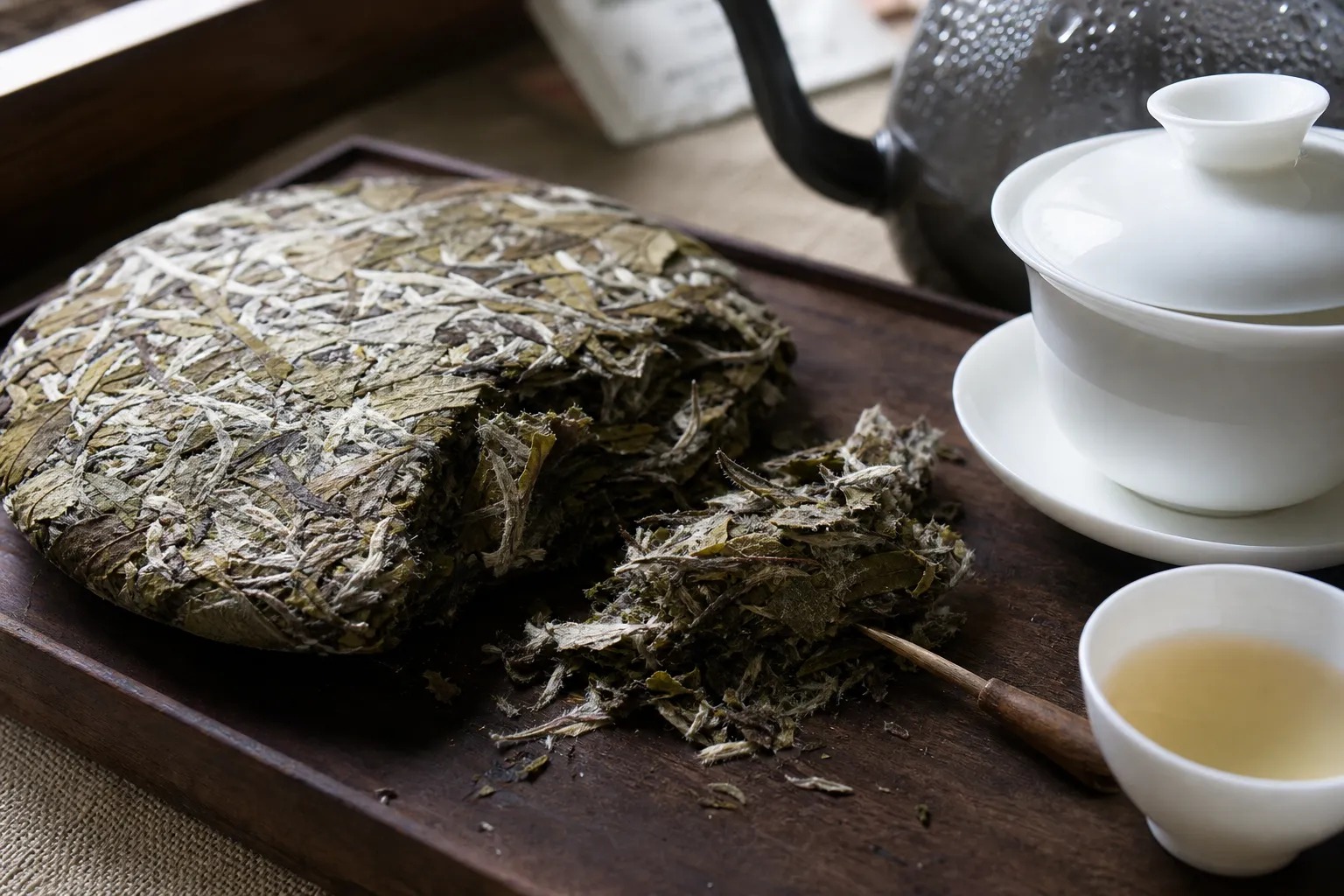
Start With the Cake Piece, Not the Label
A muted white tea taste often begins before water touches the leaves. Look at the piece you broke from the cake. If it is a tight chunk with hard layers still pressed together, the outside may brew while the center stays closed. The result can be a pale cup that feels thinner than the dry cake aroma suggested.
Loosen compressed white tea chunks with care. Aim for layers and flakes, not dust. Too many broken bits can make later cups rough or cloudy, while an intact block can stay under-extracted. If the cake is very tight, let the rinse or first short infusion soften it instead of forcing it apart with a tool.
The leaf style also sets reasonable expectations. White Peony-style cakes, with buds and open leaves, may show floral, hay-like, or soft fruit notes when brewed well. Gongmei and Shoumei cakes often include broader leaf material and can lean deeper, warmer, or more herbaceous, especially with age. These are tasting directions, not promises. Compression, storage, leaf grade, and processing style can still make a cake brew quietly.
Before changing every variable, make one clean observation: does the dry cake smell faint but pleasant, closed and neutral, or stale and distracting? A quiet but clean aroma is worth troubleshooting. An unpleasant storage smell should make you slow down and assess the sample more cautiously.
Brewing Adjustments to Try First
The most useful white tea cake brewing adjustment is usually a sequence, not one dramatic move: leaf amount, water temperature, steep time, vessel size, and leaf opening.
Leaf amount
For a gaiwan or small teapot, start with the white tea leaf-to-water ratio. If the cup tastes thin but clean, use a little more leaf next time instead of only extending time. A large vessel with too little leaf can make even good material seem muted. If you do not use a scale, compare the loosened cake piece with your usual loose white tea session; compressed leaf can look smaller than it brews.
Water temperature
Water temperature is the next control. A timid pour can leave compressed white tea flavor buried, especially when the chunk is dense or the leaves are older. Try hotter water in a measured way rather than jumping straight to harsh brewing. If the earlier cup was pale, sweet, and almost absent, higher water temperature may bring out more aroma and body. If it was already bitter, drying, or scratchy, heat is not the only issue.
Steep time
Steep time should move in small increments. A short first infusion may only wake the cake. If the leaves are still folded tightly after that, give the next steep more time. If the wet leaves have opened and the liquor remains weak, increase time again or add leaf in the next session. White tea cake steep time matters most when you track it beside leaf opening, not as a fixed rule.
Wake-up infusion
A brief rinse can help when the first pour tastes like water with a faint aftertaste. Pour hot water over the leaves, then decant. Use this as a wake-up infusion for compression, not as a universal requirement. If the rinse smells sweet, grainy, floral, or warm, the cake may simply need one more infusion to come forward.
Read the Wet Leaves Across Several Infusions
A single weak cup does not tell the whole story. Repeat infusions can show whether the cake was slow to open or genuinely limited in expression.
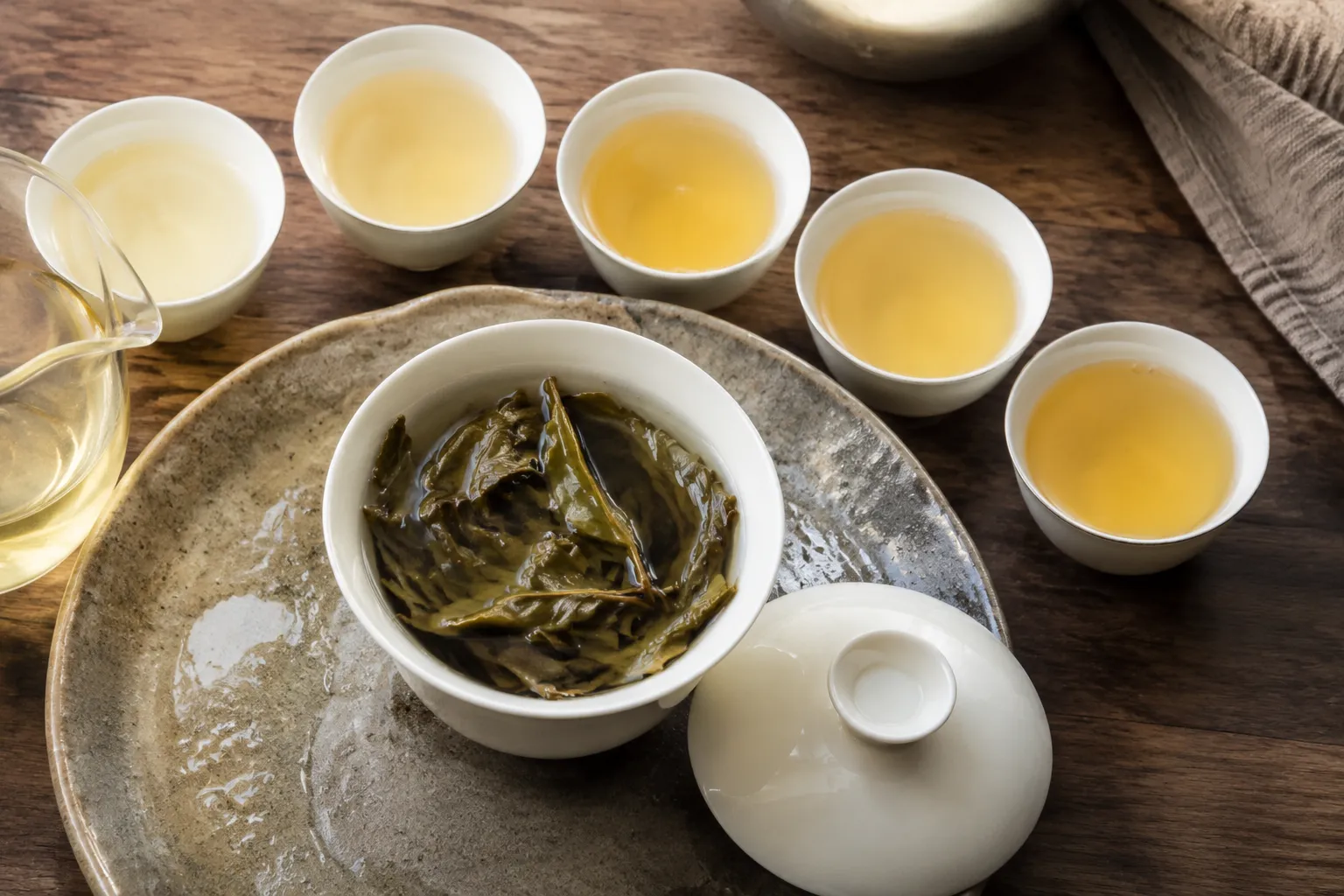
After the first or second pour, observe the wet leaves closely. Are the layers separating? Do the buds and leaves look hydrated, or does the center of the chunk remain dry-looking and compact? A still-closed core suggests extraction is lagging. Extend the next steep, pour water more directly over the compressed piece, or gently nudge softened layers apart with the lid or a tea pick between infusions.
Aroma is often more useful than liquor color alone. A pale cup may still carry fragrance, sweetness, and a soft finish. A darker cup may still taste dull if the leaves give color without aromatic lift. Smell the lid, wet leaf, and empty cup after drinking. If fragrance appears in the wet leaf but not in the liquor, the brew may need more leaf or a smaller vessel. If neither leaf nor cup gives much aroma, the issue may sit beyond simple timing.
Texture helps separate weak extraction from limited material. A muted cup can feel watery, hollow, or short in the finish. If hotter water and longer steeping add body without roughness, the problem was likely extraction. If stronger brewing only adds dryness while the center stays bland, the cake may need a different brewing style, or it may not have much more to give.
Try one controlled session before writing off the tea: loosen the piece, use a slightly stronger ratio, choose hotter water, give a brief wake-up pour, and track three main infusions. If the second or third cup becomes clearer, sweeter, or more aromatic, the cake was probably slow rather than hopeless.
When Muted Flavor May Not Be Fully Fixable
Some muted flavor storage uncertainty cannot be solved in the cup. Storage, age, compression, and base material can all shape what the tea offers, but one weak brew does not prove a specific cause. Stay with observable signs before turning the session into a verdict.
Storage questions begin with smell. A cake that smells clean but faint may simply be quiet or compressed. A cake that smells musty, oddly perfumed, distractingly smoky, or like its surrounding storage space deserves more caution. Those observations do not prove its history, but they can help you decide whether to keep experimenting, air the dry piece briefly before brewing, or lower expectations for brightness from that sample.
Age claims need the same restraint. Older white tea cakes are often discussed through changed aroma, warmer tones, and smoother body, but an age label alone does not tell you how the cake should taste. A young cake can be muted if brewed weakly. An older cake can be quiet if the material, storage, or compression does not support the flavor you expected. Use age, origin, and wrapper language as context to question, not proof of intensity.
Quality uncertainty is a later conclusion, not the first one. If several sessions with different leaf amounts, water temperatures, and steep times still produce a dull cup with little dry or wet leaf aroma, the tea may simply have limited expression. That does not need dramatic language. It means your next sample comparison should rely more on leaf appearance, aroma, brewing behavior, and seller-provided harvest context than on attractive wording alone.
Common Confusions When a White Tea Cake Tastes Flat
A flat first steep does not always mean the cake is bad.
Compressed cakes may need time to open, especially when the piece is thick. If the wet leaves become more fragrant after the first pour, continue with measured adjustments.
A pale liquor does not always mean weak flavor.
Some white tea brews remain light in color while still carrying aroma, sweetness, and a clean finish. Judge aroma and mouthfeel alongside color.
A stronger brew is not always a better brew.
More leaf, hotter water, and longer time can reveal hidden body, but they can also expose roughness. If stronger brewing only makes the cup harsh while the flavor stays hollow, extraction may not be the main limit.
A label does not settle the matter.
Harvest wording, age notes, origin language, and premium descriptions can guide questions, but they should not replace the cup. When compressed white tea flavor seems closed, the most useful evidence is still the dry cake, loosened leaf, wet aroma, and repeated infusions.
A Simple Next-Session Plan
For the next session, change only enough to learn something. Break a piece that can separate into visible layers. Use a slightly stronger leaf-to-water ratio than your weak session. Choose hotter water if the previous cup was clean but thin. Give the cake a brief rinse or wake-up infusion, then make the first main steep a little longer than before.
After each pour, check three things: whether the leaves have opened, whether the wet leaf aroma is becoming clearer, and whether the finish lasts after swallowing. If the tea improves across the second and third infusions, keep refining extraction. If it stays muted through several reasonable adjustments, set the cake aside for comparison with another sample rather than forcing a conclusion from one cup.
The best way to adjust a muted white tea cake is to move from leaf structure to brewing control to storage and label caution. Start with the piece in the gaiwan: loosen it, brew it with enough leaf, use water that can reach the compressed layers, and let the wet leaves show whether the flavor was hidden or simply limited.