
Brewing variable
How Water Quality Can Make White Tea Taste Flat or Sharp
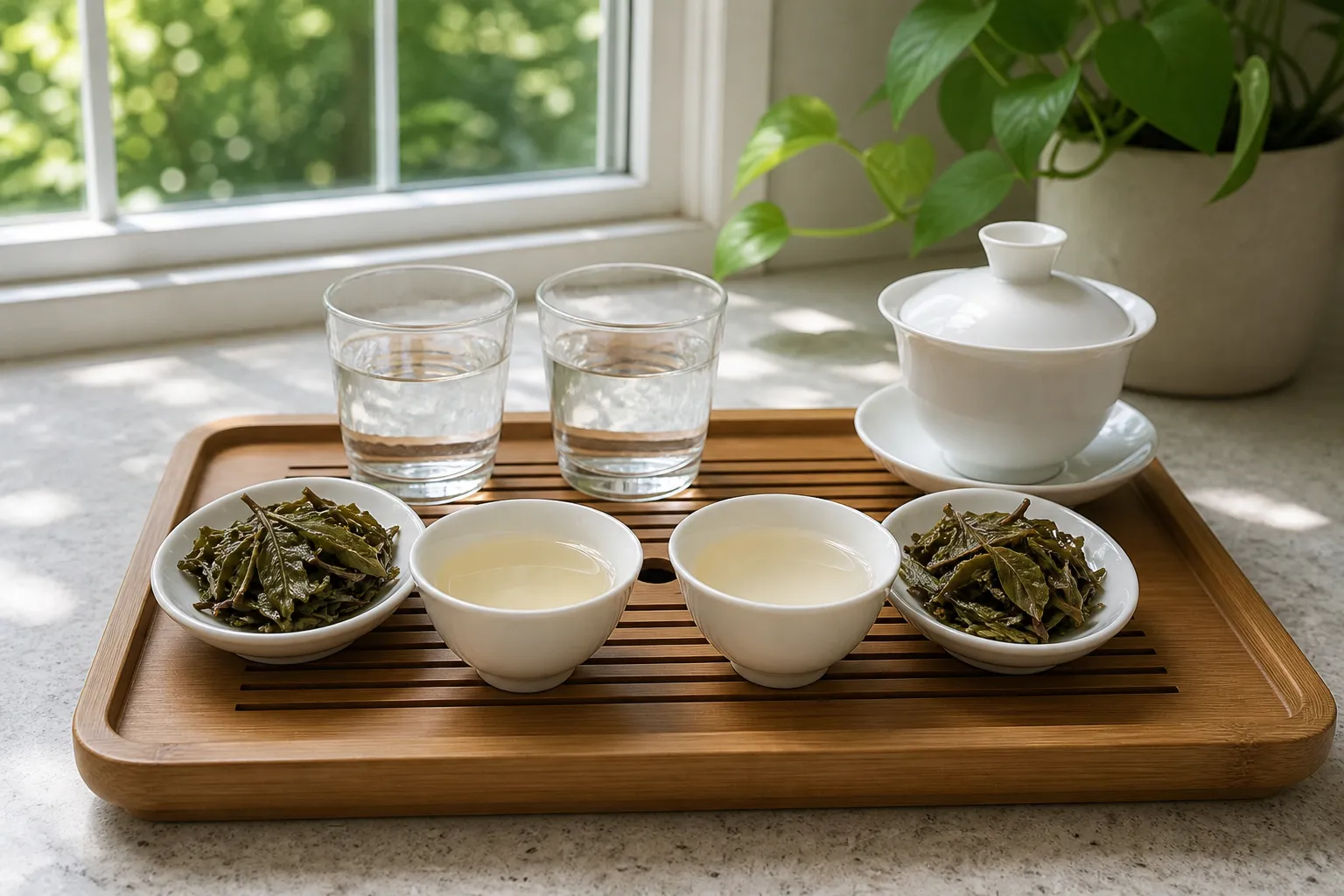
A pale cup can look right and still taste oddly quiet. Water quality can affect white tea taste by muting aroma, hiding sweetness, thinning the body, sharpening the finish, or carrying its own metallic, chlorine-like, salty, stale, or soapy note into the liquor. It is not the only suspect; low leaf amount, cool water, short steeping, tired leaves, poor storage, residue in the vessel, or an overly hot infusion can create similar problems.
The useful answer is narrow: brew the same tea twice under the same conditions, changing only the water. If the same Silver Needle, White Peony, Gongmei, or Shoumei becomes clearer, sweeter, fuller, or less sharp with one water, then water deserves attention before you blame the leaves.
upward
Start with the broader guide
Use the broader guide first if you need the full scope before this page.
What Water Can Change in a White Tea Cup
White tea often speaks in small signals. A bud-heavy Silver Needle may show soft hay, melon, cream, or a faint floral lift. White Peony can bring more leaf sweetness, light fruit, and a broader body. Gongmei and Shoumei may lean deeper, especially when aged or compressed, with dried-fruit, herb, wood, or honeyed impressions. When water hides aroma or adds an edge, the cup can feel flatter than the dry leaf promised.
The strongest available research is not specific to white tea. Studies on green and black tea show that water composition can affect extraction, flavor, color, aroma compounds, and mineral behavior in tea infusions. That supports the general mechanism: water can change how tea tastes. It does not give a precise “best water for white tea flavor” formula for every leaf grade, harvest style, vessel, or storage condition.
For the cup in front of you, water usually matters in three practical ways:
- It can change extraction, making flavor feel open, muted, rounded, thin, or rough.
- It can bring its own taste or smell, such as chlorine, metal, salt, stale kettle scale, or soap.
- It can interact with brewing choices, so the problem may appear only when the tea is steeped hotter, longer, or stronger.
A quiet cup is not automatically a flawed cup. Some white teas are naturally gentle. The question is whether the water makes a normally clear tea lose shape.
Flat, Muted, or Thin: When Water Turns the Volume Down
A flat white tea taste can mean several things. The dry leaf may smell fragrant, but the brewed cup has little lift. The liquor may show color, but not much sweetness. The first sip may seem smooth, then the aftertaste disappears. Drinkers often call all of these muted white tea flavor, even though the causes may differ.
Hard water is one possible cause. Higher mineral content can change how tea compounds extract and present themselves, and many tea drinkers notice hard water white tea as dull, heavy, scummy, or strangely quiet. In a pale infusion, the high notes and aftertaste may feel covered even when the liquor has enough color.
Very low mineral water can disappoint in a different way. Distilled or extremely low-mineral water is sometimes assumed to be the cleanest choice, but “clean” does not always mean expressive in tea. Some brews made with very low mineral water can taste thin, hollow, or flat because the liquor lacks structure. Treat that as a reason to compare, not as a rule about exact mineral numbers.
Before blaming the water, check the basic controls. Too little leaf in a large mug can make any tea taste thin. Water that is too cool may under-extract sweetness and aroma. A very short steep can leave White Peony or loose Shoumei tasting faint. Old leaves or poorly stored tea may have lost fragrance before the kettle enters the picture.
For the next cup, brew the same tea twice: same leaf amount, same vessel, same water temperature, same steep time, different water. If one cup has clearer aroma, better sweetness, and a longer finish while the other feels muffled, water quality is likely part of the explanation.
Sharp, Metallic, Chlorine-Like, or Soapy: When Water Adds an Edge
A sharp white tea brew does not always come from the water. High temperature, long steeping, broken leaf, cake dust, or naturally assertive material can make the liquor brisk, drying, or rough. Water becomes a stronger suspect when the edge is already noticeable before the tea is brewed.
Smell and taste the plain hot water. If it carries chlorine, metal, stale kettle odor, salt, or soap, those notes can show up clearly in a light infusion. EPA-related secondary drinking-water guidance discusses taste, odor, color, pH, total dissolved solids, chloride, sulfate, iron, manganese, zinc, and metallic or salty impressions as aesthetic concerns for drinking-water acceptability. That guidance is not a tea-brewing standard or a flavor recipe, but it helps explain why non-tea notes can be noticeable in the cup.
Metallic white tea notes may come across as tinny, rusty, drying, or sharp at the sides of the tongue. They may be more obvious in a pale Silver Needle than in a deeper aged Shoumei because there is less body or storage character to cover them. Chlorine-like aromas can clip floral notes and shorten the finish. A soapy white tea taste may point to water chemistry, cup residue, kettle residue, or a rinsing issue; rule out the gaiwan, cup, and kettle before blaming the tea.
Softened water needs careful wording. Household softened water is not the same as naturally soft water or low mineral water. Some systems exchange hardness minerals in ways that can change drinking-water taste. Tea drinkers often describe softened water as salty or unpleasant, but that is reader experience rather than a universal rule. Compare it directly before accepting or rejecting it.
If the cup tastes sharp, repeat the brew at a slightly lower water temperature before changing anything else. If the edge remains with one water and disappears with another, water is a better suspect. If both cups soften when the temperature drops, heat was probably the larger variable.
A Controlled Tea Water Comparison for the Next Cup
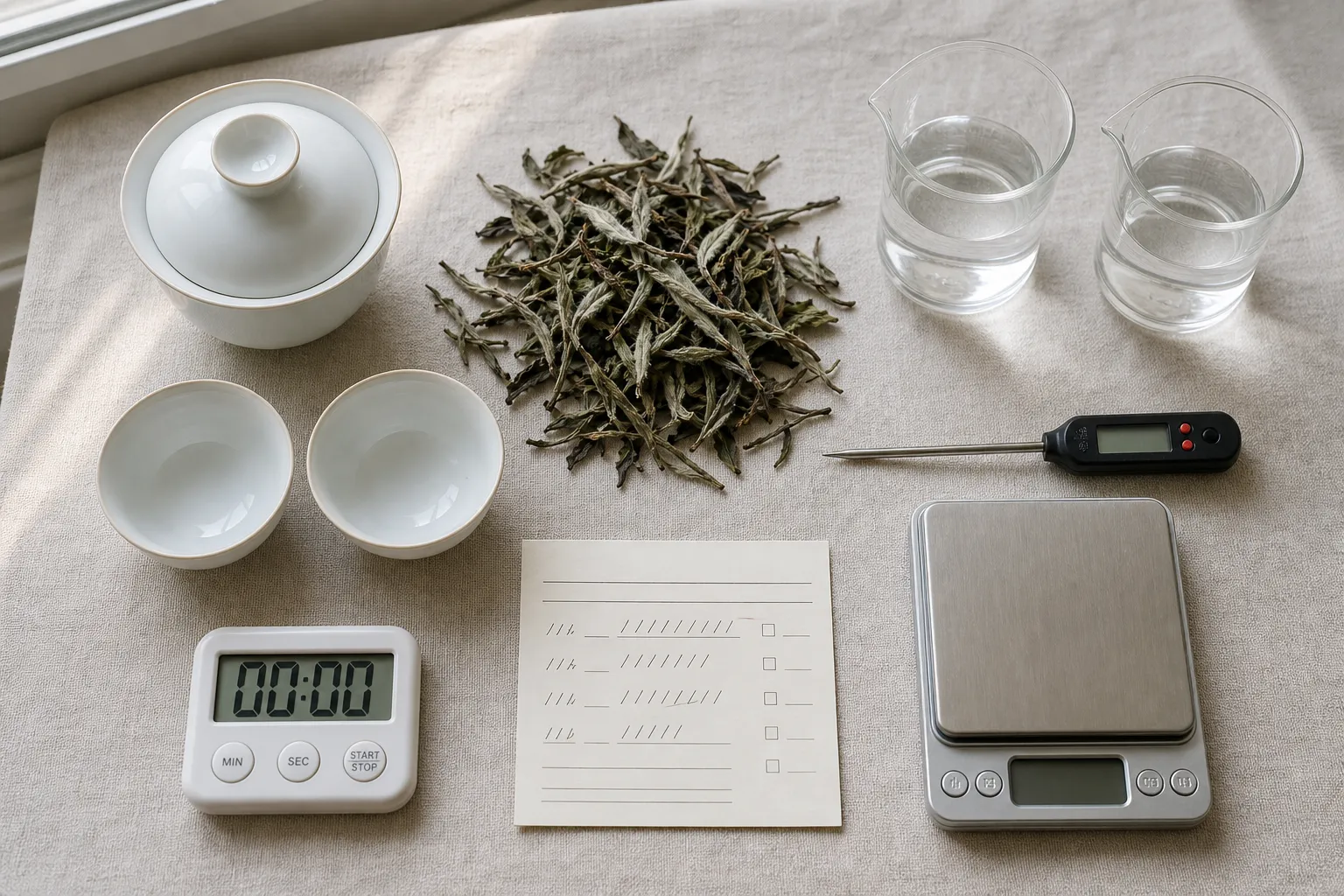
The cleanest home test is small. Do not change tea, vessel, steep time, leaf ratio, cup, and water all at once. Change only the water.
Choose one tea you know. A familiar White Peony often works well because it gives both aroma and body without needing a long session. Silver Needle can work if you know its usual softness. Gongmei or Shoumei can also work, especially if you are checking whether water hides sweetness or exaggerates roughness.
Tea
Same batch of leaves from the same bag, tin, or cake.
Leaf dose
Same weight or the same measured spoonful.
Vessel
Same gaiwan, teapot, mug, or tasting cup style.
Water temperature
Same kettle setting or same cooling time.
Steep time
Same timer, not an estimated pause.
Cup
Same cup shape if possible.
Water
Only variable changed.
Use two waters that are meaningfully different. Compare your usual tap water with a neutral-tasting bottled spring water, or filtered water with the water you normally use. Avoid turning the test into a filter-brand or bottled-water contest. You are looking for cup behavior: aroma lift, sweetness clarity, body, aftertaste, and any added off-note.
Taste the plain waters first at room temperature, then hot if practical. Water that already smells of chlorine, metal, stale kettle scale, or soap is unlikely to disappear politely under a pale infusion. Then brew the tea. Smell the wet leaves, look at the liquor color, sip while warm, and check the finish after a minute.
If both cups are flat, the problem may be leaf age, storage condition, low dose, vessel size, or steeping. If both cups are sharp, lower the temperature or shorten the infusion. If only one cup is flat, thin, metallic, or soapy, water quality is a reasonable suspect.
Common Confusions That Make Water Look Guilty
Water and temperature
Water and temperature are easy to confuse. A white tea brewed too hot may taste sharp, drying, or rough even if the water itself is fine. This is especially common with broken leaves, small fragments from a cake, or a long first steep in a small gaiwan. Before deciding that mineral content is the issue, repeat the brew with the same water at a gentler temperature.
Water and storage
Water and storage can also overlap. Tea that has absorbed damp, musty, smoky, perfumed, or stale odors may produce a muddy cup no matter what water you use. Aged white tea needs extra caution here. Storage aroma, wrapper smell, cake interior, and wet-leaf scent should be checked alongside taste; water cannot restore leaves that already carry unwanted storage notes.
Water and leaf amount
Water and leaf amount often trade places in the mind. A large mug with a small pinch of tea can create thin white tea taste even with good water. A cramped vessel with too much leaf can create harshness that looks like a mineral problem. The comparison only works when the leaf ratio is sensible and repeated consistently.
The best-water trap
There is also a “best water” trap. Coffee water recipes, remineralization charts, and exact number targets circulate widely, but they should not be copied straight into white tea practice without tea-specific support. Minerals matter, but one water will not suit every tea equally. A fresh Silver Needle, a leafy White Peony, and an aged Shoumei cake can respond differently.
What the Evidence Can and Cannot Say
The available material supports a cautious claim: water composition can affect tea extraction and sensory properties, and aesthetic water qualities such as taste, odor, color, pH, total dissolved solids, chloride, sulfate, and certain metals can influence how drinking water is perceived. That is enough to take water seriously when a brew tastes flat, muted, thin, sharp, metallic, or soapy.
The material does not establish a white-tea-specific ideal water profile. The strongest studies in the source pool concern green and black tea. Green tea may be a closer comparison than black tea for some pale, lightly processed cups, but it is still not the same as Silver Needle, White Peony, Gongmei, or Shoumei. Commercial tea pages, filter marketing, forums, and app guides may preserve useful reader language, but they are not enough to support exact prescriptions.
Keep the answer practical: hold the leaves, vessel, water temperature, and steep time steady; change only the water; then judge aroma, sweetness, body, aftertaste, and off-notes side by side. If the cleaner cup appears only when the water changes, adjust water first. If both cups behave the same, look next at leaf amount, temperature, time, storage condition, and the tea itself.
FAQ
Can water quality really make white tea taste flat?
Yes, it can. Water composition and plain-water taste can affect extraction, aroma, body, and finish. But flatness can also come from too little leaf, water that is too cool, a short steep, old tea, or poor storage, so compare the same tea with a different water before deciding.
Is hard water bad for white tea?
Hard water can make some white tea taste dull, heavy, or muted, especially in pale styles where aroma and aftertaste are easy to cover. It is not a universal rule. Test it against another neutral-tasting water with the same leaves, vessel, temperature, and steep time.
Can very low mineral water make white tea taste thin?
It can in some brewing sessions. Extremely low-mineral water may produce a clean but hollow cup, with less body or finish. That does not mean mineral-heavy water is better; it means the best next step is a controlled side-by-side comparison.
Why does my white tea taste metallic or soapy?
Metallic or soapy notes may come from the water, kettle scale, cup or gaiwan residue, a rinsing issue, or the tea itself. Taste the plain hot water first, then clean the vessel and repeat the brew. If the note follows one water and not the other, water is the likely variable.
Should I use bottled water for white tea?
Bottled water can be useful as a comparison water, especially if your tap water smells chlorinated, metallic, stale, or salty. It should not be treated as automatically better. Use it to test whether your usual water is muting aroma, thinning body, or adding an edge.
Sources
Sources and further reading
Reference links are limited to sources considered suitable for public citation in this page.