
Brewing comparison
White Tea vs Green Tea Brewing Temperature: Why the Same Water Can Taste Different
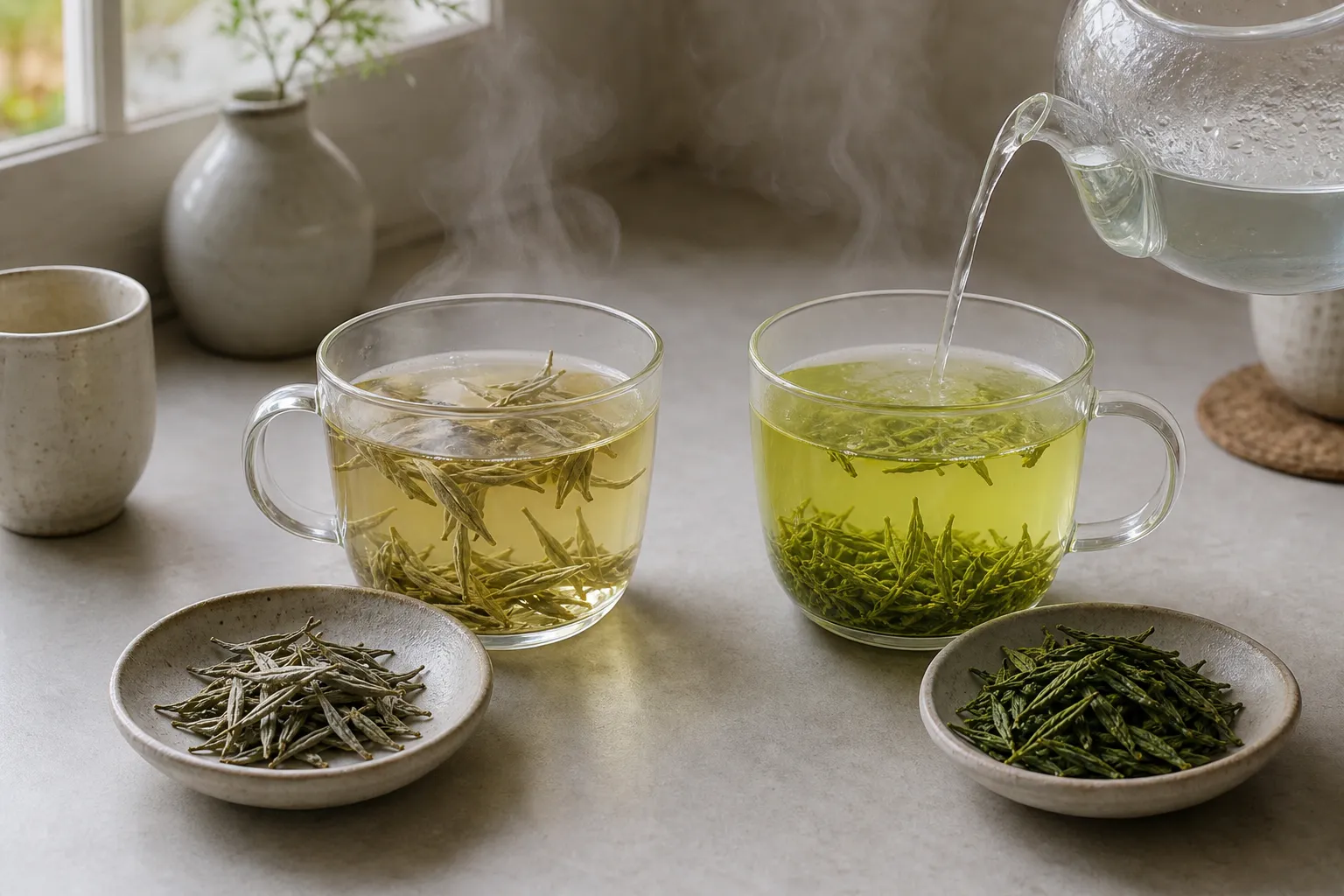
The short answer: white tea vs green tea brewing temperature is not just a kettle setting. The same water can taste different because the leaves may vary in shape, tenderness, processing, density, age, and how quickly they release aroma, sweetness, bitterness, or astringency.
A large, loose white tea may taste pale or thin at a temperature that makes a tender green tea seem sharp. A compact green tea may turn grassy before a fluffy white tea has fully opened. The better question is not “Which tea has the correct temperature?” but “What did this cup do, and what should I adjust next?”
upward
Read the full overview first
Use the broader guide first if you need the full scope before this page.
Why the Same Water Gives Different Cups
Water heat is often treated like a simple strength dial: lower means gentle, higher means strong. In practice, the leaf changes the result.
White tea can include bud-heavy Silver Needle, leaf-and-bud White Peony, and broader-leaf styles such as Gongmei or Shoumei. These do not open or extract in the same way. Buds, downy surfaces, leaf size, drying condition, age, and looseness can all affect how quickly the tea wets, sinks, opens, and gives flavor.
Green tea also varies widely. Some leaves are fine and tender; others are flatter, curled, needle-like, broken, or compact. A delicate green tea may respond quickly to heat, while a larger or more tightly shaped green tea may need time before the cup feels complete.
Same water, different impressions
- White tea tastes soft and aromatic while green tea tastes brisk or grassy.
- Green tea tastes clear and lively while white tea tastes faint or watery.
- White tea improves with a longer steep while green tea becomes rough.
- Green tea gives flavor quickly while white tea needs more room or patience.
These are brewing observations, not universal rules. Because no usable public references were available for this page, the guidance here stays with practical cup-level adjustment rather than fixed technical ranges.
If the Cup Tastes Thin, Harsh, Grassy, or Muted
Start with the problem in the cup. The flavor usually tells you which variable to move.
When white tea tastes thin
Check space and time before raising the heat. Large white tea leaves can float, stack, or open slowly, especially in a narrow infuser. Try a little more leaf, a slightly longer steep, or a wider vessel. If the aroma is present but the body is faint, the issue may be leaf amount or contact time rather than water heat alone.
When white tea tastes sweet but too quiet
A modest increase in warmth can sometimes bring the aroma forward. If the cup becomes clearer and still feels smooth, the change helped. If it turns woody, flat, or drying, return to the previous heat and adjust steep time instead.
When green tea tastes bitter, grassy, or sharp
Shorten the steep first. Time and water temperature work together. If harshness appears almost immediately, use cooler water next time. If bitterness arrives late, pour sooner.
When green tea tastes muted
Do not assume it needs much hotter water. Some green teas lose clarity when pushed hard. Try a little more leaf, a cleaner pour, or a shorter infusion with water warm enough to lift aroma without making the finish rough.
The useful pattern is simple: adjust steep time and water temperature together. Hotter water with the same long steep is a major change. Cooler water with a very short steep may leave both teas underexpressed. Change one thing at a time.
Leaf Style Changes the Temperature Question
“Brew white tea compared to green tea” sounds like a category rule, but the cup is usually decided by the actual leaf.
A bud-heavy white tea can look delicate without necessarily tasting weak under warmer water. Its compact bud structure and downy surface may make the first infusion gentle even when the water feels fairly warm. A broader white tea leaf may give body more easily, especially if it has some age or a more open shape. A broken or very small white tea leaf may release flavor faster than expected.
Green tea also resists one simple rule. Tender leaves can be more sensitive to heat and time. A larger or more robust green tea may tolerate more warmth or need more steeping time. A tightly shaped tea may seem slow at first, then grow stronger once the leaves open.
Before changing temperature, look at the leaf
- Small or broken pieces: start gently and shorten the steep.
- Large, fluffy white tea leaves: give them room and consider more time before adding much heat.
- Tightly shaped leaves: expect later steeps to behave differently after the leaves open.
- Bud-heavy teas: judge by aroma and texture, not color alone.
- Older white tea: consider aroma, storage character, and body instead of assuming it needs very hot water.
Color can mislead. White tea may brew pale but still taste sweet and complete. Green tea may look bright while already carrying a bitter edge. Use color as one clue, not the final judge.
Vessel, Pour, and Cooling Matter Too
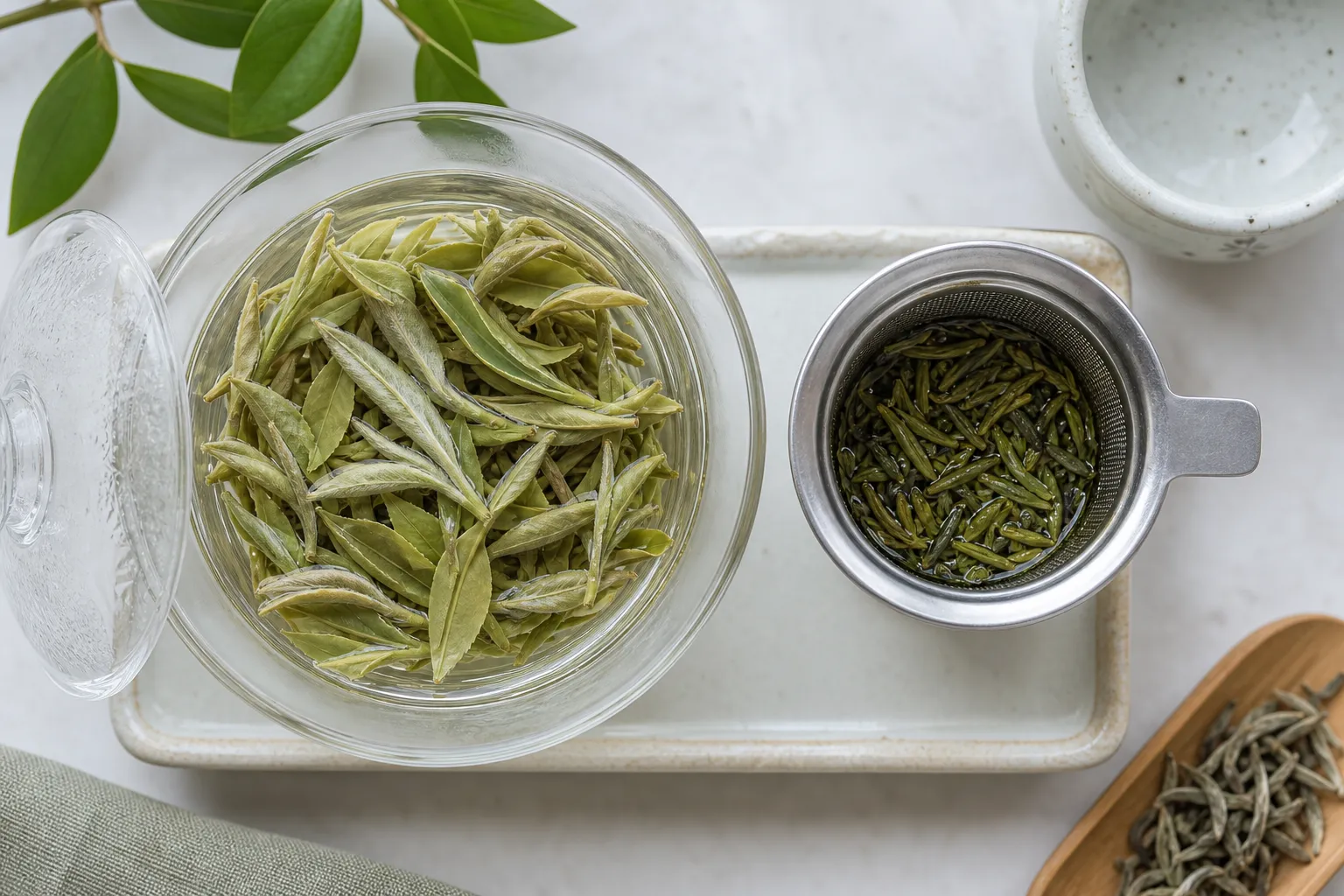
Vessel and tea temperature are linked because the leaves do not experience one perfect, unchanging heat level. A thin glass, thick mug, gaiwan, small pot, and basket infuser all hold and lose heat differently.
A small covered vessel keeps heat close to the leaves. That can concentrate aroma, but it can also push bitterness or a drying edge in sensitive tea. An open cup cools faster, which may soften a green tea or make a loose white tea seem slower to open. A tall narrow infuser can trap leaves in a tight column, so the bottom extracts more strongly than the floating top.
Pour style also changes first contact. Water poured directly onto tender leaves may feel more forceful. Water poured along the side of the vessel may be gentler. This does not need to become ritual; it only means water heat and tea flavor are shaped by the whole setup, not just the kettle.
For a fair comparison, use the same vessel size, similar leaf amount, and similar pour for both teas. If white tea is brewed in a roomy gaiwan and green tea in a cramped mesh ball, the result tells you about the vessel as much as the tea.
A Simple Adjustment Path for the Next Cup
When a cup goes wrong, avoid changing everything at once.
For thin white tea
- Add a little more leaf, or use a vessel that lets the leaves open.
- Keep the same water and extend the steep slightly.
- If aroma is still hidden, try slightly warmer water.
- If the finish becomes dry or flat, return to the previous heat and adjust time.
For bitter or harsh green tea
- Shorten the steep before changing leaf amount.
- If harshness appears early, use cooler water.
- If the tea becomes too faint, add a little leaf rather than making the steep much longer.
- If the aroma disappears, test a slightly warmer but shorter infusion.
For muted tea of either kind
- Smell the dry leaves and warmed leaves before brewing.
- Warm the vessel if the cup cools too quickly.
- Avoid overcrowding the infuser.
- Compare the second infusion; some leaves show more clearly after opening.
Aroma release matters, but without stronger source support it is better to read it through the cup: when does fragrance appear, when does sweetness show, and when do bitterness or astringency become too loud?
The Common Confusion: One Temperature Is Not One Result
The main misunderstanding is treating white tea and green tea as identical materials with different labels. They are both tea, but they can differ in processing, tenderness, shaping, drying, surface area, and storage condition. Those differences can change how the same water feels in the mouth.
Another shortcut is assuming white tea must always be brewed cooler than green tea, or that green tea must always use the lowest heat. Those habits may help some cups, but they can also create new problems. A large white tea may taste empty if treated too delicately. A green tea may taste flat if the brewer is so cautious that the leaves never open properly.
The final confusion is judging strength by color alone. White tea can look pale while still having sweetness, fragrance, and a soft finish. Green tea can look clear while already tasting sharp. Taste the first sip, the middle of the cup, and the aftertaste before deciding the temperature was wrong.
What This Page Can Say
This page can help you compare white tea and green tea by taste: the same water can behave differently because leaf style, tenderness, processing, shape, density, steep time, and vessel all matter.
It should not turn that into exact universal temperature ranges or chemistry claims from the material available here. The practical answer is narrower and more useful: brew one tea, keep the vessel and leaf amount steady, and change one variable.
If white tea tastes thin, give the leaves more room, more time, or a modest increase in warmth. If green tea tastes bitter, shorten the steep or soften the heat. If both teas used the same water and only one tasted balanced, the water was not the whole story.
FAQ
Can I use the same water temperature for white tea and green tea?
You can, especially for comparison, but expect different results. The same water may make one tea taste balanced and the other taste thin, sharp, or muted because the leaves open and release flavor differently.
Should white tea always be brewed cooler than green tea?
Not always. Some delicate white teas do well with gentle water, but large or loose white tea leaves may need more time, more space, or slightly more warmth. Judge by taste, aroma, and texture rather than the category name alone.
Why does green tea become bitter faster?
In many brewing sessions, tender or small green tea leaves can respond quickly to heat and time. If bitterness appears early, lower the water temperature next time. If it appears near the end of the steep, pour sooner.
Why does my white tea taste thin even when I use warm water?
The leaves may need more room, more leaf, or more contact time. A narrow infuser can keep large white tea leaves from opening evenly, so raising the heat is not always the first fix.