
What Should White Tea Smell Like
White tea should usually smell clean, gentle, and leaf-derived, not sharp, sour, damp, or heavily perfumed. A fresh white tea aroma may be floral, hay-like, lightly sweet, grassy, honeyed, fruity, grainy, or softly herbal, depending on the leaf style, storage, age, and brewing method.
The dry leaf can be quiet. Warmed leaves often show more. The brewed liquor may be light, but it should still feel natural in the cup.
No single fragrance proves that a tea is high quality, old, authentic, or from a particular place. A better question is: does the smell fit the leaves, the brew, and the storage context, or does it point to staleness, damp storage, unwanted scenting, or contamination from its surroundings?
upward
Read the full overview first
Use the broader guide first if you need the full scope before this page.
Smell the Tea in Three Moments
White tea can seem almost silent if you only smell the dry leaves straight from the bag. A more useful routine is to check it in three stages: dry leaf, warmed leaf, and brewed liquor.
1. Dry leaf aroma
The white tea dry leaf aroma is often the quietest part of the session. Bud-heavy teas may smell soft, downy, faintly floral, or lightly sweet. Leafier white teas can lean toward dried grass, hay, warm straw, dried herbs, or mild fruit skin.
Compressed cakes may smell especially muted until a piece is loosened and warmed. A faint smell is not automatically a flaw. White tea is often subtler than roasted oolong, black tea, or scented tea. What matters first is whether the scent is clean and leaf-like.
Take a closer look if the dry leaf smells like damp cardboard, basement air, harsh smoke, chemical fragrance, sourness, plastic, soap, or stale cupboard dust. Those notes do not explain everything by themselves, but they are worth checking again after warming and brewing.
2. Warmed leaf aroma
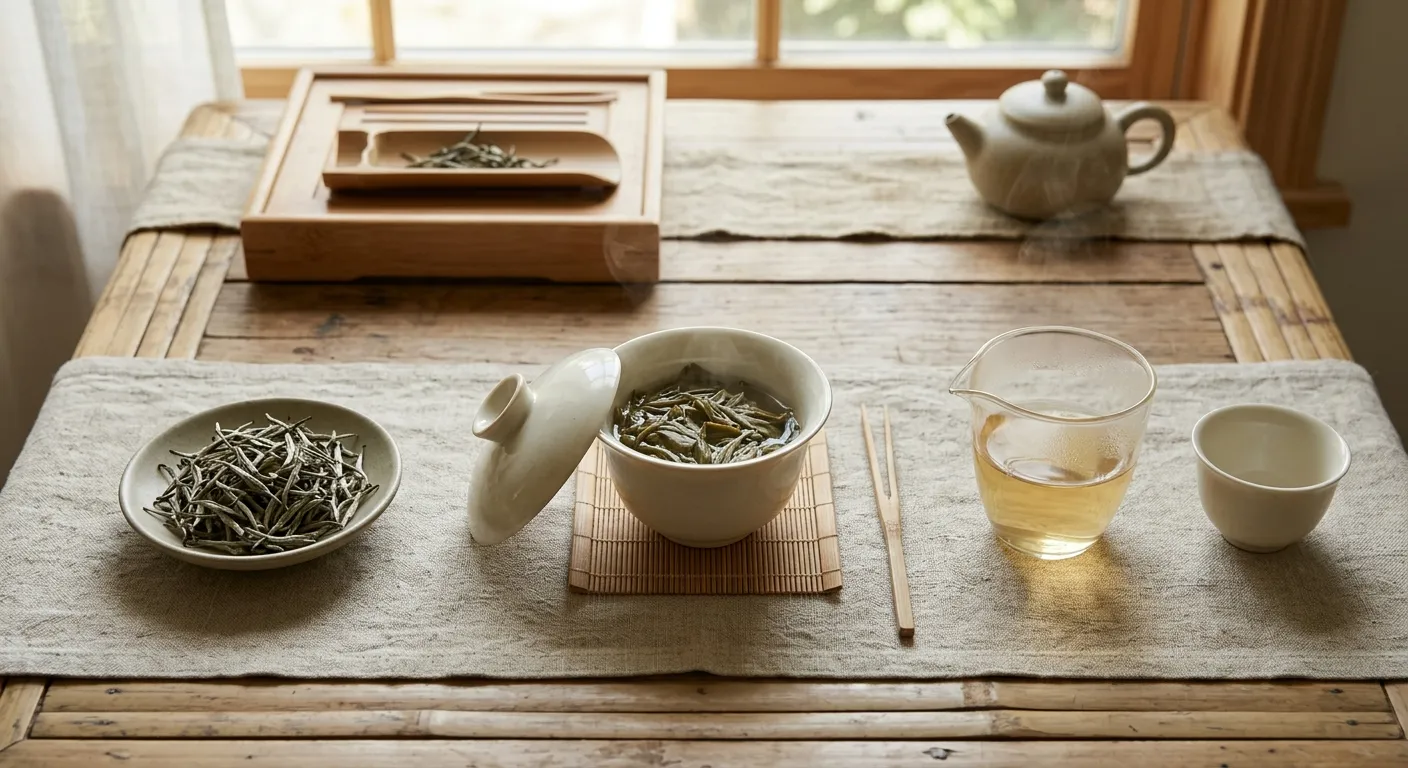
Warming the leaves usually gives a clearer impression. Add the dry leaves to a warmed gaiwan, teapot, or cup, cover briefly, then smell inside the vessel. The warmed white tea leaves aroma may bring out meadow flowers, hay, soft honey, warm grain, dried fruit, fresh grass, or a gentle herbal note.
This stage is useful because warmth releases scent before the leaf is fully extracted. If the dry leaf seemed faint, the warmed vessel can show whether the tea has quiet depth or simply feels flat. If an unpleasant smell becomes stronger here, do not ignore it.
Still, one sniff is not the whole answer. A tight cake, cool room, sealed storage, or very mild leaf material can make the first warmed aroma restrained. Let the first infusion confirm or complicate the impression.
3. Brewed white tea aroma
The brewed white tea aroma is what you meet in the cup and on the wet leaves. It may be floral, sweet-grassy, hay-like, mellow, grainy, lightly fruity, honeyed, woody, or herbaceous. Some cups feel fresh and springlike; others feel warmer, rounder, or more dried-fruit-like.
The wet leaves often smell stronger than the liquor. The cup aroma may be soft because many white tea infusions are light in body. If the liquor tastes clean and the wet leaves smell pleasant, a gentle cup aroma is normal.
If the cup smells sour, moldy, dirty, strongly smoky when that was not expected, or like added fragrance, check the basics before making a firm judgment: clean vessel, fresh water, shorter steep, and a second infusion.
White Tea Aroma Families You May Notice
Think in aroma families rather than exact labels. A tea does not need to show every note below, and the words are not a scorecard.
Aroma family
What it may smell like
How to read it
Floral
Meadow flowers, light blossoms, pollen-like softness
Common in delicate teas, but not required in every good white tea
Hay and dried grass
Clean hay, straw, sun-dried grass
Often fits leafier styles; should smell dry and clean, not damp
Honeyed sweetness
Mild honey, nectar, soft sweetness
May appear more clearly in warmed leaves or later infusions
Fresh green notes
Tender grass, stems, green plant aroma
Can feel lively when balanced; harsh greenness may come from brewing or leaf style
Warm grain
Oats, cereal, warm straw, light toast
Can make the tea feel rounder without tasting roasted
Soft fruit
Pear skin, pale stone fruit, dried fruit impressions
Usually subtle; candy-like fruit may suggest added scenting
Herbal or woody
Dried herbs, twigs, mild wood, clean leaf litter
More likely in some leafier or aged teas, but not proof of age
Flat or stale
Cardboard, dusty cupboard, tired leaves
May suggest poor storage, age, or weak aroma; check the brew
Damp or musty
Wet paper, basement air, sour dampness
A reason to pause, especially if repeated in wet leaves and cup
A clean, simple tea with hay, grain, and a little sweetness can be more convincing than a tea wrapped in dramatic tasting language.
What Changes the White Tea Smell?
The same tea can smell different depending on the leaf material, processing, storage, vessel, water temperature, steeping time, and even how recently it was shipped.
Leaf style
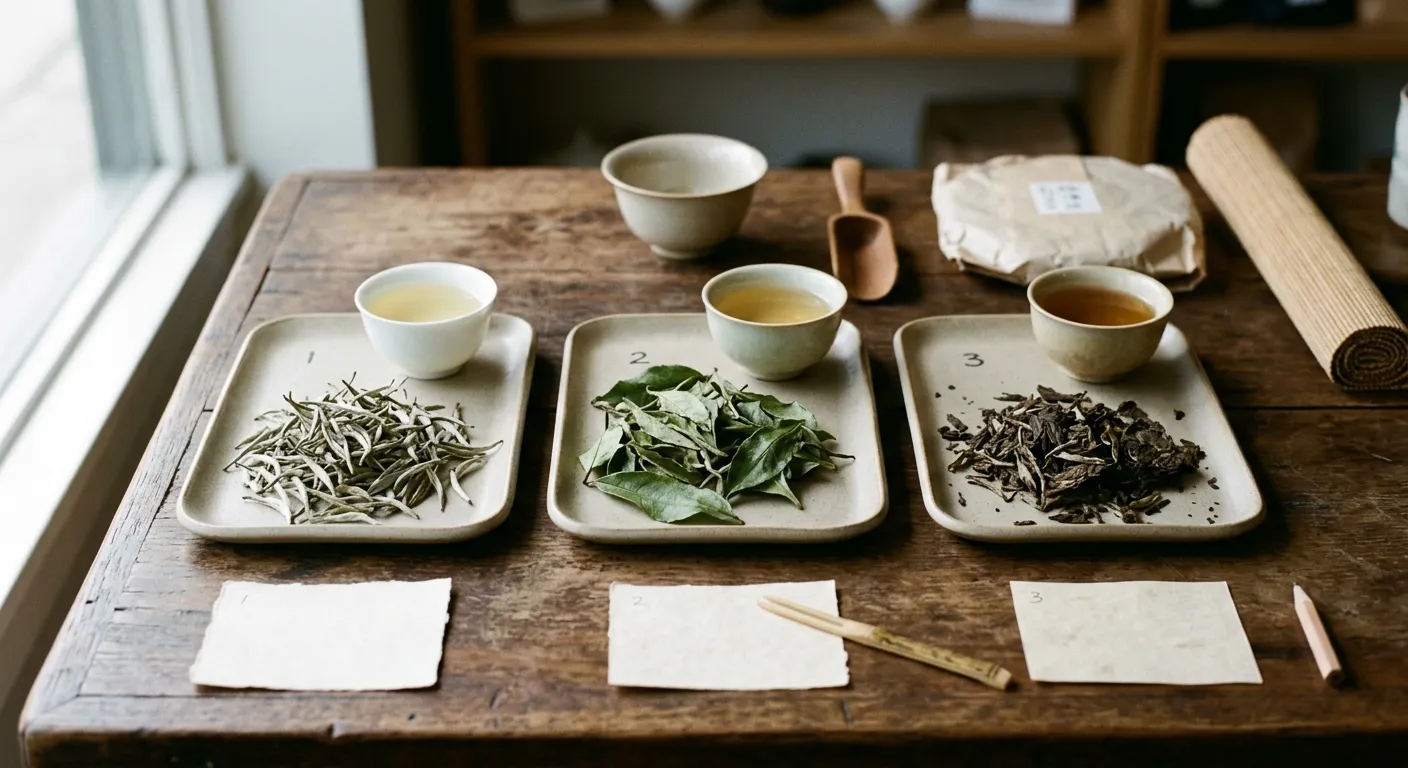
Bud-heavy white teas often present more delicate aromas: soft floral, downy, sweet, or fresh. Teas with more open leaves and stems may smell fuller, more herbal, hay-like, woody, or dried-fruit-like.
That is not a quality ladder. A bud tea is not automatically better because it smells faintly floral, and a leafier tea is not automatically lower because it smells like hay, herbs, or warm straw. Read the aroma beside the leaf appearance, liquor, mouthfeel, and basic seller information.
Freshness and settling time
Fresh white tea can smell bright, green, floral, grassy, or lightly sweet. Some teas are vivid as soon as the package opens. Others seem quiet until the leaves have rested briefly in a clean container.
A newly received tea may also smell muted after tight sealing, temperature changes during shipping, or packaging that holds odors. Give it a second check in a clean vessel. If the smell remains stale, sour, or damp after careful brewing, the concern becomes stronger.
Age and storage
Older white tea is often described with warmer aroma language: dried fruit, herbs, wood, honey, grain, or mellow sweetness. But aroma alone cannot verify age. A seller’s age statement, a dark cake, or a woody smell should not be treated as proof.
Storage matters because tea absorbs surrounding odors easily. Aged white tea should still smell clean. Earthy or woody can be normal in some cups; damp, sour, dirty, or moldy is different. If an older tea smells questionable, check whether the note fades after the first infusion or becomes more obvious.
Brewing choices
Brewing changes aroma quickly. Hotter water can draw out more scent, but it may also make green, bitter, or rough edges more noticeable. Cooler water may keep the cup softer, while making the fragrance seem faint. A longer steep can increase intensity; too much time can flatten delicate notes.
The vessel matters too. A warmed gaiwan traps scent and makes the lid aroma easier to read. A large mug spreads fragrance out. A cup that previously held coffee, scented tea, soap, or strong food can confuse the result.
If the tea smells wrong, remove easy variables first: rinse the vessel well, use fresh water, shorten the steep, and smell the leaves again warm.
When the Smell Is Normal, and When to Pause
A normal white tea smell does not have to be strong. It may be pale, quiet, and slow to open. It may also change across infusions: floral at first, then hay-like; grassy at first, then sweet; faint in the cup but clearer on the lid or wet leaves.
Pause and check more carefully when the smell is:
- damp, musty, or basement-like;
- sour across dry leaf, wet leaf, and cup;
- strongly perfumed when the tea is not described as scented;
- harshly smoky in an unexpected way;
- flat like old cardboard rather than simply mild;
- mixed with packaging, plastic, soap, spice, or cupboard odors.
These signs do not give a perfect diagnosis. Smell is one clue among several: how the leaves look, how the liquor behaves, whether the taste is clean, whether the smell changes after the first infusion, and whether the seller’s information is specific or vague.
A Simple Cup-Side Smelling Routine
Use this routine when comparing samples or deciding whether a tea seems right.
- Smell the dry leaf. Look first for a clean leaf scent, not a dramatic note.
- Warm the vessel. Add dry leaves to a warmed gaiwan, pot, or cup, cover briefly, then smell.
- Brew lightly first. Start with a moderate infusion before pushing the tea hard.
- Smell the lid, wet leaves, and cup. Each may show a different side of the tea.
- Let the cup cool slightly. Sweetness and soft fruit can become easier to notice as heat drops.
- Repeat once before judging. A second infusion can show whether a strange note is temporary or persistent.
- Write plain notes. “Clean hay and light honey” is more useful than forcing elaborate language.
This keeps the focus on observable behavior and avoids deciding too much from the first dry sniff.
Common Confusion Around White Tea Fragrance
The most common misunderstanding is expecting white tea to smell like a scented product. Unscented white tea should smell like tea leaves, not perfume. Floral, honeyed, fruity, or herbal notes can appear, but they are usually gentle and integrated.
Another mistake is treating premium words as evidence. Terms such as floral, honey, aged, old tree, rare, or medicinal-sounding descriptors may appear in tea marketing, but the words themselves do not prove quality. They are prompts for tasting, not conclusions.
Faint aroma also does not automatically mean bad tea. Some white teas are subtle by nature, and some need warmth to open. A faint but clean tea may be normal. A faint tea that also tastes flat, smells stale when warmed, and gives dull infusions is a different case.
The opposite mistake is assuming a very strong smell must be better. Strong fragrance can be enjoyable, but intensity alone is not balance. A good white tea cup aroma should still feel coherent with the leaf, the brew, and the style of tea.
So, What Should White Tea Smell Like?
White tea should smell clean, gentle, and natural. Depending on the tea, it can suggest flowers, hay, fresh grass, honey, warm grain, soft fruit, dried herbs, wood, or mellow sweetness. The dry leaf may be quiet, the warmed leaf is often more revealing, and the brewed liquor should carry a light but recognizable fragrance.
The main warning signs are not the absence of dramatic aroma notes. They are persistent dampness, sourness, stale cardboard, harsh smoke, artificial perfume, or odors that seem to come from poor storage or surrounding contamination.
Use white tea aroma as a practical clue, not a verdict. Read it together with the leaves, the cup, the storage context, and the information available about the tea.