
What Is the Difference Between Silver Needle and White Peony Taste
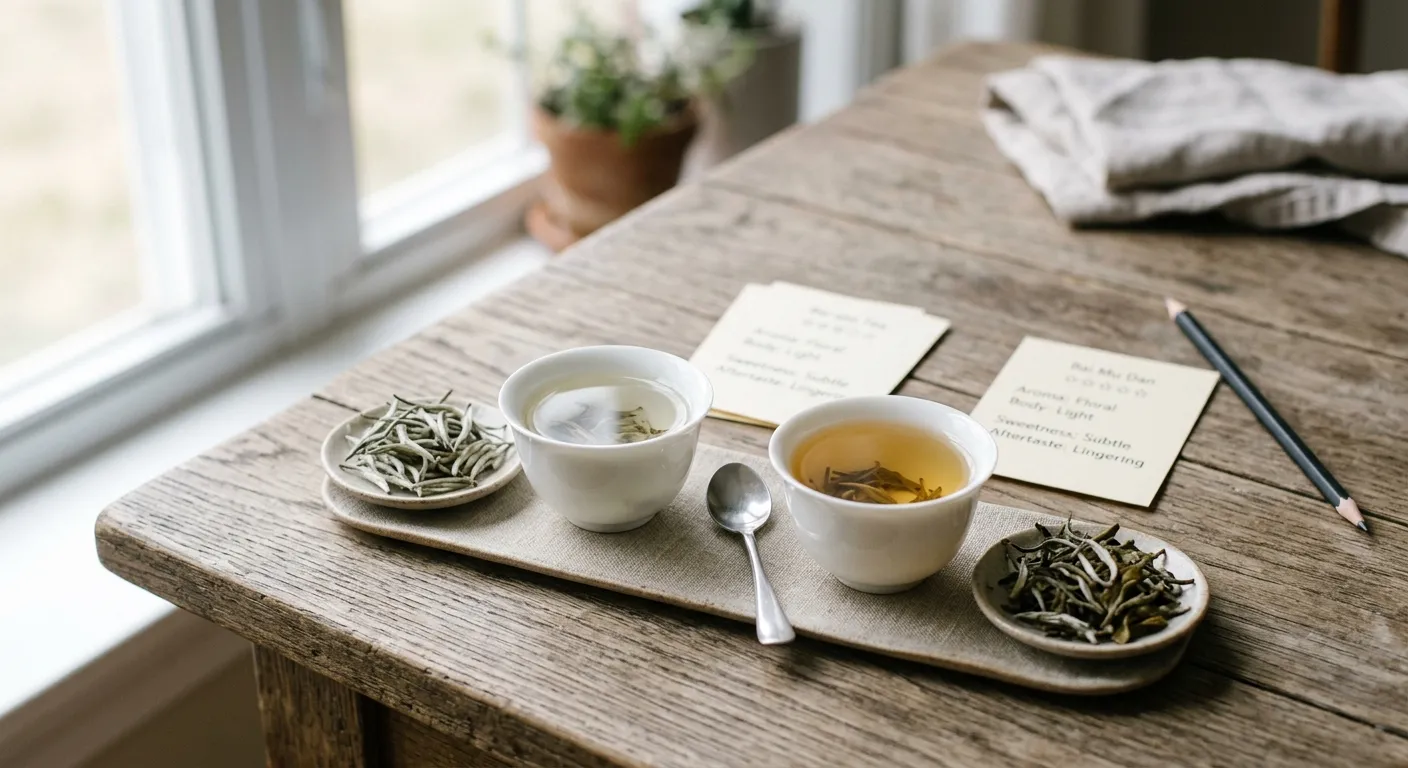
In a practical Silver Needle vs White Peony taste comparison, Silver Needle usually tastes lighter, smoother, and quieter. It often gives gentle sweetness, soft hay-like notes, pale floral hints, and a clean, fine aftertaste.
White Peony often feels broader in the cup. It can be more aromatic, more textured, slightly fruitier or leafier, and stronger through the middle of the sip.
That is the useful starting point, not a fixed rule. Brewing style, leaf quality, harvest material, age, storage, and seller labeling can blur the difference. A strong Silver Needle can taste fuller than a weak White Peony, and a delicate White Peony can feel surprisingly close to Silver Needle.
upward
Start with the broader guide
Use the broader guide first if you need the full scope before this page.
The simplest cup-level difference
If you are tasting both teas side by side, notice body before chasing flavor words.
Silver Needle is commonly expected to feel fine, soft, and restrained. The liquor may seem smooth rather than forceful. Its sweetness can feel clean and slow, more like a light nectar impression than a heavy sugary taste. Depending on the tea and brewing, the aroma may lean toward fresh hay, faint flowers, melon-like softness, or gentle green freshness.
White Peony often has more range because it usually includes both buds and leaves. That leaf material can bring more aroma, more structure, and a more noticeable finish. The White Peony flavor may show floral notes, dried-grass notes, light fruit, herb-like edges, or a deeper vegetal impression. Compared with Silver Needle, it often feels less whispery and more complete across the tongue.
Use this as a tasting map, not a quality ranking. “More delicate” does not automatically mean better, and “fuller” does not automatically mean rougher.
Silver Needle flavor: why it often tastes more delicate
Silver Needle is associated with bud-heavy material. In the cup, that often means a pale, soft, and focused profile. Many drinkers find it quiet at first, then more rewarding as the infusion cools or as later steeps reveal sweetness and aroma.
The Silver Needle flavor can seem almost too light if you are used to roasted oolong, black tea, ripe puer, or strongly brewed green tea. Its appeal is usually not obvious strength. It is more about texture, clarity, and the way sweetness appears after the sip.
Common impressions
- soft hay or dry grass;
- light nectar-like sweetness;
- faint melon or cucumber-like freshness;
- pale floral aroma;
- smooth, low-astringency texture;
- clean aftertaste.
The Silver Needle aroma may be easy to miss if the tea is brewed too weakly or tasted beside a much stronger tea. It can also seem flat if the leaves are old, poorly stored, or simply not very expressive. A premium name on a label cannot replace what you see, smell, and taste in the actual cup.
Silver Needle sweetness is often subtler than the sweetness people expect from flavored drinks. It may show as a soft finish, a roundness in the throat, or a gentle return after swallowing. If you are searching for a loud honey note, you may miss the quieter sweetness this tea can offer.
White Peony flavor: why it often tastes broader
White Peony often includes both buds and leaves, which can make the cup feel more layered. The leaf material can add aromatic lift, body, and a more visible infusion color. This is one reason White Peony is often easier for beginners to read: the taste may arrive more quickly and fill more space.
Common impressions
- fresh or dried floral notes;
- leafy and meadow-like aromas;
- light fruit suggestions;
- a fuller middle taste;
- more texture on the tongue;
- a longer aromatic finish.
The White Peony aroma is often more open than Silver Needle aroma. It may feel flowerier, leafier, or slightly fruitier, especially when brewed with enough leaf and not rushed through water that is too cool. The tea can also show more vegetal notes, especially in fresher examples or when brewed hotter.
White Peony sweetness can be round and approachable, but it is not always sweeter than Silver Needle. Sometimes it simply feels more noticeable because the body is fuller. In other cups, a good Silver Needle may have a cleaner and more persistent sweetness, while White Peony gives more aroma and texture.
That is why the comparison should not be reduced to “Silver Needle is sweet, White Peony is floral.” Both can be sweet. Both can be floral. The difference is often in weight, volume, and how quickly the flavor becomes obvious.
Brewing can exaggerate or hide the difference
The same two teas can seem very different or surprisingly close depending on how they are brewed. Before deciding that one is thin, harsh, bland, or superior, check the brewing conditions.
Leaf amount
Too little leaf makes both teas taste weak. Silver Needle is especially easy to under-read because its flavor is already gentle. If the infusion tastes like warm water with a faint aroma, the issue may be leaf ratio rather than the tea itself.
White Peony often shows more quickly with the same amount of leaf, but that does not make it automatically stronger in quality. It may simply extract more visible aroma and body from the leaf material.
Water temperature
Cooler water can preserve softness, but it may also make white tea taste muted. Warmer water can bring out sweetness, aroma, and body, while also making vegetal notes or dryness more noticeable, especially in White Peony.
For a fair comparison, keep the water temperature the same for both teas. If you brew Silver Needle gently and White Peony aggressively, you are comparing brewing choices as much as tea variety.
Steep time
Short steeps can make Silver Needle elegant or barely present, depending on leaf amount and vessel. Longer steeps may bring more sweetness and body, but can flatten delicate aromatics if pushed too far.
White Peony may tolerate a range of steep times, though longer infusions can draw out more leafiness, herbal tone, or astringency. If the White Peony tastes much stronger, ask whether it is truly the tea or simply a longer extraction.
Vessel and water volume
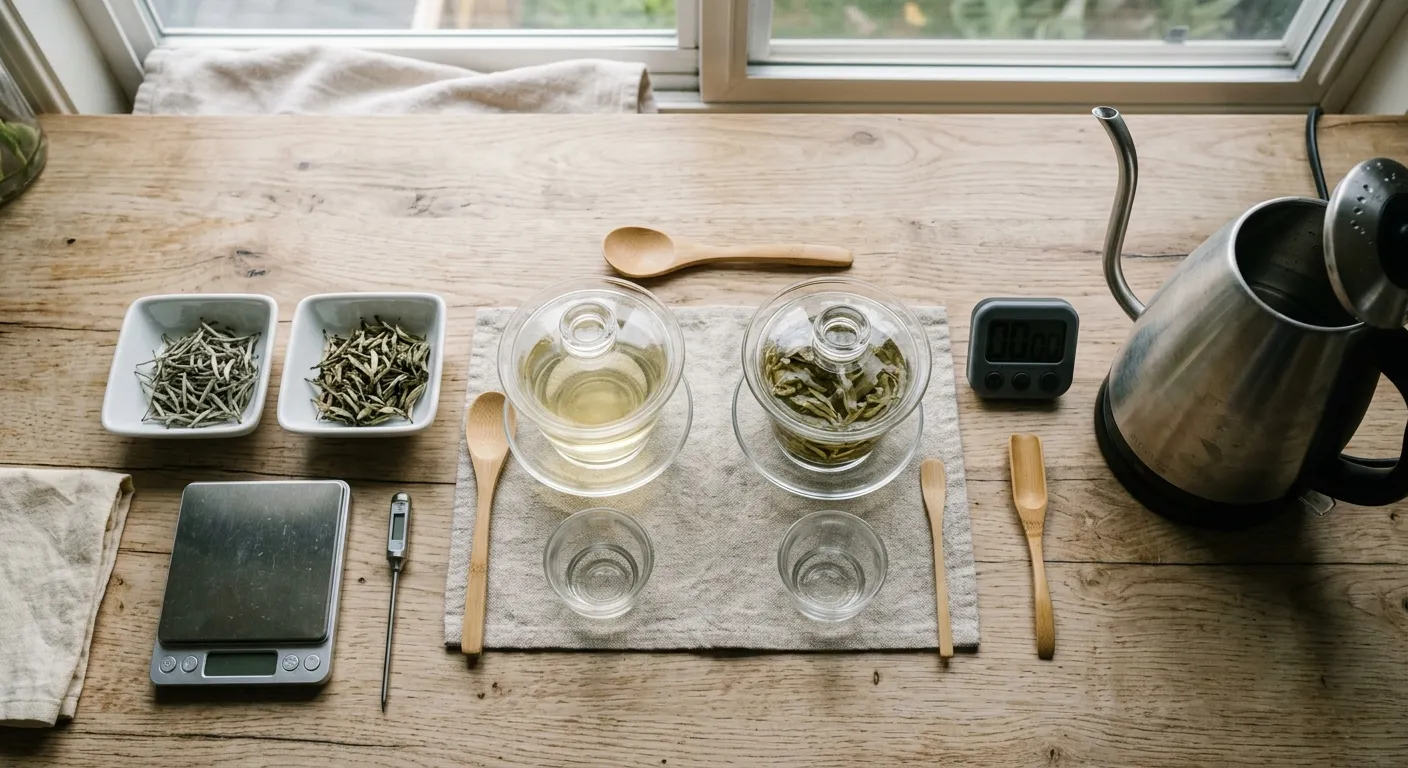
A small gaiwan, tasting cup, or small pot can make differences clearer because the leaf-to-water ratio is easier to control. A large mug can soften everything, especially if the leaves are sparse.
If your goal is a fair Silver Needle taste comparison or White Peony taste comparison, use the same vessel, same water, similar leaf weight if possible, and similar infusion timing.
Common confusion: premium language is not the same as taste
Silver Needle is often spoken about as more delicate and more premium, while White Peony is often described as fuller and more aromatic. Those expectations can be useful, but they can also mislead.
A label can tell you what the tea is supposed to be. It cannot guarantee how the tea will taste in your cup. Grade names, origin claims, age statements, and elegant product descriptions should be checked against observable signs: dry-leaf appearance, aroma before brewing, infusion color, mouthfeel, aftertaste, storage condition, and the clarity of seller information.
A few misunderstandings are worth separating.
“Delicate” does not mean flavorless
Silver Needle can taste quiet, but quiet is not the same as empty. A good cup may show softness, sweetness, and a fine aftertaste rather than obvious power. If it tastes completely flat, consider brewing strength, freshness, storage, or basic leaf quality before blaming the category.
“Fuller” does not mean lower quality
White Peony can have more body because of its leaf-and-bud character. That fuller taste is not a flaw. Many drinkers prefer White Peony precisely because it has more aroma, more texture, and a more immediate presence.
“More expensive” does not always mean more enjoyable
Some readers prefer Silver Needle for its refinement. Others prefer White Peony because it feels more expressive. The better choice depends on what you want from the cup: quiet sweetness and smoothness, or broader aroma and stronger infusion.
How to compare them without overreading the label
You do not need a formal tasting session, but you do need consistency.
Use similar amounts of leaf. Brew both teas with the same water, same vessel size, and same steep time. Smell the dry leaves first, then the warmed leaves if you use a warmed vessel. Taste the first infusion for aroma and texture, not only strength. Then taste a second infusion, because some white teas show more clearly after the first steep.
Look for these points:
- Which tea feels heavier on the tongue?
- Which aroma appears first: floral, grassy, melon-like, leafy, herbal, or fruity?
- Does the sweetness appear immediately, or more in the finish?
- Are the vegetal notes fresh and pleasant, or sharp and dominant?
- Does the aftertaste stay clean, fade quickly, or become drying?
- Does the tea improve, flatten, or become rough in later infusions?
This keeps the question practical. Instead of asking which category is “better,” you are asking which cup gives the experience you actually want.
When the usual difference may not apply
The common Silver Needle vs White Peony taste pattern can break down.
A very light White Peony may taste delicate and floral, especially if it has a high proportion of buds or is brewed gently. A concentrated Silver Needle may feel rich and sweet when enough leaf is used. Storage can also change aroma and texture over time, though those changes should be judged from the tea itself rather than assumed from age claims alone.
Processing and handling matter too. Poor storage can dull aroma. Rough brewing can make a gentle tea taste coarse. Weak brewing can make a good tea seem empty. Seller descriptions may emphasize attractive notes that do not appear clearly in every cup.
The clearest answer is this: Silver Needle often leans toward delicate sweetness and a clean, bud-focused profile; White Peony often leans toward fuller aroma, more body, and a leafier range of flavors. But the cup in front of you has the final say.
A short buying and brewing takeaway
Choose Silver Needle if you want a quiet white tea with soft texture, subtle sweetness, pale floral notes, and a clean finish.
Choose White Peony if you want a white tea that usually feels more aromatic, fuller, and easier to read in everyday brewing.
For your first comparison, do not rely only on grade names or premium wording. Brew both carefully, keep the variables steady, and taste for body, aroma, sweetness, vegetal tone, and aftertaste. That will tell you more than the label alone.