
White tea comparison
Does Silver Needle White Tea Have More Caffeine Than White Peony
Sometimes, but the name does not settle it.
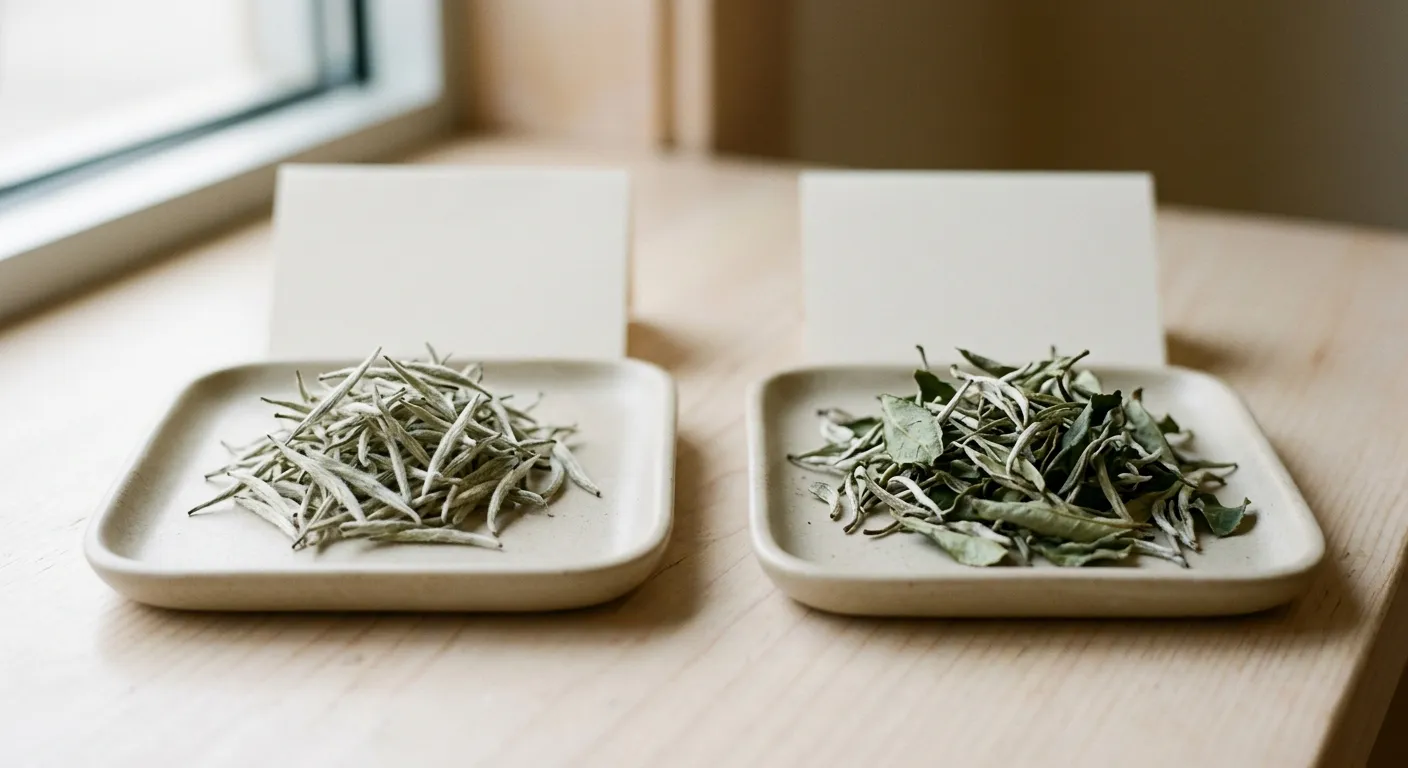
In a Silver Needle vs White Peony caffeine comparison, Silver Needle may come out higher in some samples because it is usually a more bud-focused white tea. White Peony is commonly made with both buds and leaves. That difference in leaf material matters, but it is still only a clue.
Two real teas can reverse the expected ranking. Caffeine can vary with the actual pluck, cultivar, harvest timing, processing, dry leaf weight, water temperature, steeping time, and how many infusions you drink. A pale, soft Silver Needle is not automatically low in caffeine, and a fuller-tasting White Peony is not automatically higher.
upward
Read the full overview first
Use the broader guide first if you need the full scope before this page.
Short Answer: Silver Needle Can Suggest More Bud Material, Not a Fixed Caffeine Level
Silver Needle is usually the white tea people mean when they talk about a bud-heavy style. White Peony is usually discussed as a bud-and-leaf style. That visual difference is why many drinkers assume Silver Needle has more caffeine.
The problem is that “Silver Needle” and “White Peony” are style and market names. They can tell you what kind of leaf material to expect, but they do not give you the measured caffeine content of that batch.
So the practical answer is: Silver Needle may contain more caffeine than White Peony in some comparisons, especially when the Silver Needle is mostly buds and the White Peony has more mature leaf material. But caffeine is not determined by name alone.
Why the Name Does Not Decide the Caffeine Question
Tea names are useful shopping and tasting cues. They are not lab results. For caffeine, the label has to be checked against the tea in front of you.
Bud-to-leaf ratio is a clue
A Silver Needle sample may show slender, downy buds. A White Peony sample may show a bud with one or more leaves, giving the dry tea a looser, leafier appearance.
That makes the bud-to-leaf ratio caffeine question reasonable. If one tea is made mostly from buds and another includes larger leaves, the material is not identical. Still, that observation should not be turned into a fixed rule such as “buds always mean more caffeine” or “leafier white tea is always lower.”
Use the bud ratio as a starting point, not the final answer.
Cultivar and harvest timing can shift the result
Two white teas may come from different cultivars, gardens, harvest periods, or growing conditions. Those differences can affect the leaf before brewing begins.
This is why a neat Silver Needle caffeine comparison can get messy in real life. A bud-heavy tea from one producer and a bud-and-leaf tea from another are not controlled samples. If cultivar, season, and processing differ, the style name becomes a rough clue rather than a precise comparison.
A cleaner comparison would use two teas with as many shared details as possible: similar origin, same season, similar producer context, and clear plucking information. Even then, without measured caffeine data, the result remains an estimate.
Processing and storage can change how strong the tea feels
White tea processing is often less intervention-heavy than some other tea categories, but white tea is not one single thing. Withering, drying, handling, aging, compression, and storage can all change aroma, body, sweetness, color, and extraction behavior.
A mellow aged White Peony cake may taste deeper and heavier than a fresh Silver Needle. That does not automatically mean it has more caffeine. It may simply be giving more color, body, aged aroma, or soluble flavor under your brewing conditions.
Brew Strength Is Not the Same as Measured Caffeine
One common white tea caffeine misconception is that the lightest-tasting cup must be the lowest in caffeine. White tea makes this easy to believe because many good cups are pale, floral, sweet, or soft.
Caffeine is not something you can reliably judge from liquor color or delicacy alone.
A cup may seem gentle because
- the steep was short;
- the water temperature was moderate;
- the tea has a soft texture;
- floral or sweet notes cover sharper edges;
- the leaf style is aromatic rather than brisk;
- the cup is lightly extracted overall.
That does not prove the caffeine level is low.
The reverse is also true. A bolder White Peony infusion with deeper color, more leaf aroma, or more grip is not automatically higher in caffeine than a pale Silver Needle. It may have more extracted flavor, more broken leaf material, or simply a brewing style that emphasizes strength.
Measured caffeine
What a tested sample contains under defined conditions.
Perceived brew strength
How strong, thick, bitter, sweet, brisk, or stimulating the cup seems to you.
Those can overlap, but they are not the same thing.
Brewing Variables That Can Matter as Much as the Name
If caffeine is part of why you are comparing Silver Needle and White Peony, your brewing setup matters.
Dry leaf amount
More grams of tea usually means more material available for extraction. A fluffy portion of Silver Needle may look large but weigh less than expected. A denser White Peony, especially if pressed or broken, may put more dry leaf into the same vessel than it appears to.
If you compare by spoonful instead of weight, the result can be misleading. A fairer comparison uses the same dry leaf weight, the same water volume, and similar steeping times.
Water temperature
Hotter water can extract more aggressively. With white tea, some drinkers use moderate water to protect delicate aroma, while others use hotter water to bring out body and sweetness.
A Silver Needle brewed gently may taste softer than a White Peony brewed hotter. That does not prove the Silver Needle caffeine level is lower. It may only show that the extraction was gentler.
Steeping time
Longer steeping gives water more time to draw material from the leaf. A 30-second infusion and a 5-minute infusion are not comparable cups.
If one tea is brewed briefly and the other is steeped longer, the caffeine comparison becomes mixed with a brewing comparison.
Number of infusions
White tea is often brewed across several rounds, especially in a gaiwan or small teapot. If you drink only the first infusion of one tea but several infusions of another, you are not comparing the same kind of session.
For a practical White Peony caffeine comparison, ask: how much leaf did I use, how long did I steep it, and how many cups did I actually drink?
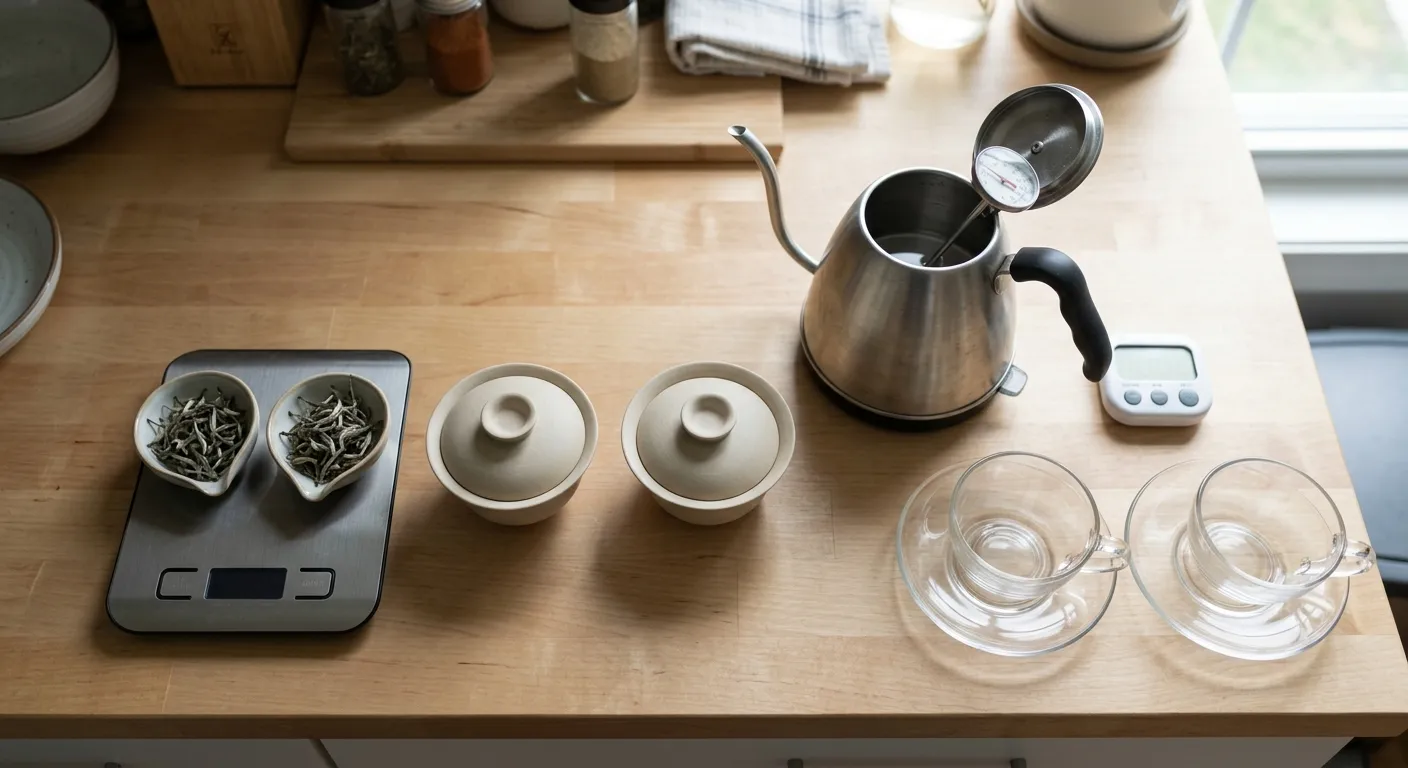
A Cleaner Way to Compare Them at Home
You cannot turn a home tasting into a caffeine test, but you can avoid the most misleading habits.
Try this:
- Use the same dry leaf weight for both teas. Do not rely on visual volume. Silver Needle can be fluffy, while White Peony may settle differently in a scoop.
- Use the same vessel and water volume. A gaiwan, cup, or small teapot is fine. Keep the setup consistent.
- Match water temperature and steeping time. If one tea is brewed hotter or longer, you are testing brewing style as much as tea style.
- Look at the dry leaves first. Notice bud ratio, leaf size, broken material, color, and whether the tea is loose or pressed.
- Taste without overreading the cup. Sweetness, pale color, floral aroma, or softness can describe the tea well, but they should not be treated as caffeine proof.
- Check seller details carefully. Harvest notes, plucking descriptions, and sample context can help. A caffeine number without testing method, sample details, or preparation conditions should be treated cautiously.
This will not give you an exact caffeine amount. It will help you avoid the weaker assumption that the tea name alone decides the result.
What to Ask When Buying
If caffeine is part of your buying decision, ask for information about the actual tea rather than broad category claims.
Useful details include
- whether the tea is mostly buds or a bud-and-leaf pluck;
- harvest season or picking period, if provided;
- cultivar or garden context, when available;
- whether the tea is loose, pressed, young, or aged;
- suggested leaf weight and brewing method;
- whether any caffeine figure is based on actual testing.
Be careful with simple claims such as “white tea is low caffeine” or “Silver Needle is always higher.” They are easy to remember, but they flatten too many variables.
A better seller answer explains the sample: what the leaf material is, how it is commonly brewed, and whether any caffeine information comes from testing or from general category assumptions.
When the Better Choice Is About Flavor, Not Caffeine
Unless you have a personal reason to limit caffeine, flavor and brewing behavior may be easier to judge than caffeine content.
Silver Needle often appeals to drinkers looking for a bud-focused tea with soft texture, pale liquor, and subtle fragrance. White Peony often shows more visible leaf variation and may brew with floral, hay-like, fruity, or gently woody notes depending on age and storage.
Those differences are easier to observe. You can see the leaf material, adjust steeping, and taste aroma, body, and finish. Caffeine remains less visible unless measured under defined conditions.
People who are caffeine-sensitive may want to be cautious and avoid using tea names as dosing tools. For personal medical concerns, seek appropriate professional guidance.
Bottom Line
Silver Needle does not automatically have more caffeine than White Peony. It may be higher in some real samples because Silver Needle is commonly a bud-heavy white tea, but caffeine is not determined by name.
For a better comparison, look at the actual leaves, especially bud-to-leaf ratio, then consider cultivar, harvest timing, processing, dry leaf weight, water temperature, steeping time, and number of infusions.
Most of all, do not confuse a pale or delicate cup with a measured low-caffeine result. If you want the most honest answer, compare similar samples under the same brewing conditions and treat any exact ranking as uncertain unless it comes with clear testing context.