
White tea caffeine guide
How Much Caffeine Is in a Cup of White Tea
A practical estimate is about 15–60 mg of caffeine in an 8-ounce cup of white tea, but that number is only a working range. If you are asking how much caffeine is in white tea, the real answer depends on the leaf material, dry leaf weight, water temperature, steep time, cup size, and whether you drink one infusion or a full session.
White tea is not caffeine-free. It is also not always “very low caffeine.” A light mug of leafier White Peony may feel gentle, while a concentrated gaiwan session with bud-heavy tea can add up across several small pours.
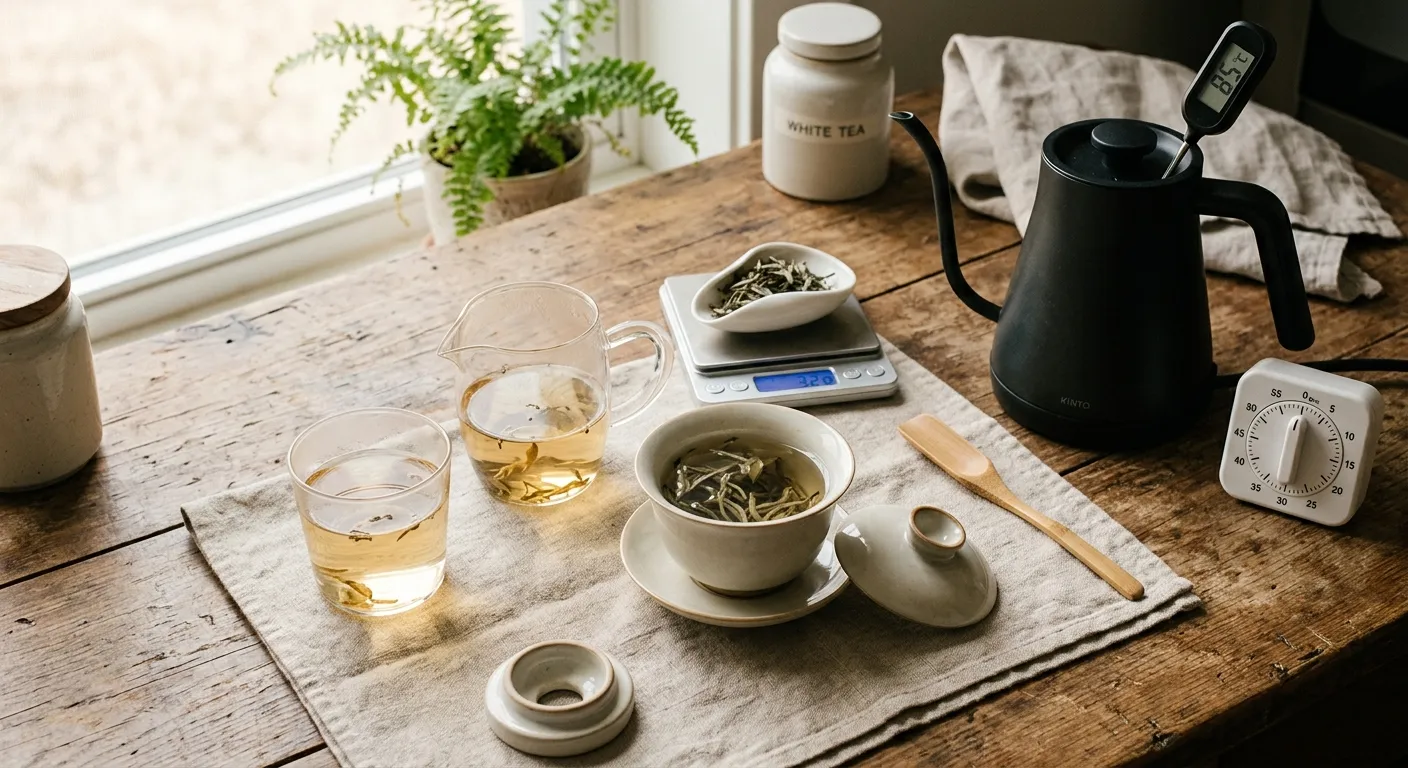
upward
Start with the broader guide
Use the broader guide first if you need the full scope before this page.
The practical answer
Use about 15–60 mg per 8-ounce cup as a practical estimate, not as a lab result. A lightly brewed cup can sit toward the lower end, while more leaf, hotter water, longer time, bud-heavy material, broken pieces, compressed tea, or repeated infusions can move the total upward.
The useful range, and why it is not exact
For everyday drinking, it is better to think of the white tea caffeine amount as a range rather than a fixed label. A lightly brewed small mug may sit near the lower end. A stronger cup made with more leaf, hotter water, and a longer steep can move higher.
The word “white tea” describes a processing style and a family of teas, not one standardized drink. Silver Needle, White Peony, Gongmei, and Shoumei can differ in bud-to-leaf ratio, leaf size, harvest style, aging condition, compression, and brewing habit. Those details often matter more than the word “white” on the package.
A caffeine number is most useful when it comes with brewing details
- Dry leaf weight: 2 grams in a mug is different from 5 grams in a small gaiwan.
- Serving volume: a 4-ounce cup and a 12-ounce mug should not be compared as the same “cup.”
- Water temperature: hotter water generally extracts more quickly.
- Steep time: a quick infusion and a five-minute steep are different drinks.
- Infusion count: one cup is not the same as the total from a long session.
There is not enough white-tea-specific public data, under defined brewing conditions, to give one precise number for every cup. General caffeine guidance from sources such as the FDA and Mayo Clinic is useful for daily intake context and sensitivity, but it does not pin down the caffeine in your exact leaves, vessel, and steep. Treat the 15–60 mg range as a practical estimate, not a lab result.
Why white tea caffeine varies
Caffeine comes from the tea plant material and from what the water extracts during brewing. The tea name gives clues, but it does not decide the whole answer.
Leaf grade and bud-to-leaf ratio
Bud-heavy teas can be stronger than their pale appearance suggests. Silver Needle is made from tender buds, while White Peony usually includes both buds and young leaves. Many beginners assume Silver Needle must be the gentlest because it looks delicate. In practice, Silver Needle caffeine can still be meaningful, especially with generous leaf weight or repeated infusions.
White Peony often gives a broader leaf-and-bud infusion. Its liquor may look more golden and taste fuller, but that does not automatically mean its caffeine is higher or lower than Silver Needle. The final cup still depends on amount, temperature, time, and serving size.
Leafier styles such as Gongmei and Shoumei are often brewed in bigger mugs, longer steeps, or aged-cake sessions. Even if each pour tastes mellow, the full session can still contribute a noticeable amount of caffeine.
Dry leaf amount
Dry leaf weight is the easiest variable to control. If you use more leaf, you give the water more material to extract from.
For a Western-style cup, many drinkers use a modest amount of leaf and a longer steep. For gongfu-style brewing, the vessel is smaller, but the leaf-to-water ratio is higher. One pour may be small, yet several pours together can add up.
If caffeine matters to you, weighing the leaf is more reliable than using spoonfuls. White tea leaves are bulky and uneven. A spoon of Silver Needle buds may weigh very differently from a spoon of broken leaf or compressed cake flakes.
Cup size
The phrase caffeine in a cup of white tea sounds simple until “cup” is defined. A tasting cup, teacup, travel mug, and 8-ounce measuring cup are not the same.
An 8-ounce reference serving is helpful for comparison, but many people drink more than that in one sitting. A 12-ounce mug brewed at the same strength will usually contain more caffeine than a smaller cup. A 100 ml gaiwan pour may contain less per pour, but five or six pours are a different total.
Think in two layers
- Caffeine per serving
- Caffeine across the whole session
Both matter, but they answer different questions.
Brewing choices that change the cup
The same white tea can produce a soft, pale infusion or a much stronger cup depending on time, temperature, and repeated pours.
Steep time
Longer steeping usually gives water more time to extract caffeine along with flavor. A 90-second steep and a 5-minute steep should not be expected to produce the same cup.
If you want a lighter brew, shorten the steep. If the tea tastes too thin, you may increase time slightly, but that will also pull more from the leaf.
Water temperature
Hotter water tends to extract faster than cooler water. Many white tea drinkers use water below a full boil for tender buds because it can keep the texture softer and reduce roughness. Near-boiling water, especially with broken leaf, compressed tea, or a longer steep, can make the cup stronger.
This is why white tea caffeine by brewing cannot be separated from flavor. A hotter brew may taste fuller, thicker, or more assertive, and it may also extract more in the same amount of time.
Repeated infusions
A single steep does not remove all caffeine from the leaves. Repeated infusions matter most when drinking white tea in a gaiwan or small teapot.
The first infusion may extract a noticeable portion, but later infusions continue drawing from the leaf. If you drink six small cups, your total intake is not the same as drinking one small cup and stopping.
A quick rinse should not be used as a dependable caffeine-control method. It may wake up the leaves, warm the vessel, and change the first aroma, but it does not give precise control over caffeine.
Is white tea low caffeine?
White tea can be lower in caffeine than some strongly brewed teas or coffee-style drinks, but “low caffeine” can mislead if it makes the tea sound nearly caffeine-free.
A lightly brewed cup may suit someone who wants a gentler tea experience. A strong white tea session, especially with bud-heavy leaves, high leaf weight, hot water, and multiple infusions, may not feel low to a caffeine-sensitive drinker.
Better questions than one isolated number
- How much dry leaf am I using?
- How large is my cup?
- Am I drinking one mug or a full session?
- Is the tea mostly buds, leaves, broken material, or compressed cake?
- Am I brewing lightly or pushing extraction?
Those details are more useful than a single caffeine number without context.
Common misunderstandings
Pale liquor does not mean no caffeine
Color can suggest leaf style, age, oxidation, or brewing strength, but it does not measure caffeine. A pale Silver Needle infusion can still contain caffeine.
Minimal processing does not make white tea caffeine-free
Caffeine is already present in the tea plant material. Withering and drying do not turn white tea into an herbal infusion.
Generic tea charts can be too vague
Some charts list one value for “tea,” “green tea,” or “brewed tea” without naming leaf type, dry weight, steep time, water temperature, or serving size. Those numbers may be useful for broad comparison, but they should not be treated as a precise answer for your cup.
If you are sensitive to caffeine
Caffeine sensitivity varies. Some people drink tea in the afternoon without noticing much. Others feel the effect from a small serving. General consumer guidance often frames caffeine in terms of total daily intake and personal tolerance, so white tea should be counted alongside coffee, matcha, energy drinks, chocolate, and other caffeine sources.
If caffeine affects your sleep, heart rhythm, medication routine, pregnancy-related choices, or another personal health concern, do not assume white tea is automatically suitable because it tastes gentle. Ask a qualified clinician for individual guidance.
Practical cup control
- Use less dry leaf.
- Brew a smaller serving.
- Shorten the steep.
- Use slightly cooler water.
- Stop after one or two infusions.
- Avoid assuming aged, pale, or expensive tea means lower caffeine.
These steps do not give an exact lab number, but they can help make the next cup lighter.
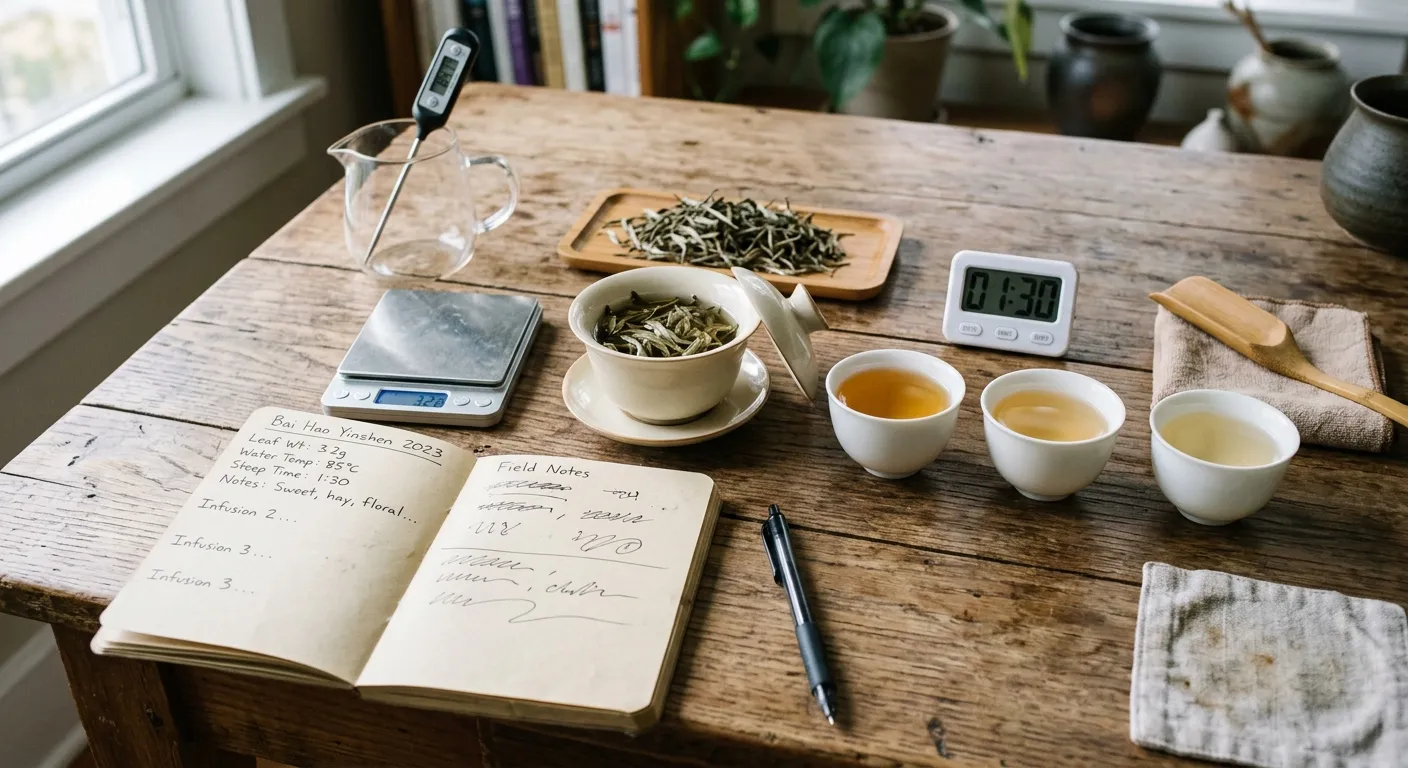
A simple way to estimate your own cup
Start with the working range of about 15–60 mg per 8-ounce cup, then adjust your expectations based on the brew.
Your cup is more likely to sit toward the lighter side when it uses modest leaf, cooler water, a shorter steep, and a normal 8-ounce serving. It may move upward with more leaf, hotter water, longer time, bud-heavy material, broken pieces, compressed tea, or several infusions in one sitting.
If you drink white tea often, keep a small note for a few sessions
- Tea style: Silver Needle, White Peony, Gongmei, Shoumei, or aged cake
- Dry leaf weight
- Water volume
- Water temperature
- Steep time
- Number of infusions
- How you personally felt afterward
That record will teach you more about your own response than a generic chart.
Bottom line
A cup of white tea is often estimated at roughly 15–60 mg of caffeine per 8 ounces, but the real amount changes with leaf material and brewing. White tea is not caffeine-free, and it is not always extremely low in caffeine.
For a gentler cup, use less leaf, cooler water, shorter steeps, and fewer infusions. If you brew concentrated white tea in a small vessel across many pours, count the whole session, not just the first cup. For caffeine-sensitive drinkers, personal response and total daily intake matter as much as the tea name on the label.
Sources
Sources and further reading
Reference links are limited to sources considered suitable for public citation in this page.