
White tea caffeine
Is White Tea Naturally Low in Caffeine
White tea is not caffeine-free, and it is not automatically low in caffeine just because it tastes light. The better answer to “is white tea low in caffeine” is: it can be gentler in some cups, but the caffeine in your cup depends on the leaf material and the way it is brewed.
A pale gold infusion, a soft floral aroma, or a delicate mouthfeel does not prove that the tea contains very little caffeine. Those signs tell you more about flavor, leaf style, and extraction than about a measured caffeine level.
upward
Read the full overview first
Use the broader guide first if you need the full scope before this page.
Why white tea has a low-caffeine reputation
White tea often looks and tastes quieter than darker teas. Silver Needle may brew pale and silky. White Peony can feel soft, floral, hay-like, or lightly fruity. Shoumei and Gongmei may be mellow even when they have more body.
That drinking experience makes the “white tea low caffeine” idea easy to believe. But “white tea” is a broad tea family, not a single caffeine profile.
Some white teas are mostly buds. Some include buds and open leaves. Some are loose; others are pressed into cakes. They may come from different cultivars, harvest moments, grades, and storage conditions. Without testing a specific tea brewed in a specific way, it is more accurate to say that white tea caffeine varies.
Marketing can blur this further. Words such as gentle, delicate, soothing, or naturally light may describe the cup’s mood or flavor, but they do not confirm that the finished drink is very low in caffeine. White tea can taste soft and still contain caffeine.
What changes the caffeine in the cup
For a tea drinker, the useful question is not only “what type of tea is this?” but “what went into this particular cup?” A few practical details matter.
Leaf grade and bud-to-leaf ratio
White tea ranges from bud-heavy styles to leafier grades. Silver Needle is usually recognized by its young buds. White Peony includes buds and leaves. Gongmei and Shoumei are generally leafier.
It is tempting to turn those categories into a simple caffeine ranking, but that can overstate what you can know by sight. A fluffy bud tea, a broken-leaf tea, and a compressed aged cake may brew very differently because of shape, density, surface area, and picking style.
Grade is a clue, not a caffeine number.
Dry leaf dose
The amount of dry leaf you use changes the cup. A lightly filled basket infuser and a tightly loaded gaiwan are not the same drink, even if both contain white tea.
More leaf usually means a stronger infusion in flavor, aroma, body, and likely caffeine contribution. The exact amount still cannot be known without measurement, but dose is one of the clearest brewing choices you control.
This is why a “gentle” white tea can feel stronger than expected if you brew it with a high leaf-to-water ratio.
Water temperature and steeping time
Hotter water and longer contact tend to draw more from the leaf into the liquor. With many young white teas, drinkers use slightly cooler water to protect soft aromatics. With aged white tea, compressed cakes, or leafier grades, hotter water may bring out more body and deeper sweetness.
A short, cooler infusion may taste light. A longer, hotter steep may taste fuller, more drying, or more assertive. That does not give you a precise caffeine figure, but it does explain why steeping time and water temperature affect cup strength.
Vessel size and infusion style
A large mug, a basket infuser, a small gaiwan, and a travel flask all extract tea differently.
One long mug steep concentrates the session into a single cup. Gongfu-style brewing uses more leaf in a smaller vessel, with several short infusions. A flask or thermos-style brew may keep leaves in hot water for a long time.
Multiple infusions of white tea can spread extraction across several small cups, while one extended steep can make the drink feel stronger at once. Neither method proves that white tea is low or high in caffeine by category. It shows why brewing style matters.
Pale liquor does not mean low caffeine
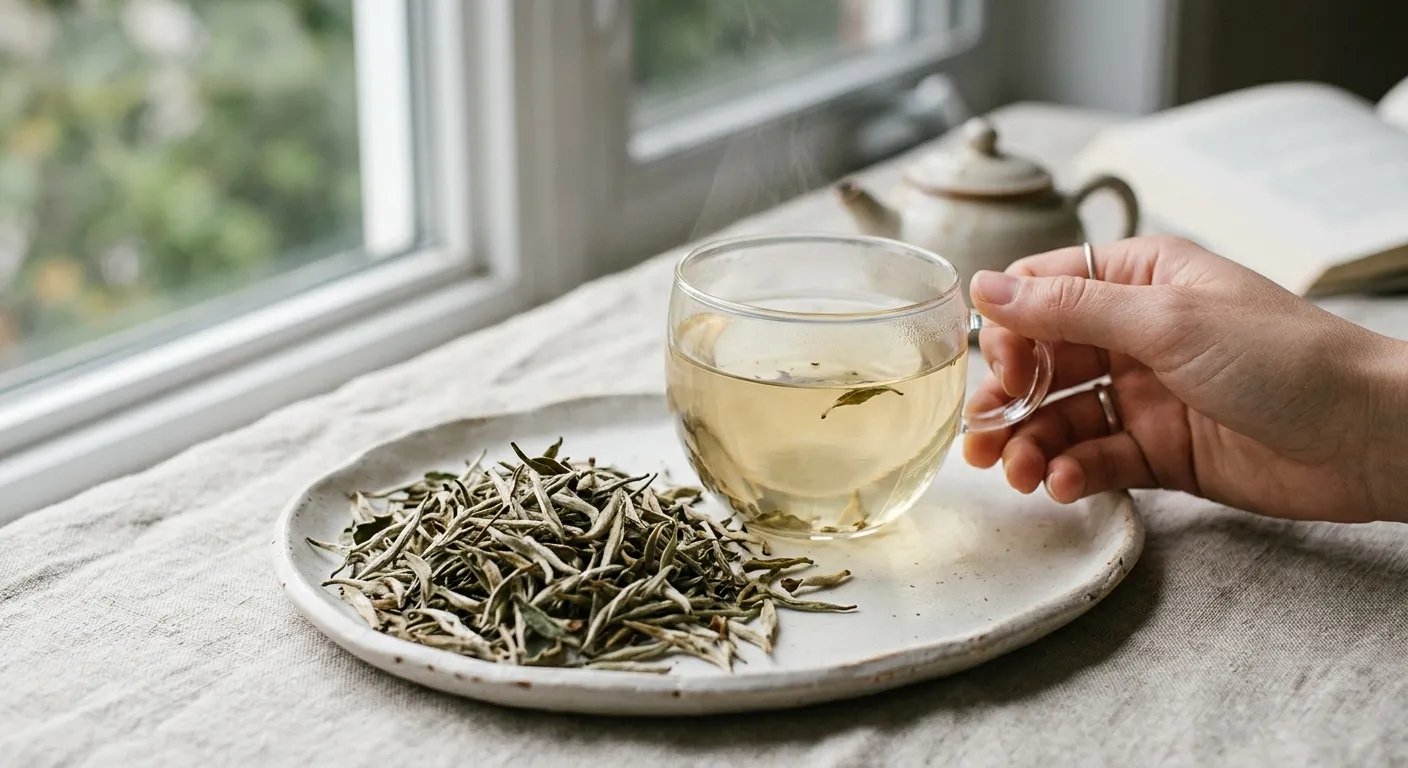
The most common white tea caffeine misconception is visual. Many white teas brew pale, especially in early infusions. Next to a dark black tea or roasted oolong, the cup may look almost weightless.
Color is not a dependable caffeine gauge. Liquor color can reflect leaf style, oxidation, aging, brokenness, storage, steeping time, temperature, and many compounds other than caffeine.
Flavor can mislead in the same way. A white tea may taste floral, melon-like, grassy, honeyed, woody, or lightly mineral. None of those notes confirms a caffeine level. “Not bitter” and “not strong-tasting” are not the same as “low in caffeine.”
Separate the ideas
- Flavor lightness: how pale, soft, sweet, or delicate the tea tastes.
- Brew strength: how much leaf, heat, time, and concentration went into the cup.
- Caffeine content: what would require measurement to state precisely.
White tea can be light in flavor without being caffeine-free.
If you want a gentler white tea session
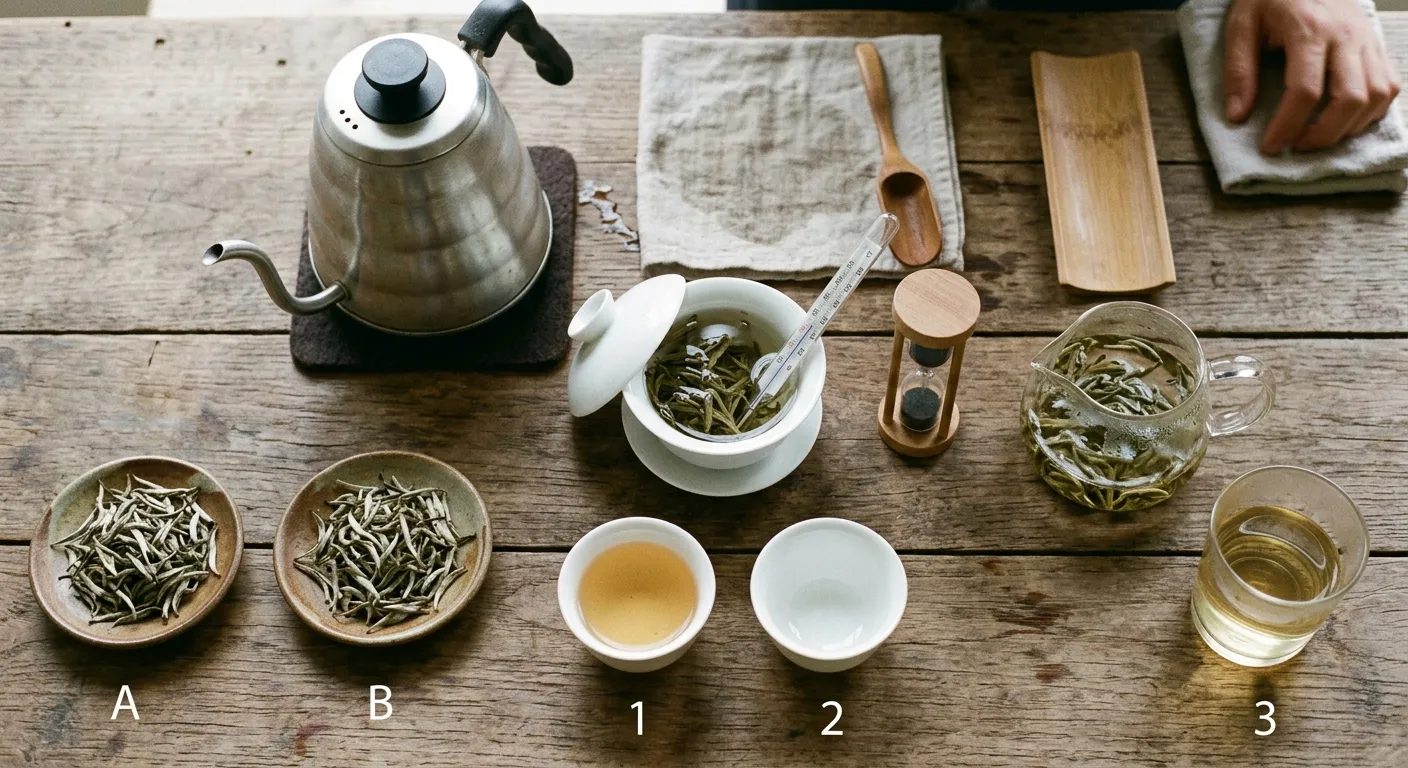
If your goal is a milder-feeling cup, work with the brewing choices you can control instead of relying on the tea name alone. This is not a medical caffeine plan; it is a tea-centered way to avoid accidentally brewing a very strong cup.
- Use a moderate dry-leaf dose. If the cup feels too forceful, drying, or heavy, reduce the leaf before changing everything else.
- Shorten the steep. Taste earlier, then extend only if the cup feels too thin.
- Use temperature as a flavor tool. Cooler water can keep many young white teas softer; hotter water may draw more body from aged or compressed material.
- Watch compressed cakes. A tight piece may open slowly, then release more strongly once the leaves separate.
- Read seller descriptions carefully. “Mellow” or “low caffeine” is only useful if the seller gives meaningful testing details. Otherwise, treat it as general style language.
When the answer matters more
For many tea drinkers, caffeine level is only a rough preference. For others, caffeine intake matters because of personal sensitivity, sleep timing, pregnancy, medication questions, or a professional limit they have been told to follow.
In those situations, do not treat white tea as caffeine-free. Check the product information available to you, brew conservatively, and follow relevant professional guidance where it applies. Herbal infusions made outside the tea plant category are different from white tea, but blend labels still matter.
The cautious takeaway is simple: white tea is not caffeine-free, not reliably low by name alone, and not predictable from pale color. The cup depends on the leaf and the brew.
A quick check before your next cup
Before deciding whether a white tea is “low caffeine,” ask:
- Am I looking at buds, leaves, broken pieces, or a compressed cake?
- How much dry leaf am I using for this vessel?
- Am I making one long mug or several short infusions?
- Is my water cooler and brief, or hot and extended?
- Am I judging caffeine from pale color or delicate taste?
- Does the seller provide real testing information, or only gentle-sounding language?
- Do I personally need strict caffeine control?
These questions will not give you a caffeine number. They will keep you from overreading the word “white” or the pale color of the liquor.
So, does white tea have less caffeine? It may in some cups, and it may not in others. The responsible answer is that white tea contains caffeine, and the amount can vary with the tea material, dry leaf dose, water temperature, steeping time, vessel, and infusion style. Treat “naturally low in caffeine” as an oversimplified claim unless you have specific, reliable information for the tea and brewing method in front of you.