
Buying decision
Loose Leaf or Cake White Tea: Which Should You Buy Online First
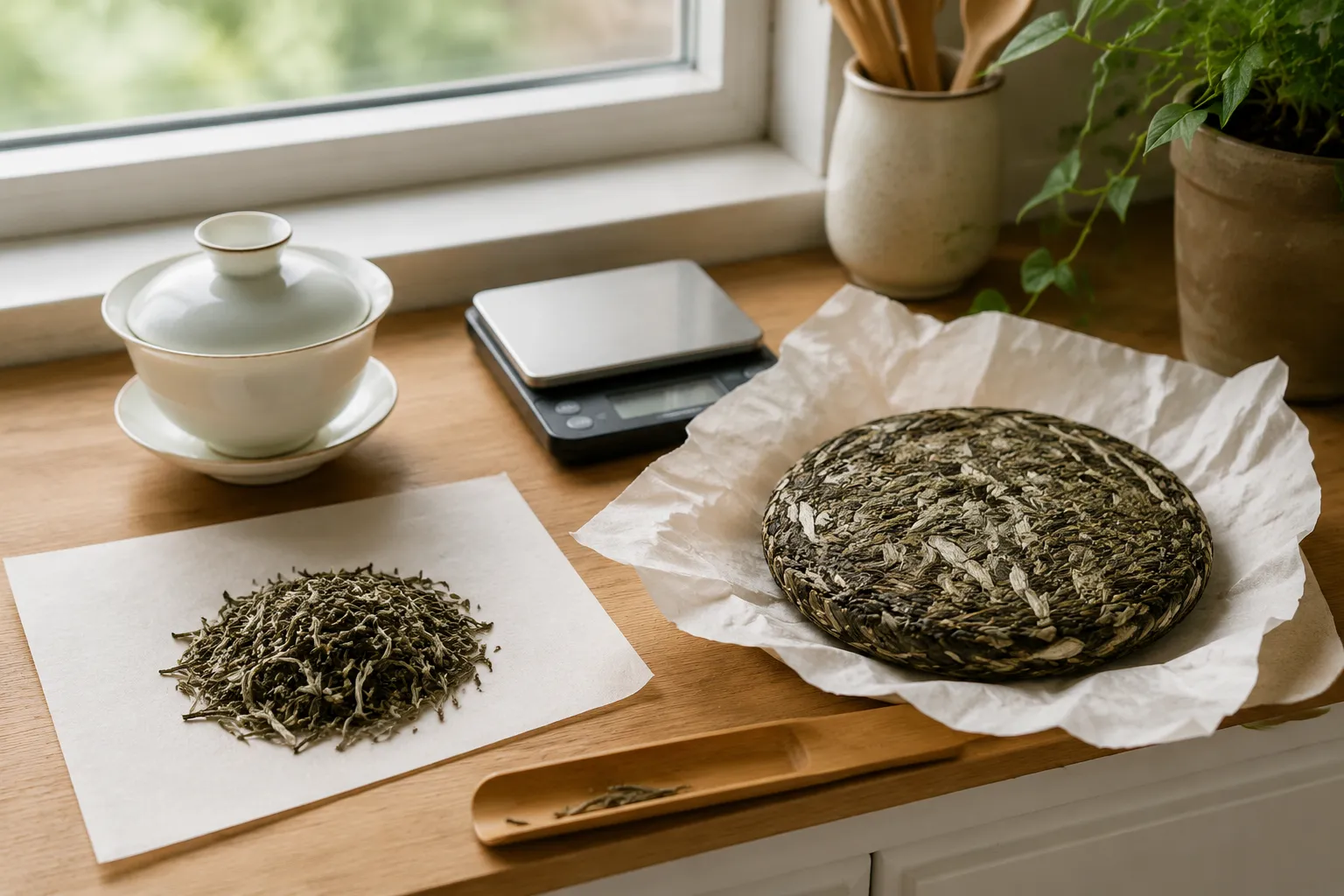
If this is your first online order, start with loose leaf white tea unless the cake listing gives you unusually clear detail and you already know you like that style. Loose leaf is easier to inspect, portion, brew, and walk away from if the cup does not match the seller's description. A cake can be a good choice later, but it asks for more trust up front.
That answer has a limit: this page is a practical buying framework, not proof that one format is always fresher, better, older, more authentic, or more valuable.
upward
Read the full overview first
Use the broader guide first if you need the full scope before this page.
The first purchase should reduce unknowns
A listing photo can show buds and leaves, but it cannot let you smell the dry tea, feel the compression, or see how the liquor changes across several steeps. That is the main problem with buying white tea online. You are not only choosing a format; you are choosing how much uncertainty you want to take on before the first cup.
Loose leaf white tea online usually suits a first purchase because it keeps the experiment smaller. You can buy a modest amount, measure it easily, and compare the dry leaf with the seller's photos. If the tea is Silver Needle, you may be checking whether the buds look even and handled with care. If it is White Peony, Gongmei, or Shoumei, you may expect a broader mix of buds, leaves, stems, and color tones. Those details do not prove quality or origin, but they give you something concrete to compare.
A cake asks for a different kind of commitment. When you buy white tea cake online, you are often buying a larger amount in a compressed form, sometimes with stronger seller language around age, storage, mountain area, batch identity, or long-term drinking potential. Those details can be useful when they are specific, but they are not proof by themselves. A wrapper, a poetic name, or a polished photo should still be checked against the practical question: do you want this much tea before tasting it?
For a first white tea purchase, the smaller unknown is usually the better one. Loose leaf lets you learn the seller, the style, and your brewing preference before you decide whether a cake deserves cupboard space.
When a white tea cake makes sense first
A cake is not automatically the riskier choice. It can make sense as a first purchase when the seller offers a sample of the same cake, a small mini cake, or a clear breakdown of harvest year, tea type, storage notes, and cake weight. It also makes more sense if you already enjoy fuller-bodied White Peony, Gongmei, or Shoumei styles and are not trying to discover white tea from zero.
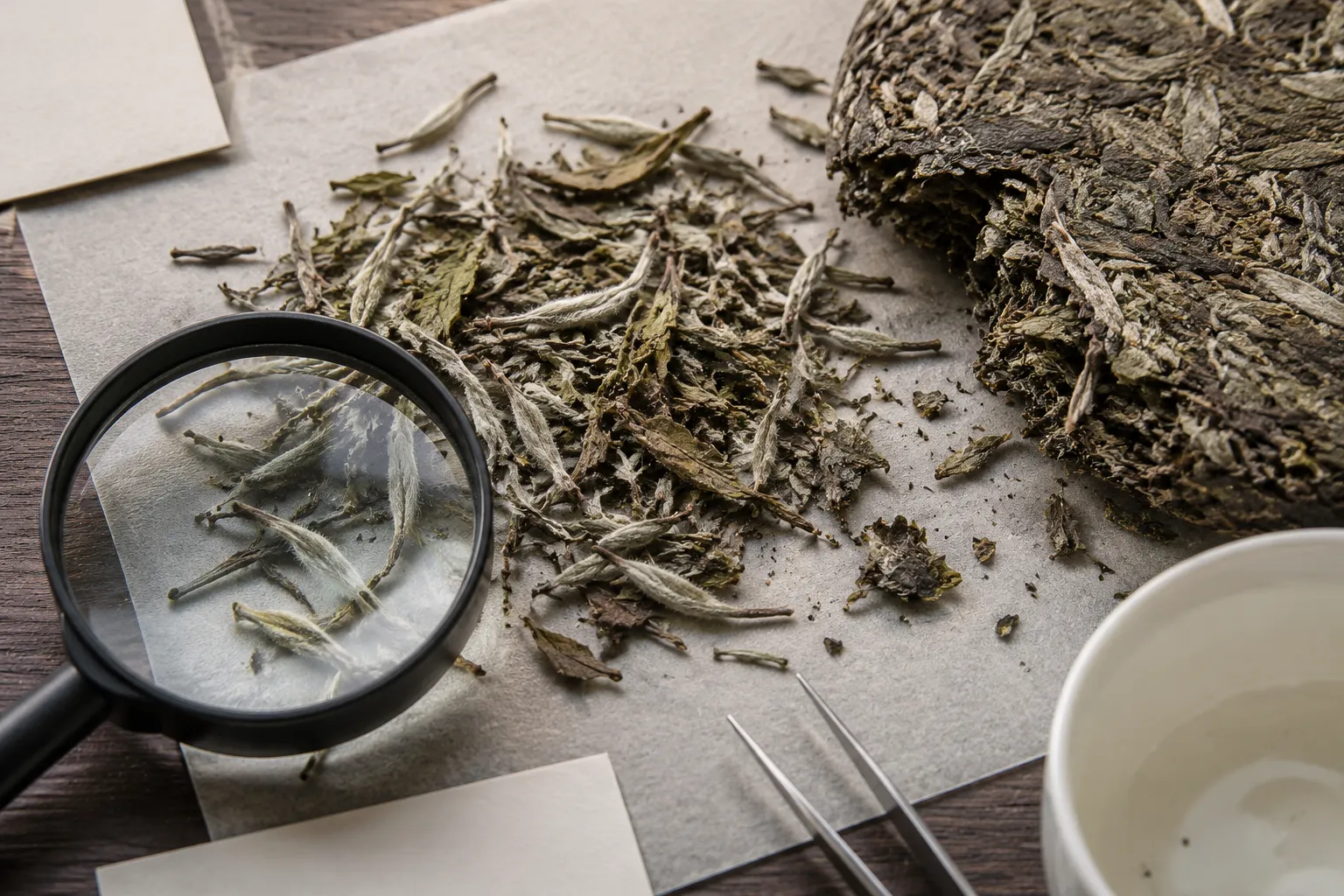
Compression changes how you handle the tea before brewing. You may need to pry off a piece, and broken flakes, whole leaves, and denser chunks may open differently in the cup. One portion may extract quickly; another may need more time. That does not make cake tea better or worse. It only means the format adds another variable before you can judge the leaf itself.
A cake can also be attractive if your goal is slow comparison over time. You can return to the same tea across different vessels, leaf amounts, and steep times. Some buyers like the compact shape for storage as well. But storage is one of the least visible parts of an online purchase. Unless the seller gives meaningful context, you cannot tell from a product page alone how the tea was kept before sale.
So a cake is a reasonable first order when the listing lowers uncertainty. Look for practical information, not just impressive language: cake weight, pressing date if provided, tea category, clear front and side photos, a broken section if available, and a sample option. If those details are missing, a loose sample is the cleaner first step.
Cake-first signals
- Lower commitment: a sample of the same cake or a small mini cake.
- Clear identity: harvest year, tea type, storage notes, and cake weight.
- Visible material: front, side, and broken-section photos where available.
- Known preference: prior enjoyment of fuller-bodied White Peony, Gongmei, or Shoumei styles.
What to inspect before buying either format
Online tea pages often use words that sound reassuring before they become useful. "Old," "rare," "traditional," "premium," "high mountain," "sun-dried," or "collector" may point to a style or market story, but none of those words should carry the decision alone. The stronger listing is the one that gives you observable details.
For loose leaf, inspect the photos for consistency between the close-up leaf shot and the wider product image. Check whether the dry tea looks like the named grade or family. Silver Needle should not be judged with the same expectations as Shoumei, and a leafy White Peony should not be treated as if it were all buds. Look for the amount sold, harvest or batch information if present, and whether the seller explains brewing in a way that matches the tea's structure.
For cake tea, ask more of the page. A compressed product should show the cake face clearly, but a side view or broken section is often more helpful for judging how the material looks beyond the wrapper. If the listing leans heavily on age, storage, or origin wording without showing leaf detail, treat that as an open question rather than a reason to upgrade the order.
The useful test is simple: could you explain what you are buying without repeating the seller's adjectives? If yes, the listing is doing some practical work. If not, the format does not matter much; you are still buying a story more than a tea.
Brewing expectations are different enough to matter
Loose leaf is easier to adjust in the first session. If the liquor tastes thin, you can raise the leaf amount, extend the steep time, or use a smaller vessel. If the cup feels heavy or drying, you can shorten contact time or reduce intensity. The feedback loop is direct because the leaves are already separated.
Cake tea can be less predictable at first because the piece you break off may include compact inner material, loose flakes, stems, or larger leaves. One portion may open quickly; another may need more time. In a gaiwan, that difference can show up as a first steep that feels quiet, followed by a stronger middle infusion once the compressed piece loosens. That is a brewing variable, not a quality verdict.
For beginners comparing loose leaf vs cake white tea, that matters. Loose leaf gives clearer feedback about water temperature, vessel size, and steep time because the format adds fewer handling variables. Cake tea asks you to learn both the leaf and the compression. If you enjoy that process, it can be part of the appeal. If you want the first online order to teach you what a basic white tea style tastes like, loose leaf is usually less distracting.
A practical compromise is to buy a loose version and a small cake sample from the same general tea family, rather than a full cake immediately. That keeps the comparison about format instead of turning it into a broad judgment between unrelated teas.
The common misunderstanding: cake does not automatically mean better aging
The biggest mistake in white tea cake vs loose leaf buying is treating the pressed shape as proof of age, storage quality, or future value. A cake may be presented with aging language, and aged white tea is a real market category, but the format alone does not tell you how the tea has been stored, how it will taste, or whether the age claim should be trusted.
Loose leaf can also be old, carefully stored, poorly stored, fresh, muted, vivid, clean, or disappointing. Cake tea can be the same. Without reliable sourcing and storage context, the buyer should keep the claim modest: the format changes handling, storage shape, and purchase commitment; it does not verify quality by itself.
This is also where wellness language should stay in the background. White tea is often discussed in wellness settings, but a buying choice between loose leaf and cake should not be based on promised body effects. Choose by inspectable listing detail, expected brewing behavior, storage uncertainty, and the amount you are comfortable buying before tasting it.
If a seller makes the cake sound important mainly because of age, rarity, or broad wellness framing, slow down. Ask whether the listing also gives leaf photos, batch context, sample access, and brewing information. If it does not, the impressive claim is still just a claim.
A simple decision rule
Buy loose leaf first when
You are new to the seller, new to the variety, or unsure whether you prefer Silver Needle, White Peony, Gongmei, or Shoumei. It is also the better first step when you want easy measuring, faster brewing feedback, and a smaller order that will not sit around if the taste is not for you.
Consider a cake first when
You have already tasted the same tea as a sample, trust the seller's level of detail, want a larger amount of one style, and are prepared to manage storage carefully after it arrives. A cake is a commitment to repeat sessions, not just a different package.
If both options are available, the most practical route is sample first, cake second. Order the smallest useful amount of loose leaf white tea online, brew it in a familiar vessel, and take notes on leaf appearance, aroma, liquor color, body, and aftertaste. If the same seller later offers a cake from a related batch or style, you will be making the second purchase with a cup-level reference instead of relying only on product-page confidence.
Bottom line
Choose loose leaf first if your goal is to learn the tea, test the seller, and keep the first order flexible. Choose a white tea cake first only when the listing is specific, the amount makes sense, and you are comfortable with storage and brewing variables that are harder to judge from a screen.
The next useful control is not a bigger claim; it is a smaller comparison. Brew a modest loose leaf sample with a measured leaf amount, steady water temperature, and consistent steep time. Once you know what that cup gives you, a cake becomes a more informed purchase rather than a guess shaped by seller language.