
Buyer check
What Is a Fair Price for White Tea Online
A fair price for white tea online is a price you can explain from the listing itself. The tea type, visible leaf grade, weight, harvest or age note, storage context, review quality, seller clarity, and payment route should all make the number feel plausible. If the page shows clear buds and leaves, names the style, gives a specific batch or storage note, and avoids oversized promises, a higher price may be easier to understand. If it gives only luxury language, blurry photos, and a dramatic discount, even a low price deserves caution.
The practical answer is this: judge the price against inspectable evidence, not against the word “premium.”

upward
Start with the broader guide
Use the broader guide first if you need the full scope before this page.
What a Fair Online Price Has to Show
A fair price begins with a clear identity. White tea is a recognized tea type in formal tea terminology, but that only places it in a broad family. It does not establish grade, origin, freshness, age, storage quality, or value. The listing still has to show what is actually being sold.
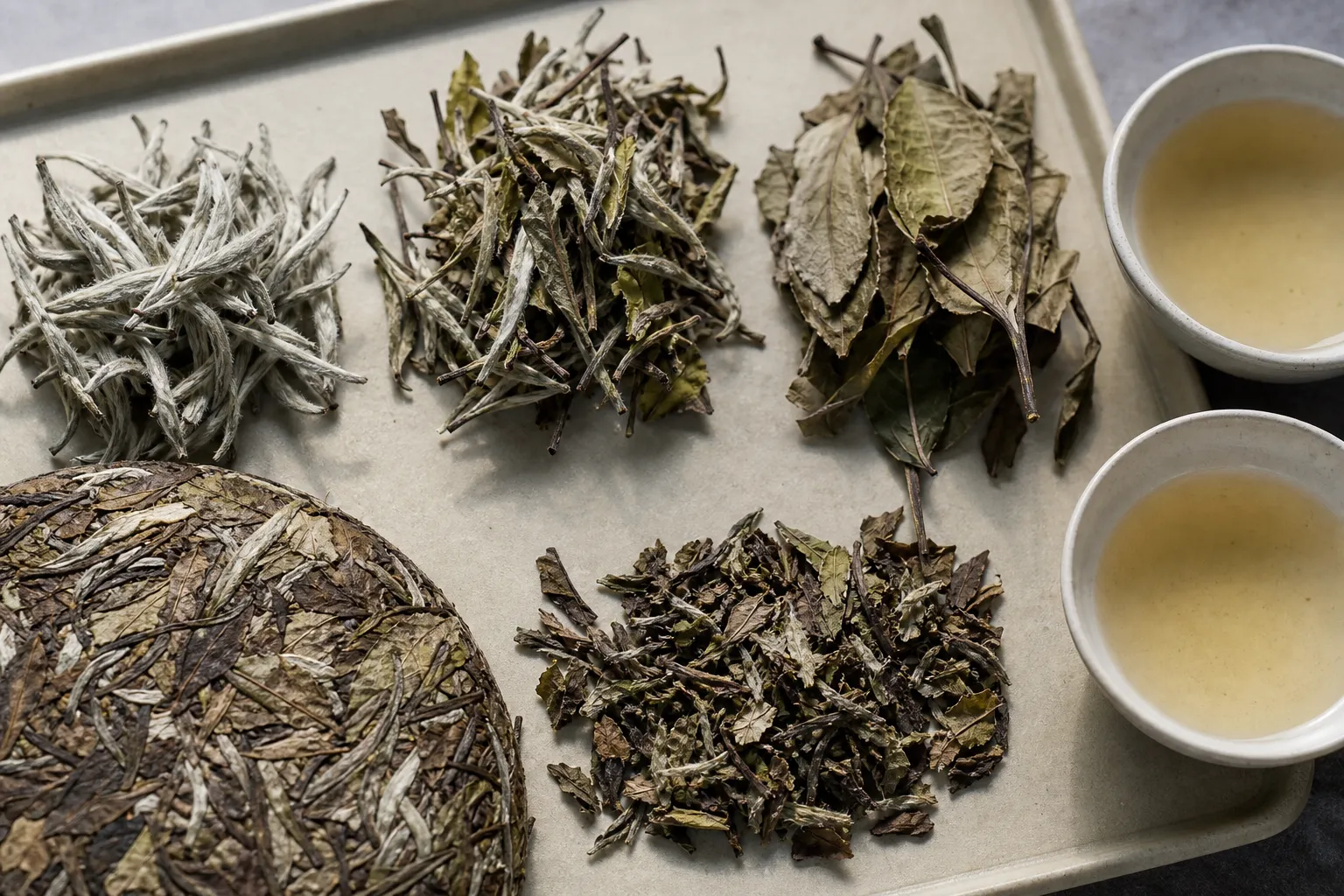
Look first at the form of the tea. Silver Needle should be described around buds. White Peony usually brings bud-and-leaf sets into the decision. Gongmei and Shoumei often appear as larger leaf material or compressed cakes, especially when sellers discuss aging. These names help you compare listings, but they are not price proof by themselves.
Grounded checks for a useful white tea price guide
- What style is named: Silver Needle, White Peony, Gongmei, Shoumei, cake, loose tea, or sample?
- Is the weight clear enough to compare price per gram or per ounce?
- Do the photos show bud shape, leaf size, color variation, stems, and breakage?
- Does the seller explain harvest year, batch context, or storage condition without leaning on prestige language?
- Are reviews specific about aroma, liquor color, brewing, packaging, or repeat steeps?
A price looks more reasonable when the listing gives you enough detail to compare it with similar tea. It becomes harder to judge when the seller asks you to trust a mood, a label, or a story without showing the leaves.
Why White Tea Prices Vary So Much
White tea prices vary because the category covers different materials and selling formats. Bud-heavy teas, leaf-and-bud sets, later-plucked leaves, loose tea, compressed cakes, small samples, gift packaging, and age claims can all sit under the same broad name. That does not mean every price difference is justified. It means the number has to be read beside the tea’s physical and seller context.
Grade language is one reason. A listing built around fine buds may be priced differently from one built around larger leaves and stems. But grade cues should remain visible. If elevated wording sits beside unclear photos, broken material, or inconsistent appearance, the price needs more scrutiny.
Harvest cues can also shape value. A season, year, or limited batch note may help when it is specific and consistent across the page. It is weaker when it appears only as decoration. In online white tea buying, a harvest note should help you understand the tea, not simply make the listing feel more special.
Age claims need particular care. Aged white tea may be sold loose or as a compressed cake, and sellers may describe storage, year, wrapper condition, aroma, and brewing behavior. A date alone does not show good storage or pleasing flavor. If the page says a tea is old but gives no storage notes, no clear photos, and no brewing description, the age claim should not carry the price.
Packaging and service can change the visible number too. Small samples may cost more per gram than larger amounts. Decorative tins, gift boxes, international shipping, and platform fees may explain part of the final cost. Separate the tea value from the selling format before deciding.
Cheap and Expensive Listings Need Different Questions
When the listing is cheap
Cheap white tea listings are not automatically poor choices. A lower price may reflect larger leaf grade, simple packaging, a broader harvest, a sale, or inventory being cleared. The question is whether the listing gives enough basic information to make the purchase understandable.
Pause when a low-price page has missing weight, vague tea type, weak photos, exaggerated wording, or reviews that never mention the drink itself. A very low price paired with very large claims is not a bargain yet; it is a reason to compare more slowly.
When the listing is expensive
Expensive white tea listings are not automatically better. A higher price may reflect bud-heavy material, careful sorting, older inventory, limited quantity, or a seller with more detailed sourcing notes. The listing should still show why the number is higher through leaf appearance, harvest context, storage notes, brewing guidance, and a realistic description of aroma and liquor color.
For a costly tea, look for friction in the details. Does the seller show dry leaves from more than one angle? If it is compressed, is the cake face visible? Is there a brewed liquor photo or a tasting description that sounds specific rather than ornamental? Do reviews mention repeat brewing, aroma changes, packaging condition, or seller communication? None of these settles the matter alone, but together they make the price easier to read.
The weak sign is not simply “high price.” The weak sign is high price plus low information.
Seller Transparency Matters as Much as the Number
White tea seller transparency is the bridge between price and trust. A careful seller does not need to reveal every supply-chain detail, but the page should answer the basic buying questions: what tea, how much, what form, what year if claimed, what storage context if relevant, and what return or support policy applies.
General consumer guidance for online shopping points in the same direction: check the seller, read reviews carefully, understand payment protections, and be skeptical of unsupported claims. For tea, those habits become more specific. You are not only asking whether a package will arrive. You are asking whether the listing gives enough leaf-level information to support the price.
Review quality matters, but not all reviews help. A useful review mentions the tea itself: dry aroma, brewed flavor, leaf condition, packaging, steeping behavior, or whether the product matched the listing. A less useful review only praises fast shipping or says the buyer has not tried it yet. Shipping comments may still matter, but they do not tell you whether the listed price fits the tea.
Photos deserve the same attention. Clear images of buds and leaves can help you compare the description with the material. Blurry images, stock-like pictures, or lifestyle scenes alone make value harder to judge. For aged cakes, photos of the wrapper, cake surface, edges, and broken pieces may help you see whether the seller is showing the tea rather than hiding behind the label.
Payment method is part of the decision too. A slightly cheaper listing may not be worth the uncertainty if the platform, payment path, or seller policy gives you little recourse. The fair price is not only the lowest visible number; it is the number attached to a purchase you can evaluate calmly.
Claims That Should Not Carry the Price Alone
Some phrases sound expensive before they explain anything. “Rare,” “old,” “authentic,” “top grade,” “handmade,” “wild,” “collector,” and “limited” may appear in white tea listings. These words are not useless, but they are claims to inspect. They should point toward observable details, not replace them.
For grade claims, return to the leaf. Are the buds uniform? Are the leaves whole or heavily broken? Does the description match the photos? For harvest claims, look for a year, season, batch note, or a clear explanation of what the seller means. For storage claims, look for notes about dryness, aroma, packaging, and environment, especially with older tea.
Wellness-adjacent language should not set the price. White tea is often discussed in broader wellness contexts, but this page is about buying judgment, not health outcomes. If a seller uses body-effect language to justify a premium, treat it as marketing language rather than evidence of leaf quality or fair value.
A fair price for white tea usually rests on ordinary, inspectable details: material, weight, appearance, harvest context, storage note, seller clarity, and review specificity. The more a listing moves away from those details, the less confidently the price can be judged.
A Quick Fair-Price Check Before You Buy
Before buying white tea online, compare the listing against a small set of practical checks:
- Price per weight: Convert the listing to a comparable unit before judging cheap or expensive.
- Tea identity: Confirm whether the page names a style such as Silver Needle, White Peony, Gongmei, or Shoumei.
- Leaf evidence: Use photos to inspect bud shape, leaf size, color, stems, and breakage.
- Harvest or age detail: Treat year, season, and age language as useful only when supported by context.
- Storage context: For older tea, look for packaging, aroma, dryness, and storage notes rather than date alone.
- Seller behavior: Prefer clear policies, specific descriptions, credible reviews, and payment options with buyer recourse.
If two listings have similar prices, choose the one that explains the tea more clearly. If one listing is much cheaper, ask what information is missing. If one is much more expensive, ask what the seller has shown beyond elevated wording.
The next step is small and concrete: compare the price per gram, then read the listing again with the leaves in view. A fair price becomes easier to recognize when the seller’s words, photos, storage notes, and review details point in the same direction.
Sources
Sources and further reading
Reference links are limited to sources considered suitable for public citation in this page.