
Online buying guide
How to Buy White Tea Online
A dry-leaf photo can look generous and still leave the real question open: what are you actually buying? To buy white tea online with better judgment, read the product page as a set of clues, not as a finished answer. Variety name, harvest wording, origin detail, leaf shape, cake condition, package sealing, seller explanation, and issue policy all matter; none of them settles the tea’s grade, age, storage history, or drinking quality alone.
The useful habit is to separate four things: what the seller states, what the photos show, what you can check after arrival, and what will only become clear in the cup. That keeps the purchase practical rather than driven by romantic naming, price drama, or broad wellness language.
upward
Read the full overview first
Use the broader guide first if you need the full scope before this page.
How to Read a White Tea Online Listing Before You Buy
Start with the tea’s basic identity. Is it sold as Silver Needle, White Peony, Gongmei, Shoumei, loose leaf, or a pressed cake? These names point toward different leaf materials and drinking expectations. Silver Needle is usually bud-focused; White Peony includes buds and leaves; Gongmei and Shoumei often involve larger leaf material and can appear loose or pressed. The category helps you orient yourself, but it does not confirm origin, storage, age, or value from the label alone.
Harvest information gives the next clue. A page that names a year gives you a clearer starting point than one that only says “fresh,” “old,” or “rare.” Season wording can help when it is tied to a specific lot, not scattered as decoration. If the tea is sold as aged, the listing should give enough context to read the claim: year, form, wrapper or cake information, storage notes where available, and whether the tea is meant for current drinking or longer holding.
Origin details are useful when they are specific enough to compare. A country name is broad; a province, county, mountain area, or producer context may tell you more if the seller explains it plainly. Still, white tea origin details are seller-provided information. Check them alongside leaf appearance, price level, storage story, and the shop’s overall transparency.
Grade language deserves the same restraint. Words such as “premium,” “heritage,” “old tree,” or “first grade” can appear without explaining how the tea will brew. Better listings describe the material: bud-only, bud-and-leaf sets, larger mature leaves, loose material, pressed cake, or mixed grade. When buying white tea, a concrete description beats a grand adjective.
A practical reading order
- Identify the form and type: Silver Needle, White Peony, Gongmei, Shoumei, loose leaf, or cake.
- Check harvest year, pressing date, or age wording if those claims affect the price.
- Read origin language as a clue to compare, not as a complete answer.
- Match grade claims against clear photos of buds and leaves.
- Look for packaging and storage notes, especially for older teas.
- Confirm how the seller handles damaged parcels, wrong items, or order problems.
If the listing feels impressive but vague, pause before adding it to the cart.
What Photos Should Show When Buying White Tea Online
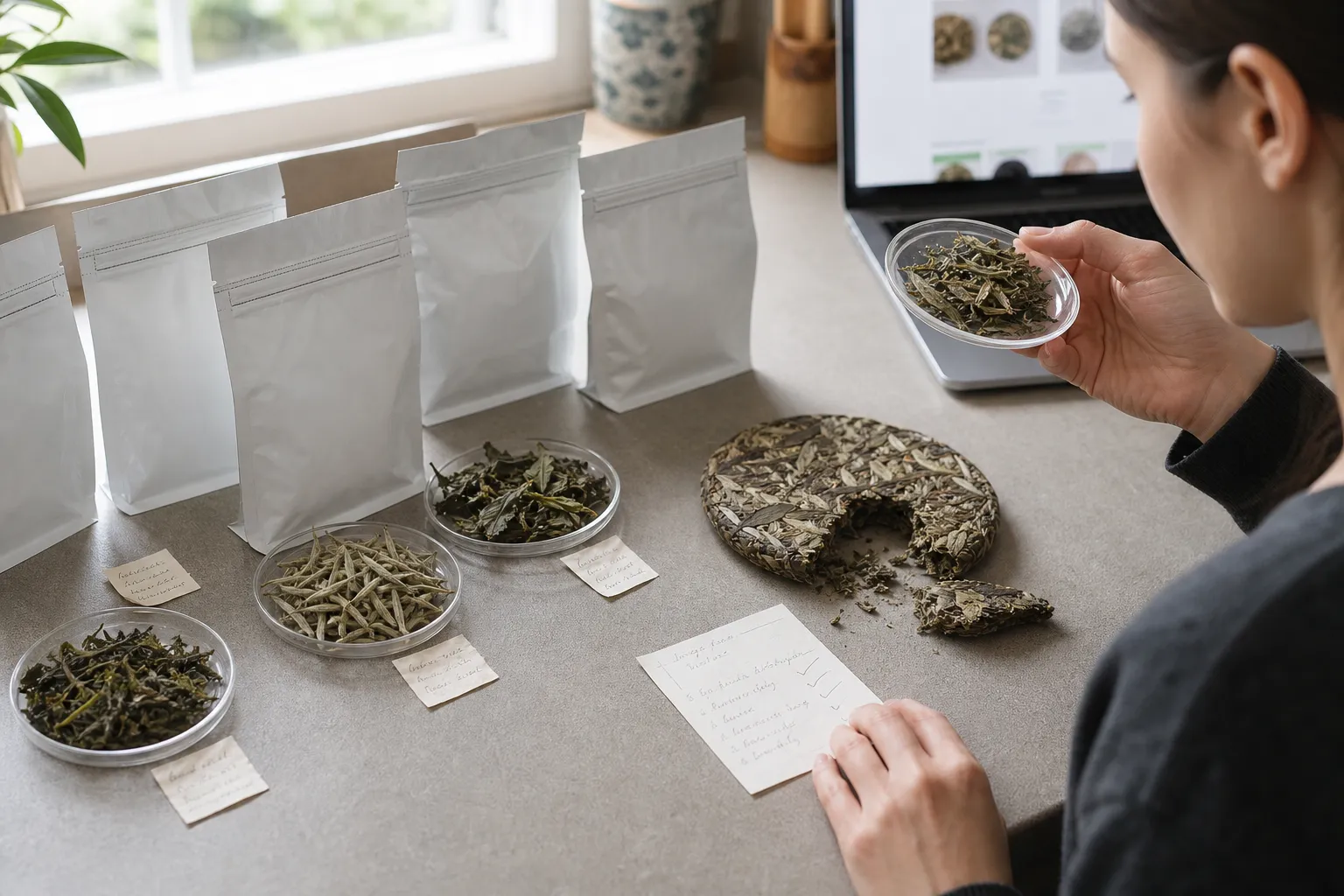
White tea leaf photos are not a tasting session, but they can prevent some poor guesses. Useful images show the dry material clearly, not only a styled teapot, gift box, or distant pile of leaves.
For Silver Needle, the photo should show buds closely enough to judge shape, color range, and whether the material looks mostly whole. For White Peony, you want to see both buds and leaves, so you can compare the leaf sets with the seller’s description. A page that calls the tea bud-rich should not hide the material under heavy styling.
For Gongmei and Shoumei, larger leaves are expected. Do not reject a tea just because it looks less tidy than bud-heavy styles. Instead, ask whether the image matches the claimed material. If a product is sold as a white tea cake, the listing should show the cake face, edge, and ideally the back or a broken section. Those views can reveal compression, visible stems, leaf size, wrapper condition, and whether the surface looks unusually dusty or poorly handled.
Lighting matters. Warm lighting can make leaves look more golden than they are; bright editing can hide dullness or rough handling. A useful product page does not need studio drama. It needs enough visual information for you to compare two teas online without guessing from one distant image.
Photos cannot confirm aroma, prior storage, brewing texture, or whether the exact bag or cake you receive will match the photographed sample. Use images to check consistency with the listing, then keep final judgment for arrival and brewing.
Samples, Loose Leaf, or Cake: What to Buy First
White tea samples are often the best first move when the seller offers them. A small amount lets you test dry aroma, leaf expansion, liquor color, and brewing response before committing to a full bag or cake. Samples matter most when the tea is expensive, aged, or described with strong tasting language you have not learned to interpret yet.
Loose leaf is usually easier for beginners to evaluate. You can see the material more clearly, measure it without breaking a cake, and brew a small session with fewer surprises. Silver Needle and White Peony in loose form are useful for learning how bud-heavy and leaf-and-bud styles differ in body, fragrance, and steeping tolerance.
A white tea cake asks for more patience. Pressed tea may need careful breaking, and the inner material can differ from the surface. Cakes can be appealing for Gongmei and Shoumei, especially when storage and age are part of the interest, but they are harder to judge from a listing alone. If you are new to aged white tea, a sample from the same cake or batch is more useful than buying a full cake from wrapper design and year wording.
Buy less when the seller is new to you, the listing is vague, the tea is costly, or the age claim carries much of the appeal. Buy more only after you have brewed the tea, checked the packaging, and decided the flavor fits your drinking habits. For a first order, variety teaches more than volume: two or three small samples can show more than one large bag chosen from polished description.
What Is a Fair Price for White Tea Online?
A fair white tea price is not a single number. It changes with variety, harvest year, leaf grade, origin detail, processing care, storage context, packaging, seller margin, and shipping. Broad tea supply chains can make price and transparency vary across sellers, so the better question is whether the listing explains why the tea costs what it does.
Silver Needle often costs more than larger-leaf styles because bud-focused material is different from mature leaf material. White Peony can range widely depending on bud ratio, leaf condition, harvest timing, and origin claims. Gongmei and Shoumei may be more approachable when young, while older examples can become expensive when year, storage, or rarity language is attached. None of those factors automatically means the tea will drink better.
Be cautious when price is treated as the main argument. A high price can reflect scarce material, careful sourcing, storage costs, brand positioning, or simple markup. A low price can be an everyday tea, a larger-leaf style, a newer harvest, a sale item, or a sign that the listing needs closer reading. Price becomes meaningful only when compared with photos, harvest clarity, seller detail, and similar teas across several shops.
| Comparison point | What to look for | Why it matters |
|---|---|---|
| Type | Silver Needle, White Peony, Gongmei, Shoumei | Sets realistic leaf and flavor expectations |
| Harvest or age | Year, season, pressing date, storage note | Helps separate fresh tea from age-focused claims |
| Photos | Clear dry-leaf or cake images | Lets you compare visible material |
| Origin wording | Specific, plain, and not overconfident | Helps judge transparency without assuming too much |
| Package details | Sealing, weight, wrapper, storage note | Affects arrival and later storage |
| Seller support | Brewing notes, issue policy, contact clarity | Shows how much uncertainty the seller helps reduce |
If one tea gives you more usable information at a similar price, that may matter more than the louder product name.
What Seller Details Matter When Buying White Tea Online?
Seller details are not only about reputation. They shape what you can understand before purchase and what you can resolve after delivery. A careful product page usually gives clear weight, harvest year, tea form, origin wording, dry-leaf photos, storage notes where relevant, and brewing suggestions that match the tea type.
Brewing notes are not a quality guarantee, but they show how the seller expects the leaves to behave. A starting leaf amount, vessel size, water temperature range, and steeping approach are more useful than a page that only says the tea is smooth or rare. Practical brewing detail helps you decide whether the tea fits your equipment and taste.
Storage information matters most for older teas and cakes. A seller does not need to reveal every private warehouse detail, but the page should avoid pretending age alone explains the cup. Storage condition can influence aroma, dryness, wrapper feel, and the way the tea opens through repeated steeps. After delivery, keep tea dry, away from strong odors, and protected in packaging that closes well. That is practical handling, not a freshness promise.
Return and issue policies deserve attention before checkout. Tea policies vary, and opened returns may not be accepted. Still, a clear path for damaged packaging, wrong items, or shipping problems reduces uncertainty. If contact information, shipping terms, or problem-resolution steps are hard to find, treat that as part of the buying decision.
The strongest seller pages do not erase uncertainty. They show you where the uncertainty is.
How to Judge White Tea Tasting Notes in Online Shops
White tea tasting notes help when they describe recognizable sensory cues: hay, melon, honeyed grain, dried flowers, warm wood, gentle herbs, mineral sweetness, or soft fruit. They become less useful when they promise the same experience for every drinker. Water, vessel, leaf amount, steep time, and storage all change the cup.
Read tasting notes beside the tea type. Silver Needle is often described through bud fragrance, pale liquor, and soft sweetness, though some versions can feel thin if brewed too lightly. White Peony may show more body from the leaf material, with floral, grassy, or lightly fruity notes depending on harvest and processing. Gongmei and Shoumei can lean broader, warmer, or more herbal, especially in aged or pressed forms. These are orientation points, not fixed outcomes.
Fresh or aged white tea is another common fork for beginners. Fresh teas often make it easier to study leaf shape and bright aromatics. Aged teas can be interesting when storage is clean and the seller explains the year and form, but older does not automatically mean better, smoother, rarer, or more valuable. For a first order, one fresh loose tea and one small aged sample may teach more than a full cake bought from dramatic description.
When a listing leans into wellness-adjacent language, keep it secondary. White tea can sit within tea culture and everyday drinking, but an online purchase should be judged by leaf material, listing clarity, storage context, packaging, and how the tea is likely to brew in your cup.
Shipping and Packaging Cues After the Tea Arrives
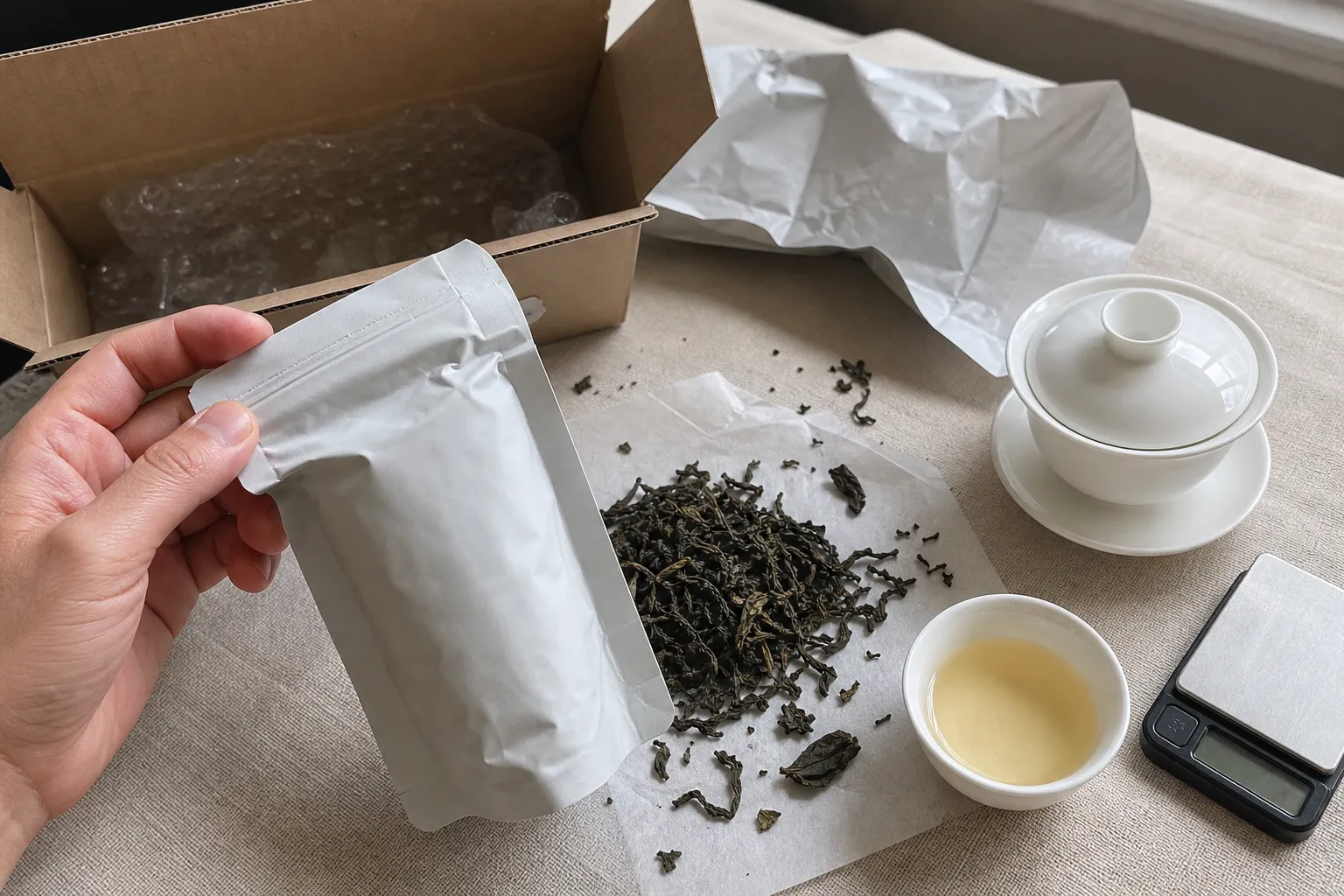
The online decision does not end at checkout. When the package arrives, look before you brew. Is the outer parcel crushed or wet? Is the tea bag sealed? Does a cake wrapper look intact? Do you notice perfume, smoke, damp cardboard, spices, or warehouse-like smells? Tea can absorb surrounding aromas, so packaging condition matters in a practical way.
Open the tea in a clean, neutral space. Judge the dry leaf gently: color, breakage, compression, dust, and aroma all give clues, but one glance should not become a dramatic verdict. Some broken material is normal in shipping, especially for fragile leaves or samples. A stale, musty, or intrusive smell deserves closer attention and should be compared with the seller’s storage description and issue policy.
Brew a small first session rather than using the whole sample. Use a familiar vessel if possible, such as a gaiwan or small teapot, and keep the variables moderate: measured leaf, steady water temperature, and short first steeps. This gives you a cleaner read on whether the tea matches the listing’s general direction. If something seems wrong, take photos of the packaging and leaves before discarding anything.
After arrival, store the tea away from heat, moisture, light, and strong smells. If the original package closes poorly, move the leaves into a clean, odor-free container. For cakes, keep wrapper information with the tea so harvest, seller, and purchase context are not lost.
Common Misconceptions About Buying White Tea Online
A category name tells the whole story
It does not. White tea can be a recognized tea type while a specific online listing still leaves questions about grade, origin, age, and storage.
Age alone makes tea better
Aged white tea depends on material, processing, storage, and current condition. A year printed on a page or wrapper is a clue to investigate, not a final judgment.
Beautiful packaging equals better leaves
Packaging can protect tea and communicate care, but it can also distract from vague sourcing, weak photos, or missing harvest information.
Tasting notes are objective promises
They are better treated as the seller’s sensory map. Your water, vessel, ratio, and steeping rhythm may bring out different parts of the tea.
The cheapest or most expensive listing is automatically smartest
Both can be wrong. A better white tea buying guide is comparison-based: match type, harvest clarity, leaf photos, seller explanation, packaging, shipping terms, and your willingness to accept uncertainty.
Before you buy, choose one control for the next order. Ask for a sample, compare two harvest years, choose loose leaf before a cake, or contact the seller about storage. The better online white tea purchase is not the one with the loudest claim; it is the one where the leaves, listing, packaging, and remaining unknowns are clear enough for your next brew.
Sources
Sources and further reading
Reference links are limited to sources considered suitable for public citation in this page.