
Buying decision
How Much White Tea Should You Buy Online at One Time
Buy less than you think until the tea is familiar. For an unknown tea, start with a sample or small trial amount, often around 10–25g if the shop offers it. If you already know the style and expect to drink it steadily, 50g is a practical learning pouch. If it is a repeat favorite and you have clean storage space, 100g can make sense. Larger orders belong to teas you have brewed more than once and still want to return to.
The useful question is not only how much white tea to buy. It is how many sessions that amount gives you, how quickly you drink, how bulky the leaf is, and whether your storage can protect the aroma after the package is opened.
upward
Read the full overview first
Use the broader guide first if you need the full scope before this page.
A Quick Quantity Map for Online White Tea
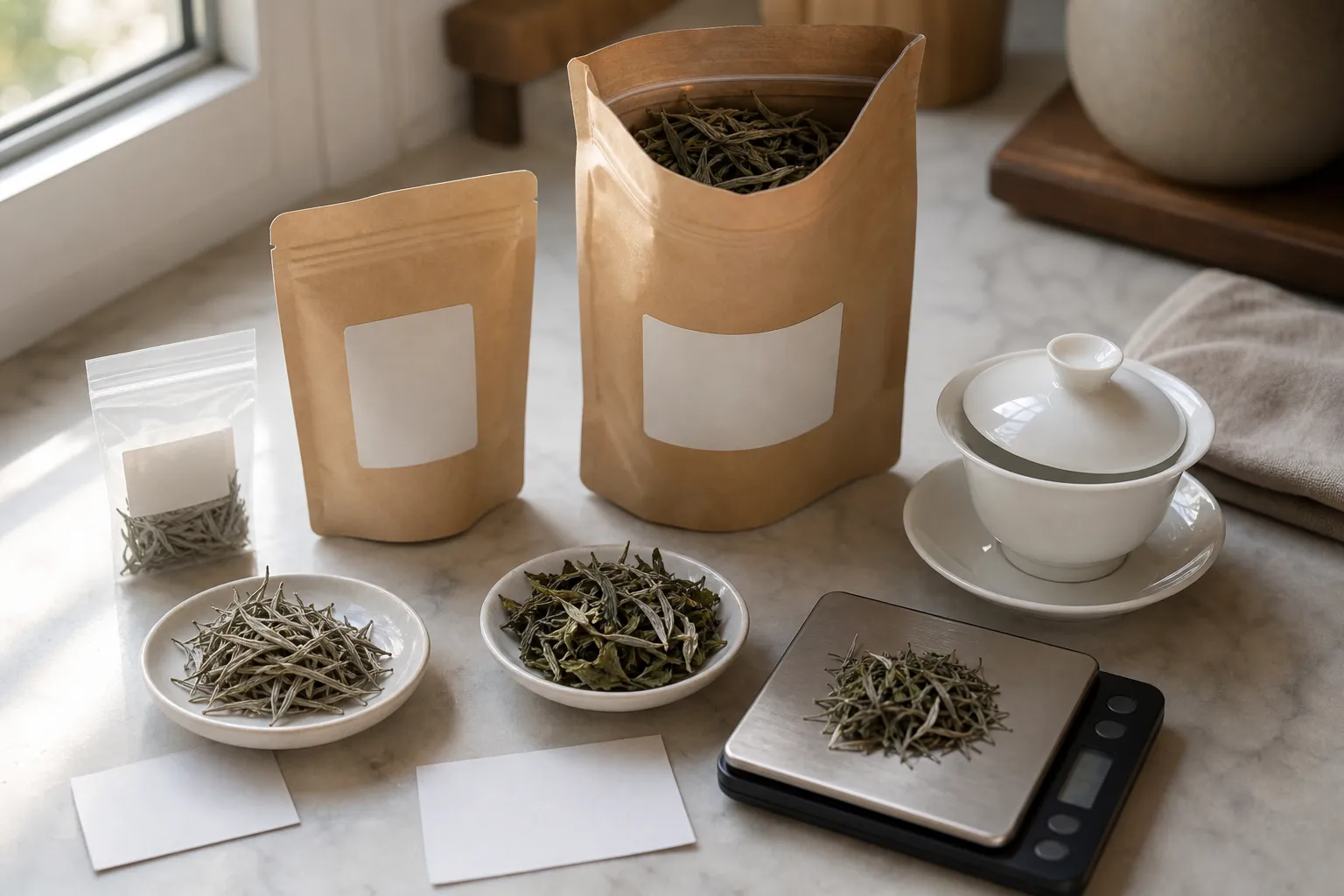
Online listings often make white tea package size look simple: sample, pouch, cake, bulk. In the cup, the decision is less tidy. Silver Needle buds can be light and fluffy. White Peony has both buds and leaves. Gongmei and Shoumei may be loose, larger-leafed, broken, or pressed into cakes. The same gram weight can look very different in your hand.
Use grams first, not teaspoons, when planning an online order. Teaspoons can help at the kettle, but they are a weak buying unit for many white teas because leaf shape changes volume so much. A fluffy Silver Needle may fill a spoon loosely; a pressed Shoumei cake may break into denser flakes. Loose leaf tea grams give you a steadier way to estimate white tea session counts.
First time with a tea, seller, harvest, or cake
10–25g sample
Enough to test aroma, leaf style, and brewing response without a large blind buy.
Comparing several similar teas
15–25g each
Keeps the sampling budget spread across styles.
Learning one tea over a few weeks
50g
Allows repeated cups with different leaf amounts, vessels, or water temperatures.
Known favorite, steady drinking
100g
Works when you already like the tea and can store it well.
Bulk order or multiple cakes
Only after repeat confidence
Better for experienced buyers with clear drinking pace and storage habits.
These numbers are practical ranges, not rules. They help you avoid two common problems: buying so little that one uneven session decides the tea, or buying so much that an unfamiliar pouch sits open longer than your storage habits can support.
Turn Package Size Into Session Count
The most useful way to decide a white tea buying quantity is to ask: how many times will I brew this before the tea loses my attention?
Loose leaf brewing advice often uses rough cup-based ratios, such as a small number of grams per mug or small pot. Those ranges are helpful only as starting points. White tea varies by leaf size, compression, and brewing style, so the better online shopping habit is to think in sessions.
Before you order, estimate with your own brewing style
- If you use about 2–3g per casual cup, a 25g sample may give roughly eight to twelve starting brews, before accounting for resteeping habits.
- If you use 5g in a small gaiwan, that same 25g amount is closer to five sessions.
- If you compare teas side by side, each round may use less leaf, but you may repeat the comparison to avoid judging from one steep.
- If the tea is pressed, broken pieces may dose more densely than a pile of fluffy buds, so a scale is more useful than a spoon.
The point is not to calculate a perfect number. It is to keep the order tied to real cups. If one package will take months to finish and you do not already love the tea, buy smaller.
When Samples Are Better Than a Full-Size Pouch
White tea samples are most useful when the listing leaves you with uncertainty: unfamiliar cultivar language, a harvest note you do not recognize, an age claim you cannot check from experience, or a price jump that makes a full pouch feel risky. A small sample lets you inspect dry leaf shape, smell the warmed leaves, watch the liquor color, and see whether the body suits your brewing style.
For a new buyer, white tea sample vs full size is less about saving money and more about preserving judgment. One tea may suggest hay, melon rind, honey, dried flowers, herbs, wood, or warm grain depending on style and storage. Another may look attractive online but brew thinner than expected in your vessel. A sample gives you room to test before turning label language into confidence.
What a 25g sample can help answer
- Does the dry leaf smell clean and appealing after shipping?
- Do the buds and leaves match the style you expected from the listing photos?
- Does the tea respond better to a lighter cup or a stronger gaiwan session?
- Does the aftertaste invite another brew, or does the tea fade quickly for your taste?
- Do you still want it after two or three separate days, not just one curious session?
If you can only get a tiny sample, brew it in your usual way and avoid making a sweeping judgment from one cup. If the sample is large enough for several sessions, change one variable at a time: leaf amount, water temperature, or steep time. That gives the tea a fairer chance before you decide whether to buy 50g or 100g.
When 50g or 100g Makes More Sense
A 50g pouch is often the useful middle ground. It is not as cautious as a sample, but it gives enough leaf to learn a tea across different moods and meals. This size works best when the tea is not completely blind: you have tried a sample, you already like the variety, or the listing gives clear enough visual and harvest information that the risk feels moderate.
Choose 50g when you want to compare brewing styles. Silver Needle may need more patient steeping to show texture. White Peony can shift from floral and pale to fuller and more herbaceous as you change leaf amount. Gongmei and Shoumei may offer broader body, especially when the leaf is larger or the material has been stored for some time. With 50g, you can make those adjustments without using the whole pouch in two sessions.
A 100g white tea order is better as a repeat-buy amount. It makes sense when you already know you will drink the tea often, the price is comfortable for your budget, and the package will not sit open beside spices, coffee, sunlight, or kitchen steam. For daily drinkers, 100g can disappear steadily. For occasional drinkers, it may become a storage test instead of a pleasure.
Bulk buying is a different decision. It may be reasonable for a known favorite, a shared household, or a tea you intentionally drink often. It is not the best answer for a beginner trying to understand white tea. Large orders magnify every uncertainty: leaf style, storage, seller description, personal taste, and drinking pace.
Storage Capacity Should Limit Larger Orders
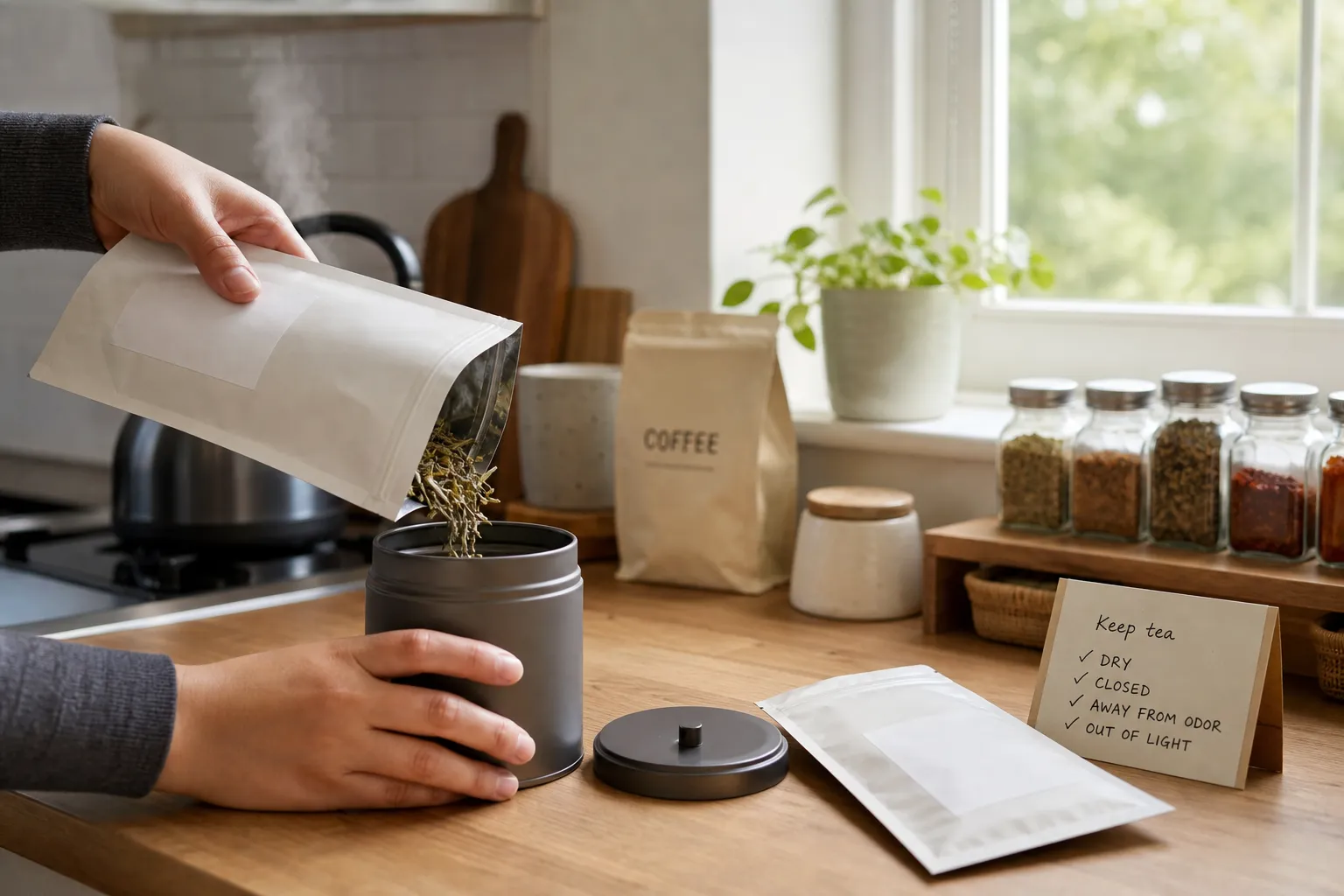
The larger the order, the more storage matters. This does not mean you need a complicated setup. It means the tea should be kept dry, closed, away from strong smells, protected from light, and held at a stable room condition as much as your home allows. White tea can pick up surrounding odors; a beautiful pouch stored near coffee, spices, cleaning products, or damp cupboards may not smell the same later.
Storage capacity is not only physical space. It is also attention. Can you reseal the pouch cleanly after each use? Do you have an opaque tin or inner bag that does not smell like another tea? Will you remember which opened package should be finished first? If not, buying several 100g pouches at once may create more clutter than value.
Aged white tea complicates simple freshness language. Some white teas are intentionally stored and appreciated over time, especially certain pressed Gongmei or Shoumei cakes. That does not mean every older tea is desirable, and it does not mean a package size proves quality. For stored teas, check the seller’s description alongside visible leaf condition, aroma, wrapper context, and your own sample experience if available.
For most online buyers, storage should act as a brake: buy only the amount you can protect and drink with attention.
Common Confusion About White Tea Amounts
Teaspoons
“Teaspoons for white tea” sounds convenient, but the spoon may hold mostly air when the leaf is fluffy, or a dense amount when the tea is broken or compressed. Use a scale when you can. If you do not have one, use spoon measurements as brewing notes, not buying math.
Cup-count claims
A seller may describe a sample by cups, servings, or sessions, but those words depend on vessel size, grams per session, infusion style, and how many times you resteep. Use those claims as rough orientation, not as a promise that your own kettle will match the listing.
Value
A bigger pouch may look cheaper per gram, but value only matters if you enjoy the tea and finish it in good condition. For an unfamiliar Silver Needle, White Peony, Gongmei, or Shoumei, a smaller order can be the wiser purchase even if the per-gram price is higher.
One-sample judgment
A thin first cup may come from too little leaf, water that was not hot enough for that style, or a steep time that did not suit the material. If the sample allows, adjust one variable before rejecting the tea. If it still does not suit you, the small size did its job.
A Practical Buying Rule
For a new online white tea, start with samples or the smallest sensible pouch. Move to 50g when you want to learn the tea and expect to drink it over several weeks. Move to 100g only for a tea you already like, brew regularly, and can store well. Keep bulk for repeat favorites, not discovery.
If you are unsure, count sessions rather than cups: choose your usual grams per session, divide the package weight by that number, and ask whether that many sessions feels realistic. Then let the next purchase be guided by the leaf in your cup: aroma, liquor color, body, aftertaste, and how well the open package holds its character in your storage.