
Online buying check
How Shipping and Packaging Affect White Tea Bought Online
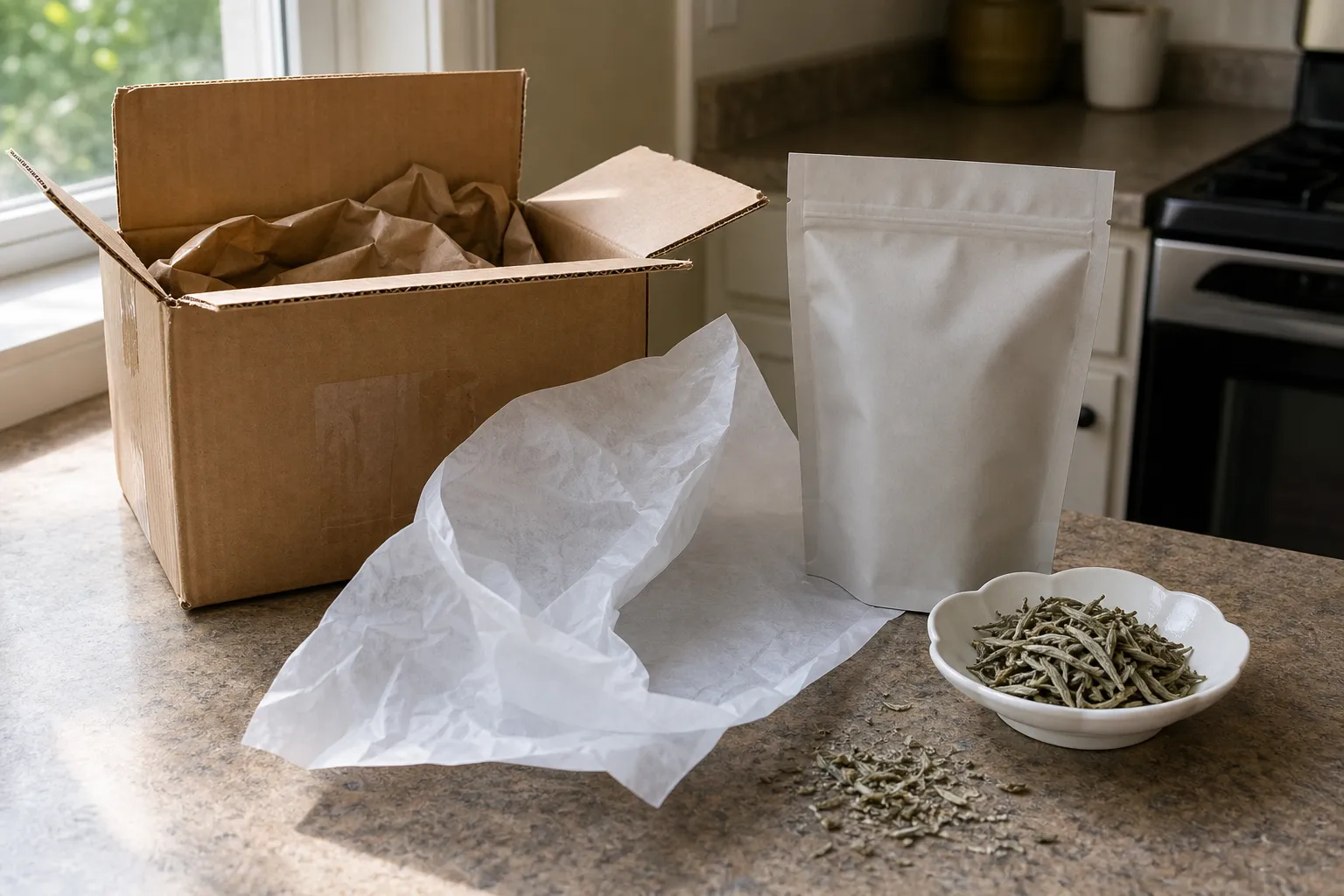
Open a parcel of Silver Needle, White Peony, Gongmei, or Shoumei, and the first clues are not abstract. They are the outer box, the inner wrap, the seal, the dry-leaf aroma, and the amount of broken material at the bottom of the bag.
White tea shipping and packaging can affect how confidently you judge an online order. Poor sealing, pressure, damp-feeling paper, strong outside odors, or vague seller handling can make the tea harder to read. Still, packaging does not prove freshness, origin, age, or careful storage. Use it as one layer of evidence beside leaf appearance, aroma, seller information, and the first brew.
upward
Read the full overview first
Use the broader guide first if you need the full scope before this page.
What Shipping And Packaging Can Change
White tea is often bought for quiet detail: soft hay, dried flowers, honeyed edges, melon skin, herbs, or the deeper dried-fruit notes that may appear in some aged cakes. When buying online, the parcel sits between the buyer and those details. A careful shipment may help the tea arrive closer to the seller’s description; a rough one can make the first inspection less clear.
The better question is not “Does this look premium?” but “Can I inspect the tea clearly?” An intact pouch, clean inner wrap, and dry-feeling storage bag give you more to work with than a crushed carton, torn wrapping, loose dust, or a scent that does not belong near tea. These signs do not settle every question, but they tell you where to look next.
Loose buds
For loose Silver Needle, pressure matters because whole buds are part of the buying expectation. A few broken tips after transit are not unusual, but heavy powder or flattened buds may affect both appearance and brewing.
Leaf-and-bud sets
White Peony has larger leaf-and-bud sets, so rough handling can make the dry leaf look more fragmented.
Cakes and sturdy styles
Gongmei and Shoumei, especially in cakes, may look sturdier, yet cracked edges, loose flakes, or a distorted cake still shape how you read the shipping condition.
Aroma is another early check. If the dry leaves smell mainly of paper, plastic, perfume, smoke, damp cardboard, or warehouse air, slow down before judging the tea itself. Smell the shipping carton, then the retail pouch, then the leaves after a short rest in a neutral space. That sequence keeps white tea aroma during shipping from becoming a rushed conclusion.
Inspect The Parcel Before Judging The Tea
Start with the outside, but do not stop there. A dented shipping box may be annoying without harming the inner tea; a neat box may still hide weak sealing. The more expensive the order, the more useful it is to inspect each layer before brewing.
Look for these arrival clues
- Outer condition: crushed corners, punctures, torn tape, or signs of rough handling.
- Inner separation: padding, a snug box, or another layer between the tea and direct pressure.
- Seal quality: a pouch, wrapper, or cake enclosure that is fully closed.
- Dryness feel: no damp paper, softened cardboard, or sticky residue.
- Leaf condition: normal small fragments versus an unusual amount of dust and flakes.
- Odor check: scent from the leaves rather than from packaging, storage, or nearby goods.
These observations help when you want to buy white tea online safely in a practical sense. They do not promise a flawless order; they reduce guesswork. If the seal looks compromised, take photos before opening every layer. If the aroma seems strange, note whether it comes from the carton, pouch, or leaves. If the dry material is heavily broken, compare it with the product photo and the tea style before deciding what it means.
White tea package sealing deserves attention because it shapes buyer confidence after delivery. A resealable pouch, heat-sealed inner bag, paper-wrapped cake, or tin can each be acceptable depending on how the seller presents the tea. The useful question is whether the closure is intact and whether the leaves are protected from obvious outside contact. A beautiful label does not answer that by itself.
Freshness Perception Is Not Proof
Freshness in white tea is partly sensory and partly contextual. A recent loose White Peony may smell lively and clean, while an older Shoumei cake may lean toward dried leaves, warm wood, herbs, or fruit-like depth. Because styles age and present differently, white tea freshness perception should not be reduced to “strong aroma means fresh” or “soft aroma means stale.”
Shipping can add uncertainty. If a parcel arrives warm, crushed, or carrying an outside smell, the first opening may feel less convincing. Without reliable seller records or a controlled comparison, though, you usually cannot prove that transit alone changed the tea. The careful judgment is smaller: the delivery condition makes the tea easier or harder to assess.
Brewing gives the next layer of evidence. Use a familiar vessel, such as a gaiwan or small teapot, and keep the first session simple. Note the dry leaf, warmed-leaf aroma, liquor color, mouthfeel, and aftertaste. If the dry aroma seems muted but the warmed leaf opens cleanly, the tea may still deserve a few cups of attention. If the liquor tastes flat, dusty, sour, or strongly of a non-tea odor, keep that observation tied to the cup rather than to a single theory about shipping.
Leaf breakage can also change extraction. Smaller pieces often infuse faster than whole buds and larger leaves, so a broken shipment may taste stronger, rougher, or cloudier at the same steep time. That does not automatically make the tea poor. It means your first brew should be adjusted: shorter steep, slightly less leaf, or a quick rinse if that fits your usual practice.
Questions To Ask Before Ordering
Good online buying starts before the parcel moves. Packaging claims can sound reassuring, but the useful details are usually plain: how the tea is sealed, whether loose leaf and cakes are packed differently, how fragile orders are protected, and whether the seller explains storage context without turning it into a certainty claim.
Before ordering, look for or ask
- How is the tea packed inside the shipping box?
- Is loose tea sealed in an inner bag, pouch, tin, or other container?
- Are cakes wrapped only in paper, or placed inside another protective layer?
- Does the seller describe storage in concrete terms rather than broad praise?
- Can the seller provide harvest, pressing, or batch information where relevant?
- What happens if the parcel arrives opened, crushed, damp-feeling, or carrying a strong outside odor?
These questions do not prove seller handling. They make the transaction clearer. A seller who answers in practical terms gives you more to compare when the parcel arrives. A seller who relies only on grand quality language leaves more uncertainty on the buyer’s side.
For high-value tea, especially older cakes or scarce lots, a sample or smaller order is often the more grounded first step. If the sample arrives cleanly sealed, smells appropriate to its style, and brews in line with the description, a larger purchase is easier to consider. If the sample arrives with poor wrapping or confusing aroma, you learn that before committing more.
Common Confusion About Online Packaging
Elegant packaging is not proof
One common mistake is assuming expensive packaging means better tea. A rigid box, elegant pouch, or heavy tin may protect presentation, but it does not confirm origin, storage history, processing care, or cup quality. The tea still needs to be judged by dry leaf, warmed aroma, liquor color, texture, and seller transparency.
Plain packaging can still work
The opposite mistake is dismissing plain packaging too quickly. Simple wrapping can be adequate if the seal is intact, the tea is separated from pressure and odors, and the order has been packed with care. A plain pouch with a clear label and good closure may give a more useful buying signal than a decorative box with vague information.
Another misunderstanding is treating every broken leaf as shipping damage. White tea styles vary. Loose Shoumei may naturally include larger, irregular leaves and stems. A cake may shed flakes from its edge. A bag of buds may contain some small downy fragments. The question is proportion and context: does the breakage fit the style, or does the parcel look crushed enough to explain unusual powder?
Heat, humidity, and odor absorption are reasonable concerns, especially when a package feels damp, smells foreign, or arrives after difficult transit. But the buyer usually cannot reconstruct the full route. Describe what you can observe. Keep the theory smaller than the leaf in front of you.
What Packaging Cannot Tell You
Packaging cannot confirm that a tea is fresh, aged as described, from a claimed place, or handled perfectly before sale. It can only add or reduce confidence. A clean seal and careful padding support a better first impression; they do not replace tasting, comparison, and seller context.
This matters most when a product page uses strong language around rarity, age, mountain origin, or collector value. For white tea packaging online, those claims need to be checked against observable cues: bud shape, leaf color, compression style, wrapper condition, dry aroma, infusion behavior, and the seller’s willingness to answer ordinary questions. If the information remains vague, packaging cannot solve it.
The available reference set for this page is limited, so specific claims about packaging materials, transit temperature, humidity exposure, odor barriers, breakage rates, or seller reliability should stay cautious. The stronger use of this topic is practical inspection: what arrived, how it smells, how it brews, and what you can ask next time.
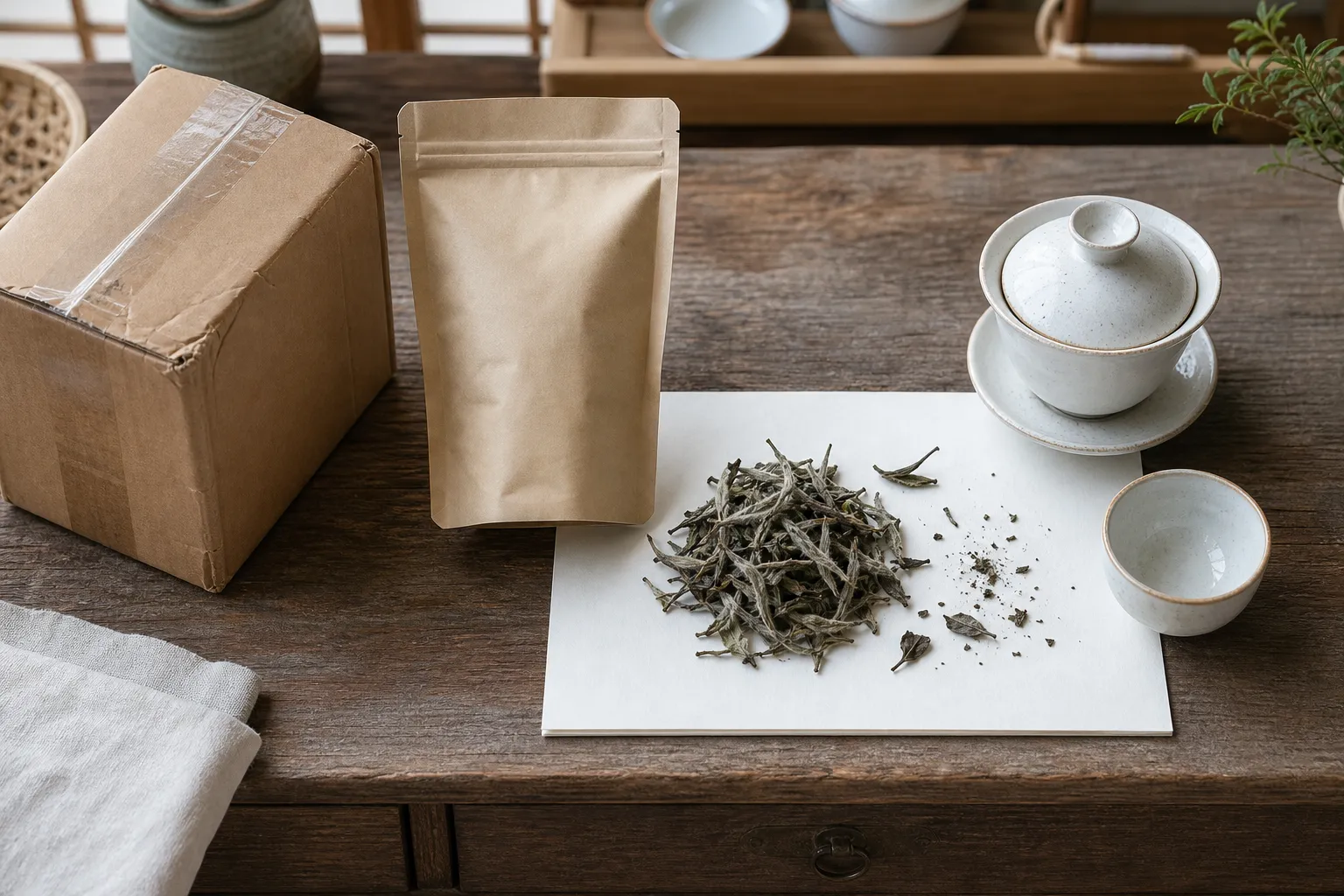
A Simple Arrival Routine
- Open in a neutral space. Open the parcel away from cooking smells, candles, cleaning products, or scented rooms.
- Document visible damage. Photograph the outer box if it is damaged. Check the inner layers before tearing everything apart.
- Smell each layer separately. Smell each layer separately, then let the tea sit briefly in a neutral space if the outer carton has a strong scent.
- Use a method you already know. If you usually test White Peony in a gaiwan, use that. If you compare aged Shoumei cakes with short steeps, keep the same rhythm.
- Keep variables steady. Do not change every variable at once; otherwise, you will not know whether the issue is the tea, the broken leaf, the water temperature, the vessel, or your own brewing choice.
After the first session, make the next step narrow. If the tea looks intact, smells clean, and brews close to expectation, store it well and continue tasting over a few sessions. If the seal was open, the leaves smell strongly of something unrelated, or the parcel shows serious compression damage, document the condition and contact the seller with specific details. Your strongest tool is not a packaging claim; it is careful observation from the box to the cup.