
White tea tasting note
Is Hay or Dried Grass Flavor Normal in White Tea
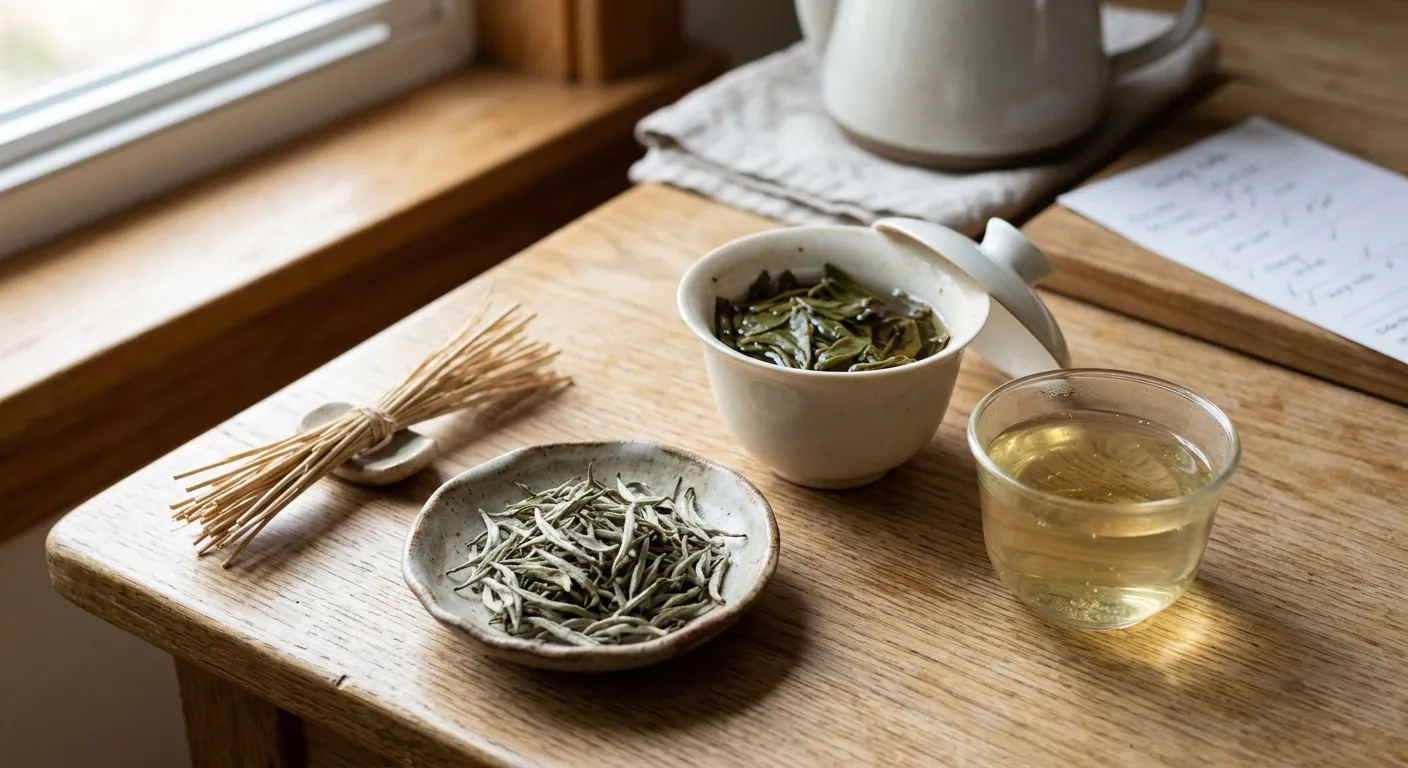
Yes. A hay, straw, meadow, or dried grass note can be normal in white tea, especially when it shows up as a soft aroma rather than a harsh taste. The better question is how that note behaves in the cup.
A clean hay flavor in white tea may sit beside light sweetness, soft grain, pale florals, or gentle leafiness. A more troubling version usually comes with stale, musty, sour, damp, chemical, or visibly abnormal cues. The aroma word alone is not enough to judge the tea.
Treat a white tea hay note as a clue, not a verdict. It can be shaped by leaf style, processing, brewing heat, storage exposure, or age. By itself, it does not prove quality, origin, freshness, age, authenticity, or a defect.
upward
Read the full overview first
Use the broader guide first if you need the full scope before this page.
Start with what you can actually smell and taste
When dried grass flavor in white tea surprises you, break the tasting into four checks: dry leaf, warmed leaf, wet leaf, and liquor.
Dry leaf
Smell the dry leaves first. A clean hay aroma may feel pale, dry, and airy, like straw or sun-dried meadow grass. That is different from leaves that smell flat, damp, sour, chemical, or stale before brewing. Dry-leaf aroma is only a starting point, but it gives you something to compare.
Warmed leaf
Next, warm the vessel and smell the leaf again before adding brewing water. Heat often makes quiet aromas easier to notice. If the hay note becomes sweeter, grainier, or more floral, it may be part of the tea’s normal range. If it turns sharp, cellar-like, or unpleasant, keep looking.
Wet leaf
After the first infusion, smell the wet leaf. A clean grassy white tea aroma may remind you of dried stems, warm straw, or sun-dried herbs. A concerning aroma is usually less about “grass” and more about dampness, sourness, mustiness, or leaves that look clearly abnormal.
Liquor
Then taste the liquor. Normal white tea flavor is judged by balance, not one note. A cup can have hay, dried grass, or straw in the aroma and still drink well if it also has sweetness, clarity, soft body, or a clean finish. If the liquor tastes thin, bitter, raspy, murky, or persistently stale, the hay note may be part of a broader issue.
When a hay note is probably just part of the tea
A hay-like note is easier to accept when it stays gentle and integrated. It is more likely to be a normal white tea aroma note when:
- the dry leaf smells clean rather than damp or sour;
- the liquor is clear in aroma and taste;
- the grassiness softens after the first steep;
- sweetness, florals, soft grain, or light fruit appear alongside it;
- the finish is clean rather than unpleasantly mouth-coating;
- small brewing changes make the grassy edge less dominant.
White tea is often quiet and plant-forward. Tasting language for white tea can include hay, straw, meadow, dried leaves, fresh-cut grass, cucumber, melon, wildflower, honey, or soft grain. These are useful descriptors, not proof of what the tea is or how it was made.
Leaf style also matters. Bud-heavy teas may feel softer, downy, sweet, or delicate. Leafier styles may show more stem, herb, plant, or dried-grass impressions. That does not automatically make one better than the other. It only means the white tea leaf style changes what you are likely to notice.
A mild dried grass white tea impression may also stand out when the tea is young, lightly aromatic, or brewed in a way that highlights green plant notes. In that case, the practical test is simple: does the note improve with a gentler brew, or does it keep pointing toward staleness, poor storage, or a style you do not enjoy?
Brewing choices can make grassiness louder
Before deciding that a tea is low grade or stale, adjust the brew. White tea brewing heat, steep time, and leaf amount can all change how hay or dried grass shows up.
If the cup tastes sharply grassy, try slightly cooler water. Very hot water can push some teas toward bitterness, astringency, or cooked vegetal notes. This does not mean hot water is always wrong for white tea; many white teas handle heat well. But when the specific problem is a grassy edge, temperature is one of the first variables worth testing.
Steep time is the next variable. A long first infusion can make delicate white tea taste heavy, rough, or overly leafy. If the hay note feels dry and abrasive, shorten the steep and see whether sweetness returns.
Leaf amount matters too. Too little leaf can make a thin cup where one aroma sticks out because there is not enough body around it. Too much leaf can make the same tea feel compressed, bitter, or grassy. If you are unsure, brew two small cups side by side: one lighter, one stronger.
Vessel choice can help as well. A small gaiwan or small teapot makes short, adjustable infusions easier. A large mug steep can blur the tea into one long extraction, which may exaggerate dryness if the leaves sit too long.
A simple troubleshooting sequence
- Brew once as usual and note the dry leaf, wet leaf, liquor aroma, taste, and finish.
- Brew again with slightly cooler water and a shorter steep.
- If the cup becomes sweeter or cleaner, brewing was probably amplifying the hay note.
- If the unpleasant side remains across careful brews, look at storage, age, and leaf condition.
This is not a laboratory test. It is a cup-level way to avoid overreading one infusion.
When hay or dried grass deserves closer attention
A hay note becomes more concerning when it arrives with other warning signs. The note itself is not enough; the surrounding evidence matters.
Pause if the tea smells musty, damp-basement-like, sour, chemical, or strongly stale. Also inspect the leaves. If you see visible abnormal growth, strange discoloration, excessive dustiness beyond normal broken material, or anything that makes you uncomfortable, do not force yourself to drink it because “aged tea” or “rustic flavor” sounds plausible.
White tea storage aroma can be subtle. Poor storage may leave dullness, paperiness, cabinet smell, or stale air in the cup. But hay does not automatically mean bad storage. Clean straw and stale white tea aroma are different experiences. Clean straw feels dry, light, and integrated. Stale aroma feels flat, tired, or dusty, often with liquor that lacks sweetness and lift.
Low grade white tea may show rougher or less integrated plant notes, but hay is not proof of low quality either. Some inexpensive teas are simple and pleasant. Some expensive teas can be poorly stored or badly brewed. Price and poetic tasting language do not replace tasting the cup.
The practical question is: does the grassiness feel clean, lively, and balanced, or does it feel dull, damp, sour, or abrasive?
If a seller uses words like hay, straw, meadow, or dried grass, read them as flavor vocabulary rather than a quality guarantee. Harvest information, storage context, clear photos, and a sensible leaf-style description can help, but the aroma word alone should not carry the decision.
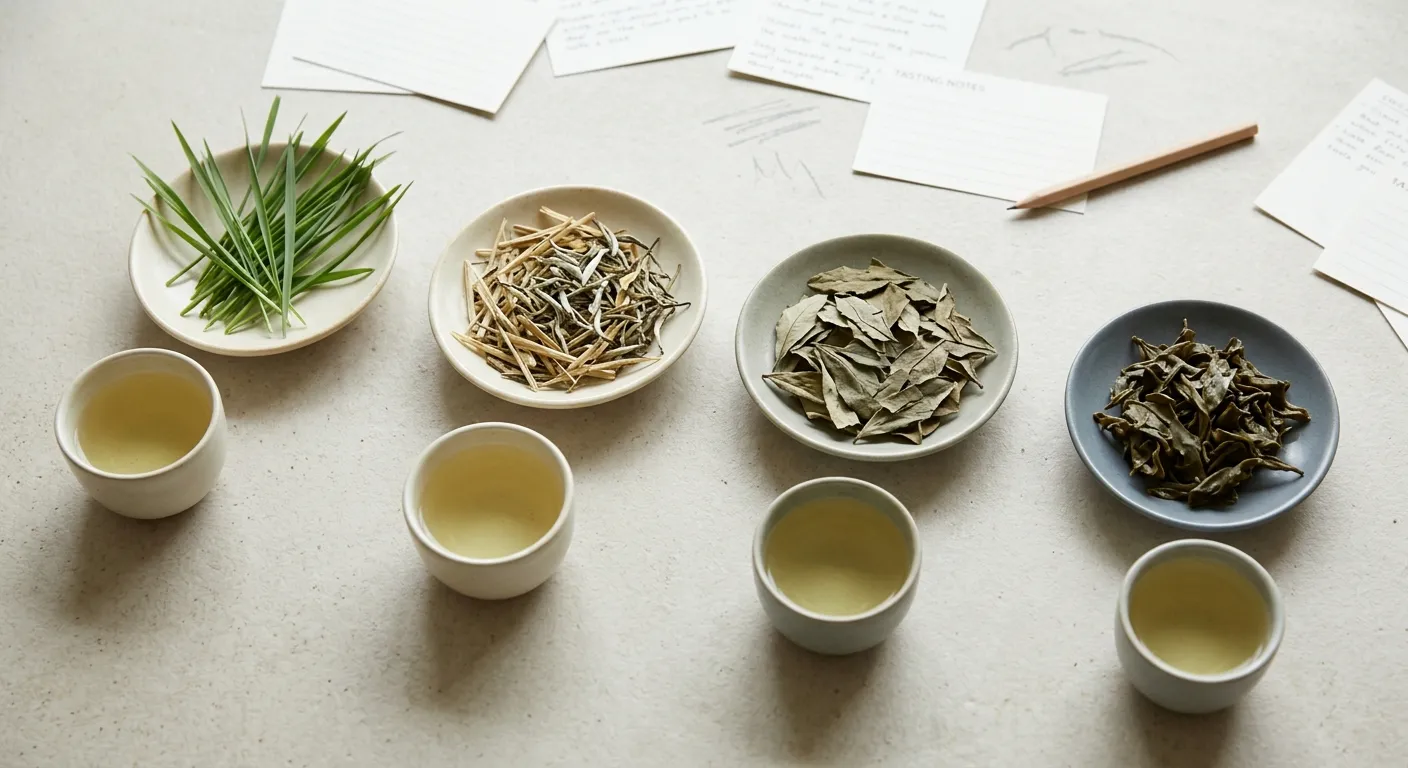
Fresh-cut grass, dried hay, and stale leaf are different
Many white tea tasting questions become easier once the vocabulary is separated.
Fresh-cut grass
Fresh-cut grass usually suggests a greener, sharper, more vivid plant aroma. In white tea, it may feel refreshing when light and harsh when strong. If it comes with bitterness or astringency, try a gentler brew before judging the tea.
Dried grass or hay
Dried grass or hay usually feels warmer, drier, and softer. It can sit near straw, meadow, dry herbs, or pale grain. This is often what readers mean when they ask whether the flavor is normal.
Stale leaf
Stale leaf is different. Staleness tends to feel flat, papery, dusty, or lifeless. It may lack sweetness and clarity. A stale white tea aroma can include dry plant notes, but the overall impression is dull rather than pleasantly meadow-like.
Musty or damp aroma
Musty or damp aroma is different again. If the smell reminds you of wet cardboard, basement air, or sour storage, do not soften the description into “aged hay” just because the tea is white tea. That may be a reason to stop, compare with another sample, or discard the tea according to your comfort level.
This is why white tea sensory framing matters. A single word can hide several experiences. Two drinkers may both say “grassy” while meaning very different things: one means clean spring leaf, the other means stale cupboard.
What the hay note cannot tell you by itself
A hay or dried grass note cannot prove that a white tea is authentic, old, high quality, low grade, properly stored, or poorly stored. It cannot identify cultivar on its own. It cannot confirm processing style by itself. It cannot tell you whether the tea is worth a premium price.
White tea cultivar flavor, processing choices, harvest material, leaf condition, storage, age, and brewing all interact in the cup. A careful conclusion stays modest: hay and dried grass can be normal sensory descriptors in white tea, but they need to be checked beside appearance, aroma, liquor quality, brewing response, and seller context.
Use the note as a prompt, not a final answer.
If the cup is clean, lightly sweet, and balanced, the hay note may simply be part of that tea’s character. If the same note arrives with sourness, dampness, chemical odor, visible abnormality, or persistent stale flatness, take it more seriously. If it disappears or softens after lowering temperature or shortening the steep, brewing was likely amplifying it.
Quick decision guide
Clean straw, meadow, or dried grass with sweetness
Normal white tea flavor range
Keep brewing and note how later steeps change
Sharp fresh-cut grass with bitterness
Brewing may be too aggressive
Lower temperature or shorten steep time
Thin liquor with one dry grassy note
Leaf amount or extraction may be off
Adjust leaf ratio and compare
Flat, papery, dusty grassiness
Possible stale character
Compare with a fresher or better-stored sample
Damp, musty, sour, or mold-like smell
Possible storage concern
Inspect the leaf and avoid drinking if uncomfortable
Seller uses “hay” as premium language
Marketing vocabulary, not proof
Check photos, storage details, harvest information, and cup quality
The most useful answer often comes after one controlled rebrew. If the tea becomes clearer, sweeter, or more balanced, the hay note was probably not a problem. If the unpleasant side remains no matter how carefully you brew, the issue is less likely to be ordinary white tea aroma and more likely to involve storage, age, leaf quality, or personal preference.
A hay note in white tea is normal when it is clean, balanced, and integrated. It deserves closer attention only when the rest of the cup gives you reasons to doubt it.