
Brewing adjustment
How to Brew White Tea for a Gentler Caffeine Cup
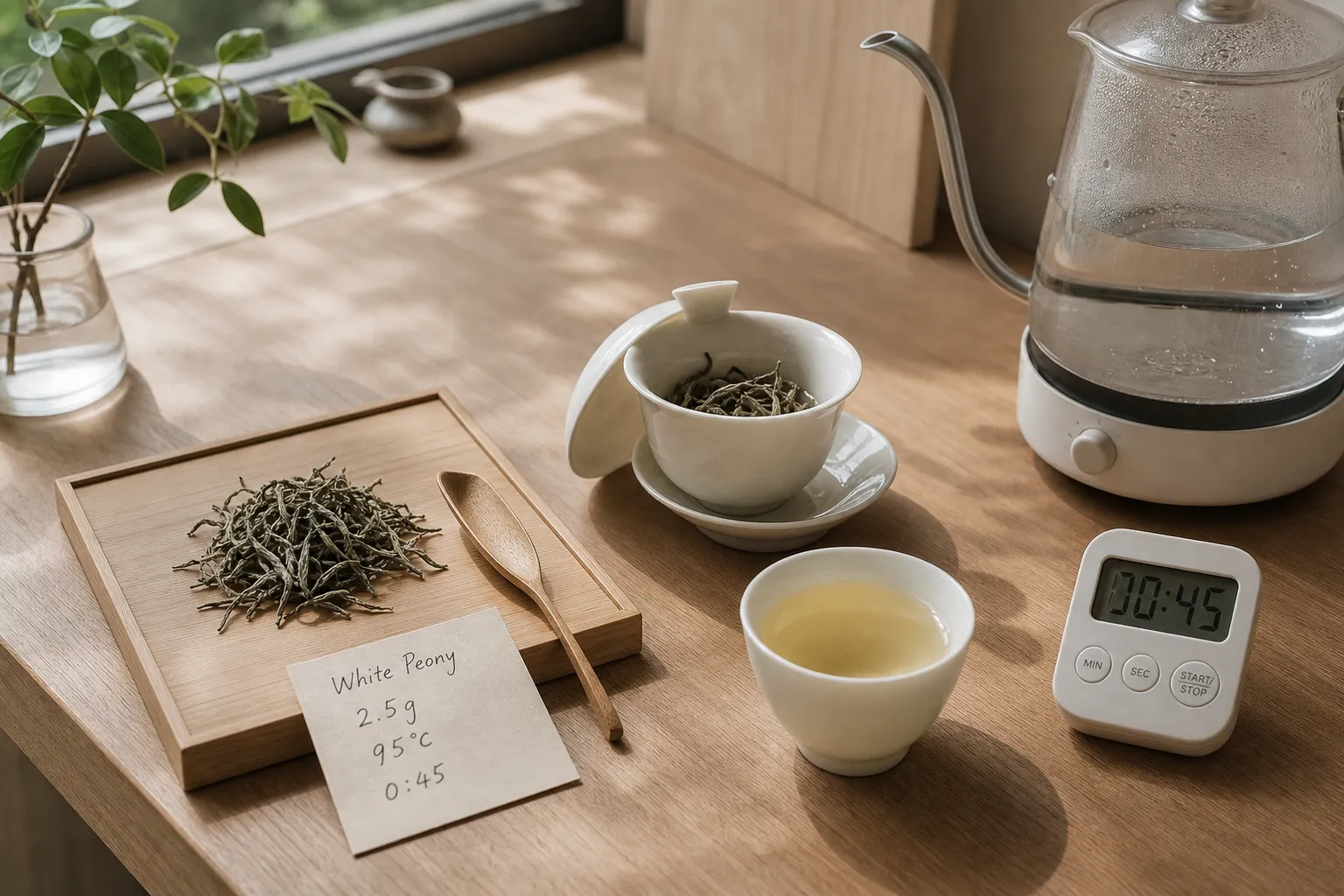
Use less leaf, moderate heat, shorter steeps, and smaller servings when you want white tea to feel gentler. That is the practical heart of low caffeine white tea brewing: adjust the cup variables you can control instead of treating the brew as a measured caffeine-removal method.
A lighter cup may feel easier because it has less concentration, less dryness, a thinner body, or simply a smaller total serving. It is still caffeinated tea, and caffeine-sensitive drinkers should not assume every white tea will feel the same.
A good first move is simple: use a little less leaf, keep the water below a hard boil, steep briefly, pour fully, taste, and stop before the cup becomes heavy, bitter, or too stimulating for you.
upward
Read the full overview first
Use the broader guide first if you need the full scope before this page.
Start with the Variables You Can Control
For a gentle white tea brew, focus on leaf amount, vessel size, water temperature, steep time, and how many infusions you drink. These usually give you more practical control than trying to guess caffeine from the label alone.
If you brew by the mug, use a modest pinch of leaves rather than packing the infuser. If you use a gaiwan or small pot, keep the leaf layer loose instead of dense. Larger-leaf styles such as Shoumei or Gongmei can look bulky without being tightly packed, so judge by how crowded the vessel feels, not by leaf size alone.
For the first cup
- Use slightly less leaf than usual.
- Choose hot water that is not aggressively boiling.
- Keep the first steep short.
- Pour the tea fully instead of letting leaves sit.
- Taste before extending the next infusion.
- Stop earlier if the session begins to feel too strong.
This does not prove a precise caffeine reduction. It gives you better control over strength, flavor concentration, and serving size.
Leaf Amount Changes the Whole Cup
Controlling leaf amount is the cleanest adjustment because it changes how much tea material meets the water. More leaf often brings fuller aroma, deeper color, more body, and more dryness. Less leaf usually creates a quieter cup with softer texture and lower intensity.
For readers trying to brew white tea with less caffeine, it is tempting to rank Silver Needle, White Peony, Gongmei, Shoumei, loose leaf, and pressed cake by promised caffeine level. Without stronger support, that is too certain. Start with dose instead.
The goal is not the weakest possible cup. Too little leaf can make white tea taste watery, flat, or faintly sweet without much aroma. Aim for the lightest cup that still tastes clear and complete.
Good stopping point
Pale, fragrant, softly sweet tea may be a good stopping point.
Too strong
A thick, gripping, drying cup may be stronger than intended.
Next-time adjustment
A sharp or restless finish may call for less leaf next time.
Not enough extraction
A hollow cup may need the same leaf amount with a slightly longer steep.
Use aroma, body, dryness, and aftertaste as feedback. That is more useful than chasing an exact number the cup cannot show you.
Water Temperature and Steep Time Work Together
Water temperature for white tea matters because hotter water and longer contact usually make the cup more forceful. This page cannot quantify exact caffeine behavior by temperature or steep length, so the safer brewing language is sensory: cooler water and shorter steeps can make white tea taste softer, lighter, and less extracted.
Many fresh or delicate white teas become sharp when pushed with very hot water for too long. A slightly cooler pour often brings out hay, melon, floral, fresh linen, or soft dried-fruit notes with less edge. Pressed or older white tea may need more heat to open, but if your goal is a gentler caffeine cup, begin lighter and increase only if the tea tastes closed.
Steep time is the easy mistake. A cup can start gentle and become heavy because the leaves keep sitting in the water. Remove the mug infuser, pour the small pot completely, or decant the gaiwan cleanly between rounds.
A cautious first session
- Short first steep to check strength.
- Slightly longer second steep only if the first cup feels too thin.
- One or two satisfying infusions if you are watching total intake.
- No need to chase every last round when the goal is gentleness.
White tea infusion style changes the rhythm. Gongfu-style brewing can feel controlled because each pour is brief, but many small rounds still add up. A mug brew looks simpler, but a large mug can become a bigger serving than expected.
Vessel Size Shapes the Session
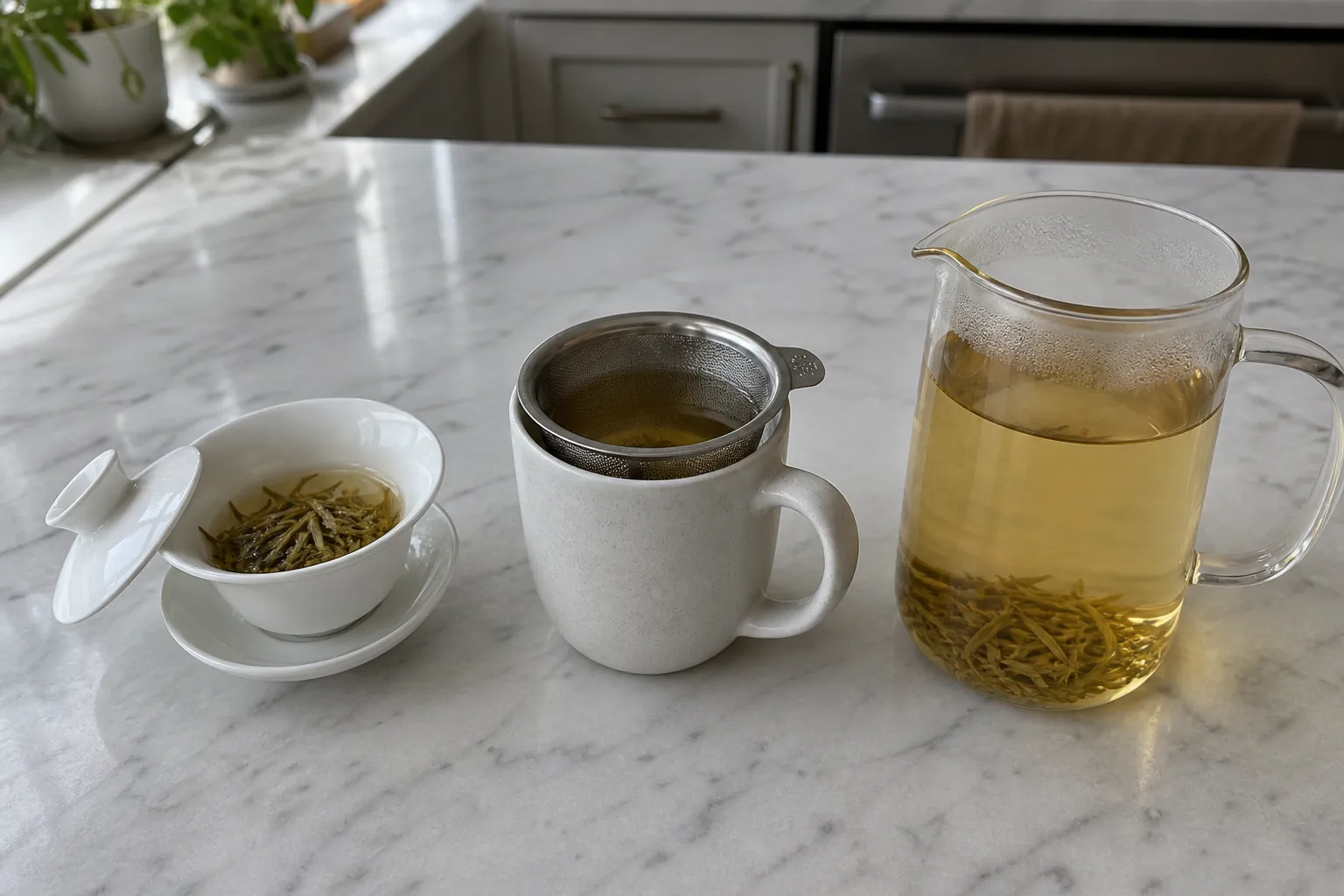
A small gaiwan, small teapot, mug infuser, and large thermos do not create the same cup experience.
A small gaiwan can help because each serving is modest and easy to taste before continuing. It also encourages short infusions and full pouring. The possible downside is habit: repeated rounds can quietly become a long session.
A mug infuser is convenient, but it needs attention. If the leaves stay in the mug while you drink, the cup keeps getting stronger. Lift the infuser out early and set it aside; you can always return for a second light steep.
A large pot or bottle is less precise when you want a mild cup. More water may seem diluted, but a long soak can still produce a dense brew. If you like large-format brewing, use less leaf and strain before the tea becomes heavy.
The best vessel is not universal. It is the one that lets you stop extraction when the cup reaches the strength you want.
What “Gentler” Can and Cannot Mean
A gentler caffeine cup is not a guaranteed low-caffeine cup. It is white tea brewed with restraint and watched carefully.
Perceived gentleness can come from several things at once: smaller serving size, lighter flavor, less dryness, softer aroma, shorter contact time, fewer infusions, or drinking less tea overall. Caffeine exposure can vary, and this page does not have the source base to give exact numbers by white tea type, harvest grade, water temperature, or steep length.
This is where common misunderstandings start.
Not automatically very low
White tea is a broad category, and the cup depends on leaf material, processing, storage, dose, vessel, and brewing method.
A rinse is not dependable control
If you rinse white tea, do it for taste, leaf opening, or personal habit, not as a predictable caffeine-control step.
Cooler water is not a removal method
Cooler brewing can make the cup taste milder, but it should not be framed as removing caffeine from the tea.
Grade does not replace attention
Silver Needle, White Peony, Gongmei, and Shoumei can all be brewed lightly or strongly.
Labels help describe style; they do not replace attention to dose, steep time, vessel, and your own response.
If caffeine affects you strongly, approach white tea as caffeinated tea and use personal caution. This article can help you adjust brewing expectations, but it is not medical guidance.
A Simple Gentle White Tea Brewing Routine
Choose a white tea you already know, or one with a clean aroma and clear storage condition. If the dry leaf smells stale, damp, oddly smoky, or heavily perfumed, brewing changes will not fix the core problem. For pressed white tea, loosen the leaves gently so you are not brewing mostly dust and broken fragments.
Add less leaf than you would use for a rich tasting session. Pour water that is hot enough to draw aroma but not so hot that the first cup turns harsh. Steep briefly, then pour fully.
Before drinking the whole cup, smell it. A gentle white tea brew often shows quiet sweetness, hay, soft florals, melon, dry grass, honeyed grain, or mild dried fruit, depending on the tea. The exact note matters less than the balance: clear aroma, light body, little harshness, and no need to force the cup.
Taste a few sips. If it is too faint, extend the next steep slightly. If it is too thick, shorten the next steep or use less leaf next time. If the first cup already feels strong enough, stop there rather than continuing just because the leaves have more to give.
For this kind of session, completion is not the goal. Comfort is the goal.
Quick Troubleshooting
If your white tea tastes drying, bitter, or heavy, change one variable at a time so the next session is readable.
Use less leaf first
This often changes the cup immediately. If the tea becomes too thin, keep the lower dose but lengthen the steep slightly.
Shorten the steep
Use this if the cup begins well but turns harsh, especially with mug infusers where leaves often stay in contact with water longer than intended.
Use a smaller vessel
A small gaiwan or small teapot can make the session more deliberate if large servings encourage you to drink more than planned.
Lower the water temperature a little
Try this if the aroma is pleasant but the taste turns sharp. Do not overcorrect into lukewarm water unless you enjoy very soft extraction.
Reduce the number of infusions
If the first cup is fine but the full session feels like too much, infusion count is part of the total cup experience.
The Cleanest Expectation
Low caffeine white tea brewing is best understood as a set of gentle brewing choices: less leaf, shorter contact, moderate heat, smaller servings, and fewer rounds. These choices may make white tea feel softer and easier for some drinkers, especially compared with a dense mug brew or a long multi-infusion session.
The limit matters: the method does not make white tea caffeine-free, does not give a predictable reduction percentage, and does not replace personal caution for people who are sensitive to caffeine.
For the next cup, keep it simple. Brew the same tea with a little less leaf, a shorter steep, and a smaller serving. Notice aroma, body, dryness, and how the session feels. Then adjust from the cup in front of you.