
How Does Aged White Tea Taste Different from Fresh White Tea
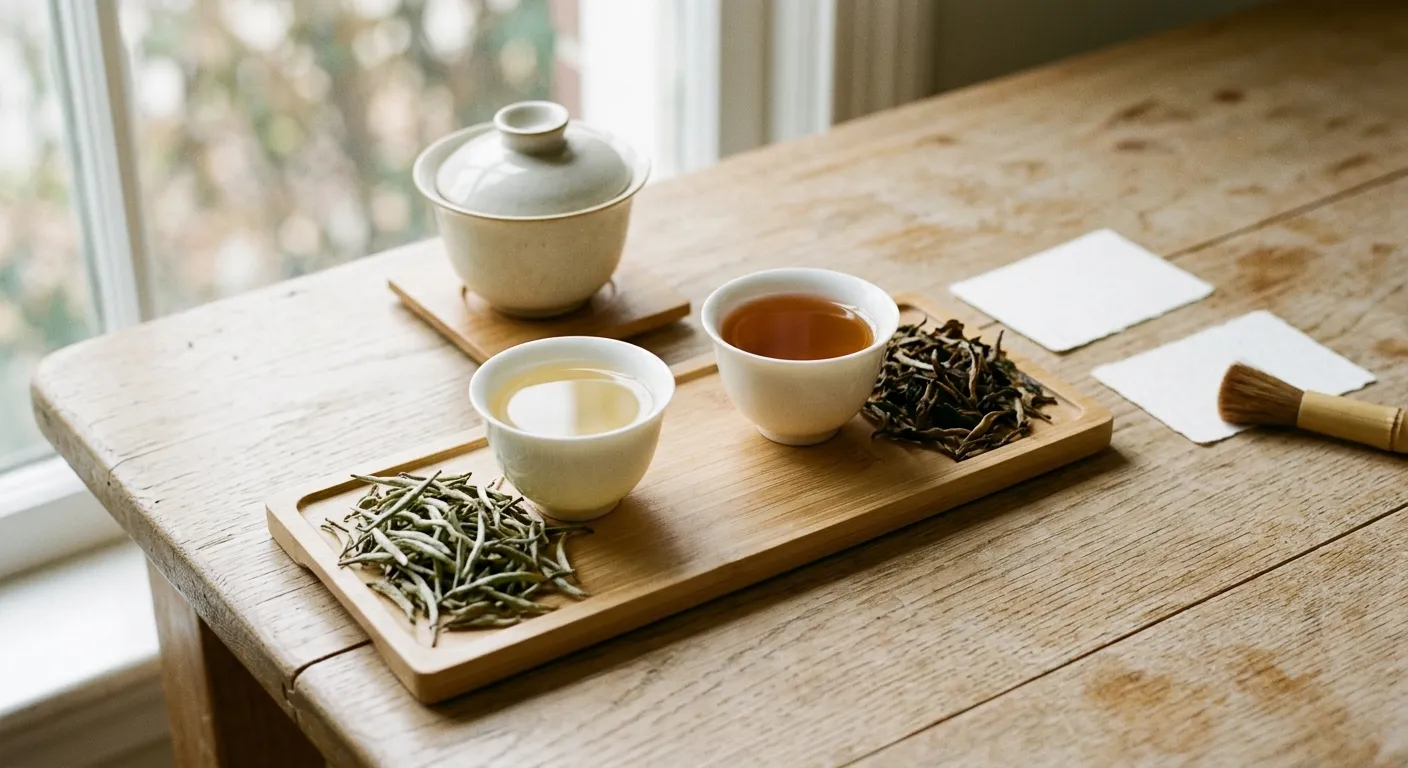
Aged white tea often tastes warmer, rounder, deeper, and sweeter than fresh white tea. Fresh white tea usually feels lighter, greener, brighter, and more delicate. In the cup, fresh white tea may show floral, hay-like, melon-like, or soft grassy notes; aged white tea taste may lean toward honey, dried fruit, wood, herbs, date-like sweetness, or a mellow old-leaf aroma.
That is the useful starting point, not a rule. Leaf grade, harvest style, bud-to-leaf ratio, compression, storage, brewing temperature, steep time, and the reliability of the age label can all change the result. A well-kept aged tea can feel smooth and layered. A poorly stored one can taste flat, sour, dusty, smoky, damp, or musty.
upward
Start with the broader guide
Use the broader guide first if you need the full scope before this page.
The main taste difference in the cup
Fresh white tea usually keeps more of the spring-leaf impression: lightness, lift, and freshness. A fresh Silver Needle may taste soft, sweet, and delicate, with pale liquor and a gentle floral or melon-like aroma. A fresh White Peony may feel a little fuller, with young leaf, meadow, hay, or faint fruit notes. Fresh Gongmei or Shoumei can be broader and leafier, sometimes with more obvious herbal or dried-grass edges.
Aged white tea often moves in another direction. The cup may feel less sharp at the top and more settled in the middle. Instead of fresh meadow, the aroma can suggest honey, dry wood, dried leaves, jujube-like fruit, old paper, warm herbs, or a soft medicinal-style note. The body may feel thicker, the sweetness may sit longer, and the finish may feel more rounded than brisk.
| What you notice | Fresh white tea taste | Aged white tea flavor |
|---|---|---|
| Aroma | Floral, grassy, hay-like, melon-like, fresh leaf | Honeyed, woody, date-like, herbal, mellow |
| Body | Light to medium, clear, delicate | Rounder, softer, sometimes thicker |
| Sweetness | Fresh, pale, nectar-like, quick | Deeper, darker, lingering, sometimes dried-fruit-like |
| Freshness | Bright, green, airy | Warmer, calmer, less green |
| Aftertaste | Clean, brisk, lightly sweet | Longer, warmer, more coating when the tea is good |
| Possible flaw notes | Thin, sharp, grassy, underdeveloped | Stale, sour, smoky, damp, musty, flat |
The word “often” matters. Not every fresh white tea is airy and floral, and not every aged tea becomes deep and sweet. A young Shoumei with mature leaves may already taste fuller than a delicate fresh bud tea. A carelessly stored older cake may taste worse than a clean, well-made fresh tea.
Aroma changes first
For many drinkers, the aroma changes before the flavor becomes obvious. Smell the dry leaf, the warmed leaf in a gaiwan or teapot, the first infusion, and the empty cup. Each moment can show a different side of the tea.
Fresh white tea aroma is often easier to describe as “high” or “clear.” It can remind you of fresh hay, wildflowers, cucumber peel, melon rind, young leaves, or light nectar. Bud-heavy teas may feel soft and downy, with quiet sweetness rather than strong perfume. Leafier fresh teas may smell more like dried grass, herbs, or warm straw.
Aged white tea aroma tends to sit lower and feel warmer. Common tasting language includes honey, dried fruit, date, wood, dried herbs, old paper, or a gentle medicinal note. In compressed tea, the dry-leaf aroma can be muted at first, then open after a rinse or short first steep. The aroma may also be more noticeable on the lid of a gaiwan or in the empty cup after the liquor is poured out.
But “old white tea aroma” is also a market phrase, and it can be overused. A strong medicinal smell, dark color, or dramatic seller description does not prove real age. Damp basement, moldy cupboard, sour, or heavy musty notes are not the same as pleasing aged depth. If an unpleasant smell appears before brewing and grows stronger in the cup, treat it as a warning sign rather than as maturity.
Body, sweetness, and aftertaste
The difference between aged versus fresh white tea is not only about aroma. Texture can be just as important.
Fresh white tea often has a clean, light body. It may feel silky, thin, brisk, or gently juicy depending on the leaf and brewing style. Its sweetness can be pale and immediate: a quick nectar note, soft melon sweetness, or fresh hay finish. Brewed too cool or too briefly, it may seem watery; brewed too hot or too long, some fresh teas can become sharp, grassy, or drying.
Aged white tea body can feel more rounded. Good aged examples may coat the mouth a little more, with a deeper sweetness that appears after swallowing. This aged white tea sweetness is often described as honeyed or dried-fruit-like rather than fresh and floral. The aftertaste may feel warmer and longer, especially when the tea has enough leaf material and clean storage behind it.
Still, body is not proof of age by itself. A leafier fresh Shoumei may brew fuller than a lightly aged bud tea. A compressed cake may release slowly in early steeps and feel thin until the leaves open. A heavily packed gaiwan can make almost any white tea seem thicker. For a fair aftertaste comparison, keep the brewing method consistent and watch how the tea behaves across several infusions, not only the first cup.
Aged tea can also lose body. If the original leaf was weak, if storage was too harsh, or if the tea has become stale, the liquor may look dark but taste hollow. In that case, age has changed the tea, but not in a useful way.
What changes the answer besides age
If two teas taste different, do not assume the calendar explains everything. These factors often matter just as much:
Leaf grade and harvest style
Bud-heavy teas such as Silver Needle tend to be delicate and subtle. Leafier grades such as Gongmei and Shoumei often carry more structure and can show stronger aged flavors. Comparing a fresh Silver Needle to an aged Shoumei cake tells you something, but it is not a clean age comparison.
Bud-to-leaf ratio
More buds can mean softness and fragrance. More mature leaves and stems can bring body, herbal depth, and darker sweetness. This affects both fresh white tea taste and aged white tea flavor.
Compression
Loose tea and compressed cakes age and brew differently. Compression can slow how quickly water reaches the inner leaves, so early steeps may seem muted. A cake also makes it harder to judge storage from the surface alone.
Storage condition
Clean, stable storage may preserve sweetness and allow warmer aromas to develop. Poor storage can create stale, sour, smoky, damp, or musty aged white tea. Storage notes are part of the flavor, but not all storage notes are desirable.
Brewing vessel
A gaiwan makes it easier to smell the lid and adjust short steeps. A larger pot may smooth the tea but blur small differences. Glass cups show liquor color clearly, but color alone is not enough.
Water temperature and steep time
Fresh tea often shows its delicate side with moderate heat and controlled timing. Aged tea can sometimes take hotter water and longer steeps, but this is not universal. If an aged tea turns harsh, sour, or woody in an unpleasant way, reduce time before blaming the leaf completely.
Seller context
Age labels, wrapper claims, cake appearance, and storage stories can be useful clues, but they are not proof on their own. Check them against aroma, taste, leaf appearance, and infusion behavior.
How to compare fresh and aged white tea
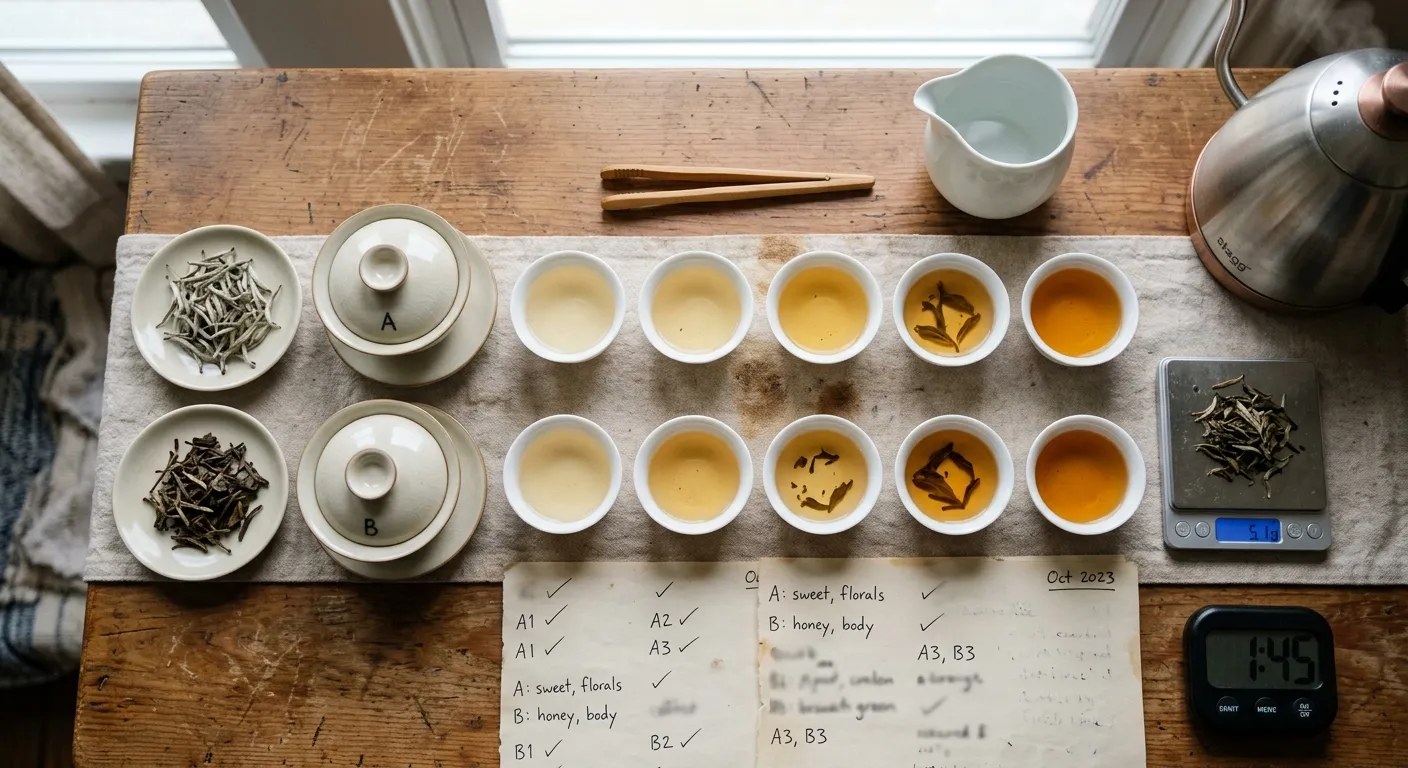
A side-by-side tasting is the simplest way to understand the difference. It does not need to be formal, but it should be consistent.
Use the same vessel type, similar leaf weight, similar water, and similar steep times. If the teas are very different in grade, note that before tasting. A fresh White Peony and an aged White Peony are easier to compare than a fresh Silver Needle and an old Shoumei cake.
Start by smelling the dry leaf. Fresh tea may smell green, floral, hay-like, or airy. Aged tea may smell warmer, woody, honeyed, or herbal. If the aged sample smells damp, sour, moldy, or aggressively smoky, make a note before brewing.
Warm the vessel, add leaf, and smell again. Heat often reveals hidden storage notes. A tea that seemed acceptable when dry may show mustiness after warming; a quiet aged tea may open into honeyed wood or dried fruit.
Brew short first infusions. Do not judge only by liquor color. Aged white tea may brew darker than fresh tea, but dark liquid does not automatically mean depth, quality, or real age. Taste for body, sweetness, clarity, and aftertaste.
Questions to ask while tasting
- Does the fresh tea feel brighter or greener?
- Does the aged tea feel rounder or warmer?
- Is the sweetness quick and floral, or deeper and more lingering?
- Are the storage notes clean and integrated, or do they dominate?
- Does the aged tea become more interesting over several steeps, or does it collapse quickly?
By the third or fourth infusion, differences often become clearer. Fresh tea may stay fragrant and light, or it may fade into soft hay sweetness. Aged tea may become smoother and sweeter, or it may reveal flatness that the first dark cup hid.
Common confusion around aged white tea labels
The biggest misunderstanding is that aged white tea automatically tastes better than fresh white tea. It may taste more mellow, deeper, or more complex, but age alone does not create quality. It changes what is already there, and storage can either protect or damage that change.
Another confusion is treating certain signs as proof. A compressed cake is not automatically old. A dark infusion is not automatically well-aged. A strong medicinal-style aroma is not automatically desirable. A vintage label is not automatically reliable. These signs can be part of the story, but they need to match the actual cup.
Mustiness deserves special attention. Some aged teas have old-wood, dried-herb, or stored-paper notes that many drinkers find pleasant when they are clean and balanced. Musty aged white tea is different: it may smell damp, stale, sour, or like a closed cupboard that has held moisture. If that note dominates the warmed leaf and the brewed liquor, it is not something to excuse just because the tea is old.
Health and value claims should stay outside the tasting judgment. This page is about flavor, aroma, brewing behavior, and purchase uncertainty. The taste of an aged tea does not by itself establish health effects, authenticity, rarity, or future market value.
A practical way to describe what you taste
When you write tasting notes, avoid starting with “good” or “bad.” Use observable words first.
For fresh white tea, note whether the cup is floral, grassy, hay-like, melon-like, brisk, soft, thin, sweet, or drying. For aged white tea, note whether it is honeyed, woody, date-like, herbal, mellow, thick, sour, stale, smoky, or musty.
Then connect the note to a brewing detail. “Honeyed and round after the second infusion” is more useful than “aged flavor.” “Dark liquor but thin body” is more useful than “old.” “Fresh aroma, pale sweetness, short finish” is more useful than “young tea.”
The short answer: fresh white tea often shows brightness, delicacy, and fresh leaf aroma, while aged white tea can show warmth, roundness, deeper sweetness, and old-leaf complexity. But the real answer is always in the cup. Compare similar samples, brew them consistently, smell for clean storage, and treat aged white tea labels as clues rather than conclusions.