
Buyer wording check
How to Spot Vague Wording in Aged White Tea Listings
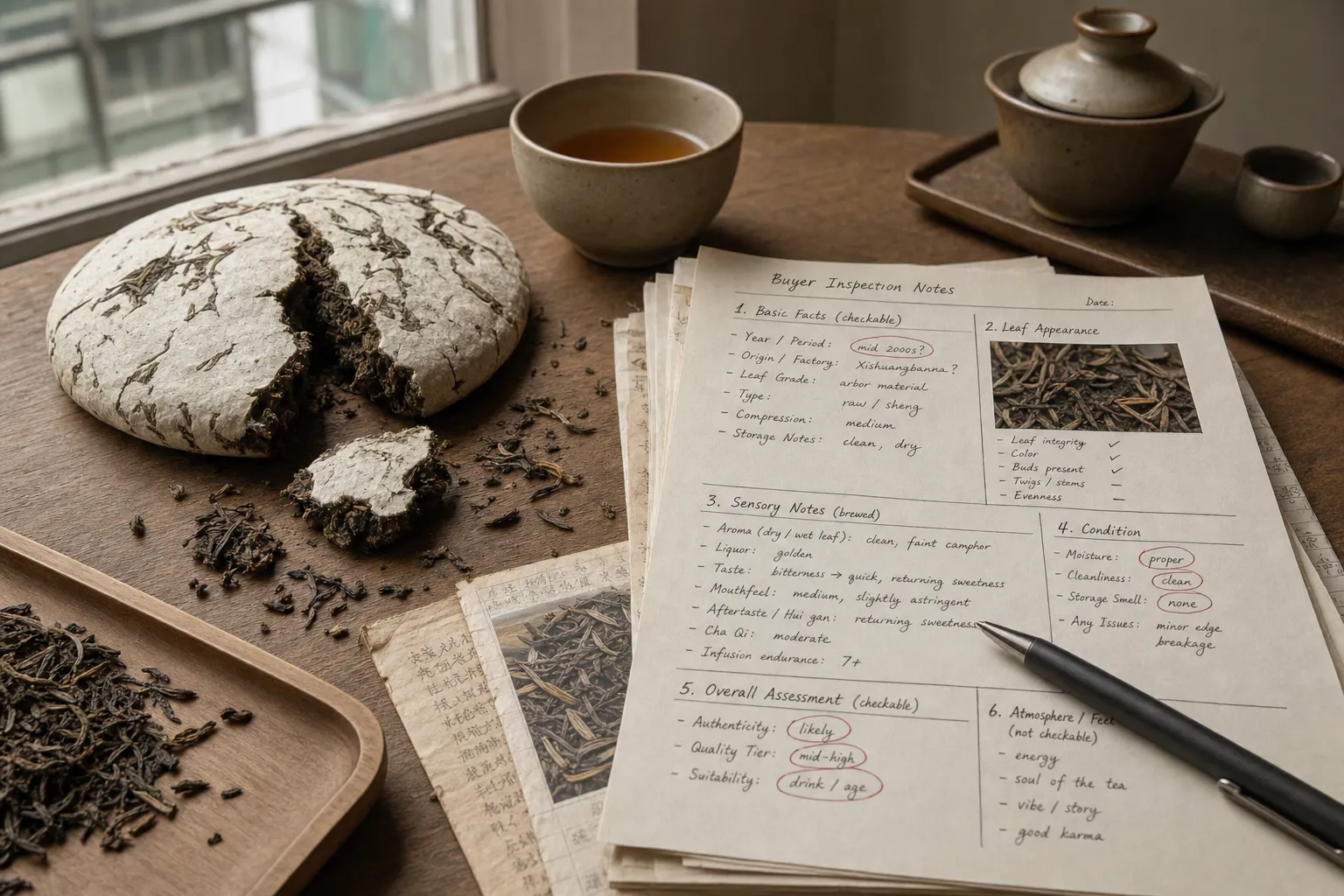
Aged white tea listings become easier to read when you separate words you can check from words that only create atmosphere. Useful aged white tea listing wording gives you a harvest year, tea type or grade, origin context, storage notes, clear photos, and sensory descriptions that match the leaves. Vague wording leans on vintage, treasure, old tree, ancient tree, premium, wellness ritual, or rare cake without showing what a buyer can inspect, compare, request, or cross-check.
A brief listing is not automatically dishonest. It simply leaves more uncertainty. Age, origin, storage, and value claims should stay provisional until the seller gives you enough detail to ask a precise follow-up question.
upward
Start with the broader guide
Use the broader guide first if you need the full scope before this page.
Start With What the Listing Lets You Inspect
On the first pass, underline the concrete details and ignore the glow around them. A listing for aged Silver Needle, White Peony, Gongmei, or Shou Mei should ideally tell you what the tea is, when it was harvested or pressed, where it is said to come from, and how it has been stored.
Inspectable tea listing details
- Harvest year, pressing year, or both, especially for a cake.
- Tea type or grade, such as Silver Needle, White Peony, Gongmei, or Shou Mei.
- Origin wording with context, not only a famous place name.
- Storage description, such as dry storage, climate, warehouse style, or seller-held history.
- Photos of dry leaf, cake surface, broken edge, liquor color, and infused leaves.
- Aroma and taste notes specific enough to compare with the age claim.
- Seller context, including whether the seller usually gives consistent harvest and storage information.
“2017 Shou Mei cake, dry stored, Fuding origin, photographed front and edge, notes of dried leaves and honeyed sweetness” is more inspectable than “rare aged white tea treasure.” The first version can still be incomplete, but it gives you handles. The second mostly asks you to feel impressed.
Clear wording does not prove age or origin by itself. It gives you better questions: Was 2017 the harvest year or the pressing year? Was it stored by the producer, wholesaler, seller, or a previous owner? Are the photos current? Does the leaf color fit the description, or does the listing lean on a wrapper and a romantic paragraph?
Prestige Stacks Can Sound More Specific Than They Are
Many vague aged white tea claims are not short. They are full of attractive words that never connect to checkable details.
Wording to slow down and inspect
- “Aged ancient tree artisanal white tea”
- “Old tree vintage white tea from a famous origin”
- “Premium treasure-grade Shou Mei cake”
- “Wellness ritual aged tea”
- “Rare traditional old white tea”
These phrases are common in tea markets, and some may describe real traditions or seller vocabulary. The weak point is the missing bridge. How old is “old”? Which harvest? Which village, county, or producing area? What grade? What storage path? Does vintage mean age, style, wrapper design, taste profile, or market positioning?
Origin terms deserve the same calm treatment. Fuding and Zhenghe are meaningful names in white tea culture, but white tea origin wording is not enough when it stands alone. “Fuding” becomes more useful when paired with harvest year, tea type, producer context, and storage details. Used by itself as a prestige signal, it does not settle quality, age, or authenticity.
The same applies to old tree white tea claim language. A seller may use tree-age wording because buyers associate it with rarity and depth. Unless the listing gives context for the claim, move it into the “unverified until supported” column. You do not need to argue with the phrase; you need to see what it is attached to.
Harvest Year, Storage, and Photos Should Work Together
Harvest year in tea listings matters because aging is a time-based claim. Still, a year on its own is not enough. A listing may show a harvest year, a pressing year, a wrapper date, or a seller’s acquisition date, and those are not always the same thing. If the wording says “2012 aged white tea” but never explains what the date refers to, ask before assuming.
Storage is the next important variable. Available storage research and experience-based tea writing support a cautious point: time and storage conditions can affect white tea’s aroma, flavor, freshness, and appearance. Temperature, humidity, compression, and environment may influence how a tea develops. Those observations explain why storage notes matter; they do not authenticate a seller’s vintage.
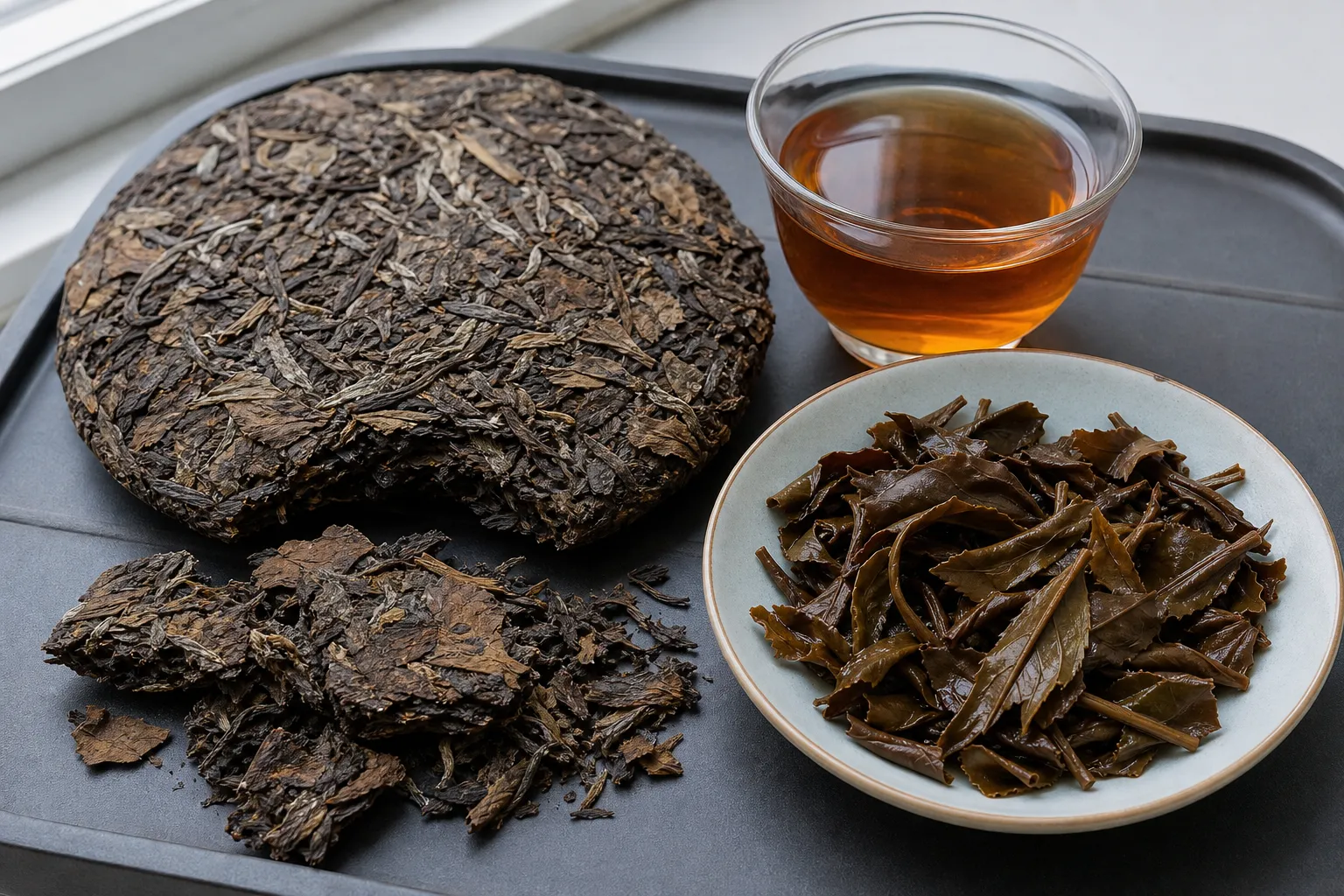
For compressed aged tea, especially Shou Mei cake listings, the wording should give more than a wrapper photo. A cake can hide inner leaf condition, so edge photos, loose broken pieces, and infused leaf images are useful. A dry cake surface with no close-up tells you less than a set of photos showing color range, compression, leaf size, stems, and brewed leaves.
Color can guide your next question, but it is not a standalone test. Greener leaves may suggest youth or lighter change; tawny, brown, maroon, or autumn-leaf tones may suggest age or storage transformation. Processing style, cultivar, lighting, photo editing, storage, and camera settings can all shift what you see. Treat color as a cue, not a verdict.
A stronger listing makes its parts agree. If the seller claims long aging, the photos, storage notes, aroma description, and grade should not feel like separate marketing fragments. If one part sounds strong and the rest is missing, pause.
Sensory Cues Help When They Stay Specific
Aged white tea sensory cues are useful when they describe something a drinker can recognize. Experience-based tea education often describes aged whites as moving away from fresh green sharpness toward softer, honeyed, mellow, dried-leaf, or autumnal impressions. Bud-heavy teas may age differently from leafier grades, and compressed cakes may behave differently from loose tea. These are tendencies, not rules.
A vague listing says “deep aged aroma” or “smooth old taste.” A more useful listing says “dried jujube, warm hay, honey, soft wood, and a rounder liquor than fresh Shou Mei.” That sentence still cannot prove the date, but you can compare it with the photos and storage note. If a listing claims a very old tea while describing only fresh grass, bright florals, and spring-like sharpness, the mismatch is worth questioning. If it presents musty, damp, basement-like, or odor-contaminated notes as normal aged character, be cautious.
Do not let romance replace the cup. “Vintage” should lead to questions about harvest year and storage. “Treasure” should lead to questions about why the tea is being valued that way. “Aged” should lead to questions about what changed in appearance, aroma, and liquor. The useful habit is not suspicion of every seller; it is asking whether the description is specific enough to compare with real leaves.
Wellness and Value Language Need More Distance
Aged white tea marketing terms sometimes borrow from cultural sayings, wellness language, and value language. You may see the old market phrase that frames one year as tea, later years with medicine- or treasure-like wording. Treat that as cultural and commercial language, not as evidence for judging a listing.
Wellness ritual tea language is easy to overread because it sounds comforting rather than technical. A listing may describe aged white tea as grounding, restorative, or suited to a quiet evening. As mood language, that tells you how the seller wants the tea to feel. It does not tell you harvest year, storage condition, origin, safety, or quality.
Value language deserves similar restraint. Rare, collectible, treasure, premium, and old-stock do not tell you whether the tea was stored well or whether the asking price makes sense. A listing should not feel more reliable because it sounds expensive. If the strongest evidence is scarcity language, ask for ordinary details: year, grade, origin, storage, photos, and tasting notes.
Aged does not automatically mean better. Some drinkers enjoy fresh White Peony for its lighter floral lift; others prefer older Shou Mei for a rounder, warmer profile. The listing’s job is not to flatter the tea into importance. It is to give enough information for a buyer to decide whether the style fits the next cup.
A Compact Reading Test Before You Buy
Use this quick test when a listing feels persuasive but thin.
- First, remove adjectives. Read the listing without rare, premium, ancient, vintage, treasure, artisanal, wellness, and old tree. What remains? If the answer is only “aged white tea cake,” the wording is doing more decoration than explanation.
- Second, separate dates. Is the listed year a harvest year, pressing year, storage start, or wrapper date? If the seller does not say, ask. For aged tea, a date without context can create more confidence than it deserves.
- Third, match claim to image. Do the dry leaf photos, cake edge, liquor color, and infused leaves give enough visual information? If the listing uses age language but shows only packaging, the tea itself has not been made visible.
- Fourth, read the storage sentence. “Stored well” is weaker than a plain description of where and how the tea was kept. You do not need a technical storage log, but you do need more than a mood word if the listing asks you to pay for age.
- Fifth, notice storage warning signs. Visible mold, fuzzy growth, damp storage, strong mustiness, or odor contamination should not be softened by romantic aged-tea language. Do not rely on a listing to teach recovery methods or exceptions. If unpleasant storage signs are presented as proof of age, step back.
- Finally, ask one follow-up question. A good listing usually becomes clearer when questioned: “Is this the harvest year or pressing year?” “Can you show the broken edge and brewed leaves?” “How was it stored?” “What grade is this cake?” A vague listing often becomes vaguer.
What This Wording Check Cannot Do
A wording check can reduce overtrust, but it cannot authenticate aged white tea. The available evidence behind storage-dependent sensory change is useful but narrow. It supports the idea that time, humidity, temperature, compression, and storage environment can affect aroma, flavor, and leaf appearance. It does not prove any commercial vintage, old-tree status, origin, storage history, safety, health outcome, or future value.
That limit is the reason careful reading matters. The buyer’s task is to rank listings by how inspectable they are, not to solve provenance from a product title. A listing with harvest year, grade, origin context, storage notes, current photos, and specific aroma language gives you something to evaluate. A listing that leans on vague vintage tea claims asks you to supply the confidence yourself.
When in doubt, choose the tea whose wording leaves you with fewer assumptions. Then brew a small amount with steady leaf weight, vessel, water temperature, and steep time, so the next decision comes from the leaves rather than the label.
Sources
Sources and further reading
Reference links are limited to sources considered suitable for public citation in this page.