
Label Reading
What a Production Year Means on an Aged White Tea Label
A production year on an aged white tea label is a starting clue, not a final answer. In practical terms, the white tea production year meaning is that the tea has been linked to that year by the maker, wrapper, seller, or listing. The label alone does not settle the harvest year, pressing date, storage history, tea condition, quality, or value.
Before buying or brewing, read the printed year alongside the leaf color, dry aroma, rinse aroma, liquor behavior, wrapper context, and the seller’s explanation. The date can help you ask better questions. It cannot do the tasting or storage judgment for you.
upward
Read the full overview first
Use the broader guide first if you need the full scope before this page.
Read the Year as a Clue, Not a Certificate
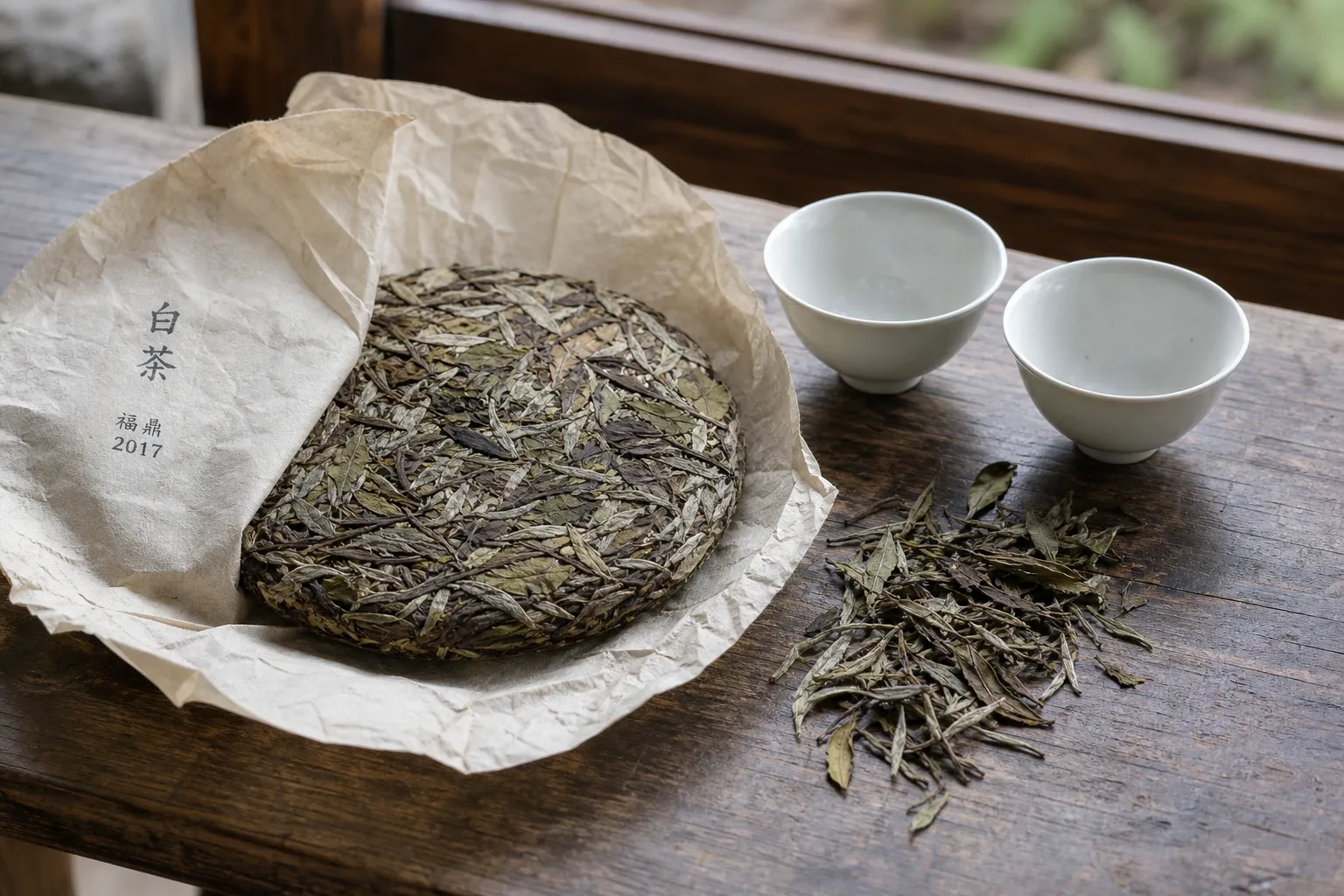
On an aged white tea cake, brick, or wrapped loose tea, a printed year may point to several different things. It may refer to the year the leaves were harvested, the year the tea was processed, the year it was pressed, the year it was packaged, or the year a seller uses to describe the batch.
Those meanings should not be treated as interchangeable unless the product context makes them clear.
For the reader looking at an aged white tea label date, the first question is simple: what does this year mean for this exact tea? A careful seller should be able to explain whether the date is being used as harvest information, production information, pressing information, packaging information, or a general age marker.
If the answer is vague, the date may still help you compare teas, but it becomes weaker as a buying clue.
This matters because aged white tea is often described through time: older leaves, stored cakes, darker liquor, mellow aroma, and smoother infusions. Time can shape the cup, but the printed year is only one part of the story. Tea condition and label date should be read together.
A useful first reading looks like this
- The label says
2018, so the tea is being presented with a 2018 date. - The seller should clarify whether that means harvest, production, pressing, or packaging.
- The leaves, aroma, storage notes, and infusion behavior should make the story feel plausible.
- If the tea is expensive or strongly marketed around age, the date needs more context.
The strongest habit is to treat the year as an index tab. It points you toward a question. It does not close the question.
Production Year Versus Harvest Year Versus Pressing Date
The common misunderstanding comes from using different date words as if they always mean the same thing. They do not.
Harvest year
A harvest year usually suggests the year the fresh tea leaves were picked. For white tea, this is the date many drinkers want because it connects the tea to leaf material, season, and early processing. If a label or seller says “harvest year,” ask whether that statement is tied to the actual leaf batch or used more loosely as an age description.
Production year
A production year can sound similar, but the phrase is not always clear on its own. It may point to the year the tea was made into its basic form, dried, sorted, compressed, packed, or entered into a seller’s inventory language. Without supporting context, production year versus harvest year should stay a question, not a settled rule.
Pressing date
A pressing date matters especially for compressed aged white tea. Loose white tea may be stored before being pressed into a cake. A cake can therefore carry a date that is not the same as the leaf harvest year. The white tea pressing date marks a production step, not necessarily the moment the leaves were picked.
For example, if a cake shows one printed year but the seller says the loose material came from an earlier harvest, the distinction matters. That does not automatically make the tea better or worse. It changes what the date can tell you. A cake pressed later from older material and a cake made from same-year material are different stories, and the label should not blur them.
When checking aged white tea labels, use three questions
- 1. What date word is being used: harvest, production, pressing, packaging, or something else?
- 2. Who is explaining the meaning: wrapper, seller, producer, or marketplace listing?
- 3. Does the tea’s condition support the story well enough for the decision you are making?
The more expensive or age-focused the tea is, the more these questions matter.
What the Tea Itself Can and Cannot Tell You
The tea in front of you can support or complicate the label date. It cannot identify the exact year by appearance alone.
White tea leaf color can shift with age and storage, but color needs context. Leaves may show greens, silvers, browns, olives, tans, or darker tones depending on grade, picking style, processing, compression, humidity exposure, and storage conditions. A darker cake is not automatically older. A lighter cake is not automatically younger.
Dry aroma is often more useful than color alone. A clean aged white tea may suggest dried leaves, hay, wood, grain, herbs, honeyed warmth, or other mellow notes, depending on the tea. But aroma varies widely, and there is no fixed aroma timeline that can be applied to every aged white tea. The better use of scent is to notice whether the tea smells clean, coherent, and compatible with the age story, or whether it seems flat, musty, sharp, perfumed, damp, or confusing.
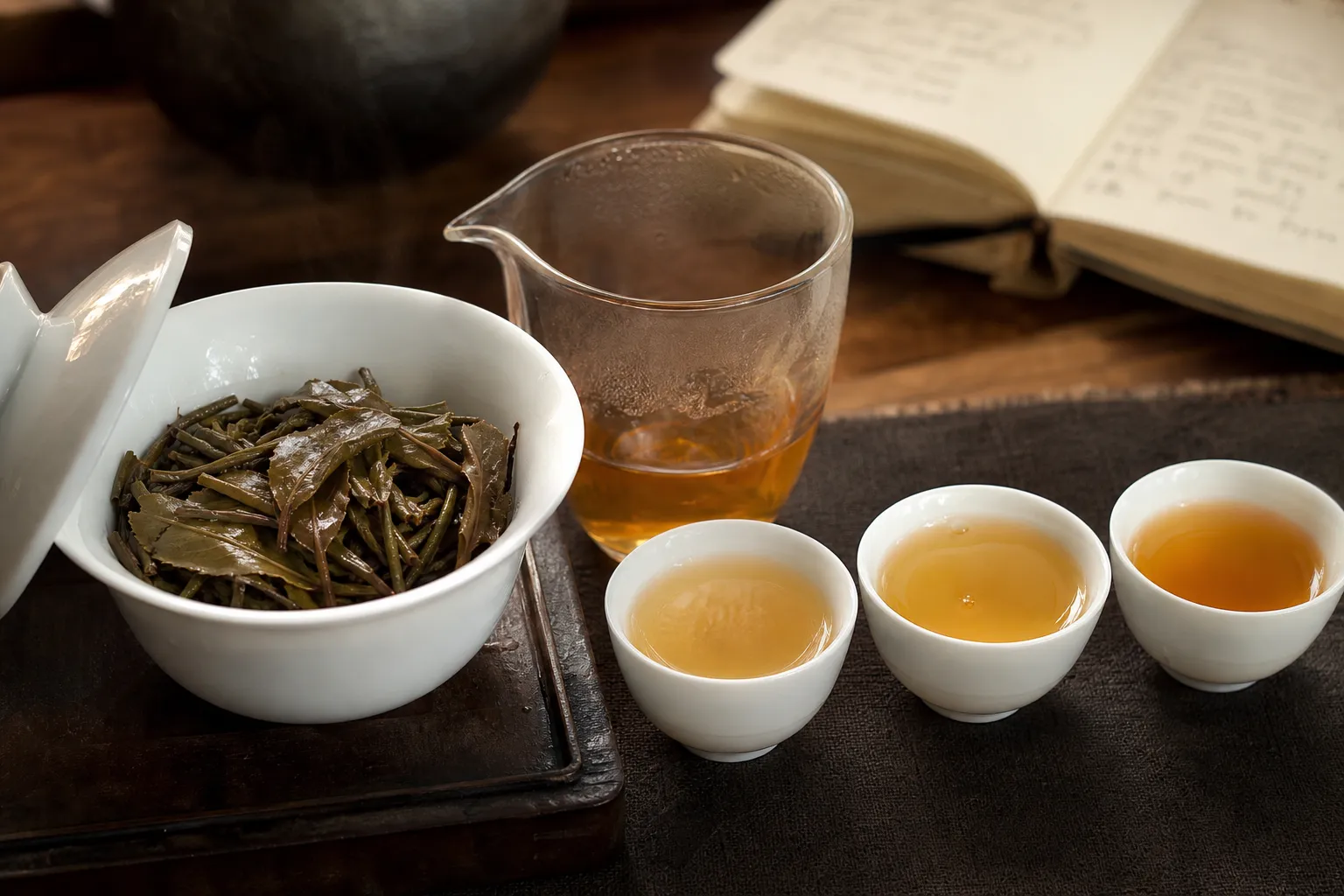
The rinse aroma can reveal more than the dry cake. Warmed leaves may open into deeper sweetness, dry wood, stored-leaf notes, or a more direct green-white tea character. This still does not confirm a date. It helps you decide whether the label and the cup are moving in the same direction.
White tea infusion changes are another practical check. In many brewing sessions, the early, middle, and later steeps show whether the material has depth, whether the storage feels clean, and whether the flavor holds together. An aged label is less persuasive if the tea collapses quickly, smells unclear, or depends entirely on the printed year for its appeal.
A narrow tasting check is enough
- Warm the dry leaves or cake piece before rinsing.
- Smell the dry leaf, then the wet leaf after a short rinse.
- Notice whether the liquor feels thin, rough, sweet, woody, clean, muted, or unsettled.
- Watch whether later infusions continue to open or fade quickly.
- Compare those observations with the seller’s date explanation.
This is not an authentication system. It is a buyer’s discipline: keep the label in conversation with the tea.
Storage History Changes the Meaning of the Date
Aged white tea is not just old tea. It is tea that has spent time somewhere, under some set of conditions. That is why white tea storage history matters when interpreting any printed year.
Two teas with the same label date can drink differently if they were stored in different environments. A tea kept dry, clean, and protected from strong odors may show a very different profile from a tea exposed to dampness, heat swings, or surrounding smells. The label year does not describe those conditions. It only gives a time marker, and sometimes not a very precise one.
When a seller describes storage, listen for concrete information rather than atmosphere. Useful context may include whether the tea was stored loose or compressed, whether it was kept sealed or allowed to breathe, whether it was held in a warehouse, shop, home collection, or producer storage, and whether wrapper condition or aroma signs match the story.
The point is not to demand a perfect biography for every modest tea. Scale your questions to the claim and price.
Storage also affects how you should brew your first session. If the tea smells tightly stored or muted, a brief rest after opening may help you judge it more fairly. If the aroma suggests dampness or contamination, longer brewing will not make the label date more meaningful. If the cake is tightly compressed, the first infusion may underrepresent the tea; later steeps can be more revealing.
Avoid judging from one dramatic sign. A dark liquor does not automatically mean deep age. A pale liquor does not automatically mean poor aging. A woody aroma does not identify a specific year. A clean, evolving cup is more useful than a label that asks to be admired on its own.
Questions to Ask Before You Trust the Date Too Much
The best next step is not suspicion for its own sake. It is clarity. A production year can help orient you, especially when comparing several teas, but it should invite a few practical questions before it shapes the whole purchase.
Ask the seller
- Does the printed year refer to harvest, production, pressing, or packaging?
- If it is a compressed tea, was it pressed in the same year as the leaves were harvested?
- Is there batch, wrapper, or producer context that explains the date?
- How has the tea been stored, and for how long under the seller’s care?
- Can the seller describe the dry aroma, wet leaf aroma, and infusion behavior without relying only on age language?
Ask the tea
- Does the leaf appearance seem generally consistent with the story, while allowing for variation?
- Does the dry aroma feel clean and integrated?
- Does the rinse aroma open naturally, or does it raise storage concerns?
- Does the liquor develop across infusions?
- Would the tea still interest you if the printed year were less prominent?
That last question is useful because date language can pull attention away from the cup. If the tea only seems appealing because the wrapper says it is old, the buying decision is resting on weak ground. If the cup, aroma, storage explanation, and label date make sense together, the date becomes more meaningful.
Where the Label Date Stops Helping
There are firm limits to what an aged white tea date meaning can do. A printed year does not settle whether the tea is genuine, carefully stored, high quality, suited to your brewing style, or worth a higher price. It also does not turn a vague listing into a well-documented tea.
It should not be used as a wellness promise or a resale argument. This page is about reading a tea label for buying and tasting context, not making health or financial judgments. Age may be part of white tea culture and market language, but a date on paper is not a result.
The source coverage for this topic is limited here. No public standard, producer document, platform record, verifiable example, or confirmed tasting report was supplied for this page. That makes broad claims about universal white tea label dates too strong. The more honest conclusion is practical: use the production year as one clue, then check the tea.
For a beginner, that is enough to make better decisions. You do not need to become a specialist before buying aged white tea. You only need to stop asking the label to answer questions that belong to the leaf, the aroma, the storage story, and the cup.
A good reading of the date sounds like this: “This year gives me a starting point. Now I need to know what kind of date it is, whether the tea’s condition supports it, and whether the cup is worth drinking on its own.”