
Buying check
How to Use a Sample to Check Aged White Tea Before Buying a Cake
A small sample will not confirm everything about an aged white tea cake, but it can tell you whether the cake deserves more trust. To sample aged white tea before buying, smell the dry leaf, inspect the broken pieces, brew several controlled infusions, then compare the liquor, texture, sweetness, aftertaste, and off-notes with the seller’s age and storage description.
Use the sample as a buying check, not a final certificate. If the session makes the tea feel cleaner, more coherent, and more enjoyable, the cake may be worth considering. If it creates more doubts about storage, leaf condition, or seller clarity, pause before buying the full cake.
upward
Read the full overview first
Use the broader guide first if you need the full scope before this page.
What an Aged White Tea Sample Can Tell You
An aged white tea sample gives you direct contact with the tea beyond the wrapper, photos, and listing language. You can smell it, warm it, brew it, watch how it opens, and see whether the cup stays pleasant across more than one infusion.
It can help you check:
- Whether the dry aroma feels clean, stale, smoky, sour, moldy, or overly perfumed.
- Whether the sample contains recognizable leaves, buds, and stems, or mostly dust.
- Whether the liquor looks reasonably clear in normal brewing.
- Whether sweetness, texture, and aftertaste appear across several steeps.
- Whether the seller’s age, storage, and cake description broadly match the cup.
What it cannot do is confirm the whole story. A sample may come from the cake edge, inner layer, loose fragments, or a portion prepared separately by the seller. Compression, humidity, packaging, and handling can all change what reaches you.
So the better question is not, “Does this sample confirm the cake exactly?” Ask instead: “Does this sample give me enough clean, consistent, enjoyable signs to make the full cake a reasonable buy?”
Check the Dry Sample Before Brewing
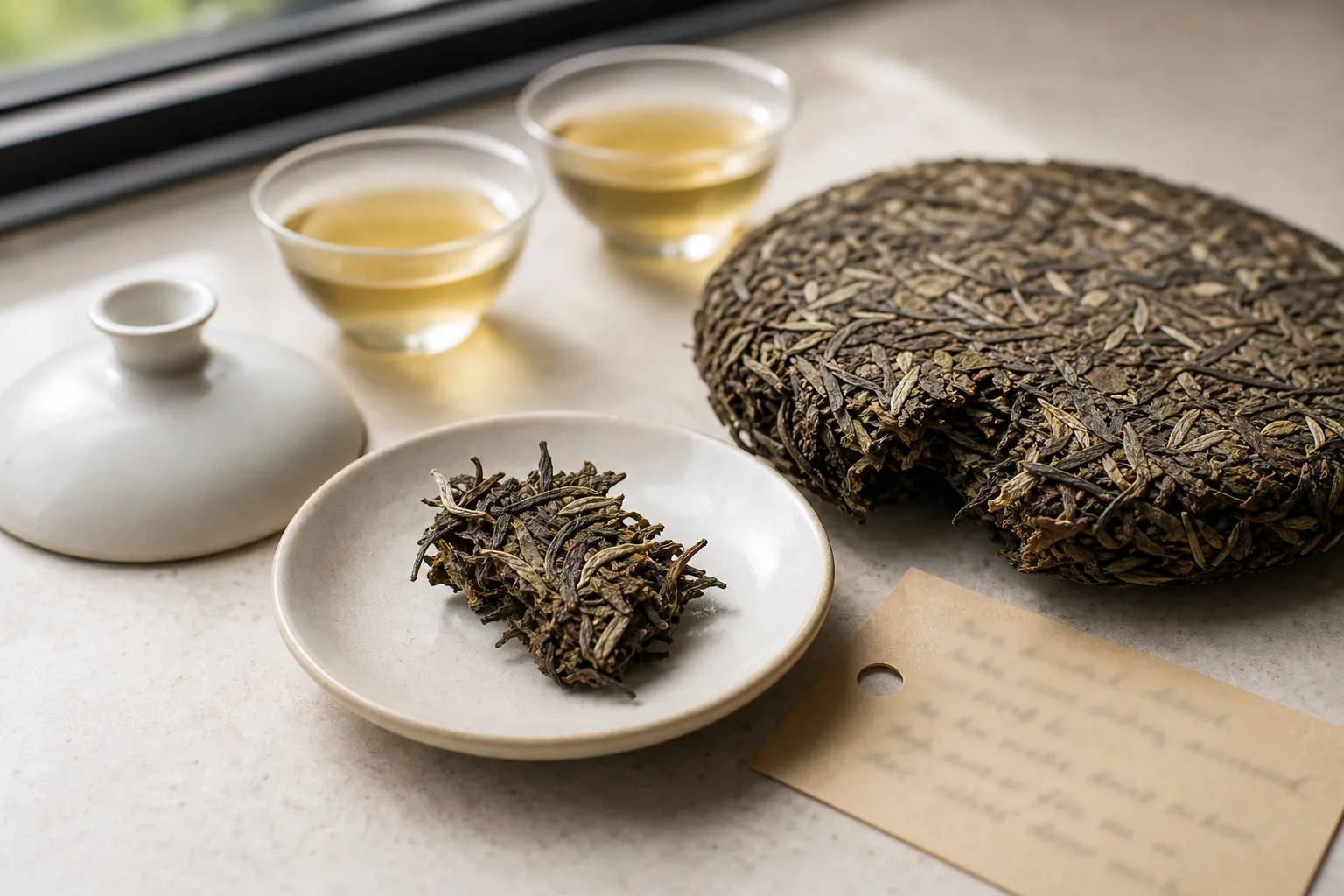
Start before the kettle is ready. Place the dry sample in a clean cup, gaiwan lid, or small dish and let it sit briefly. A pre-warmed vessel can help release aroma, but smell the tea before adding moisture.
The first dry smell often shows storage character more clearly than later cups. Aged white tea can suggest dried leaves, hay, gentle wood, soft fruit, or mellow sweetness. These notes do not guarantee quality, but they can point to a coherent aromatic direction.
Be more cautious with a sharp sour edge, damp basement impression, heavy smoke, stale mustiness, or perfume-like fragrance. One odd note does not automatically ruin the tea, especially if the sample has been sealed for a long time. Still, dry aroma is one of the first places where poor storage, tired material, or masking scent may show up.
Then inspect the leaf condition. Cake samples are often broken, so do not expect perfect leaves. Some stems, flakes, and compressed fragments are normal. Look for the overall condition:
- Are there recognizable leaf pieces, buds, or stems?
- Is the sample mostly powder, crumbs, or flat dust?
- Does the color range look natural, or oddly uniform and lifeless?
- Are there fuzzy patches, unusual specks, or debris you would not want to brew?
- Does the sample resemble the cake photo, if one was provided?
Do not judge by color alone. Grade, season, storage, compression, and original material can all affect appearance. A darker sample is not automatically better aged tea, and a lighter one is not automatically too young. Read appearance together with aroma, brewing behavior, and seller context.
If the listing describes a clean, mellow, carefully stored cake but the sample smells sour, heavily smoky, or strangely perfumed, take the mismatch seriously. Market phrases such as old wrapper, rare origin, long storage, or premium age should prompt closer checking, not automatic confidence.
Brew Several Infusions, Not One Cup
One infusion can mislead you. It may flatter the tea, punish it, or show only the surface of a compressed sample. Aged white tea is easier to judge across early, middle, and later infusions.
Use a simple setup you can repeat. A small gaiwan or tasting pot works well because it lets you control leaf amount, water temperature, and steeping time. The goal is not a formal ceremony. The goal is consistency.
A practical session
- Use enough leaf to taste clearly without forcing harshness.
- Smell the warmed dry leaf before adding water.
- Start with short infusions, then lengthen gradually.
- Pour fully each time so the leaves do not sit in leftover water.
- Note aroma, liquor clarity, texture, sweetness, and aftertaste.
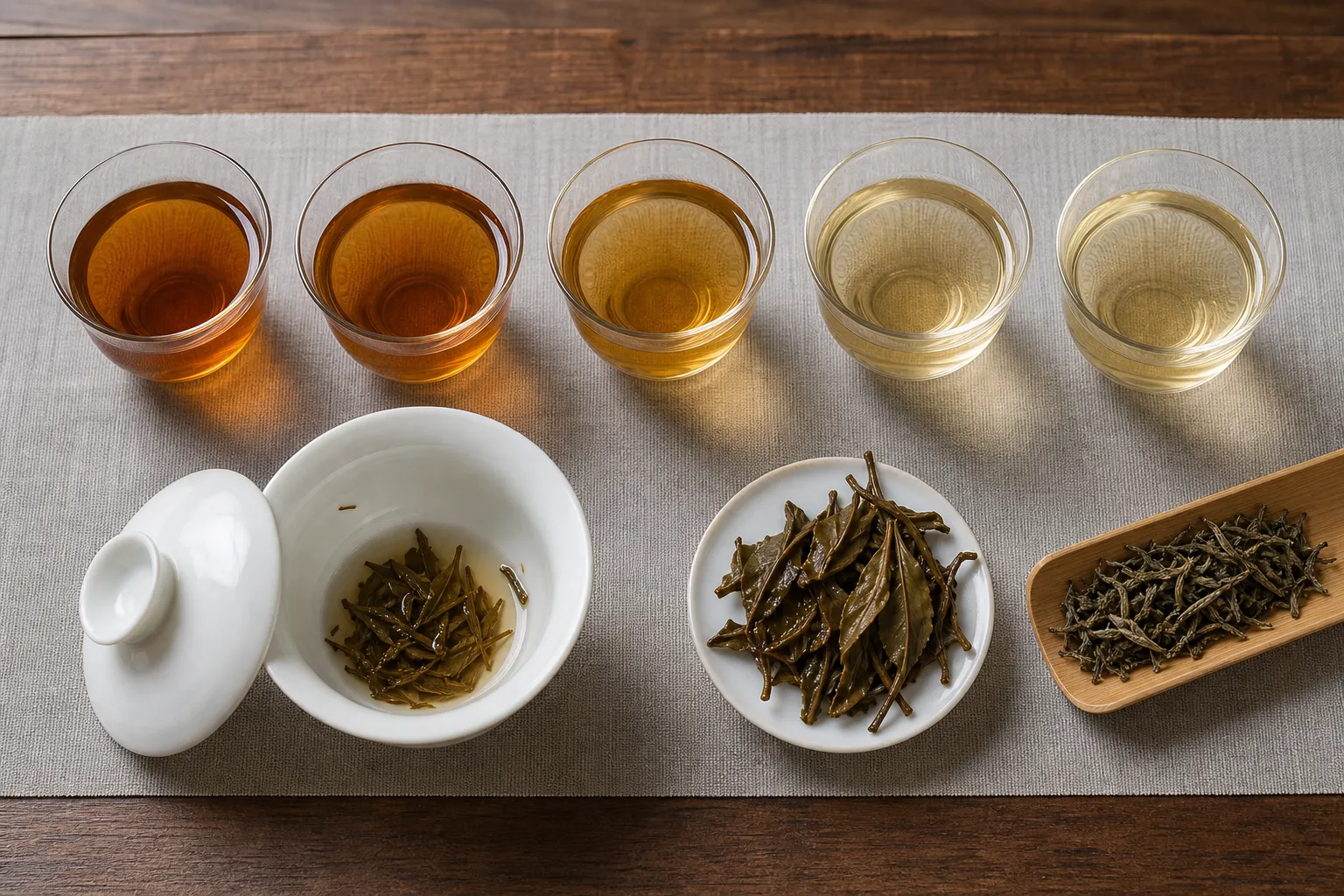
The first infusion may show storage aroma, dust, compression, or a slightly closed character. Do not decide everything there. The second and third infusions often give a clearer sense of body and direction. Later infusions show whether the sample fades quickly, turns rough, or continues with gentle sweetness.
Watch the movement of the tea. A sample that starts quiet but becomes rounded and sweet may deserve more attention. A sample that opens with a pleasant aroma but collapses into flatness may still be drinkable, but it may not justify a full-cake purchase at a higher price. A sample that grows increasingly sour, muddy, harsh, or perfumed should slow the decision down.
Liquor clarity is useful, but not a stand-alone answer. Broken material and strong brewing can make a cup look cloudy. If murky liquor appears together with damp smell, dull taste, or unpleasant texture, the concern becomes stronger.
Compare Sweetness, Texture, and Aftertaste
Aged white tea is often bought for more than its first aroma. A good sample should help you decide whether the cake has enough drinking depth for the price and size.
Sweetness does not need to taste sugary. It may appear as a soft finish, a rounded middle, or a gentle return after swallowing. If the seller describes the cake as mellow or mature, look for some kind of settled sweetness rather than only dryness or bitterness.
Texture is the feel of the liquor in the mouth. It may be light, thin, smooth, rounded, drying, rough, or heavy. A pleasant aged white tea sample does not need to be thick in every cup, but if it stays watery from the second infusion onward, the full cake may not offer the depth you expected.
Aftertaste often reveals the limits of a sample. One tea may smell attractive in the cup but disappear immediately. Another may seem plain at first and then leave a clean sweetness that lingers. Compare these impressions across several infusions instead of letting one cup decide the purchase.
Also notice sensory discomfort: scratchy finish, persistent sourness, heavy smoke, dull mustiness, or coating fragrance. These signs do not need dramatic interpretation. They may simply mean the sample does not match your taste, the seller’s description, or the price.
A useful final question is: “Would I want to drink this again next week?” If the answer is only “maybe, because the cake sounds rare,” the sample has not done enough. If the answer is “yes, and the seller’s description now makes more sense,” the cake may be worth considering.
Match the Sample to the Seller’s Description
Buying aged white tea sample portions is partly tasting and partly consistency checking. The sample should not be judged in isolation, but the description should not overpower what you smell and drink.
After brewing, review:
- Stated age or production year.
- Storage description, if provided.
- Cake photos and wrapper condition.
- Compression style and visible leaf grade.
- Price compared with your comfort level.
- How clearly the seller answers basic questions.
None of these details settles quality on its own. An old-looking wrapper does not confirm good storage. Rare origin language does not mean the cup will be better. A smooth mature taste description does not replace the actual brew. But when the sample, photos, storage notes, and seller communication point in the same direction, the buying decision becomes less speculative.
The opposite also matters. If the cake is described as clean and sweet but the sample has moldy sour tea notes, the mismatch is important. If the listing emphasizes long storage but the sample feels thin, sharp, and tired, ask whether the price still makes sense. If the tea is described as naturally aged but smells overly perfumed, consider whether the aroma comes from the leaf or from something around it.
If the sample is promising but unclear, ask follow-up questions. Where was the sample taken from? Is the cake stored the same way now? Are the photos current? Has the cake already been broken? A careful seller may not have perfect answers, but vague replies should affect your decision.
Decide Whether the Sample Is Promising, Doubtful, or Not Enough
Promising
A promising sample smells clean, brews consistently, has pleasant texture, and broadly matches the seller’s description. It does not need to be spectacular. For a full cake, reliability can matter more than one dramatic cup. If the price is comfortable and the seller context is clear, this kind of sample can support buying the cake.
Doubtful
A doubtful sample sends mixed signals. Maybe the first aroma is attractive but later cups are flat. Maybe the liquor is clear but the finish is sour. Maybe the tea tastes pleasant, but the age description sounds more confident than the information supports. In this case, do not force a yes. Ask more questions, request another sample, compare with a similar tea, or wait.
Not enough
A sample may also be too limited to judge. If you receive mostly dust and crumbs, you may learn something about handling, but not enough about the cake’s real character. If the sample smells like packaging rather than tea, air it briefly and reassess. If the seller cannot explain how the sample relates to the cake, that uncertainty remains part of the purchase.
The simplest boundary is personal: if you would not enjoy the sample at a lower price, do not buy the cake because of age language. Aged white tea is still tea you will drink, store, share, and revisit. The sample should make that future feel more concrete, not more abstract.
A Short Checklist Before Buying the Cake
Use this checklist after tasting:
- The dry sample smells clean enough to brew without hesitation.
- The leaf condition looks acceptable for a compressed aged cake sample.
- The wet leaf aroma does not become sharply sour, moldy, or artificially perfumed.
- Several infusions show continuity rather than one attractive cup and quick collapse.
- The liquor, texture, sweetness, and aftertaste fit your expectations for the price.
- The seller’s age, storage, and cake description broadly match what you observed.
- Remaining uncertainty feels acceptable for the cost of the full cake.
If most points are positive, the sample has done its job: it has lowered uncertainty enough for a considered decision. If several points remain unclear, do not solve the mystery with optimism. Try another aged white tea sample, ask for clearer details, or save the purchase for a cake with stronger sensory and seller context.