
Buyer Check
How to Check Aged White Tea Claims
Buying aged white tea can feel tricky because a label may sound precise while the proof remains partial. A cake might be described as ten years old, family-stored, rare, traditionally aged, or made from an earlier production year. Those words give you a story to examine, not a settled answer.
The practical way to check aged white tea claims is to compare the seller’s wording with what you can inspect: dry leaf, aroma, liquor, wrapper, storage explanation, sample behavior, price, and the seller’s willingness to answer plain questions. No single clue confirms age on its own. Several modest clues, when they agree, can help you decide whether to sample, ask more, or walk away.
upward
Start with the broader guide
Use the broader guide first if you need the full scope before this page.
Start with the exact age claim
Aged white tea listings often blend several ideas into one attractive sentence. Before looking at color, fragrance, or price, separate the claim into parts.
A useful age claim should make clear what is being dated:
- the harvest year of the leaf
- the production or pressing year of the cake
- the storage period after production
- the seller’s estimate rather than a documented year
- the batch, wrapper, or storage history connected to that tea
These are not the same thing. A production year on white tea packaging may not tell you when the leaves were picked, how long they were stored loose before pressing, or whether the wrapper was added later. A cake pressed recently from older material is different from a cake pressed years ago and stored as a cake. Both may be described with aged language, but they are not the same buying situation.
A good first move is to rewrite the claim in plain terms:
- “2016 white tea cake” could mean harvested in 2016, pressed in 2016, or simply listed around a 2016 date.
- “Ten-year aged Shoumei” should lead to questions about harvest year, pressing year, and storage.
- “Old stock” may mean remaining inventory, not a clear age record.
- “Family-stored” may be useful context, but only if the seller explains what it means.
If a listing uses mood-rich words but avoids dates, batches, storage location, or tea type, treat it as a starting point rather than a reason to trust the claim. Vague aged white tea listings are not automatically false, but they give you less to check.
What an aged white tea label can tell you
An aged white tea label is useful when it gives you concrete anchors. It may show a production year, brand name, tea type, region-style description, net weight, batch code, or storage-related wording. These details can help you ask better questions, especially when buying aged white tea online.
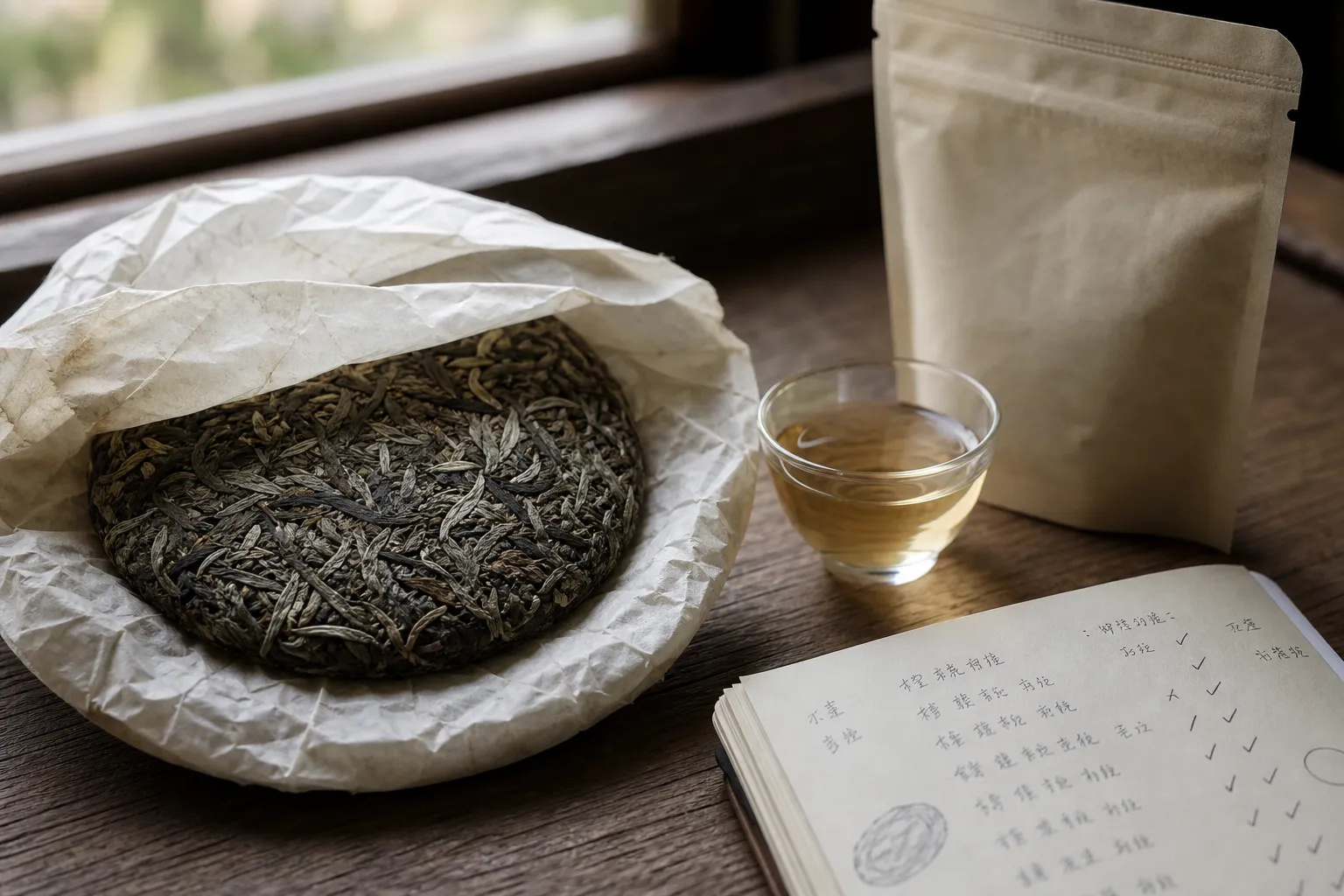
The limit is simple: packaging is still packaging. A wrapper can travel separately from the tea, be damaged, be replaced, or be copied in style. Old-looking paper is not the same as old tea. Stains, fading, loose folds, or a worn outer bag may fit an older storage story, but they do not settle the question by themselves.
When reading aged white tea cake wrappers, look for consistency rather than one dramatic sign.
A label is strongest when it agrees with the tea, the seller’s answers, the storage story, and the price. It is weakest when it is the only concrete detail offered.
Can dry leaf appearance confirm the age of white tea?
Dry leaf appearance can suggest whether an age claim deserves more attention, but it cannot carry the whole judgment. White tea changes visually depending on leaf grade, harvest style, processing, compression, storage, humidity, handling, and time. A compressed Shoumei cake will not look like loose Silver Needle. A mixed-grade cake may show different tones in the same piece. Some leaves darken unevenly because of storage or processing rather than age alone.
When checking dry leaf appearance, look at practical details:
- whether the leaf color fits the stated tea type
- whether extreme color contrasts have a clear explanation
- whether the cake surface and inner material look similar after breaking a small piece
- whether the leaves seem brittle, dusty, damp, moldy, or unusually flat in aroma
- whether stems, buds, and larger leaves match the style being sold
Color should be read as a clue, not a verdict. Darker leaves may fit an aged tea story, but they can also reflect tea type, oxidation level, moisture exposure, compression, or storage conditions. Very pale material is not automatically young either, especially when the grade and storage path are unclear.
A better question is: does the dry leaf support the seller’s story, or does it create new questions? If a seller describes careful long storage but the leaves smell musty, feel damp, or show oddly inconsistent material, ask for more detail or request a sample before buying a full cake.
What aged white tea aroma may suggest
Aged white tea aroma is one of the more useful buying clues because it is hard to judge from a listing photo but clearer when you have a sample. Still, aroma remains suggestive, not conclusive.
In many buying situations, a coherent aged-tea story is supported by an aroma that feels integrated rather than pasted on. You might notice dried leaf sweetness, mellow woodiness, herb-like warmth, date-like sweetness, or a softened hay-like note. These are tasting words, not proof of a production year. Different tea types, storage paths, and brewing choices can produce different impressions.
Pay attention to what does not fit:
- flat cardboard aroma that dominates the cup
- damp basement-like odor
- sharp sourness that does not settle after rinsing
- heavy fragrance that feels detached from the tea
- storage odor that overwhelms the leaf character
A faint storage note does not automatically make a tea poor, and a clean aroma does not verify age. The point is balance. If the seller’s language emphasizes careful aging, the dry leaf and brewed aroma should not feel confused, damaged, or aggressively masked.
When possible, smell the dry leaf, a warmed vessel, the rinsed leaf, and the empty cup after drinking. Each stage can show something different. A tea that looks old but smells lifeless deserves caution. A tea with modest appearance but clear, steady aroma may deserve more attention, even if the label remains uncertain.
Does dark liquor mean white tea is really old?
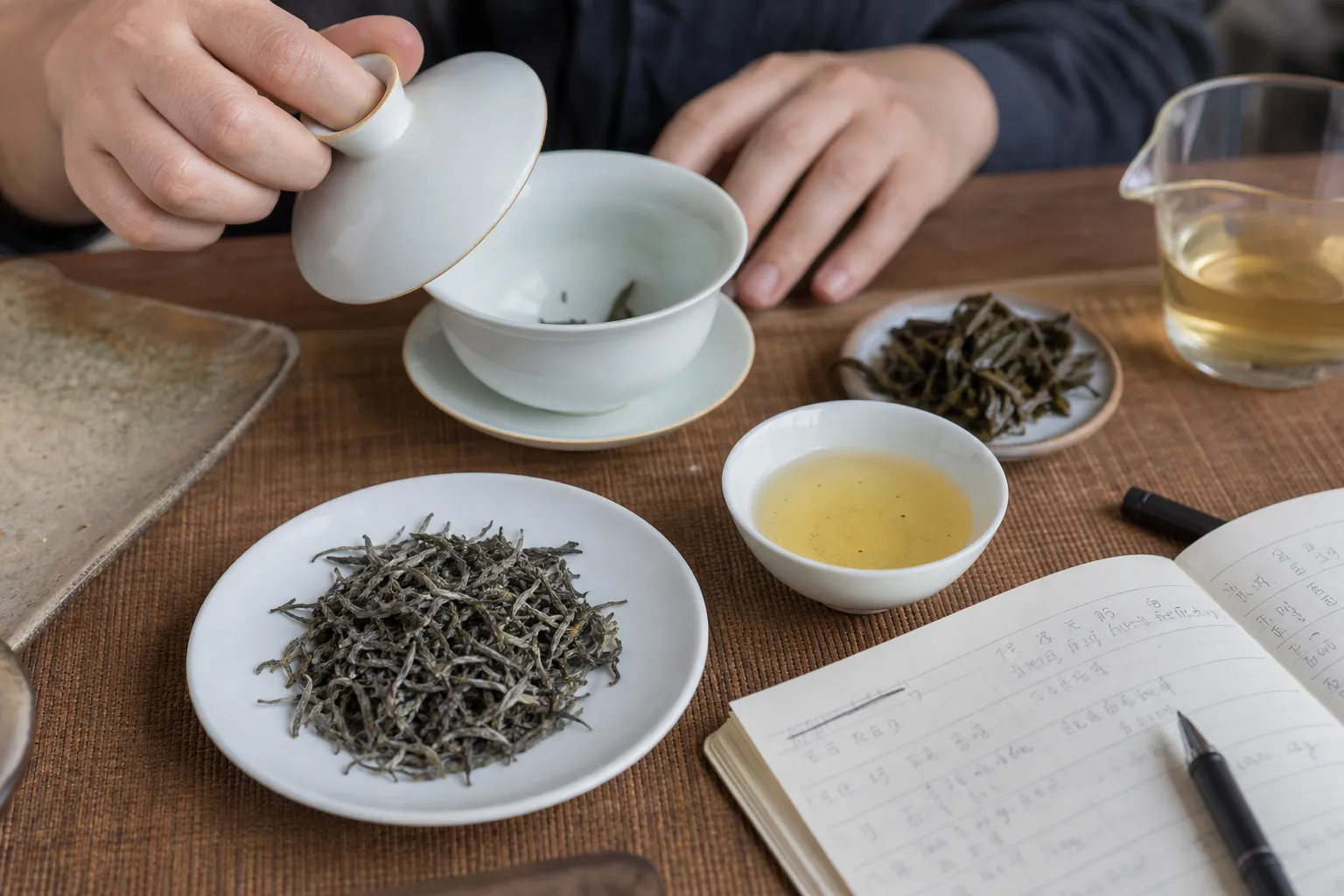
Dark liquor aged white tea photos are common because they make the tea look deep, warm, and mature. Liquor color, however, is one of the easiest clues to overread.
A darker infusion may come from age, but it can also come from leaf grade, compression, brewing ratio, water temperature, steeping time, broken leaf, storage conditions, or photography. A strong first steep in a small vessel can look much darker than a lighter steep from the same tea in a larger cup. Lighting and editing can shift color too.
Instead of asking whether the liquor is dark enough to be old, ask whether the infusion behavior makes sense:
- Does the liquor color develop gradually, or does it become dark immediately because the leaf is broken or over-steeped?
- Does the taste carry the visual depth, or does the cup look rich but taste thin?
- Does the tea remain drinkable across several infusions, or does it collapse quickly?
- Does the aroma match the color, or does the cup look mature while smelling dull?
- Does the seller show multiple brews, or only one dramatic dark pour?
Dark liquor can support a broader story. It should not decide the purchase. A buyer who treats color as the answer can miss better questions about storage, leaf condition, and sample performance.
Seller details that matter more than premium wording
Some seller language sounds reassuring without adding much information. Words such as vintage, rare, old, premium, traditional storage, warehouse-aged, or family-stored may appear in aged white tea listings. These phrases are not meaningless; they show how the seller wants the tea to be understood. But they need details behind them.
The most useful seller details aged white tea buyers can ask for are practical:
- What is the harvest year, if known?
- What is the pressing or production year?
- Was the tea stored loose, as a cake, or both?
- Where and how was it stored in general terms?
- Has the wrapper been changed, replaced, or repacked?
- Is the sample cut from the same cake or batch being sold?
- Are photos of the actual cake available, not only a stock image?
- Can the seller describe aroma, liquor, and storage without relying only on age?
A transparent seller may still be mistaken or uncertain. A vague seller may still have a good tea. The difference is that transparency gives you more points to compare. If the answers shift, become defensive, or avoid simple questions, the purchase becomes harder to judge.
Aged white tea is still tea. Variety family, leaf material, storage condition, compression, aroma, and brewing behavior matter. A number on a listing should not replace those basics.
Use price as a plausibility check
An aged white tea price check is useful because price can reveal whether a claim sits inside a plausible buying story. Price is not an authentication tool. A high price does not verify age, and a low price does not automatically disprove it.
Use price to ask sharper questions:
- If the tea is described as very old and rare, why is it priced like a casual daily drinker?
- If the tea is expensive, what details support the price besides age?
- Is the price based on a whole cake, a sample, storage story, brand recognition, scarcity language, or seller reputation?
- Are similar teas described with more detail at a comparable price?
- Does the seller offer a sample before asking for a large purchase?
A very old white tea claim is not always suspicious by itself. Older tea can exist in many storage and market contexts. The concern is mismatch: dramatic age, vague story, no sample, unclear photos, generic wrapper, and a price that depends almost entirely on the buyer trusting the label.
Price works best as a pressure test. It helps you decide how much uncertainty you are being asked to pay for.
How to use a sample before buying a cake
If the tea is expensive or the age claim is central to the listing, an aged white tea sample is often the most practical next step. A sample cannot settle the full history of the cake, but it can show whether the tea is worth further attention.
Before brewing, inspect the sample
- Does it appear to come from compressed tea or loose leaf?
- Are the leaves and stems consistent with the advertised style?
- Does the sample smell clean, stale, damp, sharp, or muted?
- Is there visible dust, odd debris, or unusual breakage?
During brewing, note the behavior
- whether the aroma opens after warming or rinsing
- whether the first cup tastes thin, harsh, mellow, sweet, woody, stale, or flat
- whether later infusions remain coherent
- whether the wet leaf aroma improves or worsens
- whether the tea feels aligned with the seller’s description
Then brew in a way you can repeat. Use the same vessel, leaf amount, water temperature range, and steeping pattern you would use for other white teas. The goal is not to force a particular result; it is to observe how the tea behaves.
If you like the sample but still feel unsure about the age, that is normal. The better question is whether the tea justifies the price and uncertainty. You do not have to solve the entire history of the cake before deciding whether the cup is worth buying.
Rewrapped, relabeled, and repacked tea
Rewrapped aged white tea is not automatically bad, but it changes the confidence level. Packaging can be replaced because the original wrapper was damaged, the tea was split for retail, the cake was stored without its outer paper, or the seller is presenting older material under a newer shop label. It can also create room for confusion.
Disclosure matters. If a cake has been rewrapped or relabeled, the seller should be able to say so plainly. A newer wrapper around older tea may be acceptable if the seller explains the situation and the tea itself is priced accordingly. A listing that presents a wrapper as original when it is not becomes harder to trust.
Questions to ask:
- Is the wrapper original to the cake?
- Has the cake been repacked by the shop?
- Was the tea stored loose before pressing?
- Is the production year tied to the leaf, the pressing, or the wrapper?
- Are there photos of the actual cake edge, inner material, and dry leaf close-up?
Do not overread wrapper neatness either. A clean wrapper does not mean the tea is young. A worn wrapper does not mean the tea is old. Packaging context matters only when it connects to the rest of the story.
Storage history is often the missing piece
Aged white tea storage history matters because time alone does not tell you how the tea was kept. Two teas with the same stated year can differ in aroma, cleanliness, texture, and drinkability because of storage. The available information may be incomplete, especially in ordinary retail listings, so the goal is not perfect certainty. The goal is to understand the broad storage picture.
Ask for storage details in plain language:
- Was the tea kept in a dry, clean environment?
- Was it exposed to strong odors?
- Was it stored as loose tea, cakes, boxes, or mixed inventory?
- Has it moved between storage locations?
- Does the seller know whether it was kept in sealed or breathable packaging?
- Are there any damp, sour, smoky, or storage-heavy notes?
Avoid turning storage words into automatic judgments. “Dry stored,” “warehouse-aged,” “traditional,” and “family-stored” can mean different things in different seller contexts. These phrases should lead to follow-up questions, not immediate trust.
The cup should also participate in the answer. If the storage description sounds careful but the tea smells musty or tastes dull, the mismatch matters. If the seller admits limited history but the sample is clean, pleasant, and priced modestly, the uncertainty may be acceptable for some buyers. The decision depends on your tolerance for unknowns.
A practical frame for checking white tea age claims
Because no single clue confirms age, the best approach is a layered check. You are looking for agreement among several modest clues, not one dramatic sign.
Use this frame before buying aged white tea:
- Clarify the date. Ask whether the year refers to harvest, pressing, storage, or seller estimate.
- Read the label lightly. Treat the aged white tea label as context, not final proof.
- Inspect the leaf. Look for consistency, condition, and whether the material fits the tea type.
- Smell before trusting the story. Aroma can reveal storage problems that photos hide.
- Do not trust color alone. Dark leaves or dark liquor may support a story, but they can mislead.
- Question premium wording. Rare or old language needs details behind it.
- Ask about storage. A year without storage context is incomplete.
- Compare price and uncertainty. The more you pay, the more detail you should expect.
- Sample when possible. A small amount can save you from buying a full cake based only on a listing.
- Keep the final judgment provisional. You may decide a tea is worth buying without treating its age as fully established.
This frame is not an authenticity system. It is a buyer’s way to slow down, notice mismatches, and avoid letting one appealing detail carry the whole purchase.
Common misconceptions about aged white tea authenticity
The most common mistake is treating a visible sign as a complete answer. Aged white tea authenticity is rarely something a casual buyer can settle from a photo or short listing.
Several assumptions deserve caution:
- Old-looking wrappers settle the age question. They do not. They may support a story only when other details agree.
- Dark liquor means long aging. It does not. Brewing choices and leaf condition can deepen the cup quickly.
- A high price confirms the claim. It does not. Price reflects many things, including scarcity language and seller positioning.
- A very old claim is always false. Not necessarily. It simply needs more context.
- A famous-sounding storage phrase is enough. It is not. Ask what the phrase means in this listing.
- A sample solves everything. It helps you judge drinkability and coherence, but it cannot reveal every part of the tea’s history.
A calmer approach is to ask: what would make this claim more coherent, and what would make me walk away? For many buyers, a coherent claim includes a clear date, a specific tea type, actual photos, a reasonable storage explanation, a sample option, and a price that does not depend entirely on romance. A weaker claim relies on atmosphere: old paper, dark soup, rare wording, and little else.
When to buy, sample, or pass
You do not need perfect certainty for every aged white tea purchase. A modestly priced sample with incomplete history may be fine if you are exploring flavor. A costly cake with a dramatic age claim deserves more scrutiny. Match your checking effort to the price, the seller’s confidence, and your reason for buying.
Consider buying
when the tea tastes good to you, the seller’s details are consistent, the storage story is at least broadly described, and the price feels fair for the remaining uncertainty.
Consider sampling first
when the claim is attractive but incomplete, the cake is expensive, the seller uses strong age language, or the photos leave questions about leaf condition.
Consider passing
when the listing avoids basic questions, treats wrapper condition as the main answer, leans on premium wording without detail, refuses a reasonable sample request, or asks you to pay heavily for an age story you cannot examine.
The best habit is not suspicion for its own sake. It is proportion. Aged white tea can be enjoyable because of taste, texture, aroma, and the slow changes associated with storage. Before buying, the claim should be checked alongside the tea, not treated as something the tea must be forced to support.