
Leaf check
Can Dry Leaf Appearance Prove the Age of White Tea
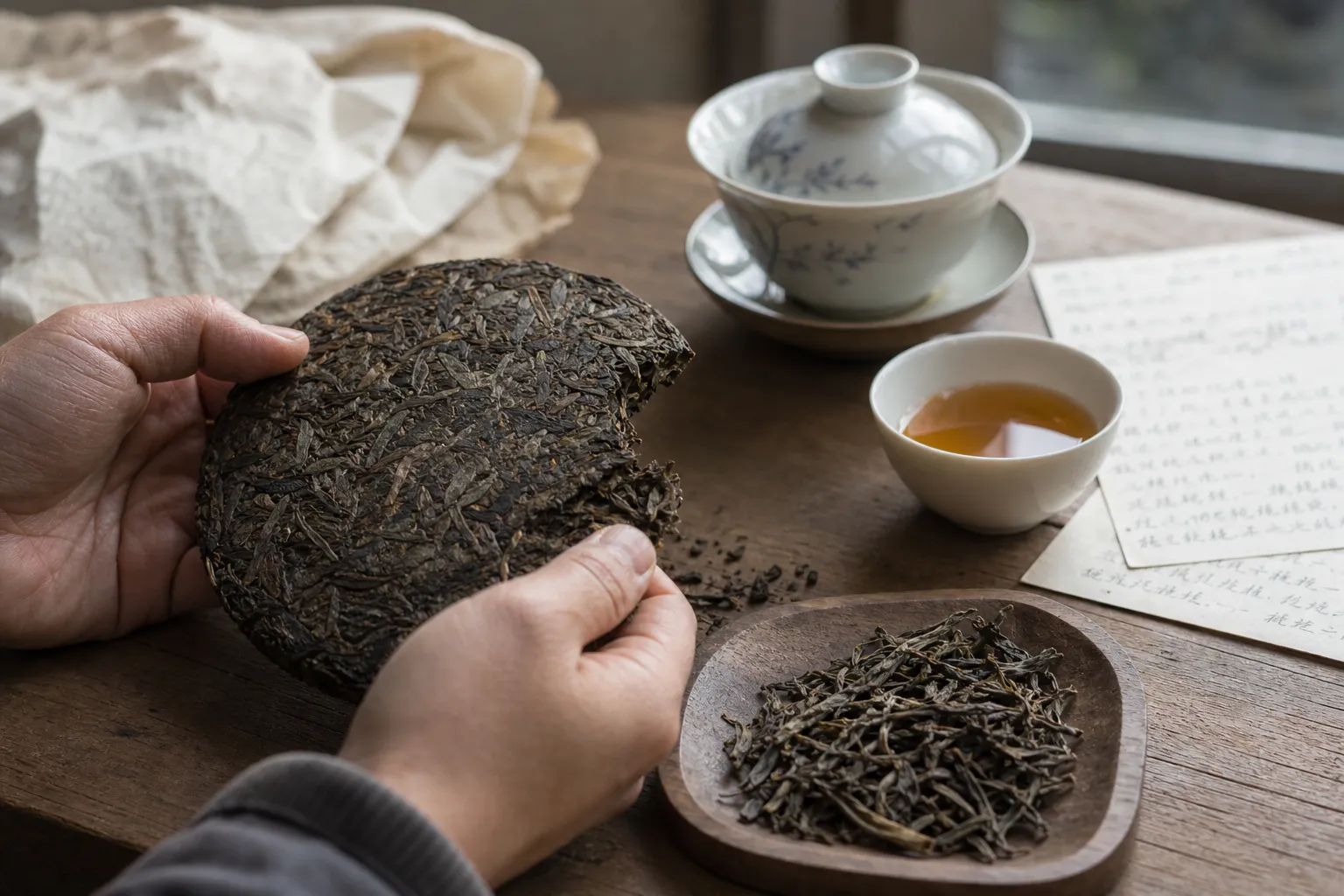
Dry leaves can give useful clues, but they cannot prove the age of white tea by themselves. Aged white tea leaf appearance may look darker, duller, more settled, or more compressed than a fresh loose tea, especially in cakes and older stored batches. Those signs are worth noticing. They are not enough to confirm a seller’s age claim.
Use the dry leaf as a first screen, not the final answer. Look at color, shape, breakage, compression, surface dryness, dry aroma, liquor color after steeping, and how the tea responds across several infusions. Then compare those observations with wrapper information, storage notes, harvest details, and the seller’s explanation. If the story feels too neat, let the cup slow the decision down.
upward
Read the full overview first
Use the broader guide first if you need the full scope before this page.
What Dry Leaf Appearance Can Actually Tell You
Dry leaf appearance can help you notice whether a tea looks consistent with its description. A claimed aged White Peony should still make visual sense as a leaf-and-bud tea. Gongmei and Shoumei often show larger leaves and stems. Silver Needle is built around buds, so a pile dominated by broad broken leaves would not match that name well. These are identity clues before they are age clues.
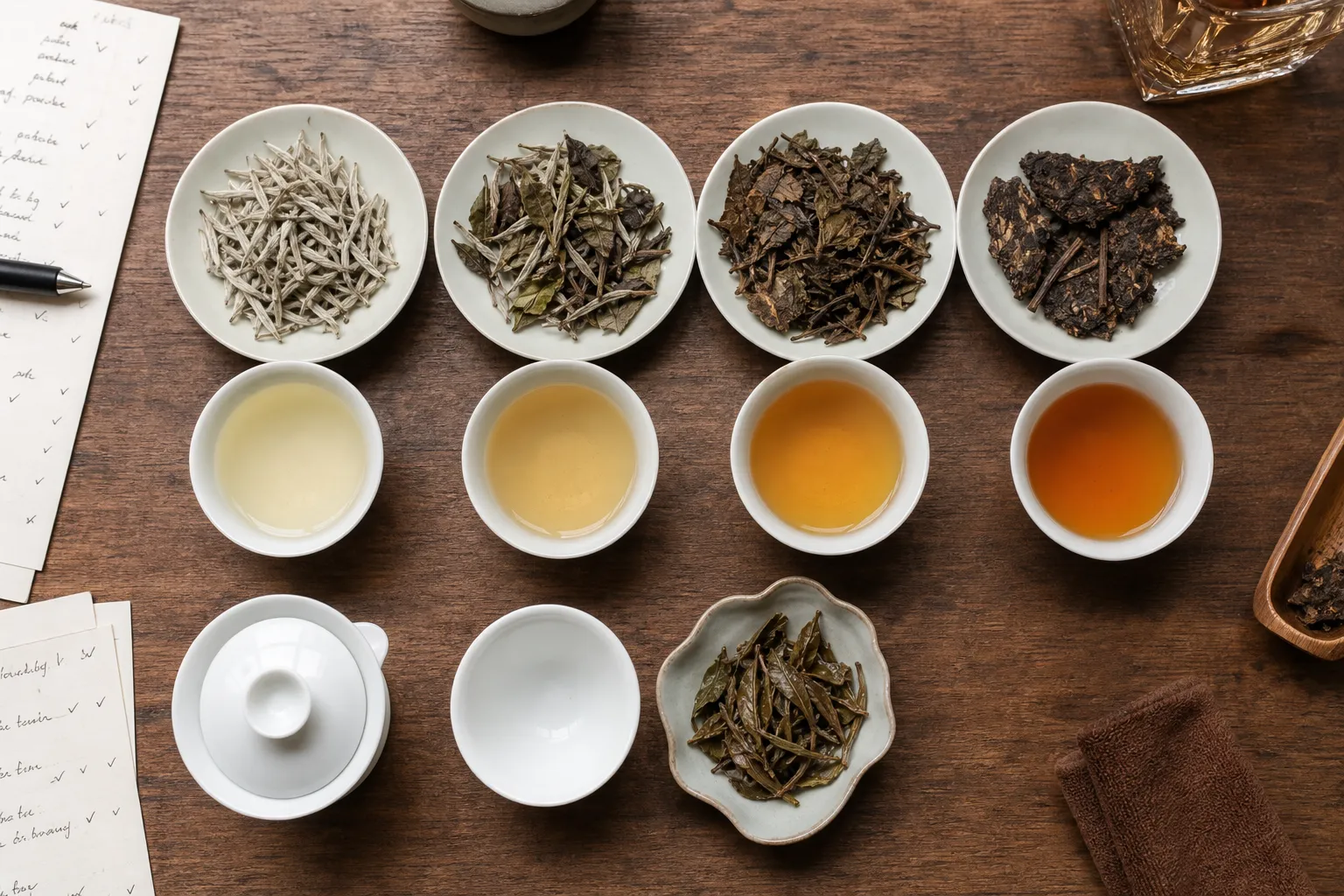
Color is usually the first thing people check. Old white tea leaves may appear deeper, more muted, or less green than very fresh tea, but aged white tea color is not a clock. Darker leaf can come from time, storage, processing, humidity exposure, compression, stronger drying, or simple variation in the material. A brown or darkened surface may suggest that the tea has changed, but it does not tell you exactly how many years have passed.
Texture also matters, but only as part of the picture. Dry leaves that look brittle, dusty, flattened, or tightly pressed raise better questions than answers: Was this tea stored as a cake? Was it handled roughly? Does the dry leaf smell clean, stale, sharp, damp, or flat? Those questions are more useful than trying to assign an exact year from appearance alone.
The practical move is simple: let the dry leaf decide what to check next. If it looks older than the label claims, brew it carefully and watch the liquor. If it looks too bright or fresh for a strong age claim, ask for storage and harvest context before treating the label as reliable.
Why Appearance Is Not Proof
Appearance is not proof because tea changes through several overlapping causes. Time is only one of them. Storage condition, starting material, leaf grade, compression, humidity, oxygen exposure, and handling can all affect how dry leaves look. Without a reliable record, a darker surface cannot separate those causes cleanly.
This is where many buyers overread leaf appearance. A dull cake may look old, but dullness can also come from tired material or storage that has not preserved aroma well. A bright loose tea may look young, but some batches retain lighter tones depending on material and storage. A compressed cake may appear more settled than loose tea from the same broad period because pressure changes how the surface reads.
The honest answer has to stay narrow: appearance can guide suspicion, comparison, and follow-up questions, but it should not be used as age verification. There is no dependable visual rule such as “this color equals this year” or “this surface proves this storage history.”
A stronger judgment comes from agreement between several clues. The leaf looks plausible, the dry aroma feels coherent, the first infusion does not clash with the age story, later steeps hold together, and the wrapper or seller information does not leave obvious gaps. Even then, the conclusion should stay cautious: the tea may fit the claim better, not that the claim has been proven by the leaf.
A Better Way to Read Old White Tea Leaves
Start with the leaf family
Silver Needle, White Peony, Gongmei, and Shoumei do not age into the same visual shape, because they do not begin with the same raw appearance. Bud-heavy tea, leaf-and-bud sets, and larger mature leaves create different piles on the tray. If the grade description and the material do not match, the age question becomes secondary.
Read color distribution
Look at color distribution rather than one dramatic dark patch. A mixed dry leaf can show lighter stems, deeper leaves, and varied bud tones. That variation may be normal, but harsh contrast, odd staining, or a flat dusty surface should make you slow down. The point is not to reject every uneven tea. The point is to avoid turning one attractive “old” color into confidence.
Smell before brewing
Smell the dry leaf before rinsing or brewing. Aroma is not proof either, but it helps check whether the visual impression has support. A tea that looks aged but smells lifeless, musty, sour, or strangely perfumed deserves more caution. A tea that looks modest but opens with a clean, settled scent may deserve a closer brew before judgment.
Brew a small sample
Use a consistent vessel. A gaiwan is useful because it lets you watch the leaves open, smell the lid, and compare short infusions. Keep the leaf amount and water temperature steady enough that you are not blaming the tea for a chaotic brew. Do not force the tasting response into one expected flavor; ask whether the liquor, aroma, and texture feel connected to the age story or scattered away from it.
What to Compare Before Trusting an Age Claim
When evaluating old white tea leaves, compare ordinary details rather than chasing one dramatic sign. A claimed age of white tea should make sense across the tea, the packaging, and the explanation.
Dry leaf color
Whether the tea looks fresh, muted, dark, or uneven
Prove the exact year
Leaf shape and grade
Whether the material fits Silver Needle, White Peony, Gongmei, or Shoumei
Confirm age by itself
Compression
Whether a cake or brick has changed the visual surface
Separate time from pressing and storage
Dry aroma
Whether the scent supports or conflicts with the visual impression
Confirm storage quality
Liquor behavior
Whether the brewed tea feels coherent across infusions
Confirm the label
Wrapper information
Whether harvest, storage, or batch details are stated
Replace tasting and judgment
Seller explanation
Whether the story is specific or vague
Remove uncertainty
This table is not a scoring system. It is a way to keep your eyes from doing all the work. If the dry leaf looks aged but the wrapper information is vague, the aroma is flat, and the brew falls apart quickly, the appearance clue has weak support. If the dry leaf, scent, liquor, and seller context all point in the same direction, the claim may feel more plausible, but still not visually settled.
Be careful with unsupported age verification claims. Phrases that lean too heavily on “old-looking” leaves can sound reassuring while giving you very little to test. A better seller conversation gives concrete context: what the tea is, whether it is loose or pressed, what the wrapper says, how it has been stored, and what kind of brewing response to expect.
Common Confusion Around Aged White Tea Color
The most common confusion is treating dark color as a shortcut for age. Darker dry leaves may suggest change, but they do not create a calendar. A very dark cake is not automatically older than a lighter cake, and a lighter-looking tea is not automatically young. Material and storage can bend the visual result.
Another confusion is expecting all aged white tea to look the same. Bud-heavy teas, leaf-and-bud teas, and larger-leaf styles have different surfaces from the beginning. Aged Silver Needle will not look like aged Shoumei simply because both are described as older tea. Judging aged white tea starts with asking whether the leaf style itself makes sense.
A third confusion is separating appearance from brewing. Dry leaf appearance is quiet; hot water reveals more. If a tea is being sold mainly on an aged look, brew it before making the stronger decision. Watch whether the leaves open cleanly, whether the liquor color develops in a believable way for that tea, and whether the aroma holds through more than one short steep.
The final confusion is assuming that a wrapper settles the matter. White tea wrapper information can be useful, especially when it includes harvest or storage details, but packaging is still part of the larger check. It should support the tea in the cup, not replace it.
When Appearance Should Make You Slow Down
Dry leaf appearance should make you pause when the visual story is too convenient. Very old-looking leaves paired with vague wording, no clear tea type, no storage context, and a high-pressure sales tone are not stronger because they are dark. They are harder to evaluate.
You should also slow down when the tea looks inconsistent with its name. If a tea described as a bud tea contains mostly broad broken leaves, the issue is not just age; the basic description may be unclear. If a cake is described with precise age language but the seller cannot explain storage or material, the leaf tray alone should not carry the claim.
Appearance should also raise questions when it conflicts with aroma. A tea can look attractive and still smell stale or damp. It can look plain and brew with more balance than expected. This is why dry inspection belongs at the start of the decision, not the end.
For a sample you already own
The next step is controlled brewing. Use the same gaiwan, leaf amount, water temperature, and steep timing you would use for a comparable tea. Note the dry leaf, warmed leaf scent, first liquor color, and later steep behavior. The goal is not to prove the age at home. The goal is to decide whether the tea deserves trust, more questions, or a pass.
The Practical Answer
Dry leaf appearance can help you judge whether an aged white tea claim feels plausible, but it cannot prove age on its own. Darker color, duller surfaces, compressed form, and older-looking leaves are clues. They become more useful only when they line up with aroma, brewed liquor, storage context, wrapper information, and a clear seller explanation.
If you are comparing two teas, do not ask which one looks older first. Ask which one gives you the most coherent story across leaf, scent, cup, and context. That keeps appearance in its proper place: a useful white tea appearance clue, not proof. For the next purchase or tasting session, start with the dry leaf, then let the brewed tea and storage details decide how much confidence the claim deserves.